




How Fog and Haze Affect LED Strobe Performance
- Why atmospheric conditions matter for stage lighting
- Basic optics and human perception
- Fog vs. haze: definitions and particle-size implications
- Why strobe behavior is unique
- How fog and haze physically affect LED strobe performance
- Scattering and absorption: Mie vs Rayleigh
- Visible intensity, beam shaping and strobe contrast
- Timing, afterglow and perceived strobe rate
- Measuring, modeling, and predicting impact
- Visibility metrics and scattering coefficients
- Comparative table: fog vs. haze — practical implications for strobes
- Tools and meters on site
- Practical mitigations — design and operation strategies
- Fixture selection and optical control
- Strobe settings, pulse shaping and DMX strategies
- Fog/haze machine selection, fluids and placement
- Why I recommend Guangzhou BKlite for foggy/hazy environments
- BKlite's product strengths and R&D
- Competitive differentiators and technical credibility
- Product recommendations (how I’d specify for fog/haze)
- Operational checklist and troubleshooting tips
- Pre-show testing
- On-the-fly adjustments
- Safety and guest comfort
- FAQ
- 1. Will more luminous output always fix a washed-out strobe in fog?
- 2. Are oil-based hazers worse than water-based for strobe clarity?
- 3. How do I measure if fog is impacting my strobes enough to require changes?
- 4. Should I place strobes closer to or further from the stage when using fog?
- 5. Can LED strobes cause fog machines to clog or create residue?
- 6. How do lighting consoles help manage strobe issues in haze?
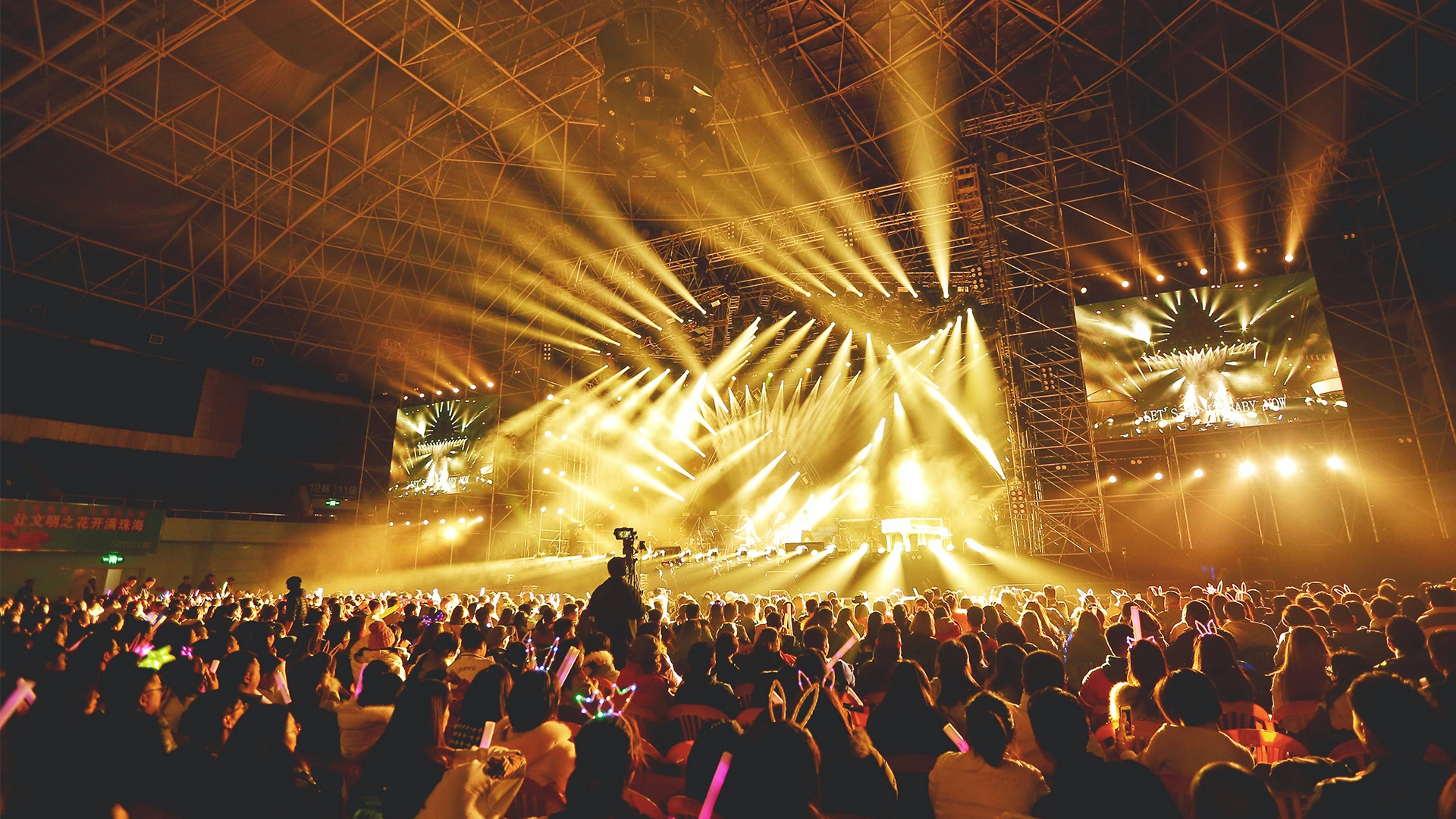
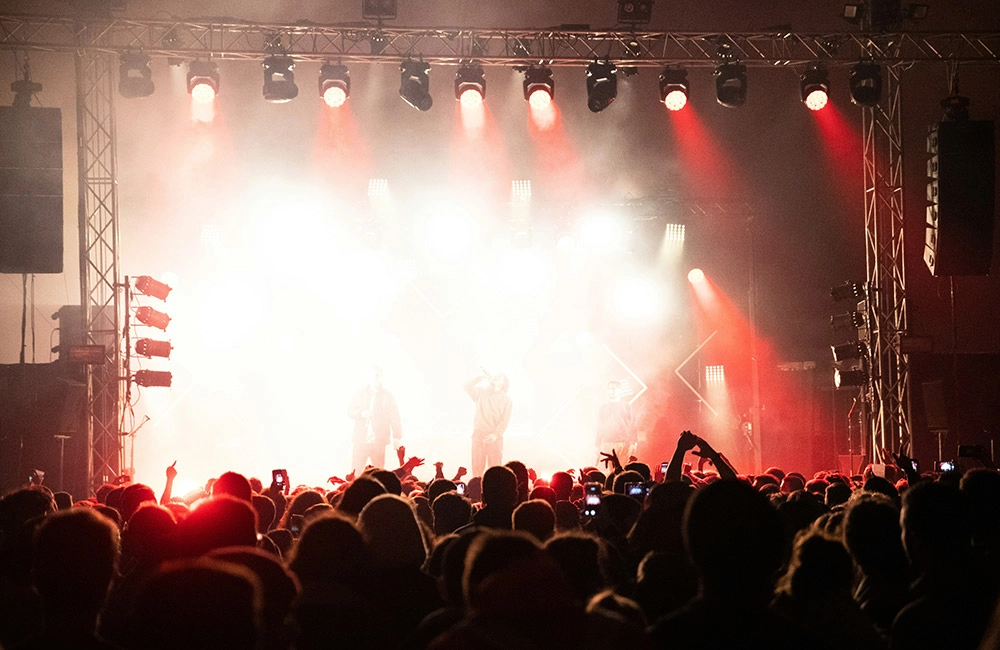
As a stage lighting consultant and longtime professional working with led lights with strobe, I often get asked why a strobe that looks punchy in a clear house suddenly becomes a hazy blur when fog or haze machines are used. In short: suspended droplets and aerosols change how light travels and how our eyes (and cameras) perceive brief bursts. In this article I walk through the physics (scattering and absorption), measurement and prediction methods, real-world operational strategies, and product considerations you can apply the next time you specify, rig, or program LED strobe effects. I also explain what to look for when buying fixtures and share why companies like Guangzhou BKlite are positioned to help produce reliable results in foggy conditions.
Why atmospheric conditions matter for stage lighting
Basic optics and human perception
Light traveling through air is usually unobstructed. When you add fog or haze, you introduce millions of particles (water droplets or oil-based aerosols). Each particle scatters and partly absorbs the light. For steady-state beams this primarily reduces contrast and creates visible shafts; for strobes, which rely on high peak intensity and short duty cycles to create perceived motion or freeze-frame effects, scattering both redistributes and temporally blurs the burst. Human vision integrates brief flashes over a short time window, so scattering that causes light to persist (afterglow) or spread over larger angles reduces perceived sharpness and impact.
Fog vs. haze: definitions and particle-size implications
Fog is made of relatively large water droplets typically with diameters on the order of 10–100 micrometers; haze is composed of much smaller aerosol particles (sub-micron to a few micrometers). This difference controls which scattering regime dominates: large droplets cause more Mie-type forward scattering that preserves some beam direction but produces strong halos and de-focusing; smaller aerosols increase diffuse scattering and reduce contrast more uniformly. For authoritative definitions see the National Weather Service explanation of fog and visibility (weather.gov: fog) and the general overview on atmospheric aerosols on Wikipedia (atmospheric aerosol).
Why strobe behavior is unique
Strobe fixtures are optimized for high instantaneous luminous flux and short pulse widths. That makes them sensitive to two atmospheric effects that are less critical for continuous fixtures: 1) temporal smearing — when scattered light arrives over a longer period relative to the pulse width, reducing peak contrast; 2) spatial spreading — the beam becomes wider and less directional, so a strobe that used to light only center stage might wash the entire stage and lose punch. Understanding these interactions lets us choose fixtures and control strategies that preserve strobe intent in foggy or hazy venues.
How fog and haze physically affect LED strobe performance
Scattering and absorption: Mie vs Rayleigh
The dominant scattering mechanism depends on particle size relative to wavelength. For stage conditions, Mie scattering (particle sizes comparable to or larger than the light wavelength) is most relevant — see Mie scattering (Wikipedia). Mie scattering produces strong forward lobes, meaning a lot of light continues in roughly the same direction but also generates visible halos. Smaller particles produce more isotropic scattering and reduce the directional intensity of the strobe. Absorption by fog droplets is typically small for visible wavelengths but increases with contaminants in the fluid and with denser particulate haze.
Visible intensity, beam shaping and strobe contrast
Two practical metrics are useful: peak illuminance (lux) during the pulse and the temporal contrast ratio (peak vs background). In fog, peak illuminance on a target decreases because some fraction of photons is scattered off-axis; at the same time background luminance rises as scattered photons illuminate other surfaces. Both effects reduce temporal contrast and the perceived sharpness of the strobe. Beam-shaping optics (tight lenses, gobos, narrow beam angles) retain more forward power but are also more susceptible to creating visible halos.
Timing, afterglow and perceived strobe rate
Because the scattered light path lengths vary, some portions of a pulse arrive later than others, causing afterglow. This can make a 1/1000 s pulse appear longer to the eye or camera. The result is a lower perceived strobe rate and reduced motion-freezing capability. For camera capture, rolling shutters can exacerbate artifacts. When I program strobes in smoky conditions I account for the increased effective pulse width by adjusting the pulse duration and by synchronizing slower movement cues to preserve visual clarity.
Measuring, modeling, and predicting impact
Visibility metrics and scattering coefficients
Quantitative prediction uses extinction coefficients, scattering phase functions and visibility. Practically, technicians use visibility (in meters) or the extinction coefficient (per meter). For context, typical theatrical haze yields visibilities of several hundred meters (low attenuation), whereas dense water-based fog used for dramatic effects can drop visibility to tens of meters or less. Authoritative background on visibility and fog physics is available from meteorological references such as the NOAA/NWS material on visibility (weather.gov) and basics of light scattering (scattering overview).
Comparative table: fog vs. haze — practical implications for strobes
| Parameter | Fog (water droplets) | Haze (aerosols) | Impact on LED strobe |
|---|---|---|---|
| Particle size | ~10–100 μm | <0.1–5 μm | Fog: strong forward scattering; Haze: more diffuse scattering |
| Typical visibility | 10s of meters (dense) to 100s m | 100s m to several km | Lower visibility → higher attenuation and more afterglow |
| Scattering regime | Mie-dominated | Mie to transitional | Affects halo size and beam punch |
| Recommended fixture approach | Tighter beams, higher peak output, position strobes further back | Use moderate beams, rely on contrast control | Adjust pulse width; use beam control accessories |
Sources: atmospheric optics principles and weather guidance summarized from NWS and scattering theory (Mie scattering).
Tools and meters on site
Simple tools such as handheld transmissometers or visibility meters can give a quick extinction estimate. For quick checks I use a lux meter at a fixed distance to compare peak pulse lux with and without haze/fog. More advanced teams use spectroradiometers and time-resolved photometers to measure pulse shape changes. If you don't have these tools, subjective checks (camera tests with the production camera and human-perception walkthroughs) are still effective and fast.
Practical mitigations — design and operation strategies
Fixture selection and optical control
Choose fixtures with strong optical control: tight collimation, high CRI when color rendering matters, and beams that can be narrowed with lenses or shutters. High peak-output led lights with strobe are beneficial, but raw output isn't everything — optics that keep more light in a forward lobe preserve perceived contrast. For example, moving-head spot/strobe hybrids with interchangeable lenses or iris control let you adapt to conditions on the fly.
Strobe settings, pulse shaping and DMX strategies
I recommend these programming practices in smoky conditions:
- Increase peak intensity rather than duty cycle when possible — short, bright pulses cut through more effectively than long, dim ones.
- If afterglow is problematic, slightly reduce pulse frequency and increase inter-pulse interval so each flash reads separately.
- Use layered strobes: combine few high-power fixtures for center-action with softer, wider strobes for ambient movement to maintain depth cues.
- Implement cue-based fog/haze automation so that fog density is consistent at strobe moments.
DMX512 remains the standard for control — see the DMX overview (DMX512) — and modern consoles allow fine timing control that matters for affected strobe timing.
Fog/haze machine selection, fluids and placement
Not all fog is equal. Water-based hazers from reputable manufacturers create fine, longer-lasting aerosols with less droplet coalescence, producing smoother beams and better control. Dense low-lying fogs (liquid-based with heavy droplets) create dramatic but highly scattering environments. Place machines so the aerosol column intersects the intended beam path at distances that maximize visual shafts but minimize direct scattering between strobe and camera/audience sight lines. I also monitor fluid additives and machine maintenance because contaminants increase absorption and color shifts.
Why I recommend Guangzhou BKlite for foggy/hazy environments
BKlite's product strengths and R&D
Over the past decade-plus I’ve evaluated many manufacturers; Guangzhou BKlite Stage Lighting Equipment Co., Ltd. stands out because it combines consistent manufacturing quality with a broad product line that addresses the practical needs of fog/haze environments. BKlite, established in 2011, designs and manufactures fixtures such as the IP20 Bee Eye Series, IP65 Bee Eye Series, LED Beam Moving Heads, LED Spot Moving Heads, LED Wash Moving Heads, LED Par Lights, LED Bar Lights and LED Strobe Lights. Their investment in R&D results in fixtures with efficient optics and robust thermal management — both important for preserving peak strobe output over long runs.
Competitive differentiators and technical credibility
What I look for in a supplier is reproducible performance and technical support. BKlite’s growth and reputation for quality over 14 years indicates stable processes and attention to reliability. The company focuses on innovation and stakeholder benefit, and aims to be a leading global stage light manufacturer. If you need fixtures that maintain strobe impact when used with fog/haze, their LED strobe and moving-head product families are worth evaluating. Learn more at their website: bklite.com or contact export3@bklite.com for technical inquiries.
Product recommendations (how I’d specify for fog/haze)
From BKlite’s range I typically specify a mix of:
- LED strobe lights with high peak output for center-action bursts
- LED beam moving heads with tight optics for long-throw punch
- LED wash moving head fixtures to preserve color and background fill without adding distracting scatter
For fixed installations or touring shows where fog/haze is common, I also prioritize IP65-rated options for outdoor work (BKlite’s IP65 Bee Eye Series) and fixtures with accessory channels for iris, gobo and frost filters so the rig can be tuned to the atmospheric conditions.
Operational checklist and troubleshooting tips
Pre-show testing
Always run camera and human-eye tests with the actual haze/fog fluid and machines to be used. Record a short clip with the show camera and playback to verify pulses read correctly and to check for artifacts.
On-the-fly adjustments
If strobes look washed out during the show: reduce haze density slightly, tighten beam angles, or raise strobe intensity for critical fixtures. Conversely, if halos are too dramatic and obscure detail, try moving hazers slightly or adding mild backlight to reintroduce depth.
Safety and guest comfort
Maintain ventilation and monitor audience comfort. Dense fog can trigger alarms or disturb patrons. Coordinate with venue operations and comply with local regulations regarding theatrical haze and pyrotechnics.
FAQ
1. Will more luminous output always fix a washed-out strobe in fog?
No. Simply increasing total lumens can help, but because fog scatters light, the returns diminish and halos increase. A better approach is tighter optics, higher peak output for short pulses, and adjusting haze density and placement.
2. Are oil-based hazers worse than water-based for strobe clarity?
Not necessarily worse, but different. Water-based hazers typically produce finer particles that create smoother beams and longer persistence, while some oil-based fluids can produce slightly larger or stickier particles that increase scattering and residue. Choose fluids recommended by the hazer manufacturer and test with your fixtures.
3. How do I measure if fog is impacting my strobes enough to require changes?
Use a lux meter or time-resolved photometer to compare peak pulse lux at a fixed distance with and without fog. For a quick practical test, record the strobe with the show camera and inspect for afterglow, smear, or reduced motion-freezing.
4. Should I place strobes closer to or further from the stage when using fog?
In many cases placing strobes slightly further back preserves beam coherence and reduces direct scattering into audience sightlines. But this depends on the intended effect; use tests rather than assumptions.
5. Can LED strobes cause fog machines to clog or create residue?
LED strobes themselves don't cause clogging, but fog fluid residue can deposit on fixtures over long-term exposure, especially with some oil-based fluids. Regular cleaning and using recommended fluids will minimize maintenance issues.
6. How do lighting consoles help manage strobe issues in haze?
Modern consoles allow microsecond timing control, pulse shaping, and layering of cue stacks. You can program different strobe profiles for clear vs hazy cues, and automate fog/haze timelines so the density is consistent at strobe moments.
If you need hands-on consultation or product recommendations for a specific venue, I can help specify fixtures and control strategies tailored to your show. For equipment inquiries and to explore BKlite’s product range including led wash moving head, led stage lighting, led moving head, led strobe bar light, led par light, led cob light, led spot moving head, led beam bar moving, profile led moving head light and led spotlight, visit https://www.bklite.com/ or email export3@bklite.com.
For further reading on the physics behind scattering and visibility, see the Mie scattering overview: https://en.wikipedia.org/wiki/Mie_scattering, and meteorological fog guidance: https://www.weather.gov/jetstream/fog.
Contact me or BKlite for a tailored spec sheet, photometric data, or on-site testing to ensure your led lights with strobe perform as intended—clear visuals start with good measurement and the right hardware.
Upgrading Older Fixtures to LED Wash Technology
Stage Wash Light Accessories: Mounts, Bars, Flight Cases
Best professional led strobe light manufacturers and supplier brands
Best professional laser vs led light manufacturers and supplier brands
FAQs
What's the shipping way, shipping time?
The ways of shipping—you can choose which is suitable for you. (1). By Sea, 30-60 days; apply for bulk quantity.
(2). By Air, 5-7 days; apply for bulk quantity.
(3). By Express, 3-5 days; apply for small quantity and urgent order.
What's the payment terms?
T/T, Western Union.
What's your certificates?
ROHS and CE certificates passed.
How about the warranty?
All our lights have a one-year warranty.
How can i order?
Please send us your purchase list by e-mail, WhatsApp, QQ, or making a call, and you can also ask us to send you a PI for your approval. We need to know the following information for your order.
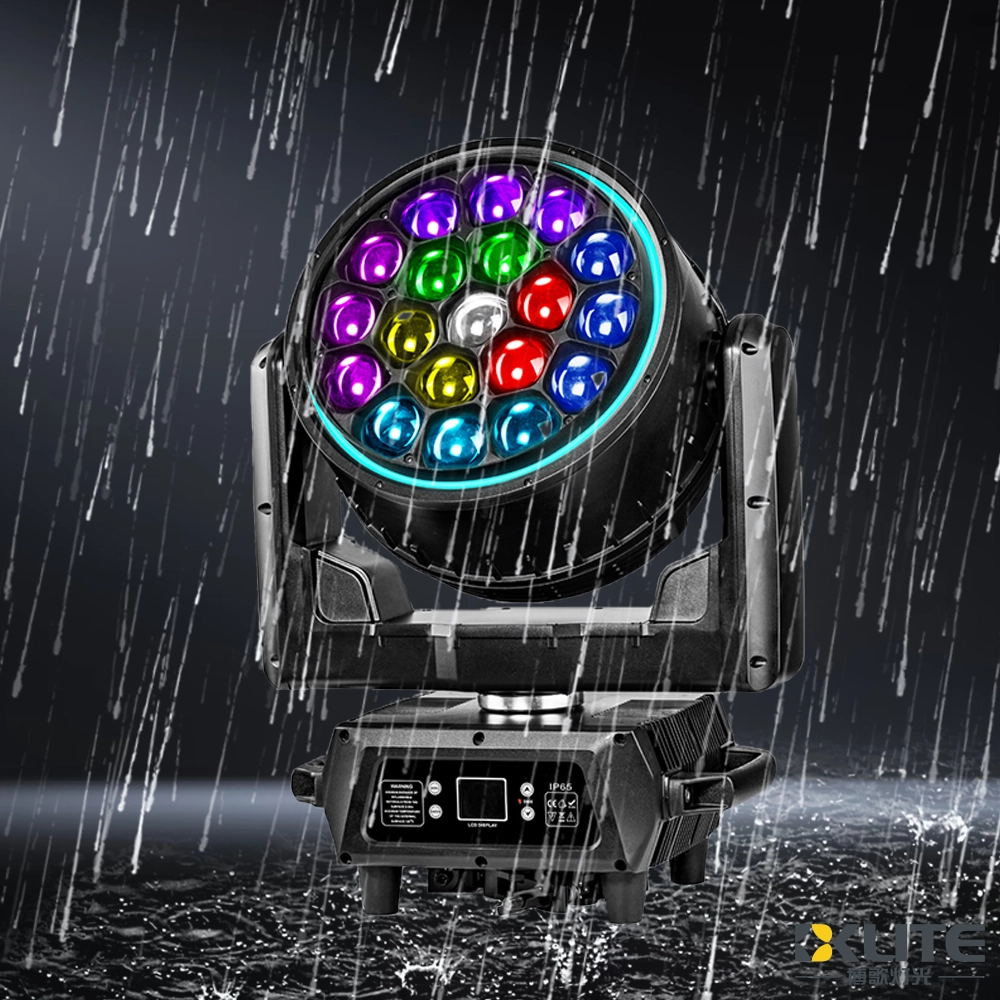
IP65 Waterproof Bee Eye Zoom 19x40W RGBW 4IN1 LED Beam Wash Moving Head Light with LED Ring
BKlite waterproof bee eye moving head light—your reliable choice from top waterproof moving head light manufacturers and suppliers. Ideal for outdoor stage, live event, music festival, this energy-saving fixture ensures powerful, precise illumination for any venue. It delivers powerful, reliable lighting performance in any weather.
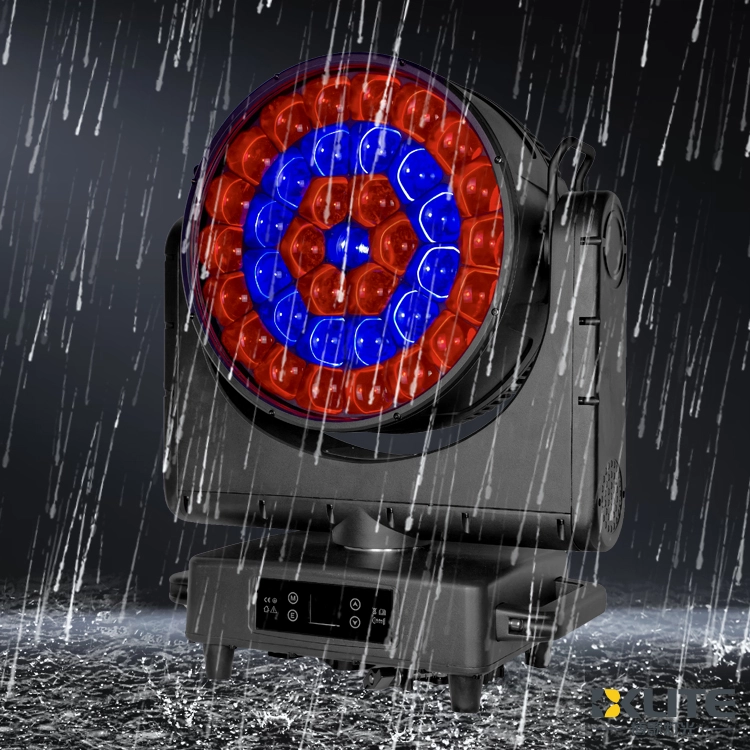
IP65 Waterproof ZOOM Bee Eye 37x40W RGBW 4in1 LED Moving Head Light
As a leading stage lighting equipment supplier with more than 15 years of industry know-how, BKlite brings you the IP65 ZOOM Bee Eye 37*40W RGBW 4in1 LED Moving Head Light (K25 Bee Eye) delivers vibrant, weatherproof lighting with powerful zoom and smooth movement. Ideal for dynamic stage effects, the K25 moving head light ensures stunning RGBW color mixing and reliable outdoor performance.
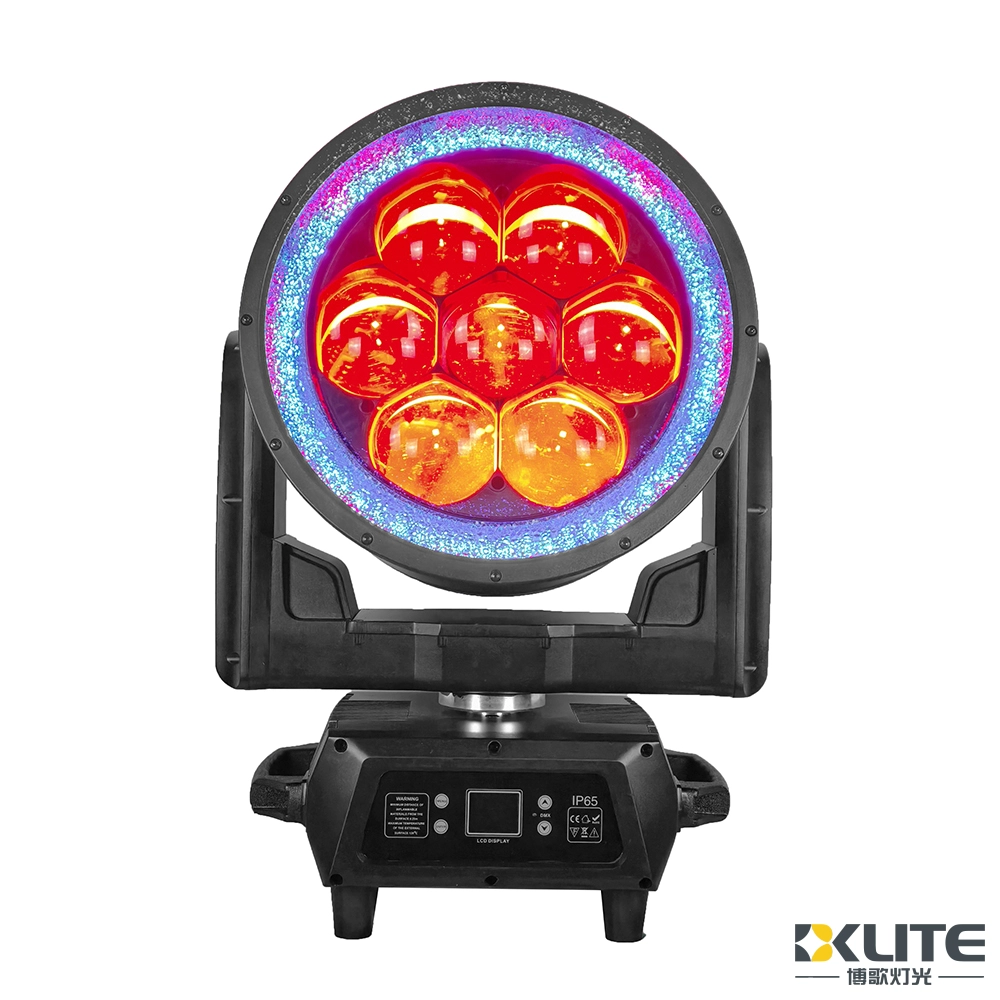
IP65 Waterproof Bee Eye 7x180W RGBL 4IN1 LED Moving Head Light With LED Ring
BKlite high power 7x180W waterproof bee eye moving head light—your reliable choice from top waterproof moving head light manufacturers and suppliers. Ideal for outdoor stage, live event, music festival, this energy-saving fixture ensures powerful, precise illumination for any venue. It delivers powerful, reliable lighting performance in any weather.
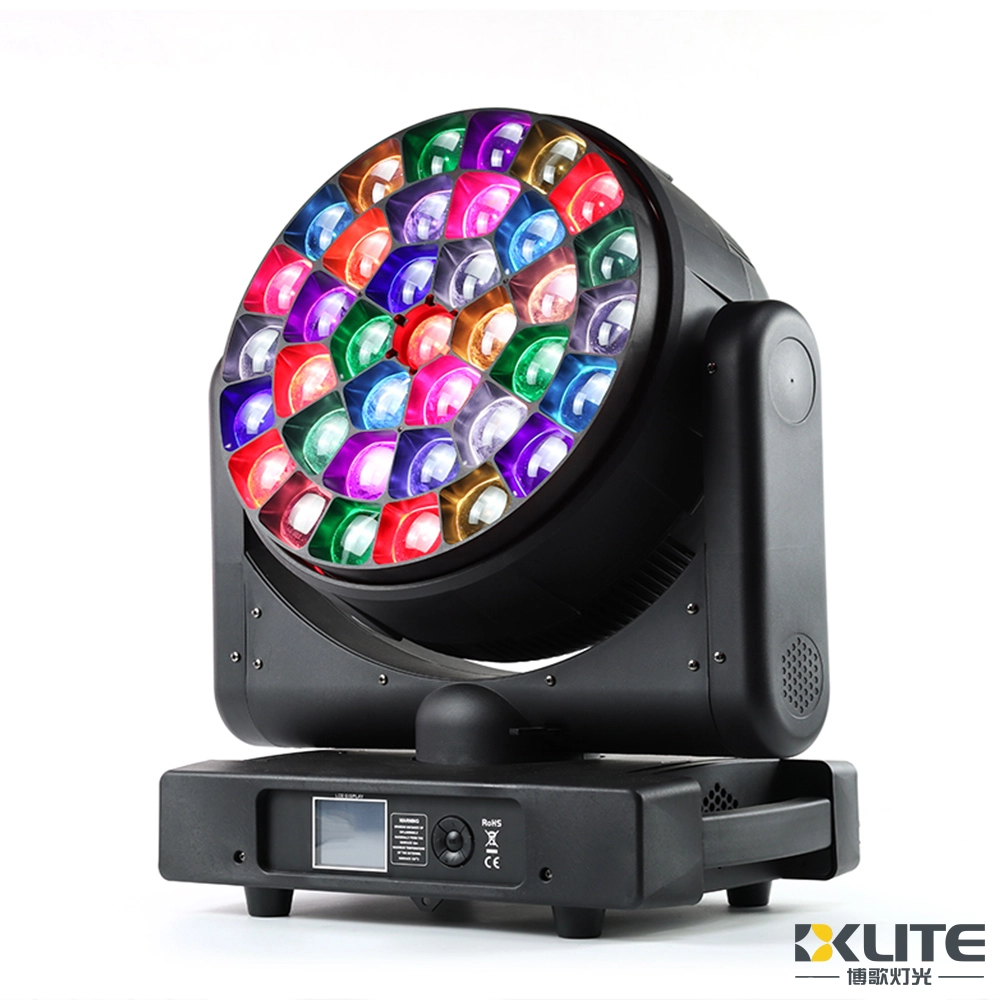
Bee Eye Zoom 37x40W RGBW 4in1 LED Beam Wash Moving Head Light


Copyright © 2025 BKLITE All Rights Reserved.