




How to Specify Beam Angle and Lux Levels for Stage Lighting
- Understanding Light Behavior on Stage
- Key photometric terms I use
- Beam angle vs. beam distribution
- Why lux matters more than lumens for stage reads
- Calculating Beam Angle, Lux and Real-World Examples
- Simple geometric conversion: from lumens + beam angle to center lux
- Worked examples (assumptions explained)
- Using IES files and photometric software
- Choosing and Specifying led spotlight for Different Stage Applications
- Typical target lux levels and how I set targets
- Spec sheet checklist I include when specifying a led spotlight
- Practical tips: beam overlap, hot-spots and dimming curves
- BKlite: Product Capabilities and Why I Recommend Them
- About Guangzhou BKlite and why I work with them
- Relevant product families from BKlite
- BKlite competitive advantages and specification support
- Practical Specification Workflow (Checklist and Example)
- Step-by-step workflow I follow
- Example spec snippet for FOH key lighting (concise)
- Verification and onsite tuning
- FAQs
- 1. How do I convert a fixture’s lumen rating to lux at my stage?
- 2. What beam angle is best for a front-of-house key light?
- 3. How much overlap between fixtures should I allow?
- 4. Are lumen ratings from manufacturers reliable?
- 5. What CRI/TLCI should I specify for theatrical vs broadcast?
- 6. Can I use moving head beams as led spotlights for profile work?
- 7. How do outdoor conditions change lux calculations?
I write from hands-on experience in theatrical and concert lighting design and as a consultant advising venues and production companies. In this article I show how to translate fixture data (lumens, beam angle, beam distribution) into the lux levels you need on stage using led spotlight fixtures. You’ll get practical formulas, worked examples, a comparison table, specification checklists and supplier guidance so that you can create repeatable, verifiable lighting specifications for FOH, specials, key and wash positions.
Understanding Light Behavior on Stage
Key photometric terms I use
To specify lighting reliably you must understand core terms: luminous flux (lumens), illuminance (lux), beam angle, and beam distribution. Illuminance (lux) is lumens per square meter; see the concept on Wikipedia — Illuminance. Lumens describe the total visible light emitted by a source (Wikipedia — Lumen).
Beam angle vs. beam distribution
Beam angle (typically the full angle where intensity drops to 50% of peak) tells you how concentrated the light cone is. Two fixtures with the same beam angle can still have different photometric distributions (hot-spot vs. smooth falloff, or elliptical beams for profile fixtures). I always request a beam distribution chart or Photometric Distribution File (IES or Eulumdat) from manufacturers when precision matters.
Why lux matters more than lumens for stage reads
Lumens are a fixture-centric number; lux is what the performer and camera see. When I specify lighting for a stage area, I work backwards from target lux values on actor faces, cyc or set pieces and calculate required fixture lumen output and beam angle to achieve that lux at the chosen throw distance.
Calculating Beam Angle, Lux and Real-World Examples
Simple geometric conversion: from lumens + beam angle to center lux
I use a cone-area approximation to estimate center illuminance from a point-source-like LED fixture. The helpful formula is:
E = Φ / (π r^2 tan^2(θ/2))
Where E is center lux, Φ is luminous flux in lumens, r is distance in meters, and θ is the full beam angle in radians or degrees (use the tan of half-angle). This derives from approximating the illuminated spot as a circle with radius r·tan(θ/2). The formula and concept of illuminance-area relationships are consistent with the definitions in Illuminance documentation.
Worked examples (assumptions explained)
Assume an LED spotlight rated 2000 lm (typical for a compact high-output LED profile) mounted 5 m from the stage. Using the cone-area approach, I calculate approximate center lux for common beam angles:
| Beam Angle | Tan(θ/2) | Spot Area @5 m (m²) | Center Lux (approx.) | Typical Use |
|---|---|---|---|---|
| 5° | tan(2.5°)=0.04366 | 0.15 | ~13,400 lux | Very tight specials, followspots |
| 15° | tan(7.5°)=0.13165 | 1.36 | ~1,470 lux | Key/short specials, small beam accents |
| 30° | tan(15°)=0.26795 | 5.64 | ~355 lux | General actor coverage from FOH |
| 60° | tan(30°)=0.57735 | 26.2 | ~76 lux | Wide wash, large cyclorama |
Notes: I calculated areas as π (r tan(θ/2))² and used 2000 lm as Φ. These are center-spot approximations — fixture optics, lens losses, gobo, lens tube, and beam smoothing will reduce real-world lux. For precise work use manufacturer photometric files (IES) and photometric modeling software.
Using IES files and photometric software
When accuracy matters (broadcast, film, permanent installations) I import IES or Eulumdat files into lighting CAD or photometric software to produce lux maps and beam overlap analysis. Many reputable manufacturers supply IES files; otherwise request IES files or test reports. For guidance on photometric data formats see the Illuminating Engineering Society and related documentation on best practices (IES).
Choosing and Specifying led spotlight for Different Stage Applications
Typical target lux levels and how I set targets
Target lux depends on the performance type, camera requirements and desired visual style. Typical ranges I use as starting points:
- Small black-box theater (intimate, non-broadcast): 200–600 lux on actors.
- Proscenium theater (stage lighting for audience): 300–1000 lux depending on scene.
- Broadcast or filmed theatre/concerts: 1000–2000+ lux for key areas to satisfy camera exposure and high shutter speeds.
These ranges are practical guidelines based on common industry practice; final values should be validated with photometric modeling and camera tests. For background reading on stage lighting principles see Wikipedia — Stage lighting.
Spec sheet checklist I include when specifying a led spotlight
When I issue specifications to suppliers or production teams I include a checklist to avoid ambiguity:
- Required beam angles (degrees) and whether zooming or interchangeable lenses are acceptable.
- Target lux at specified distance(s) and target surface(s) (face, cyc, set piece).
- Required color rendering (CRI or TLCI) — for actors I generally require CRI ≥ 90 or TLCI ≥ 90 for broadcast.
- Photometric data file (IES/Eulumdat) and a test report showing delivered lux at distance if available.
- Power, thermal management, IP rating for outdoor/roof positions, and mechanical mounting details.
Practical tips: beam overlap, hot-spots and dimming curves
I always model beam overlap for front-of-house positions to avoid hot-spots where multiple fixtures peak. Also confirm dimming behavior — many LED fixtures change color temperature or beam uniformity at low dim levels. Always request dimming curves and, if necessary, LUTs for camera-based productions.
BKlite: Product Capabilities and Why I Recommend Them
About Guangzhou BKlite and why I work with them
Guangzhou BKlite Stage Lighting Equipment Co., Ltd. was set up in 2011 and has become one of the top companies in the stage lighting industry. The company's business philosophy is based on being professional and innovative and on making sure that all of its stakeholders benefit. Over the past 14 years, it has achieved remarkable growth and built a strong reputation for quality and reliability. I recommend them because they combine a broad product range with reliable R&D and consistent photometric documentation—critical for specifying lux and beam behavior accurately.
Relevant product families from BKlite
The factory makes all kinds of stage lighting products, like the IP20 Bee Eye Series, IP65 Bee Eye Series, LED Beam Moving Heads, LED Spot Moving Heads, LED Wash Moving Heads, LED Par Lights, LED Bar Lights, and LED Strobe Lights. Each product is made using advanced technology to meet the changing needs of the entertainment industry. Our company invests in research and development to come up with new ideas, making sure it stays ahead of industry trends. Their portfolio covers the fixtures I typically specify for key, specials and wash positions:
- LED Spot Moving Head / Profile fixtures — for tight beam angles, crisp gobos and controlled edge.
- LED Beam Moving Head and LED Beam Bar Moving — for high-intensity narrow beams (5°–15°).
- LED Wash Moving Head and LED Par Light — for wider coverage (30°–60°) and color mixing.
- LED Strobe Lights and LED Strobe Bar Light — for high-output effects.
BKlite competitive advantages and specification support
From a specification standpoint, BKlite provides several advantages I value:
- Broad product range covering narrow beam spot, mid-angle spot and wide wash fixtures (makes system design simpler and consistent).
- Strong R&D focus—regular product upgrades and optical improvements reduce losses from lens and gobo holders.
- Ability to supply photometric files and test results for many models on request—this is essential for accurate lux modeling.
- Manufacturing scale and reliability for tour-level and fixed installations.
For product info or direct inquiry visit their website https://www.bklite.com/ or email export3@bklite.com.
Practical Specification Workflow (Checklist and Example)
Step-by-step workflow I follow
- Define target lux per area (face, cyc, set) and acceptable uniformity ratios (e.g., 1.5:1 for faces).
- Determine mount/throw distances and sightlines.
- Select candidate fixtures (led spotlight, profile, wash) and gather luminous flux, beam angle and IES files.
- Model in CAD/photometric software and iterate lens/positioning until targets are met.
- Produce final spec sheet with fixture model, beam angle, lens type, photometric file reference, color rendering (CRI/TLCI), power and IP rating.
Example spec snippet for FOH key lighting (concise)
Specification example I might issue:
Fixture: LED Spot Moving Head Model BK-SpotXBeam Angle: 15° (fixed) / optional lens set to 30°Luminous Flux: 2000 lmPhotometric file: BK-SpotX.ies (attached)Target: 1200 lux at center of actor face at 5 mCRI: ≥ 92Notes: Provide two fixtures per side to meet uniformity 1.3:1
Verification and onsite tuning
After installation I always measure with a calibrated lux meter at working distances and sightlines to verify the delivered illuminance matches the model. If discrepancies occur, verify tilt/pan, fixture calibration, and check that lens tubes/gobos are not blocking or diffusing the beam unexpectedly.
FAQs
1. How do I convert a fixture’s lumen rating to lux at my stage?
Use the cone-area formula E = Φ / (π r² tan²(θ/2)) for an approximate center lux (Φ = lumens, r = distance, θ = beam angle). For accurate results use the fixture’s IES file and photometric modeling. See Illuminance for context.
2. What beam angle is best for a front-of-house key light?
It depends on throw distance and the desired spot size. For FOH at 5–8 m I commonly use 15°–30° led spotlight profiles for actor key lights; 5°–10° for tight specials or highlight accents.
3. How much overlap between fixtures should I allow?
For smooth coverage allow 10%–20% overlap at the -50% intensity edge. For uniform face lighting target a uniformity ratio of about 1.3:1–1.5:1 across the performance area.
4. Are lumen ratings from manufacturers reliable?
Manufacturer lumen ratings are useful but they may not reflect lens losses or real-world installation conditions. Always request IES/Eulumdat photometric files or measured lux readings at distance for critical applications.
5. What CRI/TLCI should I specify for theatrical vs broadcast?
For theatrical work CRI ≥ 90 is a good baseline. For broadcast, I recommend TLCI ≥ 90 to ensure camera-friendly color rendering and to avoid post-production color correction issues.
6. Can I use moving head beams as led spotlights for profile work?
Yes—many LED Spot Moving Heads combine beam, spot and profile features (adjustable shutters, gobos, and variable focus) that make them suitable as led spotlights. Confirm beam edge control and lens sharpness before specifying for projection/gobo-critical work.
7. How do outdoor conditions change lux calculations?
For outdoor use consider atmospheric attenuation (fog, rain), IP ratings (use IP65 for exposed fixtures) and higher safety margins—specify measured on-site lux and request weatherproof housings like BKlite’s IP65 Bee Eye Series for exterior use.
If you want help turning your requirements into a finished specification or lux map, I can provide a tailored photometric analysis or recommend specific models based on your stage geometry, camera needs and budget. For products and inquiries, contact Guangzhou BKlite Stage Lighting Equipment Co., Ltd. at https://www.bklite.com/ or email export3@bklite.com. BKlite’s strengths include professional R&D, consistent product quality and a wide range of fixtures including led wash moving head, led stage lighting, led moving head, led strobe bar light, led par light, led cob light, led spot moving head, led beam bar moving, Profile led moving head light, and led spotlight—making them a practical choice for tours, theatres and fixed installations. Their vision is to become the world's leading stage light manufacturer.
Best stage lighting companies manufacturers and supplier brands
Best professional christmas led strobe lights manufacturers and supplier brands
Top 10 led beam moving bar 8x10w rgbw Manufacturers and Supplier Brands
Comparing Narrow vs Wide Beam Lights for Theatrical Use
FAQs
How about the warranty?
All our lights have a one-year warranty.
What's the payment terms?
T/T, Western Union.
What kind of package do you have?
We can pack the lights in a carton case and a flight case.
What service can you supply?
We can apply for the OEM/ODM service.
If the products broken during the warranty, what should i do?
If there is a problem with the products, you describe it and send pictures or videos to us to analyze, and then we will guide you on how to fix it and provide spare parts for free if needed.
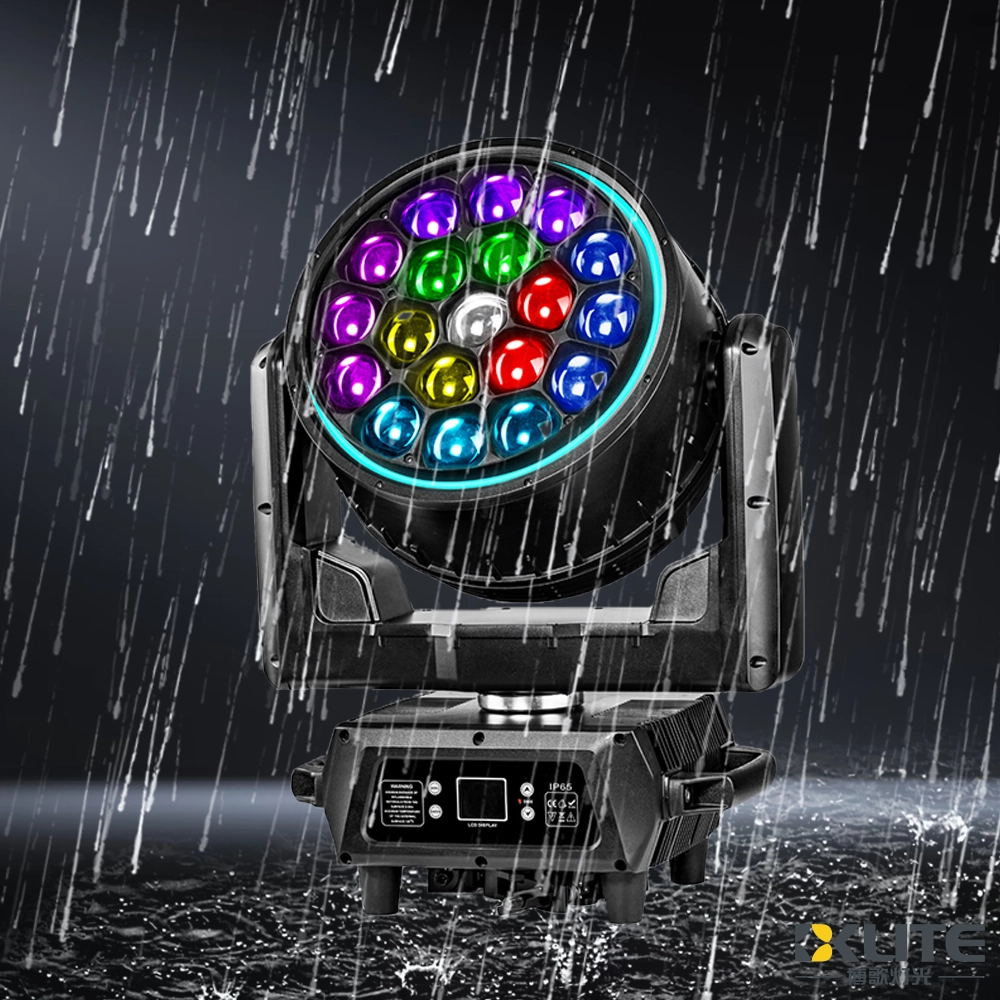
IP65 Waterproof Bee Eye Zoom 19x40W RGBW 4IN1 LED Beam Wash Moving Head Light with LED Ring
BKlite waterproof bee eye moving head light—your reliable choice from top waterproof moving head light manufacturers and suppliers. Ideal for outdoor stage, live event, music festival, this energy-saving fixture ensures powerful, precise illumination for any venue. It delivers powerful, reliable lighting performance in any weather.
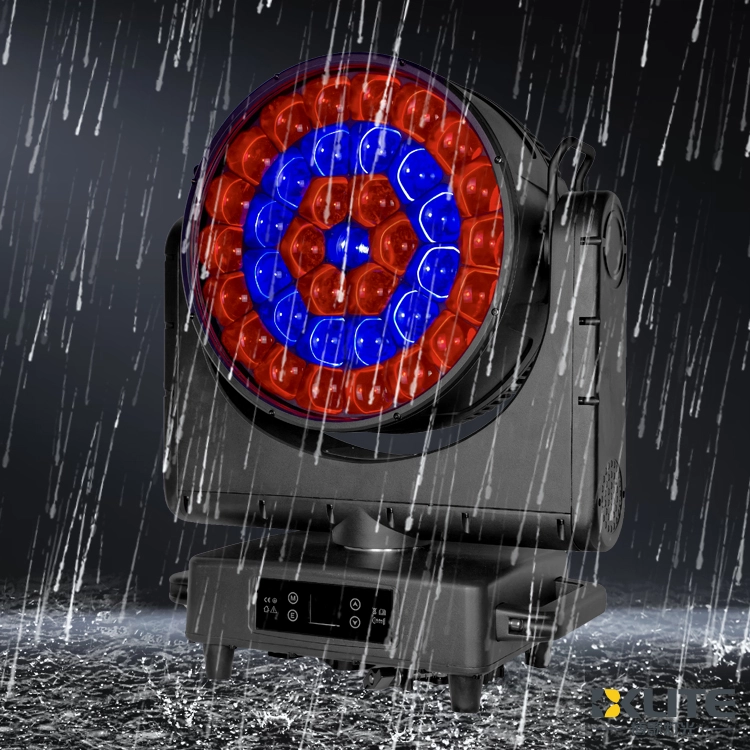
IP65 Waterproof ZOOM Bee Eye 37x40W RGBW 4in1 LED Moving Head Light
As a leading stage lighting equipment supplier with more than 15 years of industry know-how, BKlite brings you the IP65 ZOOM Bee Eye 37*40W RGBW 4in1 LED Moving Head Light (K25 Bee Eye) delivers vibrant, weatherproof lighting with powerful zoom and smooth movement. Ideal for dynamic stage effects, the K25 moving head light ensures stunning RGBW color mixing and reliable outdoor performance.
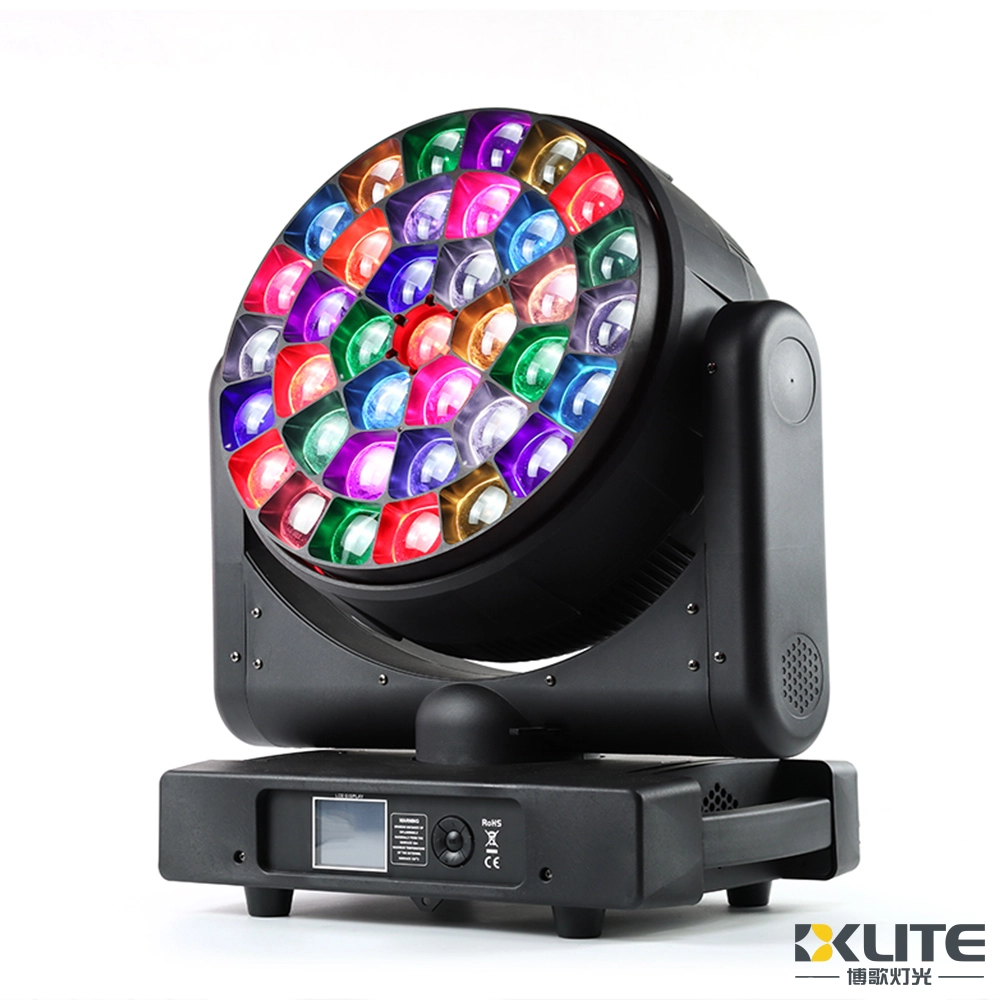
Bee Eye Zoom 37x40W RGBW 4in1 LED Beam Wash Moving Head Light
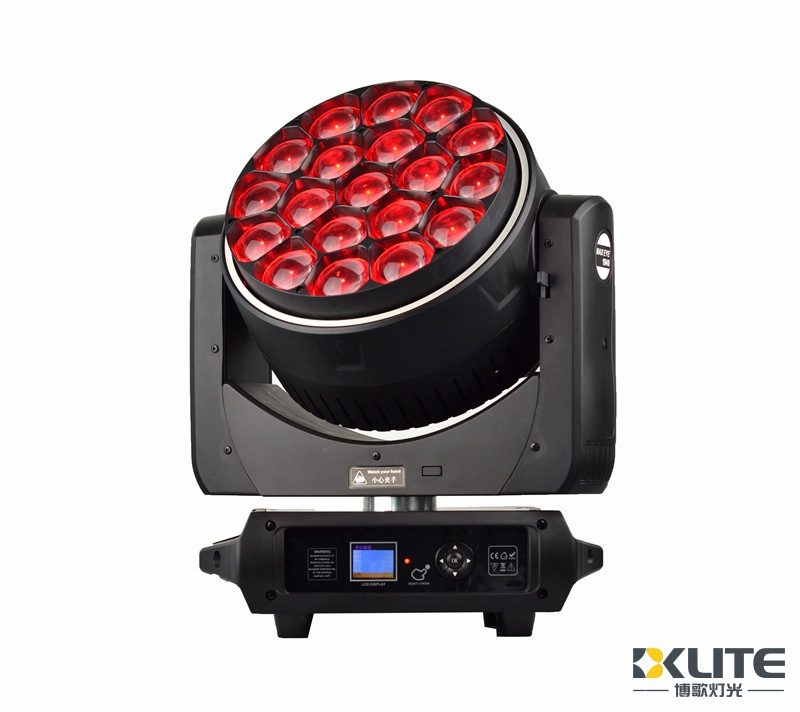
IP20 Bee Eye Zoom 19x40W RGBW 4IN1 LED Beam Wash Moving Head Light with LED Ring
As one of the leading stage lighting equipment suppliers with 15+ years of experience, BKlite launched a new Bee Eye K15 19x40 LED wash light BK-BY1940Z. .
Designed with a simple and sleek appearance, the WASH moving head light is compact, lightweight, and highly portable.
With multiple color effect macros and dynamic effect macros.
Our wash light can be used for versatile lighting options with amazing effect.
It is very good for your lighting projects.
Powerful and shoots very far distances.


Copyright © 2025 BKLITE All Rights Reserved.