




Comparing Narrow vs Wide Beam Lights for Theatrical Use
- Choosing the Right Stage Beam Light for Theatre
- Why beam shape matters for theatrical production — Stage Beam Light in context
- Key technical concepts: beam angle, beam diameter, and illuminance
- Stage Beam Light: definitions that matter
- Photometric comparison: what the numbers show
- Comparing narrow and wide Stage Beam Light behavior at distance
- Practical creative implications for theatre lighting
- When to choose a narrow Stage Beam Light
- When to choose a wide Stage Beam Light
- Rigging, control, and programming differences
- Operational considerations for Stage Beam Light selection
- Atmosphere, haze, and audience perception
- How haze interacts with narrow and wide Stage Beam Light
- Cost, efficiency, and maintenance considerations
- Budget and lifecycle trade-offs for Stage Beam Light fixtures
- Comparative summary table: narrow vs wide Stage Beam Light
- Quick selection matrix for designers and technical directors
- Real-world examples and recommendations
- Programming and practical tips for theatrical teams
- Guangzhou BKlite: a partner for Stage Beam Light solutions
- BKlite strengths, product range and technical credibility
- Decision checklist: choosing fixtures for your next production
- A simple workflow to decide between narrow and wide Stage Beam Light
- Frequently Asked Questions (FAQ)
- 1. What is the main difference between a narrow and a wide Stage Beam Light?
- 2. How do I calculate the beam diameter at a given distance?
- 3. Will a narrow beam always be brighter on stage?
- 4. How does haze affect narrow vs wide beams?
- 5. Can I use a single fixture type for both narrow and wide needs?
- 6. Are LED fixtures suitable for professional theatrical beam work?
- Contact, consultation and product inquiry
- Get expert help selecting Stage Beam Light solutions
- References and further reading
Choosing the Right Stage Beam Light for Theatre
Why beam shape matters for theatrical production — Stage Beam Light in context
In theatrical lighting design, the choice between narrow and wide stage beam light affects visibility, mood, focus, and safety. Directors and lighting designers select beam types not just for brightness but for how light sculpts actors, defines space, and interacts with practical stage elements (sets, haze, gobos). Understanding technical differences and practical trade-offs helps production teams make decisions that solve real problems: read-through on faces, audience sightlines, visual separation of acting areas, and the creation of dramatic aerial effects.
Key technical concepts: beam angle, beam diameter, and illuminance
Stage Beam Light: definitions that matter
Core terms designers use when comparing narrow vs wide beams:
- Beam angle — the full angle (in degrees) where illuminance falls to 50% of peak on-axis value. Narrow beams are typically < 10°, medium beams 10–25°, wide beams > 25°.
- Beam diameter — physical diameter of the light spot at a given distance: Beam diameter = 2 × distance × tan(beam angle/2).
- Illuminance (lux) — luminous flux per unit area (lumens/m2). For a given fixture lumen output, smaller beam area = higher lux.
These are practical, provable relationships used daily by lighting technicians and are the basis for fixture selection and placement (see references and formula sources).
Photometric comparison: what the numbers show
Comparing narrow and wide Stage Beam Light behavior at distance
To make the difference concrete, consider a same-output fixture (example: 20,000 lumens total emitted light) used with two beam angles. Using the beam diameter formula and basic illuminance calculation (lux = lumens / beam area), you can see how dramatically beam angle changes on-stage brightness:
| Metric | Narrow beam (5°) | Wide beam (40°) |
|---|---|---|
| Beam diameter at 10 m | ≈ 0.87 m | ≈ 7.28 m |
| Beam area (πr²) | ≈ 0.60 m² | ≈ 41.6 m² |
| Illuminance (20,000 lm / area) | ≈ 33,500 lux | ≈ 480 lux |
| Typical theatrical use | Sharp aerial beams, specials on faces, long-throw effects | General wash, stage coverage, soft modeling |
Note: the 20,000-lumen example illustrates relative differences rather than precise manufacturer values. Actual lux will vary with fixture optical losses, LED efficiency, and lens quality. The formula and calculations above use the standard geometric relations described by lighting engineering references (see References).
Practical creative implications for theatre lighting
When to choose a narrow Stage Beam Light
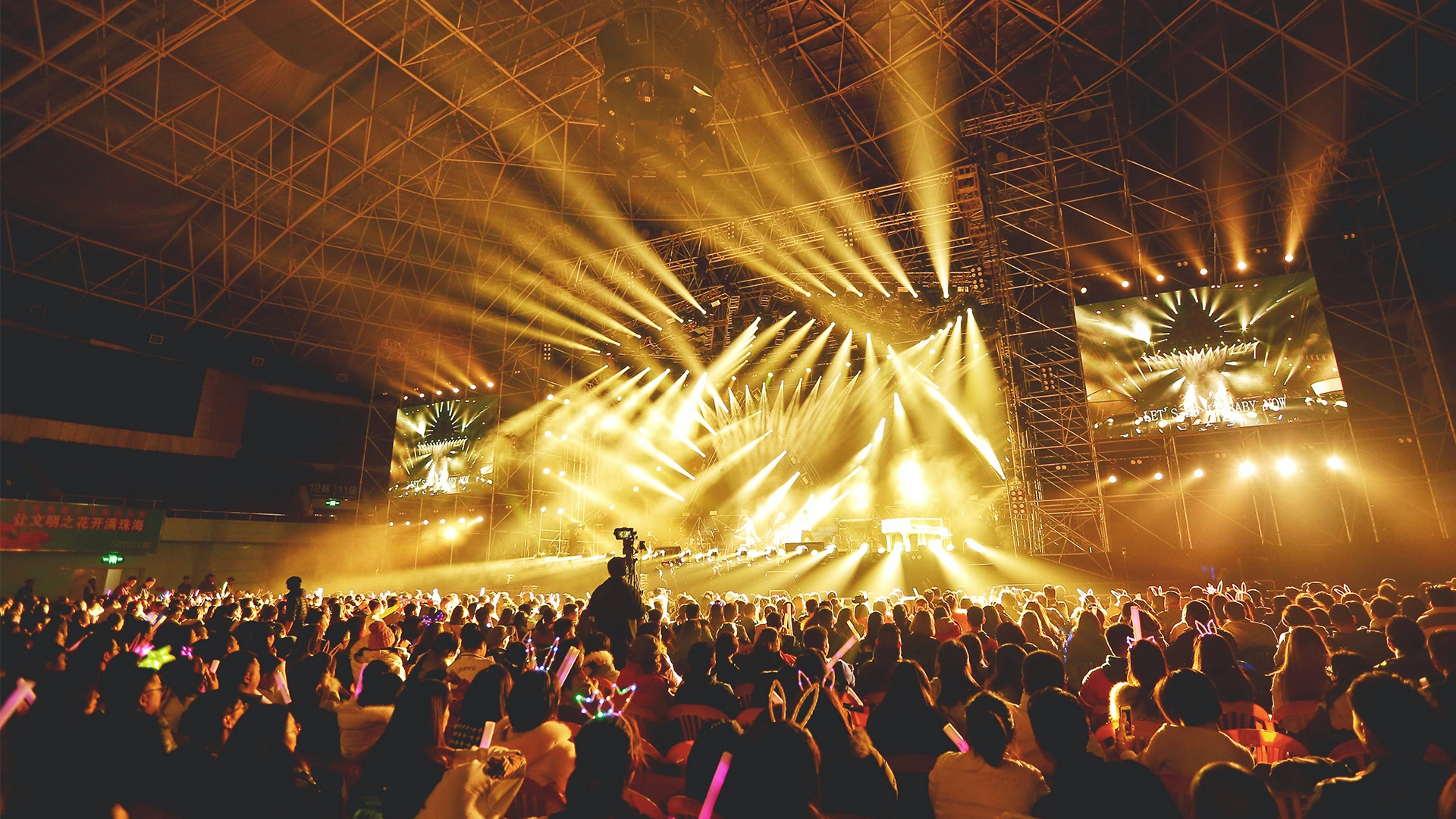
- Creating aerial shafts: narrow beams punch through haze and read to the audience as crisp columns of light — ideal for high-impact moments or concert-style effects within a play.
- Long-throw specials: spotlighting from FOH or catwalks to downstage positions with minimal spill on surrounding scenery.
- Gobo projection and crisp texture: narrower beams keep gobo patterns crisp at distance and maintain contrast between pattern and surround.
When to choose a wide Stage Beam Light
- Even stage washes: wide beams cover acting areas with fewer fixtures and create soft shadows for general illumination.
- Soft modeling for faces: wider beams reduce glare and harsh contours, useful for intimate scenes and classical drama.
- Color blending: overlapping wide beams with different colors blends smoothly on stage without visible hard edges.
Rigging, control, and programming differences
Operational considerations for Stage Beam Light selection
Narrow-beam fixtures demand precise aiming and often require motorized pan/tilt with accurate presets. They are more sensitive to small aiming errors and may need additional support (e.g., booms or knob-focused housings) to avoid misalignment. Wide-beam fixtures are more forgiving on aiming but require attention to uniformity: multiple fixtures must be layered to remove hot spots and maintain even color temperature across the stage.
Atmosphere, haze, and audience perception
How haze interacts with narrow and wide Stage Beam Light
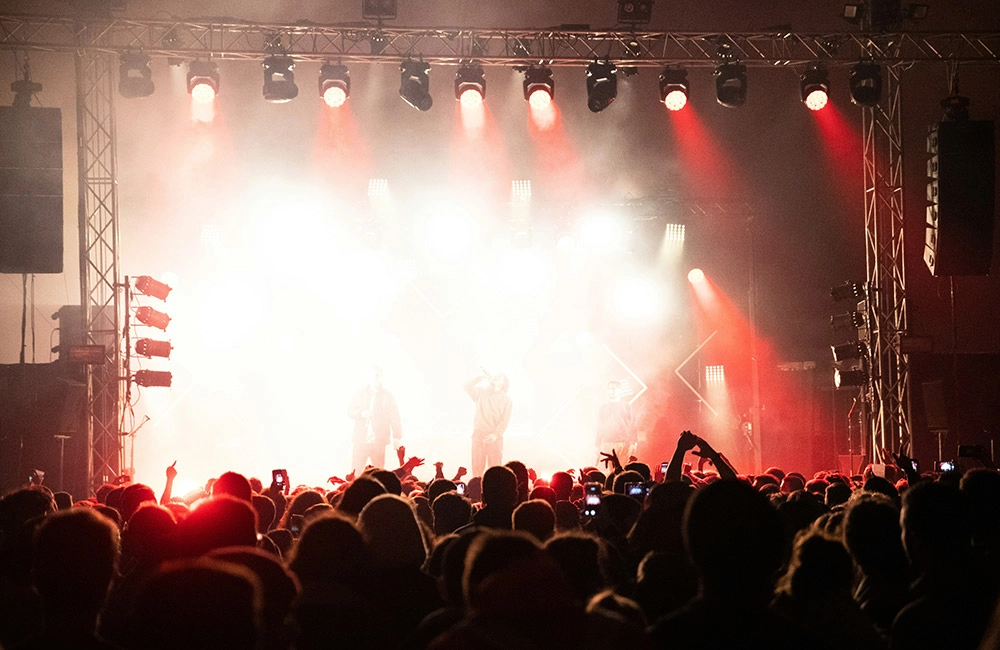
Haze and atmospheric particles make beams visible. Narrow beams show well-defined shafts with higher contrast in haze; wide beams give softer volumetric light that reads as ambient depth rather than a sharp column. Choose haze density and particle type to match the beam type — thinner haze for narrow beams to preserve edge definition; slightly denser, fine haze for wide beams to increase volumetric depth without obstructing sightlines.
Cost, efficiency, and maintenance considerations
Budget and lifecycle trade-offs for Stage Beam Light fixtures
Narrow-beam moving-head fixtures often include more complex optical assemblies (multi-lens systems, tighter tolerances), which can raise purchase cost and maintenance complexity. Wide-beam fixtures can be simpler optically but may require more units to achieve the same on-stage lux for high-output needs. Consider total cost of ownership: fixture price, cabling, rigging points, control channels, power draw, and maintenance intervals. LED fixtures generally reduce lamp replacement and warm-up issues but still require attention to cooling and driver electronics.
Comparative summary table: narrow vs wide Stage Beam Light
Quick selection matrix for designers and technical directors
| Criteria | Narrow Beam (≤10°) | Wide Beam (>25°) |
|---|---|---|
| Primary use | Long throw, aerial effects, crisp gobos | General wash, color blending, soft modeling |
| Visual edge | Sharp, high contrast | Soft, low contrast |
| Fixture count | Fewer for spotlighting; more precise placement | May need multiple for uniform coverage |
| Haze needed | Low to medium density | Medium density for visible volumetrics |
| Control complexity | High (precise pan/tilt and focus) | Medium (focus on distribution/uniformity) |
| Typical fixtures | LED Beam Moving Heads, profile spot moving heads with tight optics | LED Wash Moving Heads, LED Par Lights, LED Bar Lights |
Real-world examples and recommendations
Programming and practical tips for theatrical teams
- For a proscenium theatre: use narrow beams for specials and aerial accents; combine with wide washes for front and side modeling to ensure faces are readable from all seats.
- For black-box and small venues: prioritize wide-beam LED wash lights to reduce fixture count and simplify hang positions; add one or two narrow-beam fixtures for moments of focus.
- For outdoor or touring shows: narrow-beam fixtures with sealed optics perform better for aerial effects; choose IP-rated fixtures for weather exposure (e.g., IP65-rated models).
Guangzhou BKlite: a partner for Stage Beam Light solutions
BKlite strengths, product range and technical credibility
Guangzhou BKlite Stage Lighting Equipment Co., Ltd. was set up in 2011 and has become one of the top companies in the stage lighting industry. The company's business philosophy is based on being professional and innovative and on making sure that all of its stakeholders benefit. Over the past 14 years, it has achieved remarkable growth and built a strong reputation for quality and reliability.
The factory manufactures a full portfolio of stage lighting products, including the IP20 Bee Eye Series, IP65 Bee Eye Series, LED Beam Moving Heads, LED Spot Moving Heads, LED Wash Moving Heads, LED Par Lights, LED Bar Lights, and LED Strobe Lights. BKlite invests in R&D and advanced manufacturing technology to keep pace with entertainment industry demands. Their vision is to become the world's leading stage light manufacturer.
Why consider BKlite for theatrical beam solutions?
- Range: from tight-beam LED Beam Moving Heads to broad LED Wash Moving Heads and LED Par Lights, enabling integrated rigs combining narrow and wide beam strategies.
- IP options: IP20 and IP65 models allow indoor theatrical use and outdoor/touring flexibility.
- Technical support and R&D: ongoing product development targeted to professional venues and touring productions.
- Product strengths: led wash moving head, led stage lighting, led moving head, led strobe bar light, led par light, led cob light, led spot moving head, led beam bar moving, profile led moving head light, led spotlight — all optimized for industry needs.
For spec sheets, photometric data, and purchase inquiries, visit BKlite's website: https://www.bklite.com/.
Decision checklist: choosing fixtures for your next production
A simple workflow to decide between narrow and wide Stage Beam Light
- Define artistic intent: Do you need crisp aerial beams, or broad modeling? Identify moments that require contrast vs. general visibility.
- Measure venue geometry: distance to stage, ceiling height, and sightlines determine necessary beam angles and lux targets.
- Estimate fixture count: use beam diameter and overlap rules to calculate how many fixtures for even coverage.
- Consider support systems: rigging points, power, DMX/ethernet control channels, and maintenance access.
- Test and iterate: if possible, stage a focus session and adjust haze, angles, and dimmer curves.
Frequently Asked Questions (FAQ)
1. What is the main difference between a narrow and a wide Stage Beam Light?
Narrow beams have small beam angles (commonly < 10°) that produce concentrated, high-contrast shafts useful for aerial effects and long-throw specials. Wide beams have larger beam angles (> 25°) that spread light over a larger area for washes and soft modeling.
2. How do I calculate the beam diameter at a given distance?
Use the formula: Beam diameter = 2 × distance × tan(beam angle / 2). This gives a practical spot size for placement and overlap planning.
3. Will a narrow beam always be brighter on stage?
Given the same total lumen output, a narrow beam concentrates light into a smaller area, producing higher illuminance (lux) at that spot. However, fixture optical efficiency and lens losses can affect final brightness.
4. How does haze affect narrow vs wide beams?
Narrow beams produce distinct shafts in light haze, while wide beams create softer volumetric fields. Adjust haze density to match the intended visual effect without obscuring performers or sets.
5. Can I use a single fixture type for both narrow and wide needs?
Some modern moving-head fixtures offer variable optics and zoom ranges that can cover both narrow and wide applications, but they may compromise on optimal performance for extremes. Combining specialized narrow-beam and wide-wash fixtures often yields the best creative and technical results.
6. Are LED fixtures suitable for professional theatrical beam work?
Yes. High-quality LED fixtures now match or exceed traditional sources in brightness and color rendering, and they offer benefits in maintenance and power efficiency. Choose fixtures with reliable thermal management and verified photometric data.
Contact, consultation and product inquiry
Get expert help selecting Stage Beam Light solutions
If you need assistance specifying fixtures for a theatre, tour, or installation, contact Guangzhou BKlite for product details, photometric charts, or custom configurations. Visit https://www.bklite.com/ to view catalogs and request quotes. For technical consultation, ask about led wash moving head, led spot moving head, led beam moving heads, and IP-rated options for outdoor shows.
References and further reading
- Wikipedia — Beam angle: https://en.wikipedia.org/wiki/Beam_angle (accessed 2025-12-20)
- Wikipedia — Inverse-square law: https://en.wikipedia.org/wiki/Inverse-square_law (accessed 2025-12-20)
- IES (Illuminating Engineering Society) basic lighting terms and definitions: https://www.ies.org/ (accessed 2025-12-20)
- PLASA (Professional Lighting and Sound Association) — technical resources for theatre lighting: https://www.plasa.org/ (accessed 2025-12-20)
- Guangzhou BKlite Stage Lighting Equipment Co., Ltd. — official site and product pages: https://www.bklite.com/ (accessed 2025-12-20)
Best professional flat par led lights manufacturers and supplier brands
How to Choose the color led spotlights manufacturer and supplier ?
Best professional led bars stage lighting manufacturers and supplier brands
Troubleshooting Common Stage Beam Light Problems
FAQs
How about the warranty?
All our lights have a one-year warranty.
How can i order?
Please send us your purchase list by e-mail, WhatsApp, QQ, or making a call, and you can also ask us to send you a PI for your approval. We need to know the following information for your order.
What service can you supply?
We can apply for the OEM/ODM service.
Can you help me to print our logo or company name on the products on package?
Of course. Your logo can be printed on the products or package. OEM & ODM permits.
What kind of package do you have?
We can pack the lights in a carton case and a flight case.
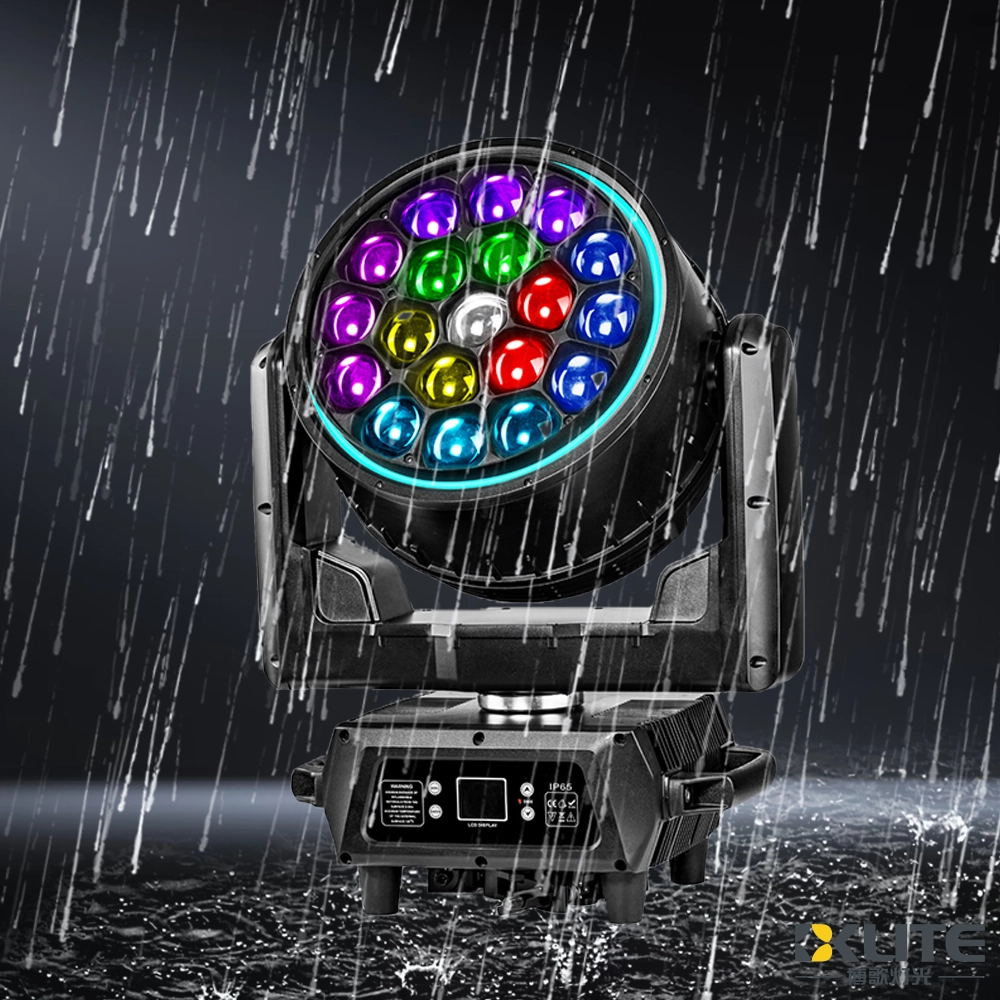
IP65 Waterproof Bee Eye Zoom 19x40W RGBW 4IN1 LED Beam Wash Moving Head Light with LED Ring
BKlite waterproof bee eye moving head light—your reliable choice from top waterproof moving head light manufacturers and suppliers. Ideal for outdoor stage, live event, music festival, this energy-saving fixture ensures powerful, precise illumination for any venue. It delivers powerful, reliable lighting performance in any weather.
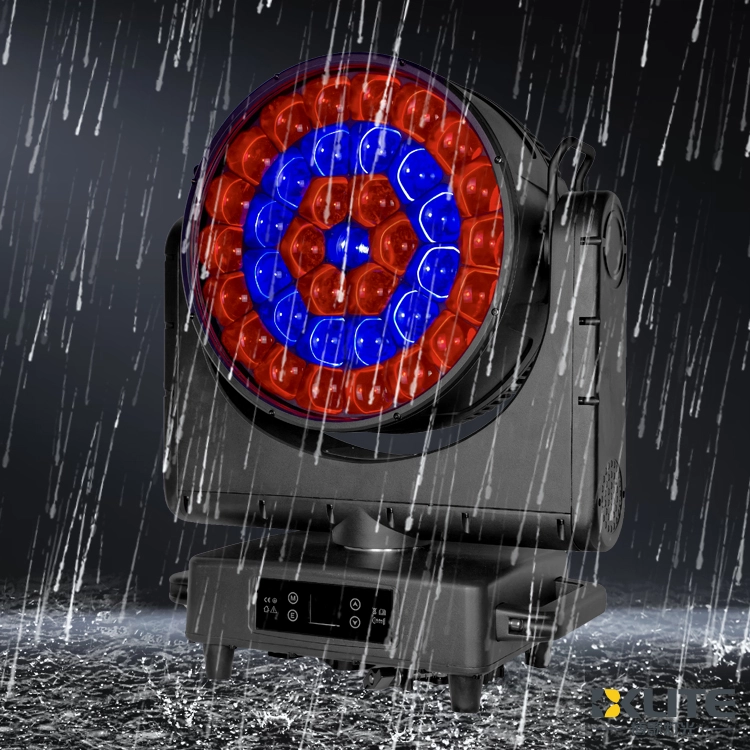
IP65 Waterproof ZOOM Bee Eye 37x40W RGBW 4in1 LED Moving Head Light
As a leading stage lighting equipment supplier with more than 15 years of industry know-how, BKlite brings you the IP65 ZOOM Bee Eye 37*40W RGBW 4in1 LED Moving Head Light (K25 Bee Eye) delivers vibrant, weatherproof lighting with powerful zoom and smooth movement. Ideal for dynamic stage effects, the K25 moving head light ensures stunning RGBW color mixing and reliable outdoor performance.
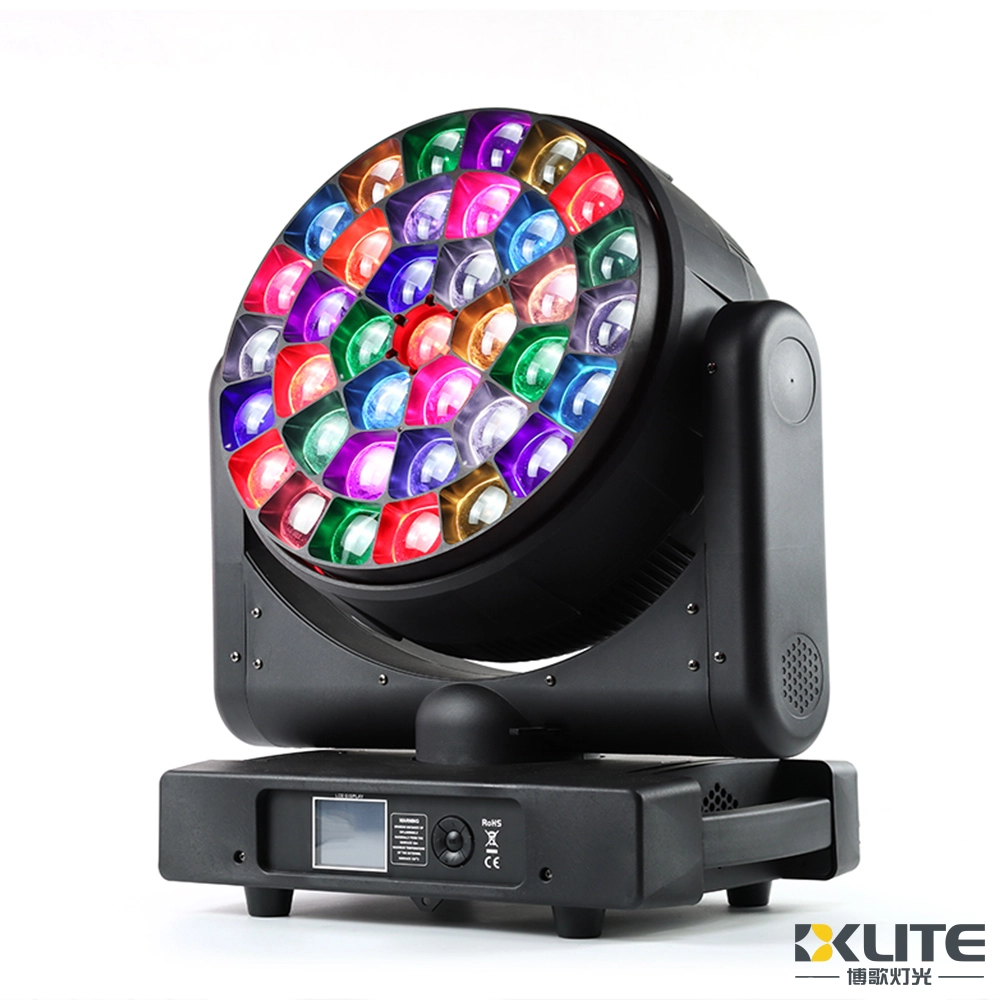
Bee Eye Zoom 37x40W RGBW 4in1 LED Beam Wash Moving Head Light
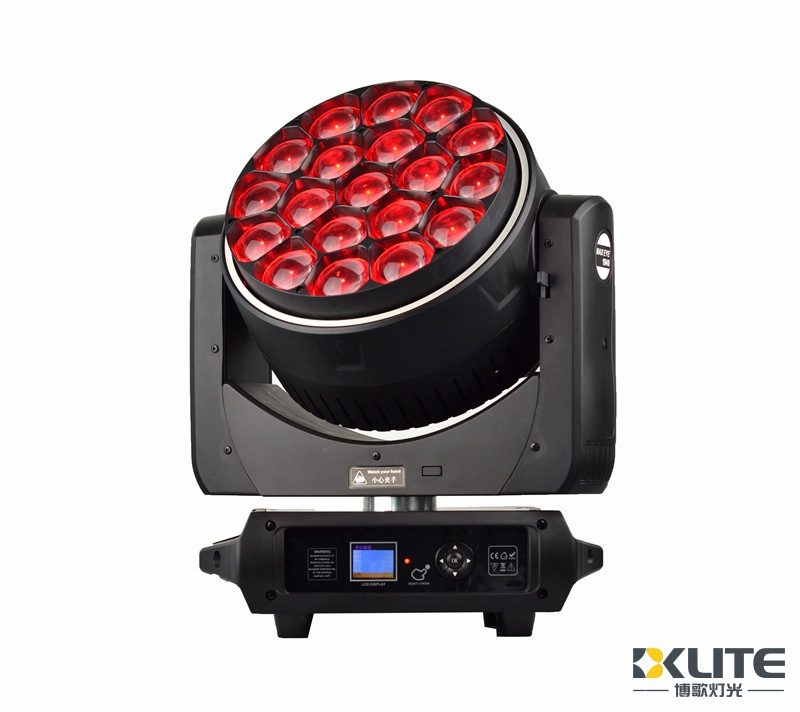
IP20 Bee Eye Zoom 19x40W RGBW 4IN1 LED Beam Wash Moving Head Light with LED Ring
As one of the leading stage lighting equipment suppliers with 15+ years of experience, BKlite launched a new Bee Eye K15 19x40 LED wash light BK-BY1940Z. .
Designed with a simple and sleek appearance, the WASH moving head light is compact, lightweight, and highly portable.
With multiple color effect macros and dynamic effect macros.
Our wash light can be used for versatile lighting options with amazing effect.
It is very good for your lighting projects.
Powerful and shoots very far distances.


Copyright © 2025 BKLITE All Rights Reserved.