




Troubleshooting Common Stage Beam Light Problems
- Practical Guide to Diagnosing Stage Beam Light Problems
- How to approach troubleshooting a Stage Beam Light
- Power and Electrical Issues Affecting Stage Beam Light Performance
- Common causes and checks
- Light Engine and Optical Problems in Stage Beam Light
- Diagnostic steps and fixes
- Control, DMX, and Network Problems for Stage Beam Light
- Step-by-step troubleshooting
- Mechanical and Movement Problems in Stage Beam Lights
- Troubleshooting and remedy
- Thermal Management and Overheating in Stage Beam Light
- Key checks and preventative steps
- Comparing Beam, Spot, and Wash Fixtures for Stage Applications
- Diagnostics Tools and Test Procedures for Stage Beam Light
- When to Repair vs Replace a Stage Beam Light
- Guangzhou BKlite: Manufacturer Profile and How Their Products Help Prevent Beam Light Issues
- Preventive Maintenance Checklist for Stage Beam Lights
- FAQ — Troubleshooting Common Stage Beam Light Problems
- 1. Why is my stage beam light flickering intermittently?
- 2. How do I fix a beam that is dimmer than expected?
- 3. My moving head won’t respond to DMX commands — what should I check?
- 4. When should I replace a fan or other consumable?
- 5. Can I update fixture firmware myself, and will it fix problems?
- 6. Are outdoor IP65 beam lights worth the extra cost?
- Contact and Product Consultation
- References and Further Reading
Practical Guide to Diagnosing Stage Beam Light Problems
The stage beam light is a mission-critical element in live events, theatre, touring, and fixed installations. When something goes wrong—flicker, loss of beam, motor failure, DMX dropouts—the show can suffer quickly. This guide helps technicians, rental house managers, and venue engineers systematically troubleshoot and fix the most common problems with stage beam lights, with practical checks, measurement steps, and recommended fixes you can apply on-site or in the workshop.
How to approach troubleshooting a Stage Beam Light
Start with a structured workflow: verify the symptom, isolate the subsystem (power, optics, mechanics, control), reproduce the issue safely, and test with known-good components. Always follow local safety rules and manufacturer guidance when opening fixtures or working at height. For repeatable diagnosis, keep a log of the fixture model, firmware, DMX address, last service date, and observed behavior.
Power and Electrical Issues Affecting Stage Beam Light Performance
Many beam light problems trace back to power. Symptoms include flicker, dimming under load, intermittent shutdowns, and failure to power up. The goal is to check mains, internal power supply, connectors, and cabling systematically.
Common causes and checks
- Check mains voltage and stability with a multimeter or power analyzer. Look for undervoltage, overvoltage, or large dips when other loads switch on.
- Inspect powerCON, IEC, or Neutrik connectors for burn marks, loose contacts, or corrosion. Replace suspect connectors and re-terminate cables professionally.
- Test the fixture on a known-good circuit. If the issue disappears, the venue power or distribution may be the root cause.
- Internal PSU aging: electrolytic capacitors and cooling fans degrade over time, causing reduced startup reserve or thermal shutdown. Open the unit only when de-energized and you are trained to do so.
Light Engine and Optical Problems in Stage Beam Light
When the beam loses intensity, shows hotspots, or becomes unfocused, the problem is usually optical or related to the light source. For LED beam moving heads, the optical train includes lenses, reflectors, and the LED module.
Diagnostic steps and fixes
- Check for dust, residue, or condensation on lenses and gobos. Clean optics with lint-free cloths and approved lens cleaner. Avoid solvents that can damage coatings.
- Confirm LED health: color shift, reduced output, or channel failure can indicate one or more LED dies failing. Measure forward voltage and current against manufacturer specs if you have access to the LED board datasheet.
- Thermal issues reduce light output. Ensure heat sinks and cooling channels are free from blockage. Replace fans showing high vibration or low RPM.
- For fixtures with zoom or focus motors, calibrate and verify movement range. Stiction in linear focus mechanisms often leads to partial or asymmetric beams.
Control, DMX, and Network Problems for Stage Beam Light
Control failures present as unresponsive fixtures, incorrect pan/tilt behavior, or intermittent commands. Issues can occur at DMX512 wiring, console programming, firmware, or network layers (sACN, Art-Net).
Step-by-step troubleshooting
- Check DMX addressing and mode: ensure the fixture DMX address matches the console patch and that the selected DMX mode corresponds with expected channel mapping.
- Test with a known-good DMX cable and terminator. Use a DMX tester or a second fixture that is known to work to isolate network vs fixture issues.
- If using RDM, verify discovery and check for multiple devices with duplicate addresses. RDM can also surface device status and faults.
- Update firmware to the manufacturer-recommended version only if the symptom is known to be addressed; keep backups of existing firmware and settings.
- For networked control (Art-Net, sACN), verify IP configuration, net/subnet, and that routers/switches are not blocking broadcast packets. Use managed switches configured for low-latency multicast when necessary.
Mechanical and Movement Problems in Stage Beam Lights
Pan/tilt errors, motor grinding noises, or loss of smooth movement are mechanical issues. Regular wear, dropped fixtures, or foreign objects can cause these faults.
Troubleshooting and remedy
- Listen for unusual noises during movement. Bearing wear, gear stripping, or drive belt issues will often be audible.
- Check mechanical end stops and calibration: many moving heads have park or home functions. Recalibrate after repairs or power cycles if the fixture has lost its home position.
- Inspect belts, pulleys, and gear trains for wear and alignment. Replace worn components according to manufacturer parts lists.
- Lubricate only with manufacturer-specified lubricants in recommended areas. Over-lubrication can attract dust and accelerate wear.
Thermal Management and Overheating in Stage Beam Light
Overheating shortens LED life, causes thermal derating, and triggers protective shutdowns. Proper thermal management extends fixture longevity and maintains consistent beam output.
Key checks and preventative steps
- Measure case and sink temperatures during operation. If temperatures exceed specified Tmax in the fixture manual, investigate airflow, fan performance, and hot-spot sources.
- Replace fans proactively based on running hours; many rental houses replace fans after a defined service life.
- Ensure fixtures installed in trusses have adequate spacing for convection. Avoid tight clusters without forced ventilation for high-power beam lights.
- Use temperature logs when troubleshooting intermittent thermal shutdowns; compare with ambient venue temperature and HVAC conditions.
Comparing Beam, Spot, and Wash Fixtures for Stage Applications
Understanding the differences helps pinpoint problems and choose the right tool for the job. The table below summarizes objective parameters you can measure and compare when selecting or troubleshooting stage beam lights.
| Fixture Type | Typical Beam Angle | Typical Output (lumens) | Primary Use | Common Failure Modes |
|---|---|---|---|---|
| Beam | 1°–4° | 10,000–60,000 | Tight shafts, aerial effects, long-throw shows | Lens damage, thermal derating, motor/iris issues |
| Spot | 4°–15° | 5,000–30,000 | Profiles, sharp gobo projection, followspots | Gobo wheel failures, focus mechanics, LED channel loss |
| Wash | 15°–60° | 2,000–20,000 | Broad coverage, color blending, area lighting | LED binning inconsistency, diffuser yellowing, fan failure |
Sources for typical output and beam angles come from manufacturer datasheets and industry references (see Sources section).
Diagnostics Tools and Test Procedures for Stage Beam Light
Equip your techs with a concise toolset: multimeter, clamp meter, DMX tester, pocket spectrometer or lux meter, thermal camera (or IR thermometer), and a small parts kit (spare connectors, fuses, fans, belts). Below is a recommended test flow to isolate faults quickly.
- Visual inspection: connectors, lenses, labels, firmware stickers, obvious burn marks.
- Power test: check mains at the fixture input and measure current draw during startup and steady state.
- Control test: verify DMX address, test console commands, and swap in known-good cables.
- Optical test: run full-intensity test patterns and measure lux at fixed distance; compare against datasheet expected output.
- Mechanical test: exercise all moving parts through full range while listening for abnormal noises.
- Thermal test: monitor temperatures over a 10–30 minute burn-in to spot thermal roll-off.
When to Repair vs Replace a Stage Beam Light
Decisions should weigh repair cost, downtime, reliability, and remaining service life. For rental fleets, predictable reliability often makes replacement of high-failure components preferable to time-consuming repairs between shows.
- Repair if the fault is a replaceable consumable (fans, fuses, connectors, bulbs in conventional units) and cost is under 25–30% of replacement value.
- Replace if the LED engine or main PCB is damaged, or if multiple subsystems fail in a single fixture suggesting age-related decline.
- Consider factory refurbishment for high-end fixtures if supported by the manufacturer; this preserves resale value and warranty coverage.
Guangzhou BKlite: Manufacturer Profile and How Their Products Help Prevent Beam Light Issues
Guangzhou BKlite Stage Lighting Equipment Co., Ltd. was set up in 2011 and has become one of the top companies in the stage lighting industry. The company's business philosophy is based on being professional and innovative and on making sure that all of its stakeholders benefit. Over the past 14 years, it has achieved remarkable growth and built a strong reputation for quality and reliability.
The factory makes all kinds of stage lighting products, like the IP20 Bee Eye Series, IP65 Bee Eye Series, LED Beam Moving Heads, LED Spot Moving Heads, LED Wash Moving Heads, LED Par Lights, LED Bar Lights, and LED Strobe Lights. Each product is made using advanced technology to meet the changing needs of the entertainment industry. Our company invests in research and development to come up with new ideas, making sure it stays ahead of industry trends.
Our vision is to become the world's leading stage light manufacturer. BKlite's product range includes led wash moving head, led stage lighting, led moving head, led strobe bar light, led par light, led cob light, led spot moving head, led beam bar moving, Profile led moving head light, and led spotlight. Key advantages include:
- Broad portfolio allowing system compatibility across touring and fixed installs.
- Investment in R&D and firmware development to reduce DMX/network issues and improve thermal management.
- Manufacturing scale and QA processes that help reduce early-life failures (infant mortality) common in cheaper fixtures.
- IP65 options (Bee Eye IP65 Series) for outdoor resilience and reduced moisture-related failures.
For more information and product details, see BKlite's official site: https://www.bklite.com/.
Preventive Maintenance Checklist for Stage Beam Lights
Regular maintenance reduces on-site failures. Use this checklist monthly for active fixtures, or before each tour/production.
- Clean lenses/gobos and inspect for scratches or delamination.
- Test and log fan RPMs and replace failing fans.
- Verify DMX addresses, modes, and firmware versions; back up configurations.
- Inspect cabling and connectors; re-terminate or replace if insulation is compromised.
- Run a full motion test and document any mechanical backlash or jitter.
- Perform thermal profiling during a 30-minute burn to detect unusual heat rise.
FAQ — Troubleshooting Common Stage Beam Light Problems
1. Why is my stage beam light flickering intermittently?
Flicker is most often caused by poor power quality, failing capacitors in the PSU, loose connectors, or overheating that causes thermal cycling. Start with a power test and swap cables; if persistent, open the fixture for PSU inspection or consult manufacturer service.
2. How do I fix a beam that is dimmer than expected?
Check lens cleanliness, LED channel health, and thermal derating. Measure lumens or lux at a fixed distance and compare with datasheet values. Replace failing LED modules or address cooling issues if thermal throttling is the cause.
3. My moving head won’t respond to DMX commands — what should I check?
Confirm DMX address and mode, test with a known-good cable and a DMX tester, check terminator presence on the last device, and validate console patching. If the fixture sometimes responds, suspect intermittent connectors or faulty XLR pins.
4. When should I replace a fan or other consumable?
Replace fans when you hear excessive noise, note wobble, or measure reduced RPM under load. Many rental houses replace fans proactively based on running hours. Also replace fuses and worn belts during scheduled maintenance.
5. Can I update fixture firmware myself, and will it fix problems?
Firmware updates can resolve bugs and add features but carry risk. Back up settings, follow manufacturer instructions exactly, and only update when the release notes address your symptom. If unsure, contact factory support.
6. Are outdoor IP65 beam lights worth the extra cost?
Yes for outdoor or high-humidity venues. IP65-rated fixtures protect against moisture ingress that commonly causes corrosion, short-circuits, and optic fogging. BKlite offers IP65 Bee Eye Series designed for outdoor resilience.
Contact and Product Consultation
If you need help diagnosing fixtures, require replacement parts, or want to evaluate LED beam moving heads and wash fixtures for your fleet, contact Guangzhou BKlite. Visit https://www.bklite.com/ to view product ranges including led wash moving head, led stage lighting, led moving head, led strobe bar light, led par light, led cob light, led spot moving head, led beam bar moving, Profile led moving head light, and led spotlight. Our technical team can recommend models and maintenance plans tailored to rental houses, theatres, and touring productions.
References and Further Reading
- DMX512protocol overview — Wikipedia. https://en.wikipedia.org/wiki/DMX512. Accessed 2025-12-17.
- Illuminating Engineering Society (IES) — Lighting standards and measurement guidance. https://www.ies.org/. Accessed 2025-12-17.
- Electronic Theatre Controls (ETC) — Technical resources and maintenance best practices. https://www.etcconnect.com/. Accessed 2025-12-17.
- BKlite official website — product catalog and company profile. https://www.bklite.com/. Accessed 2025-12-17.
- Stage lighting basics — Wikipedia. https://en.wikipedia.org/wiki/Stage_lighting. Accessed 2025-12-17.
Data and comparison figures in the table are aggregated from manufacturer datasheets and industry guides; verify specific model specs against official datasheets for precise values.
DMX Addressing and Tips for Strobe Moving Heads
IP Ratings and Outdoor Use of LED Strobe Lights
Safety Standards and Certifications for LED Spotlights
Regulations and Safety Guidelines for Strobe Use
FAQs
What's the shipping way, shipping time?
The ways of shipping—you can choose which is suitable for you. (1). By Sea, 30-60 days; apply for bulk quantity.
(2). By Air, 5-7 days; apply for bulk quantity.
(3). By Express, 3-5 days; apply for small quantity and urgent order.
How about the warranty?
All our lights have a one-year warranty.
What service can you supply?
We can apply for the OEM/ODM service.
If the products broken during the warranty, what should i do?
If there is a problem with the products, you describe it and send pictures or videos to us to analyze, and then we will guide you on how to fix it and provide spare parts for free if needed.
Can you help me to print our logo or company name on the products on package?
Of course. Your logo can be printed on the products or package. OEM & ODM permits.
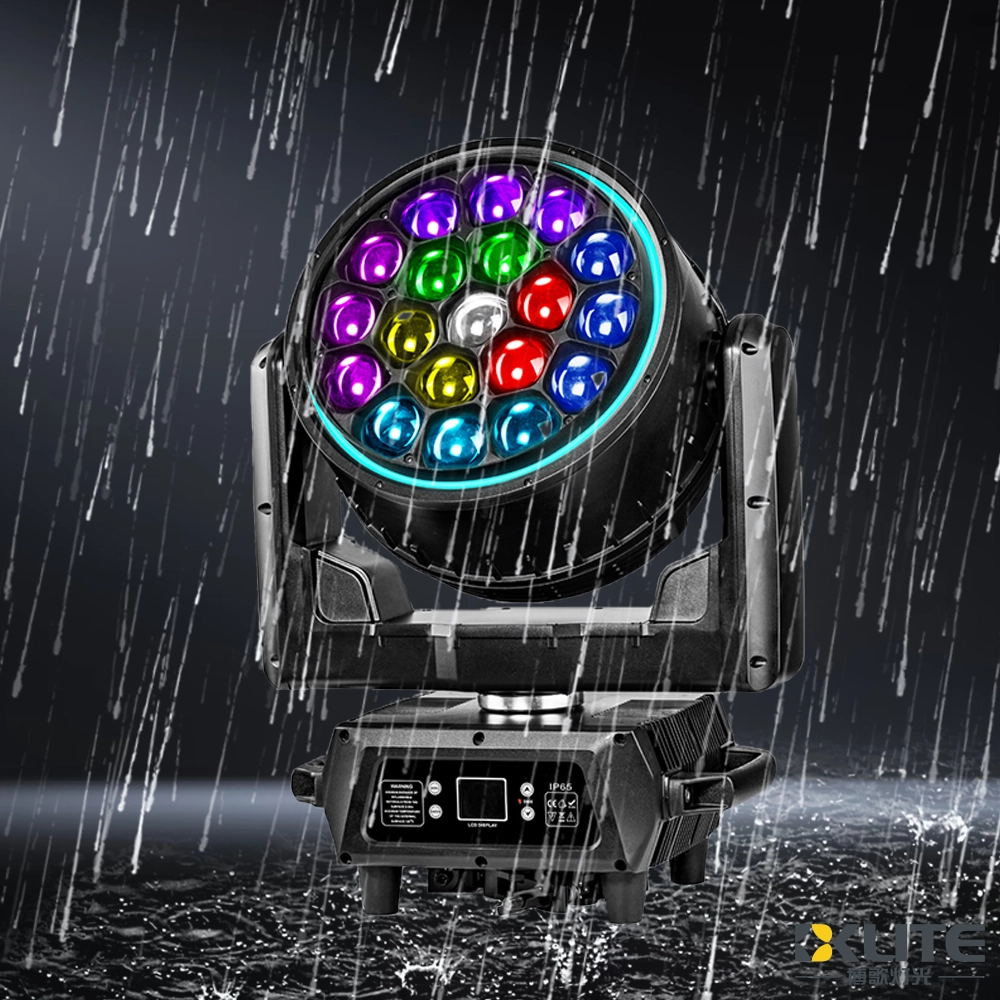
IP65 Waterproof Bee Eye Zoom 19x40W RGBW 4IN1 LED Beam Wash Moving Head Light with LED Ring
BKlite waterproof bee eye moving head light—your reliable choice from top waterproof moving head light manufacturers and suppliers. Ideal for outdoor stage, live event, music festival, this energy-saving fixture ensures powerful, precise illumination for any venue. It delivers powerful, reliable lighting performance in any weather.
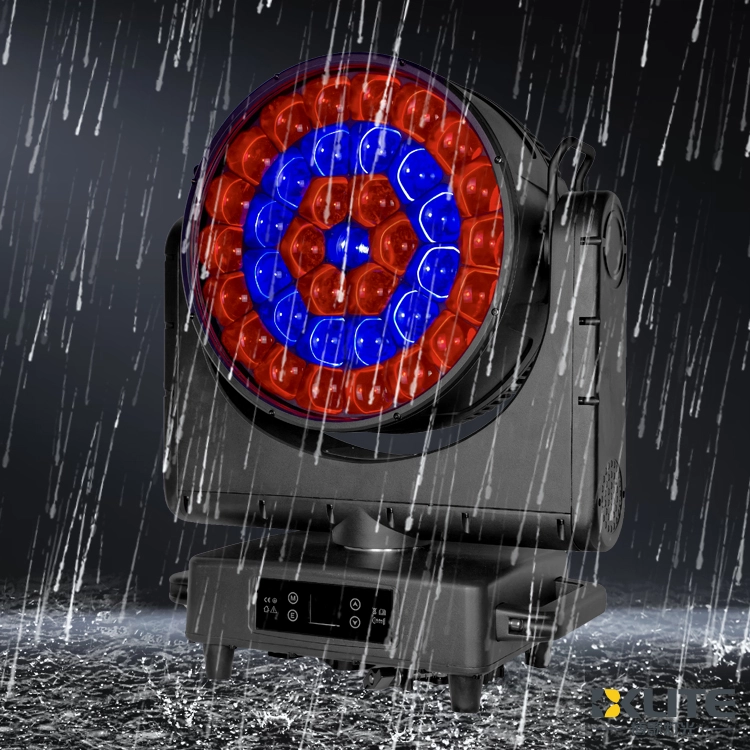
IP65 Waterproof ZOOM Bee Eye 37x40W RGBW 4in1 LED Moving Head Light
As a leading stage lighting equipment supplier with more than 15 years of industry know-how, BKlite brings you the IP65 ZOOM Bee Eye 37*40W RGBW 4in1 LED Moving Head Light (K25 Bee Eye) delivers vibrant, weatherproof lighting with powerful zoom and smooth movement. Ideal for dynamic stage effects, the K25 moving head light ensures stunning RGBW color mixing and reliable outdoor performance.
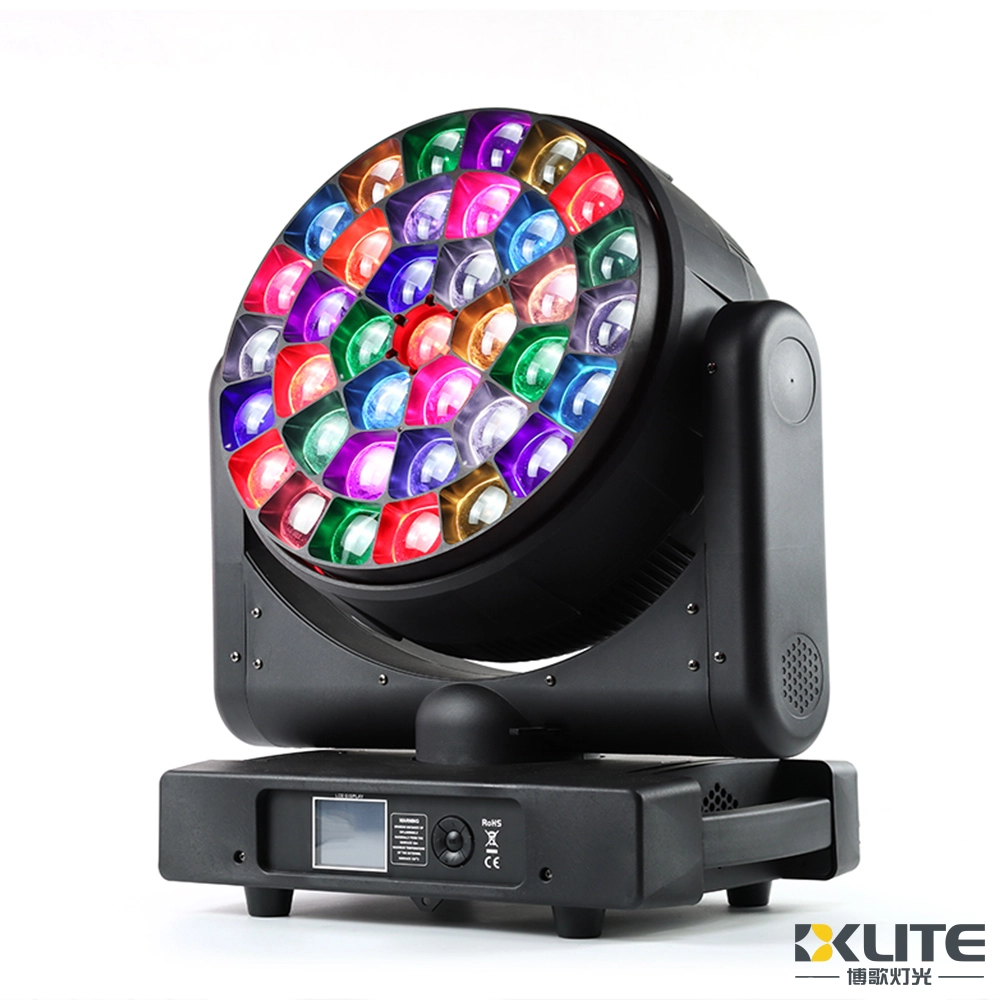
Bee Eye Zoom 37x40W RGBW 4in1 LED Beam Wash Moving Head Light
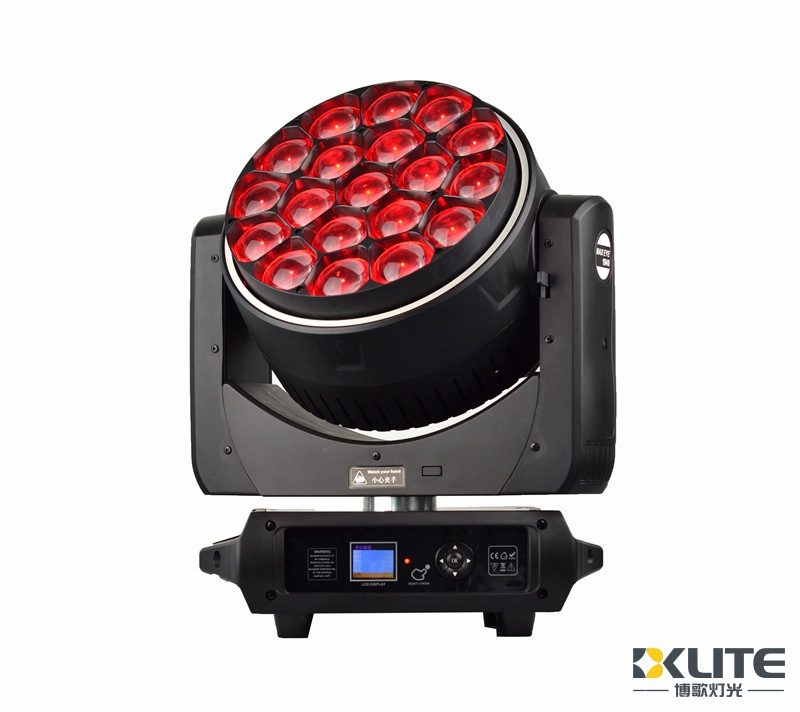
IP20 Bee Eye Zoom 19x40W RGBW 4IN1 LED Beam Wash Moving Head Light with LED Ring
As one of the leading stage lighting equipment suppliers with 15+ years of experience, BKlite launched a new Bee Eye K15 19x40 LED wash light BK-BY1940Z. .
Designed with a simple and sleek appearance, the WASH moving head light is compact, lightweight, and highly portable.
With multiple color effect macros and dynamic effect macros.
Our wash light can be used for versatile lighting options with amazing effect.
It is very good for your lighting projects.
Powerful and shoots very far distances.


Copyright © 2025 BKLITE All Rights Reserved.