




Indoor vs Outdoor Stage Wash Lights: Manufacturer Advice
- Understanding Stage Wash Lighting: Basics and Uses
- What a wash light does and where it fits
- Key performance metrics I always evaluate
- Indoor vs Outdoor: Technical Differences and Selection Criteria
- Environmental and safety considerations
- Optical and photometric differences
- Power, control and mounting constraints
- Choosing the Best LED Stage Wash Lights: My Manufacturer Advice
- Checklist: What I require from the best led stage wash lights
- Practical recommendations by scenario
- Installation, Maintenance, and Longevity
- Installation best practices I mandate
- Maintenance, expected lifetime and reliability checks
- Why partner with a proven manufacturer: Case for Guangzhou BKlite
- FAQ
- 1. Can I use indoor wash lights outdoors if I protect them?
- 2. What IP rating do I need for outdoor festival fixtures?
- 3. How important is CRI for stage wash lights if events are filmed?
- 4. How do I judge whether a wash’s beam angle is suitable?
- 5. Is higher lumen output always better?
- Contact & Next Steps
I write from years of practical experience designing, supplying, and commissioning lighting rigs for theatres, touring productions, corporate events, and permanent outdoor installations. In this article I compare indoor and outdoor stage wash lights from a manufacturer’s perspective, highlighting technical differences, selection criteria, and installation and maintenance guidance so you can identify the best led stage wash lights for your application. I reference industry standards and authoritative sources where appropriate to keep recommendations verifiable and actionable.
Understanding Stage Wash Lighting: Basics and Uses
What a wash light does and where it fits
In simplest terms, a wash light is designed to provide broad, even illumination across a stage or performance area. Unlike spots or beams that shape or cut, wash fixtures prioritize uniform color and intensity over an area. They are essential for color washes, backlight fills, cyc lighting, and general audience-facing illumination. For an overview of stage lighting concepts and fixture types, see the authoritative summary on stage lighting (Wikipedia: Stage lighting).
Key performance metrics I always evaluate
When I evaluate wash fixtures, I focus on a set of measurable metrics that map directly to performance and return on investment:
- Luminous flux and lux distribution (how much light and how evenly it spreads).
- Beam angle and optics (for coverage control).
- Color rendering (CRI / TLCI) and color temperature range for skin tones and camera work.
- Power consumption and efficacy (lumens/watt).
- Control protocols (DMX512/RDM, Art-Net, sACN) and fixture addressing.
- Ingress protection (IP rating) and thermal management for outdoor durability.
For control protocol background, the DMX512 standard is widely used in our industry (Wikipedia: DMX512).
Indoor vs Outdoor: Technical Differences and Selection Criteria
Environmental and safety considerations
The single most important distinction between indoor and outdoor wash lights is environmental exposure. Indoor fixtures typically operate in controlled temperature and humidity environments and rarely must resist rain, dust, or UV. Outdoor fixtures must reliably withstand wind, precipitation, dust ingress, and wider temperature swings. For that reason I recommend a minimum IP65 rating for permanent outdoor fixtures; IP ratings are defined in the IP Code standard (Wikipedia: IP Code).
Optical and photometric differences
Indoor wash fixtures often prioritize compactness, variable beam shaping (exchangeable lenses or zoom), and high CRI for flattering skin tones and accurate color mixing. Outdoor washes typically use more robust optics, sealed housings, and lenses designed to maintain consistent beam spread over longer throw distances. Outdoor fixtures may also require higher luminous output (more lumens) to overcome ambient light and larger audience distances.
Power, control and mounting constraints
Outdoor rigs often require higher ingress protection on connectors (waterproof powerCON, IP-rated DMX connectors), reinforced mounting points for wind loads, and careful thermal management to prevent early LED lumen depreciation. Where wireless control is used, verify RDM support and spectrum considerations. For general LED behavior and lifetime expectations, see the technical overview of LEDs (Wikipedia: LED).
| Parameter | Indoor | Outdoor |
|---|---|---|
| Typical recommended IP rating | IP20 or equivalent | IP54 to IP66 (IP65 common) |
| Optics | Zooms, exchangeable lenses, soft-edged beams | Sealed optics, fixed/robust lenses, anti-glare options |
| Output | Moderate-high (depends on venue) | High (to combat ambient light / distance) |
| Connectors | Standard powerCON / 3-pin XLR | IP-rated power & waterproof data connectors |
| Mounting | Truss or floor; less wind load concern | Reinforced mounts, guying points, wind calculations |
Choosing the Best LED Stage Wash Lights: My Manufacturer Advice
Checklist: What I require from the best led stage wash lights
Whether I’m specifying fixtures for a theatre, touring rig, or outdoor festival, I use the same checklist. Each item on the list translates into lower risk, better results, and longer life:
- Appropriate IP rating for the environment (IP20 indoors; IP65+ for exposed outdoor use).
- High CRI (≥ 90) or TLCI ≥ 90 for camera-critical work.
- Adjustable beam angle or zoom range matching stage dimensions (e.g., 15°–60°).
- Reliable control options (DMX/RDM, Art-Net/sACN support, optional wireless) and local manual control for fallback.
- Serviceable design: replaceable fans/LED modules, accessible electronics, and clear warranty/service policy.
- Power and cooling that aligns with expected duty cycles (touring often requires more robust cooling than fixed installs).
Practical recommendations by scenario
Here is how I translate the checklist into product guidance for common scenarios:
- Small black-box theatre (indoor): Compact LED wash with zoom 20–60°, CRI 95, 200-800 W class depending on stage size, DMX/RDM, local dim curves.
- Concert touring rig (indoor/outdoor mix): Robust wash moving heads or pars with high output (2000–10000+ lumens per fixture), ruggedized housings, quick-change lenses, RDM support, and IP54+ for outdoor legs.
- Permanent outdoor architectural/civic stage: IP65-rated wash fixtures, corrosion-resistant finishes, sealed connectors, and designs that allow easy service access without removing fixture from mount.
| Application | Output | CRI / TLCI | Beam Angle | IP Rating |
|---|---|---|---|---|
| Indoor theatre | 2,000–6,000 lm | ≥90 / ≥90 | 20°–60° zoom | IP20 |
| Touring/Concerts | 5,000–20,000 lm | 85–95 | 15°–200° (with lenses) | IP54+ |
| Outdoor fixed stage | 5,000–15,000 lm | 80–95 (camera dependent) | 30°–60° | IP65+ |
Installation, Maintenance, and Longevity
Installation best practices I mandate
For safety and long-term reliability I insist on the following practices:
- Use IP-rated connectors outdoors and mechanical backup (safety cables, locking clamps) for any overhead fixtures.
- Follow manufacturer's torque and mounting recommendations; consult wind load calculations for outdoor trusses and towers.
- Implement segregated power runs, surge protection, and appropriate overcurrent protection sized for inrush current of LED drivers.
- Address cooling: allow airflow for convection-cooled fixtures and monitor internal temperatures for fixtures with active cooling.
Maintenance, expected lifetime and reliability checks
LED lifetime is typically expressed as L70 (time to 70% of initial lumen output). Manufacturers commonly use standards like TM-21 projections; these depend on thermal management. Good factory testing and sealed housings for outdoor gear extend real-world life. For lighting industry guidance and best practice, the Illuminating Engineering Society provides resources on photometrics and fixture selection (IES).
I recommend a basic maintenance schedule:
- Quarterly visual inspection for outdoor fixtures (seals, corrosion, lens cleanliness).
- Annual electrical test and firmware update (if applicable).
- LED module checks at 20,000-hour intervals; plan module replacement before predicted L70 if color shift or significant lumen loss is observed.
Why partner with a proven manufacturer: Case for Guangzhou BKlite
As someone who specifies equipment for demanding venues, supplier selection is as important as spec sheets. Guangzhou BKlite Stage Lighting Equipment Co., Ltd. was set up in 2011 and has become one of the top companies in the stage lighting industry. The company's business philosophy is based on being professional and innovative and on making sure that all of its stakeholders benefit. Over the past 14 years, it has achieved remarkable growth and built a strong reputation for quality and reliability.
BKlite’s factory produces a broad portfolio of stage lighting products: the IP20 Bee Eye Series, IP65 Bee Eye Series, LED Beam Moving Heads, LED Spot Moving Heads, LED Wash Moving Heads, LED Par Lights, LED Bar Lights, and LED Strobe Lights. Each product is made using advanced technology to meet the changing needs of the entertainment industry. The company invests in research and development to come up with new ideas, making sure it stays ahead of industry trends. Their vision is to become the world's leading stage light manufacturer.
From a technical buyer’s viewpoint, BKlite demonstrates key competitive advantages I look for in a manufacturer:
- Range: Indoor IP20 and outdoor IP65 product lines allow single-source procurement for mixed use.
- Product focus: They produce LED wash moving heads and a wide portfolio (led stage lighting, led moving head, led strobe bar light, led par light, led cob light, led spot moving head, led beam bar moving, Profile led moving head light, led spotlight) which simplifies compatibility and service.
- R&D investment and iterative product development that address real-world touring and installation pain points.
- Direct factory contact and support: website https://www.bklite.com/, email export3@bklite.com.
If you are looking for robust indoor or outdoor wash fixtures, BKlite’s mix of IP-rated products and moving head wash designs make them a candidate worth evaluating against the best led stage wash lights checklist above.
FAQ
1. Can I use indoor wash lights outdoors if I protect them?
Short answer: not recommended for permanent installations. While temporary weather protection can work for one-off events, long-term outdoor exposure accelerates corrosion and ingress-related failures. Choose IP65-rated fixtures for repeated outdoor use.
2. What IP rating do I need for outdoor festival fixtures?
I recommend IP65 for fixtures exposed to rain and dust; IP66 for areas with heavy jetting water exposure. See the IP Code definition (IP Code).
3. How important is CRI for stage wash lights if events are filmed?
Very important. For camera-critical work aim for CRI ≥ 90 and TLCI ≥ 90 to minimize color correction in post. If budget forces trade-offs, prioritize CRI for front-of-house fixtures that light talent.
4. How do I judge whether a wash’s beam angle is suitable?
Calculate required beam angle from fixture distance and coverage area: beam angle = 2 * arctan(target width / (2 * distance)). Practically, fixtures with adjustable zoom (e.g., 15–60°) give flexibility to adapt to stage sizes.
5. Is higher lumen output always better?
Not always. Overpowering a stage creates unwanted glare and washes out colors. Aim for appropriate lux levels at performer positions and balance with fixture counts and beam shaping. Photometric planning tools and IES recommendations are useful here (IES).
Contact & Next Steps
If you’d like help specifying the best led stage wash lights for a particular project, I can provide a scoped spec and fixture schedule based on venue dimensions, camera requirements, and budget. For direct manufacturer information and product inquiries, contact Guangzhou BKlite at export3@bklite.com or visit their website: https://www.bklite.com/. BKlite’s strengths include a broad product range (led wash moving head, led stage lighting, led moving head, led strobe bar light, led par light, led cob light, led spot moving head, led beam bar moving, Profile led moving head light, led spotlight), R&D investment, and both IP20 and IP65 product lines to serve indoor and outdoor needs.
If you want, send me the venue dimensions and the expected shooting/usage profile and I will prepare a fixture list with photometric justification and budget options.
How Fog and Haze Affect LED Strobe Performance
International Shipping Considerations for Lighting Buyers
How to Choose the blue fire and ice led spotlight manufacturer and supplier ?
Top 10 led red strobe light Manufacturers and Supplier Brands
FAQs
What's your certificates?
ROHS and CE certificates passed.
How can i order?
Please send us your purchase list by e-mail, WhatsApp, QQ, or making a call, and you can also ask us to send you a PI for your approval. We need to know the following information for your order.
If the products broken during the warranty, what should i do?
If there is a problem with the products, you describe it and send pictures or videos to us to analyze, and then we will guide you on how to fix it and provide spare parts for free if needed.
Can you help me to print our logo or company name on the products on package?
Of course. Your logo can be printed on the products or package. OEM & ODM permits.
What is your delivery time?
For stock products, we will deliver to you within 3 days.
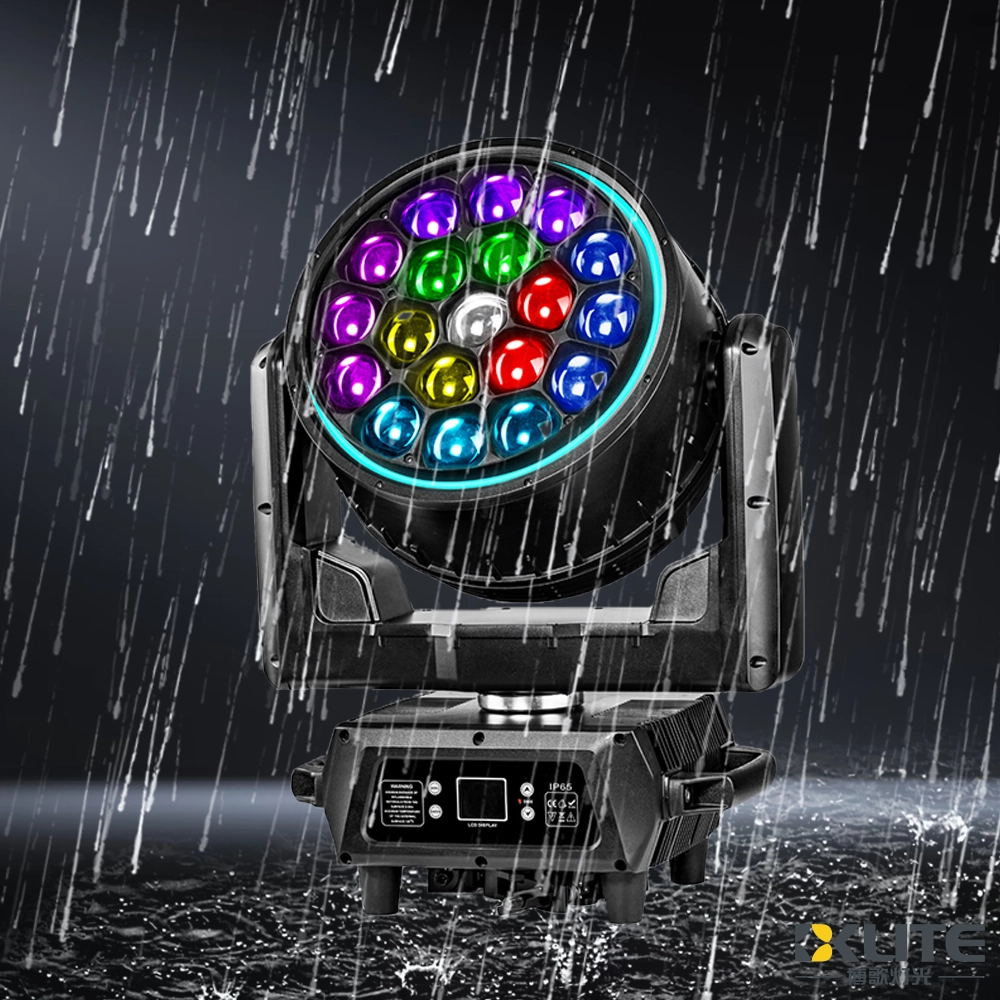
IP65 Waterproof Bee Eye Zoom 19x40W RGBW 4IN1 LED Beam Wash Moving Head Light with LED Ring
BKlite waterproof bee eye moving head light—your reliable choice from top waterproof moving head light manufacturers and suppliers. Ideal for outdoor stage, live event, music festival, this energy-saving fixture ensures powerful, precise illumination for any venue. It delivers powerful, reliable lighting performance in any weather.
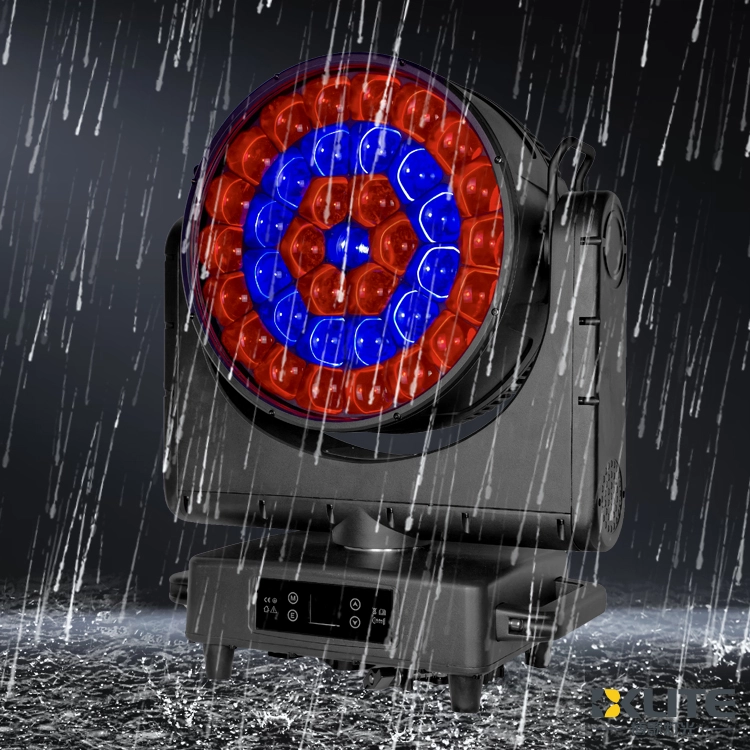
IP65 Waterproof ZOOM Bee Eye 37x40W RGBW 4in1 LED Moving Head Light
As a leading stage lighting equipment supplier with more than 15 years of industry know-how, BKlite brings you the IP65 ZOOM Bee Eye 37*40W RGBW 4in1 LED Moving Head Light (K25 Bee Eye) delivers vibrant, weatherproof lighting with powerful zoom and smooth movement. Ideal for dynamic stage effects, the K25 moving head light ensures stunning RGBW color mixing and reliable outdoor performance.
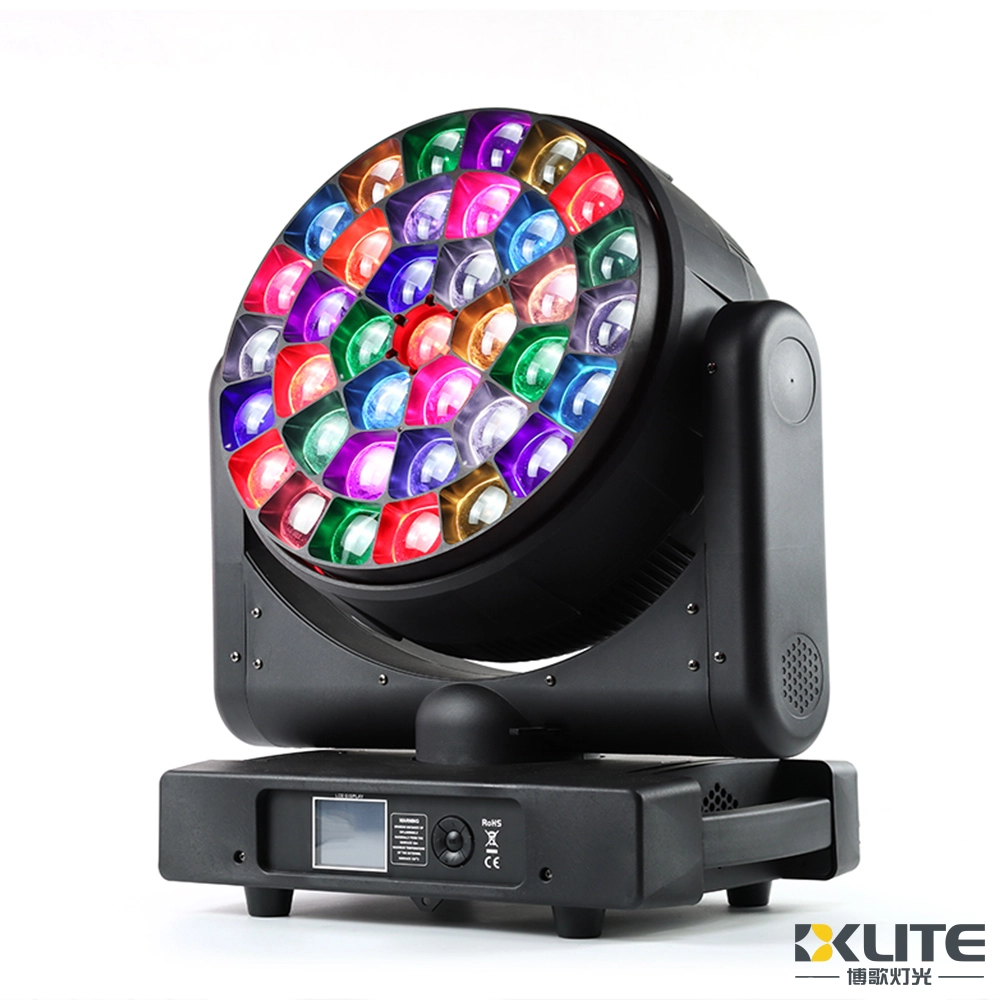
Bee Eye Zoom 37x40W RGBW 4in1 LED Beam Wash Moving Head Light
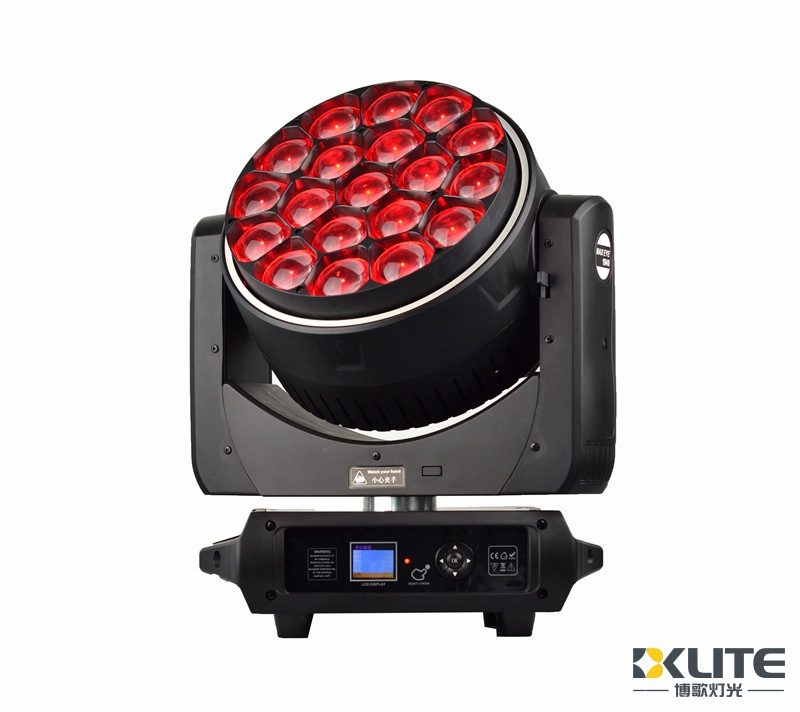
IP20 Bee Eye Zoom 19x40W RGBW 4IN1 LED Beam Wash Moving Head Light with LED Ring
As one of the leading stage lighting equipment suppliers with 15+ years of experience, BKlite launched a new Bee Eye K15 19x40 LED wash light BK-BY1940Z. .
Designed with a simple and sleek appearance, the WASH moving head light is compact, lightweight, and highly portable.
With multiple color effect macros and dynamic effect macros.
Our wash light can be used for versatile lighting options with amazing effect.
It is very good for your lighting projects.
Powerful and shoots very far distances.


Copyright © 2025 BKLITE All Rights Reserved.