




Installing LED Strobe Lights Safely on Trusses
- Understanding truss systems and load ratings
- Types of truss and their load characteristics
- Calculating point loads versus distributed loads
- Safety factors and working load limits
- Choosing and preparing LED strobe fixtures for truss mounting
- Fixture selection: weight, shape, power and control
- Mounting hardware: clamps, safety cables and rated shackles
- Electrical and thermal considerations
- Safe installation procedures
- Pre-installation checks and PPE
- Step-by-step mounting procedure
- Testing, commissioning and photobiological safety
- Common risks, inspection and maintenance
- Common installation mistakes and how to avoid them
- Inspection and maintenance schedule
- Emergency procedures for fixture failure
- Practical rigging data and recommended safety factors
- Manufacturer choice and product considerations: why it matters
- Why choose a reputable manufacturer
- Case in point: Guangzhou BKlite
- BKlite strengths and recommended product lines for truss-mounted strobes
- Final recommendations and checklist
- Quick pre-rig checklist
- When to bring in specialists
- FAQs
- 1. What is the minimum safety factor I should use when hanging LED strobes?
- 2. Do LED strobes need safety cables?
- 3. How do I reduce the risk of triggering photosensitive seizures with strobe effects?
- 4. Can I hang multiple LED strobe fixtures close together on a truss?
- 5. Who is qualified to rig and install truss-mounted strobes?
- 6. How often should rigging hardware be inspected?
- Contact and next steps
I’ve spent more than a decade designing and supervising installations that involve led lights with strobe effects on trusses — from small theatre rigs to touring productions. In this article I summarize the critical considerations to install these fixtures safely: truss selection and load calculations, fixture and hardware choices, electrical and photobiological safety, proper step‑by‑step rigging, routine inspection, and emergency procedures. Where helpful, I reference established guidance from recognized authorities such as the Entertainment Technician Certification Program (ETCP) and OSHA to make recommendations verifiable and actionable.
Understanding truss systems and load ratings
Types of truss and their load characteristics
Trusses used in live events are normally aluminum triangular (e.g., F34, F44) or box truss sections made to specific load tables by manufacturers. Knowing whether you have a triangular truss, box truss, or an engineered custom system is the first step: material, span length, and support points determine allowable loads and deflection. For a technical overview of truss structures in engineering, see Wikipedia - Truss.
Calculating point loads versus distributed loads
LED strobe fixtures impose point loads where clamps attach. Conversely, a lighting batten with multiple strobe fixtures distributes weight. When I assess a rig, I map each fixture’s weight and center of gravity, then convert those into equivalent point loads at the truss nodes. You must use the truss manufacturer’s load tables or structural engineer calculations for spans and support spacing rather than guessing. For credentialed guidance on rigging and load calculations, see the ETCP resources at etcp.plasa.org.
Safety factors and working load limits
Industry practice applies safety factors to account for dynamic loading and uncertainty. Typical entertainment rigging uses safety factors between 5:1 and 8:1 depending on the component and application. That means a clamp or shackle with a stated Working Load Limit (WLL) of 500 kg should have an breaking strength many times higher. Always choose hardware whose WLL comfortably exceeds the imposed loads when combined with environmental or dynamic effects. OSHA fall-protection and material-handling regulations provide baseline expectations for personal safety and lifting equipment: OSHA.
Choosing and preparing LED strobe fixtures for truss mounting
Fixture selection: weight, shape, power and control
When selecting led lights with strobe for truss mounting, key spec items are: weight (kg), overall dimensions (for clamp placement), mounting points or yoke options, power draw (W), DMX/ethernet control interfaces, and cooling requirements. Lightweight LED strobes can reduce truss load but always evaluate total rig weight including cables and accessories. For DMX control compatibility and standards, see the DMX512 overview: Wikipedia - DMX512.
Mounting hardware: clamps, safety cables and rated shackles
Use industry-rated lighting clamps (e.g., half couplers, omega clamps) with matching bolts and safety cables. Safety cables are mandatory for every fixture as a secondary attachment. Select shackles and hardware rated for overhead lifting and that display WLL or traceable certification. As a rule, never use unmarked or improvised hardware for overhead rigging.
Electrical and thermal considerations
LED strobes are more efficient than discharge or xenon strobes but still produce heat in electronics. Ensure fixtures have adequate ventilation and are not packed tightly where heat will accumulate. Calculate circuit loading, considering inrush current if fixtures have capacitive supplies; group fixtures on circuits to avoid nuisance breakers. For permanent installations, follow local electrical codes and employ a licensed electrician for mains connections.
Safe installation procedures
Pre-installation checks and PPE
Prior to lifting any fixtures, I perform a site walkthrough: confirm truss certifications, inspect the truss for visible damage or corrosion, verify rated load capacity at the planned hung positions, and check that the structure supporting the truss (bars, chain hoists, motors) is properly rated. Personal protective equipment (PPE) should include helmet, gloves, eye protection, and when working at height, appropriate fall arrest (full-body harness, lanyard, SRL) per OSHA fall protection standards: OSHA - Fall Protection. Only ETCP- or otherwise qualified riggers should perform overhead work on trusses: ETCP.
Step-by-step mounting procedure
Below is a standard sequence I follow on most installs:
- Verify fixture weights and positions on the rigging plot.
- Confirm clamp type and orientation; test-fit clamps on a spare truss span to confirm clearance and access to bolts.
- Attach clamp to fixture yoke or bracket while fixture is still on the ground; fit safety cable and secondary retention.
- Hoist the fixture to the desired location using a qualified team or motorized hoist; do not rely solely on ladders to attach heavy fixtures at height.
- Tighten clamp hardware to manufacturer torque values; secure with safety clips or locking hardware where required.
- Install safety cable around truss and back to fixture anchor point, ensuring no slack that could allow the fixture to swing free.
- Dress power and data cables to avoid creating trip hazards or extra load on the fixture. Use proper cable management (ties, coiling) and route away from clamp bolts.
- Power up incrementally and verify that inrush does not trip breakers; check control signals and strobe functions.
Testing, commissioning and photobiological safety
After physical installation, run commissioning tests: DMX addressing, strobe rate, intensity sweep, and thermal monitoring under expected run-time. Importantly, strobing lights can trigger photosensitive epilepsy in small percentages of the population. Provide event organizers with warning signage and pre-show notices when intense strobe effects are used. For medical guidance on photosensitivity and seizures, see the Epilepsy Foundation: Epilepsy.com - Photosensitivity.
Common risks, inspection and maintenance
Common installation mistakes and how to avoid them
Errors I see repeatedly include underestimating total load (fixtures + cabling), using non-rated hardware, inadequate secondary restraints (safety cables), and poor cable dressing that creates leverage around clamps. Avoid shortcuts: measure, calculate, document and have a second qualified person check critical steps.
Inspection and maintenance schedule
Establish a written inspection routine. My standard schedule for touring or rental fixtures is:
- Before each load-in: visual check of clamps, safety cables, and electrical connections.
- Monthly (or after heavy shows): inspect internal wiring, fan operation, and fixture mounting points.
- Annual: full teardown inspection and test of all rigging hardware by a competent rigger or manufacturer service center.
Emergency procedures for fixture failure
Have an emergency plan: if a fixture detaches or shows catastrophic failure, clear the area below the truss immediately, secure power to affected circuits, and involve a qualified rigging team to remove or replace the fixture safely. Document any failures and report them to the fixture manufacturer for analysis.
Practical rigging data and recommended safety factors
Below is a compact reference table I use during planning. These are conservative, industry-accepted ranges; always confirm specifics with component manufacturers and a structural engineer when necessary.
| Component | Typical Recommended Safety Factor | Notes / Source |
|---|---|---|
| Lighting clamps and couplers | 5:1 | Common entertainment rigging practice; ensures WLL well above working loads. See ETCP guidance: etcp.plasa.org. |
| Secondary safety cables (static) | 5:1 | Designed to arrest a dropped fixture; must be rated for overhead use. |
| Lifting slings and hoist chains | 5:1 to 7:1 | Follow manufacturer and local lifting standards; OSHA and industry guides apply. |
| Structural support (building/roof) | Engineer-specified (commonly ≥3:1 for static but determined case-by-case) | Always involve a structural engineer for permanent or roof-mounted installations. See OSHA: osha.gov. |
These factors align with PLASA and ETCP expectations for entertainment rigging; always reference component-specific ratings and documentation from suppliers.
Manufacturer choice and product considerations: why it matters
Why choose a reputable manufacturer
Reliable product documentation, traceable test data, and consistent build quality reduce risk. Trusted manufacturers publish detailed weight, WLL attachment points, power draw, and cooling specifications that make planning straightforward and safe.
Case in point: Guangzhou BKlite
Guangzhou BKlite Stage Lighting Equipment Co., Ltd. was set up in 2011 and has become one of the top companies in the stage lighting industry. The company's business philosophy is based on being professional and innovative and on making sure that all of its stakeholders benefit. Over the past 14 years, it has achieved remarkable growth and built a strong reputation for quality and reliability.
The factory makes all kinds of stage lighting products, like the IP20 Bee Eye Series, IP65 Bee Eye Series, LED Beam Moving Heads, LED Spot Moving Heads, LED Wash Moving Heads, LED Par Lights, LED Bar Lights, and LED Strobe Lights. Each product is made using advanced technology to meet the changing needs of the entertainment industry. Our company invests in research and development to come up with new ideas, making sure it stays ahead of industry trends.
Our vision is to become the world's leading stage light manufacturer. Visit our website at https://www.bklite.com/ or contact us at export3@bklite.com for product specs, CAD files, and certified test reports.
BKlite strengths and recommended product lines for truss-mounted strobes
From my assessment, BKlite offers several advantages for safe truss installations:
- Comprehensive product range (led wash moving head, led stage lighting, led moving head, led strobe bar light, led par light, led cob light, led spot moving head, led beam bar moving, Profile led moving head light, led spotlight) allowing consistent control protocols and spare-part strategies.
- Clear specification sheets for weight, power, and mounting points that support accurate load calculations.
- Investment in R&D which helps keep photometric performance and cooling designs effective for long runs and touring.
If you plan to rig multiple led lights with strobe, working with a manufacturer that provides CAD models and certified test reports (temperature, photometric, ingress protection for IP-rated fixtures) simplifies structural calculations and compliance checks.
Final recommendations and checklist
Quick pre-rig checklist
- Confirm fixture weights and obtain manufacturer mounting points.
- Verify truss and support ratings with manufacturer documentation or structural engineer sign-off.
- Use rated clamps, bolts and safety cables; ensure WLLs and safety factors meet or exceed recommended values.
- Use qualified riggers and adhere to PPE and fall protection requirements (ETCP/OSHA recommended).
- Provide safety notices for strobe use and check for potential photosensitivity issues with event stakeholders.
When to bring in specialists
Engage a structural engineer for permanent installations, an ETCP-certified rigger for complex overhead work, and the fixture manufacturer for any ambiguous mounting questions or unusual orientations. For touring rigs, include regular inspection slots in the production schedule.
FAQs
1. What is the minimum safety factor I should use when hanging LED strobes?
Industry practice for lighting hardware is a minimum safety factor of 5:1 for clamps and secondary supports. Specific applications may require higher factors; always follow manufacturer guidance and ETCP/PLASA recommendations (etcp.plasa.org).
2. Do LED strobes need safety cables?
Yes. Every overhead-mounted fixture must have a secondary restraint (safety cable) rated for overhead use. Safety cables protect against clamp failure and are internationally accepted practice.
3. How do I reduce the risk of triggering photosensitive seizures with strobe effects?
Limit flash frequency and duty cycle, provide clear warnings to patrons and staff, and avoid prolonged high‑intensity strobing in public-facing areas. Consult the Epilepsy Foundation for medical guidance: Epilepsy.com.
4. Can I hang multiple LED strobe fixtures close together on a truss?
Yes, but you must account for cumulative weight, wind loading (for outdoor sites), heat dissipation, and cable management. Use the truss manufacturer’s distributed load tables and ensure attachment points do not create concentrated overstress.
5. Who is qualified to rig and install truss-mounted strobes?
Rigging should be performed by trained professionals with relevant certification (ETCP certification is widely recognized). Those working at height must use appropriate fall protection equipment and follow OSHA or local regulations.
6. How often should rigging hardware be inspected?
Visual checks should occur before each load-in. More detailed inspections (including NDT where appropriate) should be performed annually or per manufacturer guidelines. Replace any hardware that shows deformation, corrosion or thread damage.
Contact and next steps
If you need product specifications, CAD models, or certified load information for led strobe fixtures, I recommend contacting Guangzhou BKlite directly. They offer a broad range of stage lighting (led wash moving head, led stage lighting, led moving head, led strobe bar light, led par light, led cob light, led spot moving head, led beam bar moving, Profile led moving head light, led spotlight) and can supply the documentation required for safe truss installations. Visit https://www.bklite.com/ or email export3@bklite.com with your rigging plot and installation questions. I or the BKlite technical team can review your plan and recommend specific fixtures and rigging hardware to meet safety and performance targets.
Wholesale auto led strobe lights manufacturer and supplier
Best church stage lights manufacturers and supplier brands
Renting vs Buying Stage Beam Lights: Cost and Benefits
Best professional flat par led lights manufacturers and supplier brands
FAQs
What is your delivery time?
For stock products, we will deliver to you within 3 days.
What's your certificates?
ROHS and CE certificates passed.
Can you help me to print our logo or company name on the products on package?
Of course. Your logo can be printed on the products or package. OEM & ODM permits.
When will you ship the product after I send the money?
It depends the order.Small order will take 3-5 days.
If the products broken during the warranty, what should i do?
If there is a problem with the products, you describe it and send pictures or videos to us to analyze, and then we will guide you on how to fix it and provide spare parts for free if needed.
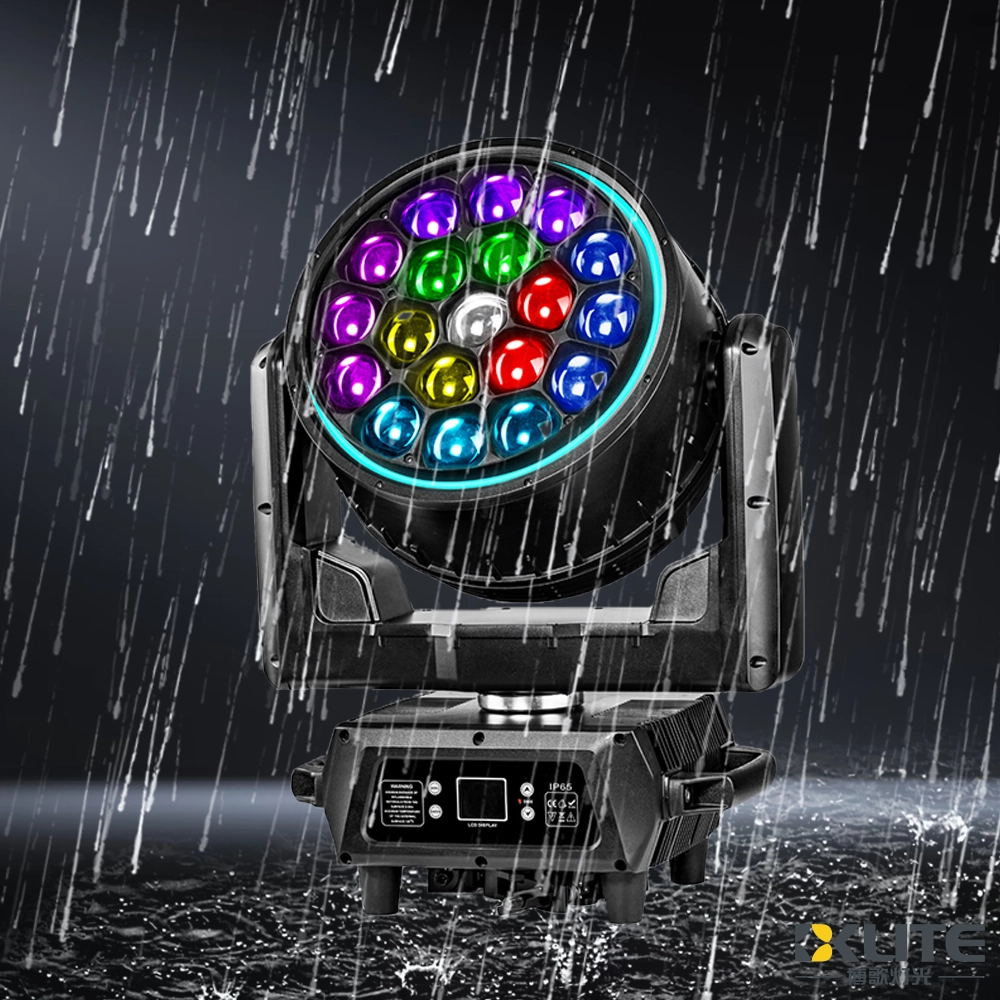
IP65 Waterproof Bee Eye Zoom 19x40W RGBW 4IN1 LED Beam Wash Moving Head Light with LED Ring
BKlite waterproof bee eye moving head light—your reliable choice from top waterproof moving head light manufacturers and suppliers. Ideal for outdoor stage, live event, music festival, this energy-saving fixture ensures powerful, precise illumination for any venue. It delivers powerful, reliable lighting performance in any weather.
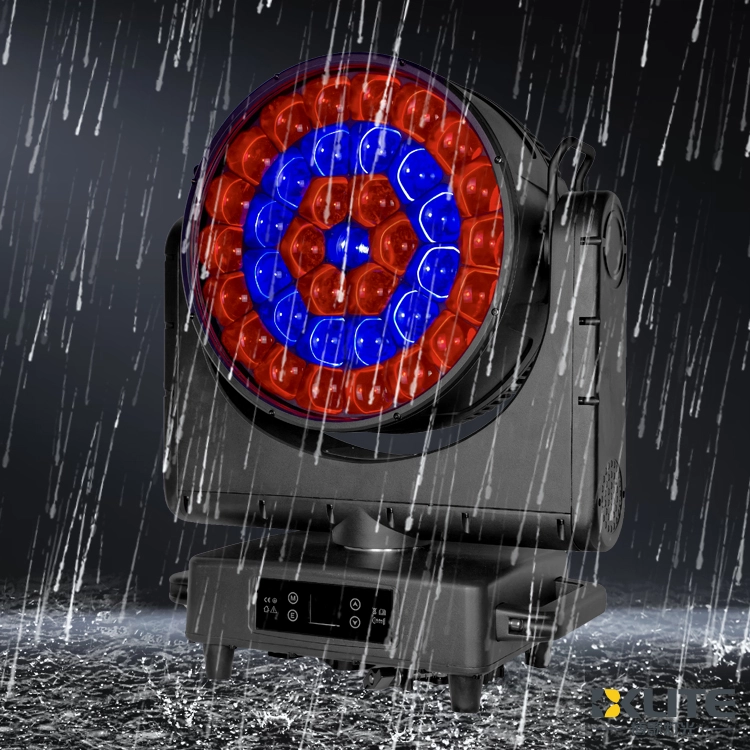
IP65 Waterproof ZOOM Bee Eye 37x40W RGBW 4in1 LED Moving Head Light
As a leading stage lighting equipment supplier with more than 15 years of industry know-how, BKlite brings you the IP65 ZOOM Bee Eye 37*40W RGBW 4in1 LED Moving Head Light (K25 Bee Eye) delivers vibrant, weatherproof lighting with powerful zoom and smooth movement. Ideal for dynamic stage effects, the K25 moving head light ensures stunning RGBW color mixing and reliable outdoor performance.
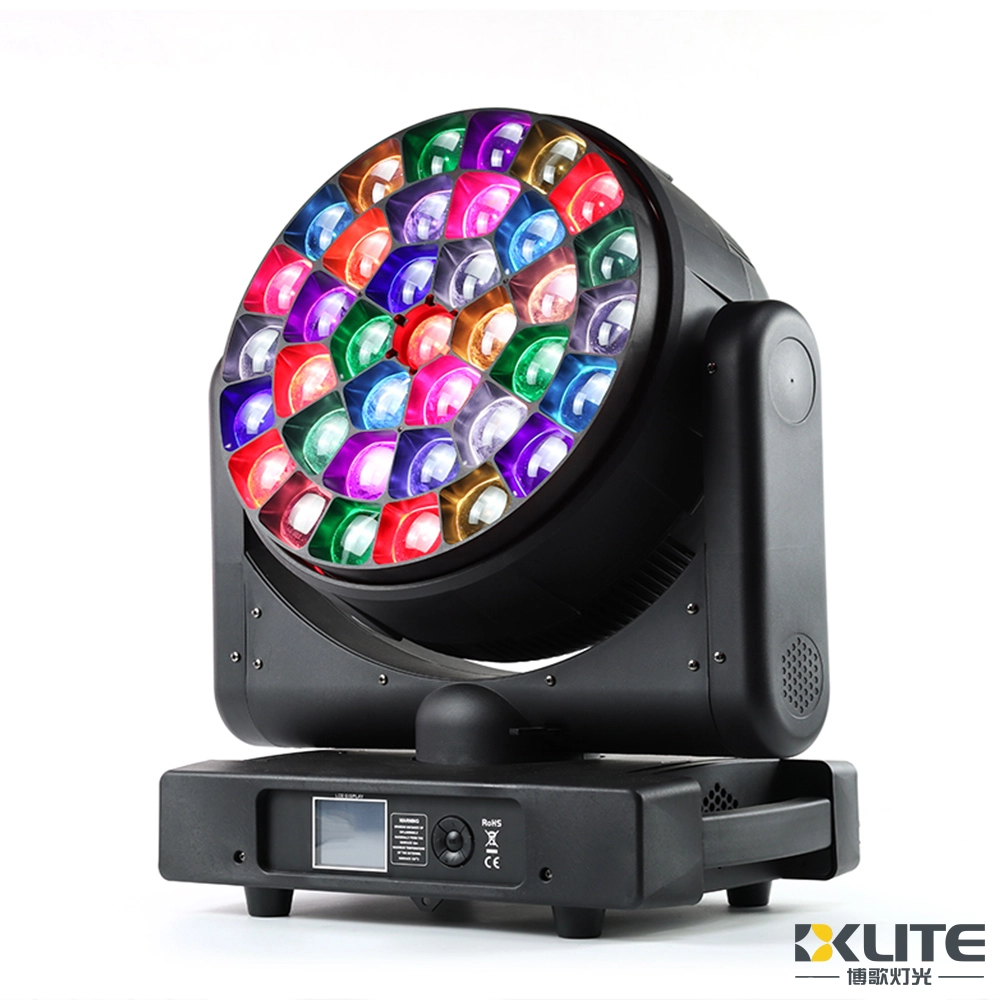
Bee Eye Zoom 37x40W RGBW 4in1 LED Beam Wash Moving Head Light
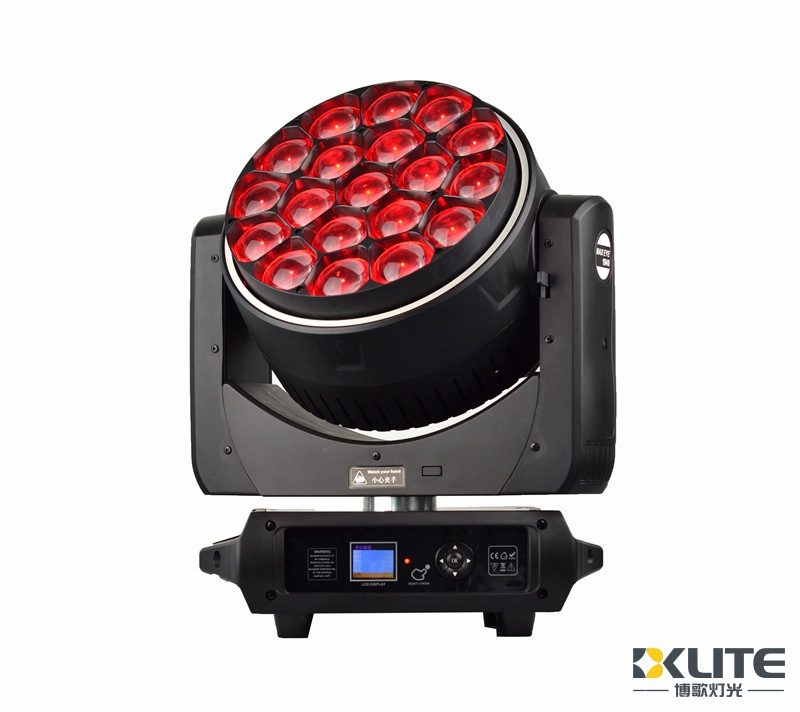
IP20 Bee Eye Zoom 19x40W RGBW 4IN1 LED Beam Wash Moving Head Light with LED Ring
As one of the leading stage lighting equipment suppliers with 15+ years of experience, BKlite launched a new Bee Eye K15 19x40 LED wash light BK-BY1940Z. .
Designed with a simple and sleek appearance, the WASH moving head light is compact, lightweight, and highly portable.
With multiple color effect macros and dynamic effect macros.
Our wash light can be used for versatile lighting options with amazing effect.
It is very good for your lighting projects.
Powerful and shoots very far distances.


Copyright © 2025 BKLITE All Rights Reserved.