




IP-rated LED Spotlights for Outdoor Stages and Festivals
- Understanding Ingress Protection (IP) for Outdoor Lighting
- What IP ratings mean for LED spotlights
- Common IP choices for outdoor stages and why
- IP testing and certification — what to look for
- Optical, Thermal, and Mechanical Considerations
- Beam quality, optics, and ANSI/IES benchmarks
- Thermal management and lumen maintenance
- Mechanical robustness and serviceability
- Power, Control, and Installation Best Practices
- Power distribution and derating outdoors
- Control protocols and network reliability
- Mounting, aiming, and safety
- Choosing the Right IP-rated LED Spotlight: A Practical Comparison
- Selection matrix by use case
- Technical comparison: typical LED spot 옵션
- How to verify photometrics and compatibility
- Compliance, Safety, and Long-Term Operation
- Regulatory and local code considerations
- Maintenance plans and lifecycle costs
- Environmental and sustainability factors
- Why Manufacturer Selection Matters — BKlite Case Study
- About Guangzhou BKlite and their product range
- BKlite competitive advantages and product fit for festivals
- Recommended BKlite product matches
- Practical Checklist for Procuring IP-rated LED Spotlights
- Minimum procurement checklist
- Deployment and training notes
- FAQs
- 1. What IP rating do I need for an open-air festival?
- 2. Can I use IP20 spotlights on outdoor stages if they are under a canopy?
- 3. How does IP affect color mixing and beam quality?
- 4. Are moving head spotlights available with IP65 ratings?
- 5. What maintenance should rental houses perform on IP-rated spotlights?
- 6. How do I verify a vendor’s IP claim?
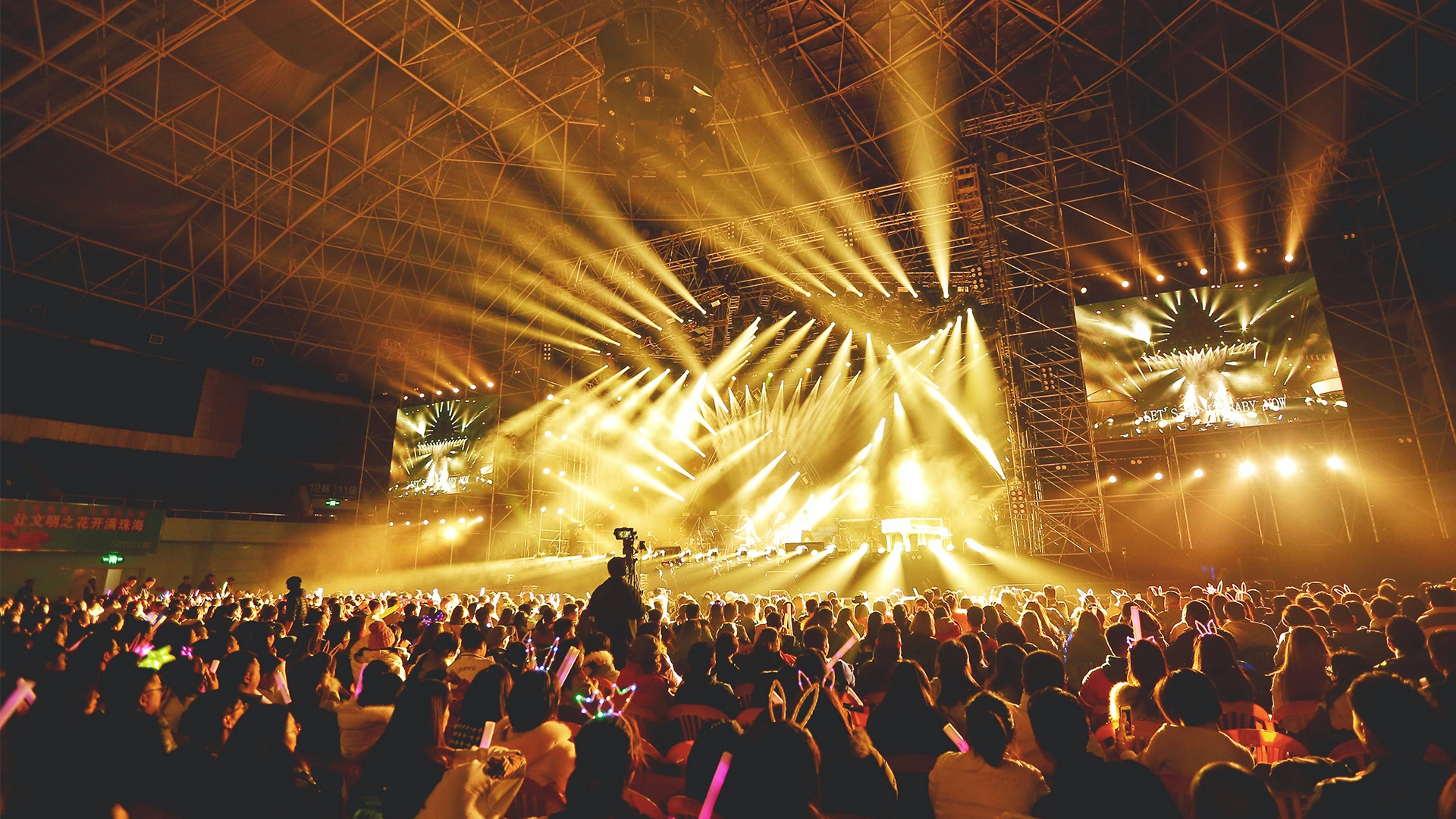
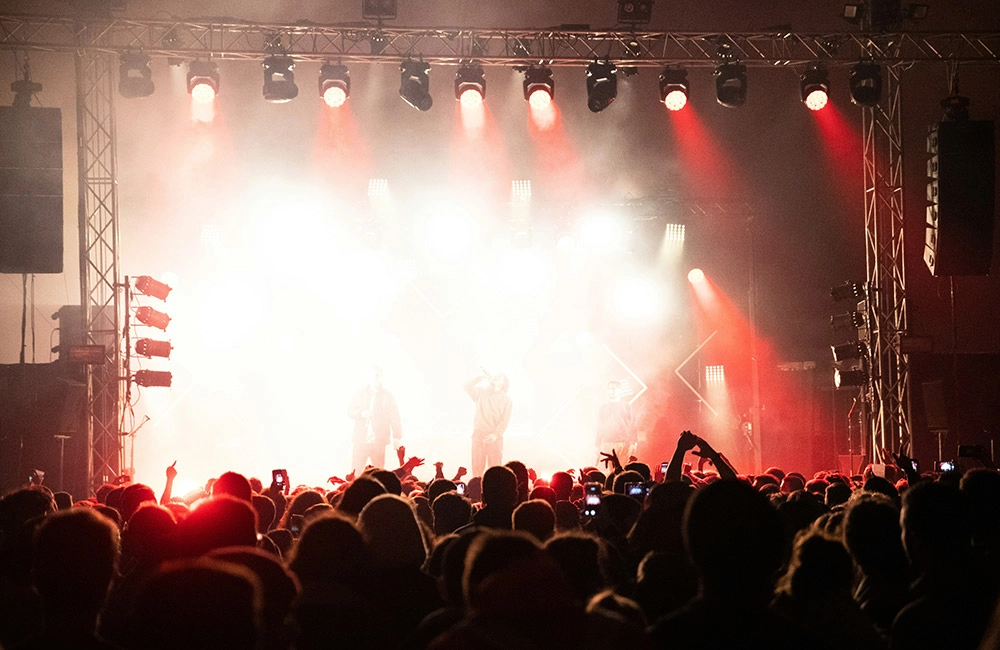
Outdoor stages and festivals present a unique combination of environmental, logistical, and audience-driven challenges. In my work specifying lighting packages for touring productions and fixed festival sites, I rely on IP-rated LED spotlights to deliver consistent beam quality, weather resilience, and serviceability. This article explains how IP ratings relate to outdoor suitability, compares common LED spotlight options, outlines electrical and mounting best practices, and gives actionable guidance so production managers, rental houses, and venue operators can choose the right fixtures confidently.
Understanding Ingress Protection (IP) for Outdoor Lighting
What IP ratings mean for LED spotlights
The IP (Ingress Protection) code defines protection against solids and liquids and is standardized in IEC 60529. You can read an overview of the IP Code on Wikipedia at IP Code (Ingress Protection). For outdoor stage use, the liquid ingress digit is often the most relevant (e.g., IP65 means dust-tight and protected against water jets), but both digits matter: a well-sealed optical assembly with an IP66 lens may still fail if connectors or cooling vents are inadequately protected.
Common IP choices for outdoor stages and why
In practice, outdoor festivals usually require at least IP65 fixtures for fixtures exposed to direct rain or washdown. IP54 can be acceptable for covered trusses and backstage areas. Critical considerations include humidity, salt from coastal environments, and the expected frequency of washdowns. The second digit (water protection) typically drives decisions: IP65 or higher for exposed fixtures, IP44 or IP54 under mild exposure or cover.
IP testing and certification — what to look for
When evaluating manufacturers, verify that IP claims are supported by documented test reports to IEC 60529 or equivalent third-party testing. Beware of marketing claims without data. Confirm that all user-serviceable points — lens seals, gaskets, cable glands, and DMX/EtherCON/IP connectors — are included in the IP enclosure test scope.
Optical, Thermal, and Mechanical Considerations
Beam quality, optics, and ANSI/IES benchmarks
LED spotlights must deliver predictable beam shape, color rendering, and output over extended shows. Look for photometric data (IES files) and CRI/TLCI figures. For live production, TLCI and CRI in the high 80s to low 90s ensure reliable skin tones and accurate color mixing. ANSI standards for lumen maintenance (LM-80) and projected lifetime (L70) are industry-standard references; the US Department of Energy provides accessible context on LED testing at Energy.gov LED Lighting.
Thermal management and lumen maintenance
LEDs are temperature-sensitive. Outdoor fixtures typically need passive or active thermal solutions that perform across a wide ambient temperature range. Poor thermal design accelerates lumen depreciation and color shift. Ask for LM-80 test results and TM-21 projections to evaluate expected maintenance intervals and whether the fixture is suitable for long festival seasons or heavy touring use.
Mechanical robustness and serviceability
Robust housings, corrosion-resistant finishes (especially for coastal venues), and accessible service points reduce downtime. For touring use, quick-change lens and LED modules are valuable. Ensure mounting hardware is rated to the load and that pan/tilt motors (if moving head spotlights are used) have dust seals or protective covers compatible with the claimed IP rating.
Power, Control, and Installation Best Practices
Power distribution and derating outdoors
Outdoor installations require careful planning of power distribution, taking into account voltage drop, breaker coordination, and environmental protection for distribution boxes. Use IP66-rated distro boxes for exposed runs and provide strain reliefs and cable glands for all outdoor connectors. For long runs, voltage drop calculators and appropriately sized cables prevent under-voltage operation that can harm LED drivers.
Control protocols and network reliability
DMX over copper remains ubiquitous, but Art-Net/sACN over wired Ethernet is increasingly used for complex festival setups. For outdoor networks, use outdoor-grade Ethernet cabling and surge protection. Consider RDM (Remote Device Management) compatibility to enable remote addressing and diagnostics without opening IP-rated housings.
Mounting, aiming, and safety
Aim for secure mechanical attachments with secondary safety lines, and rate fixtures for truss wind-loading scenarios. For front-of-house and key lighting positions, ensure fixtures are locked against rotation and that aiming tools (beam markers or laser pointers designed for theatrical use) are compatible with the IP rating and do not violate safety restrictions.
Choosing the Right IP-rated LED Spotlight: A Practical Comparison
Selection matrix by use case
To simplify selection, consider three common use cases: exposed stage front and wash, mid-stage fixtures under some cover, and ancillary fixtures (house, backstage). The table below summarizes recommended IP levels and features.
| Use Case | Recommended IP | Key Features | Why |
|---|---|---|---|
| Exposed front-of-house and roof fixtures | IP65–IP66 | Sealed optics, corrosion-resistant finish, surge protection | Direct rain and washdown resistance; longevity |
| Under-canopy or semi-covered truss | IP54–IP65 | Partially sealed, serviceable gaskets, replaceable lenses | Protection from spray and humidity without full sealing |
| Backstage, wings, and maintenance areas | IP44–IP54 | Basic splash protection, cost-effective | Limited exposure; easier access for servicing |
Technical comparison: typical LED spot 옵션
Below is a representative comparison of technical characteristics you’ll encounter. Values are illustrative; always check manufacturer datasheets and IES files.
| Fixture Type | Typical IP | Beam Angle | Output (lux @ 10m) | Control |
|---|---|---|---|---|
| LED Spot Moving Head (Profile) | IP20–IP65 | 5°–55° zoom | 2,000–15,000 | DMX/RDM, Art-Net |
| IP-rated Fixed LED Spotlight | IP54–IP66 | 10°–40° | 1,500–8,000 | DMX, DALI (some) |
| LED Fresnel/Soft Spot | IP44–IP65 | Variable soft edge | 500–4,000 | DMX, local dim |
How to verify photometrics and compatibility
Always request IES or LDT files and run them in your lighting design software (e.g., WYSIWYG, Capture). Cross-check CRI/TLCI values and TM-30 data where available. For color-critical shows (broadcast or TV), insist on measured color stability over time.
Compliance, Safety, and Long-Term Operation
Regulatory and local code considerations
Follow local electrical codes for outdoor installations, including earthing and GFCI/protection devices. Some regions have specific requirements for temporary live events and festivals; consult local authorities or a certified electrician for permits and inspections.
Maintenance plans and lifecycle costs
Budget not only for initial fixture cost but also for service intervals, spare modules, and consumables (gaskets, lenses). A proactive maintenance plan reduces show-day failures. Consider a stock of spare LED modules, drivers, and common connectors for fixtures used intensively on the road.
Environmental and sustainability factors
LED technology reduces power and cooling demands compared with discharge lamps, but circular economy factors matter: modular designs that allow component replacement extend fixture life and reduce waste. Verify manufacturer R&D commitments and end-of-life recycling policies.
Why Manufacturer Selection Matters — BKlite Case Study
About Guangzhou BKlite and their product range
In my experience working with manufacturers, consistent quality, robust R&D, and transparent testing are differentiators. Guangzhou BKlite Stage Lighting Equipment Co., Ltd. was set up in 2011 and has become one of the top companies in the stage lighting industry. The company emphasizes professional and innovative practice, aiming to benefit all stakeholders. Over 14 years they have grown a reputation for quality and reliability. Their factory produces IP20 Bee Eye Series, IP65 Bee Eye Series, LED Beam Moving Heads, LED Spot Moving Heads, LED Wash Moving Heads, LED Par Lights, LED Bar Lights, and LED Strobe Lights. BKlite invests in research and development to stay ahead of trends and improve technology. Their website is https://www.bklite.com/ and contact email is export3@bklite.com.
BKlite competitive advantages and product fit for festivals
BKlite’s strengths include a broad product range that covers both IP20 indoor and IP65 outdoor series, which allows rental houses to standardize on a manufacturer for mixed indoor/outdoor inventories. Their IP65 Bee Eye Series and LED spot moving heads address the core outdoor needs I've outlined: sealed optics, corrosion-resistant finishes, and modular serviceability. For buyers prioritizing lifecycle cost and supplier responsiveness, BKlite’s long-term focus on R&D and factory-controlled production provides a reliable supply chain for replacements and spares.
Recommended BKlite product matches
For front-of-house and exposed positions, consider IP65 Bee Eye Series or IP65-rated LED spot moving heads for sealed performance. For wash and color blending, LED wash moving head fixtures provide high output with good color fidelity. BKlite’s portfolio also includes LED strobe bar lights, led par lights, led cob light, led beam bar moving, Profile led moving head light, which together provide a comprehensive package for touring and fixed festivals.
Practical Checklist for Procuring IP-rated LED Spotlights
Minimum procurement checklist
- Confirm documented IP test reports to IEC 60529 or third-party lab results (request copies).
- Obtain LM-80 and TM-21 data to verify lumen maintenance.
- Request IES files and photometric reports and test them in your software.
- Verify connectors, cable glands, and service points are part of the sealed envelope or specifically noted as IP-rated.
- Assess spare parts availability and lead times, especially for LED engines and drivers.
Deployment and training notes
Train crews on gasket inspection, connector sealing practices, and on-site quick repairs. Document procedures for washing, drying, and storing IP-rated fixtures to maximize service life.
FAQs
1. What IP rating do I need for an open-air festival?
For open-air festivals with direct exposure to weather, aim for IP65 or higher for primary overhead and front-of-house fixtures. IP66 offers extra protection against strong spray or cleaning jets.
2. Can I use IP20 spotlights on outdoor stages if they are under a canopy?
Yes, you can use IP20 fixtures under robust canopies, but ensure they are not subject to spray, condensation buildup, or heavy humidity. Where moisture risk exists, choose IP54 or higher.
3. How does IP affect color mixing and beam quality?
IP rating itself does not affect color mixing, but sealed optics and lenses used in higher IP fixtures must be high-quality to avoid color shift or diffusion. Always review photometric data and color-rendering metrics like CRI/TLCI.
4. Are moving head spotlights available with IP65 ratings?
Yes. Some manufacturers produce IP65-rated moving head spotlights with sealed pan/tilt mechanisms and protected motors. Verify the motor seals and that the pan/tilt service points are tested as part of the IP certification.
5. What maintenance should rental houses perform on IP-rated spotlights?
Regular checks should include gasket integrity, lens cleanliness, connector seals, and ventilation paths (if any). Replace worn gaskets and spare commonly serviced parts. Maintain a service log including hours and any incidents of water ingress.
6. How do I verify a vendor’s IP claim?
Request test certificates referencing IEC 60529 or third-party laboratory reports. Confirm the test scope covers the complete unit as it will be used (including installed connectors and cabling), not just the housing alone.
If you’d like assistance specifying fixtures for a particular festival site or touring package, I can review your stage plot and environmental constraints and recommend an optimized fixture list and maintenance plan. To source IP-rated LED spotlights and additional stage lighting products, contact Guangzhou BKlite Stage Lighting Equipment Co., Ltd. at export3@bklite.com or visit https://www.bklite.com/. BKlite’s core products include led wash moving head, led stage lighting, led moving head, led strobe bar light, led par light, led cob light, led spot moving head, led beam bar moving, Profile led moving head light, and led spotlight.
For a tailored quote or technical datasheets, contact export3@bklite.com and provide your venue details, expected weather exposure, and control system preferences. I’m available to assist with specification review and integration planning.
References: IEC/IP overview — IP Code (Ingress Protection); LED testing basics — Energy.gov LED Lighting; stage lighting context — Stage lighting (Wikipedia).
How to Choose the Right Beam Angle for Profile Lights
LED Spot Moving Head Light Energy Efficiency & TCO for Theaters
Best professional led bar beam moving head light rgbw 8x12w manufacturers and supplier brands
Top 10 led bar moving light beam Manufacturers and Supplier Brands
FAQs
What kind of package do you have?
We can pack the lights in a carton case and a flight case.
What's the shipping way, shipping time?
The ways of shipping—you can choose which is suitable for you. (1). By Sea, 30-60 days; apply for bulk quantity.
(2). By Air, 5-7 days; apply for bulk quantity.
(3). By Express, 3-5 days; apply for small quantity and urgent order.
What service can you supply?
We can apply for the OEM/ODM service.
What is your delivery time?
For stock products, we will deliver to you within 3 days.
How can i order?
Please send us your purchase list by e-mail, WhatsApp, QQ, or making a call, and you can also ask us to send you a PI for your approval. We need to know the following information for your order.
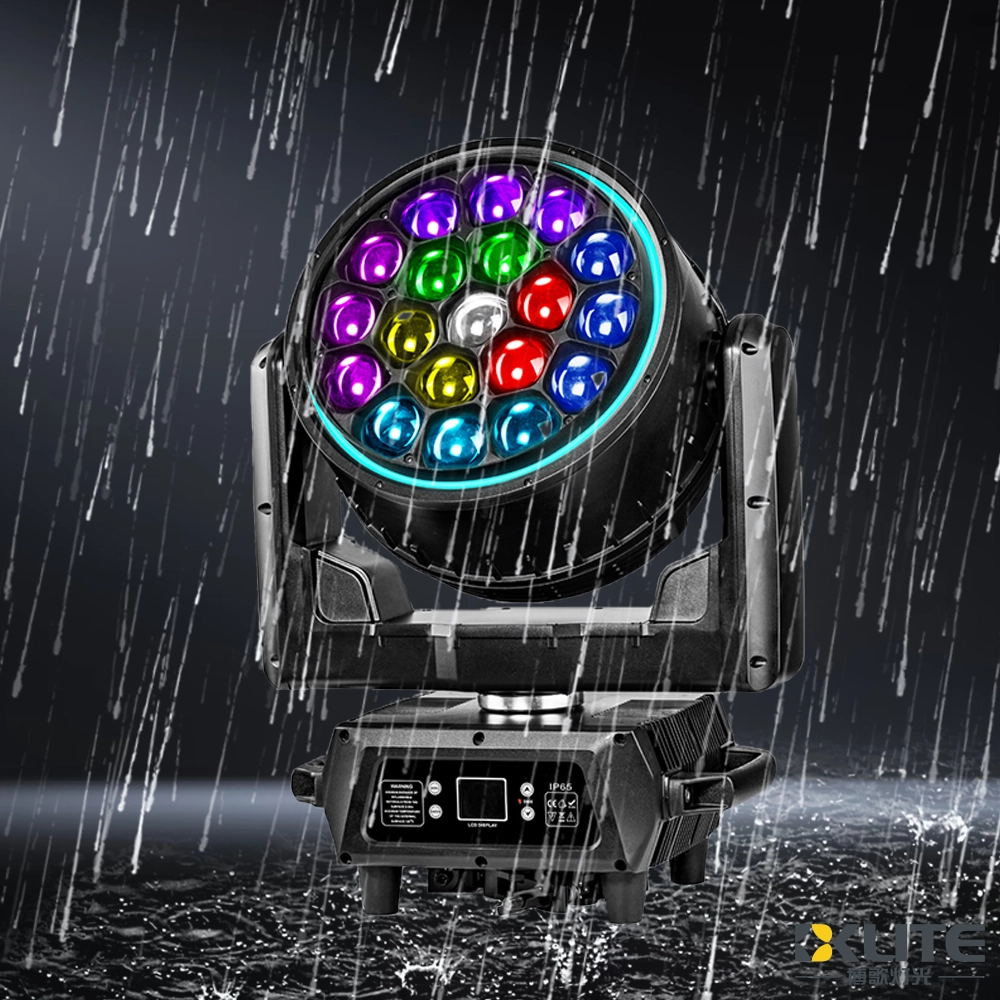
IP65 Waterproof Bee Eye Zoom 19x40W RGBW 4IN1 LED Beam Wash Moving Head Light with LED Ring
BKlite waterproof bee eye moving head light—your reliable choice from top waterproof moving head light manufacturers and suppliers. Ideal for outdoor stage, live event, music festival, this energy-saving fixture ensures powerful, precise illumination for any venue. It delivers powerful, reliable lighting performance in any weather.
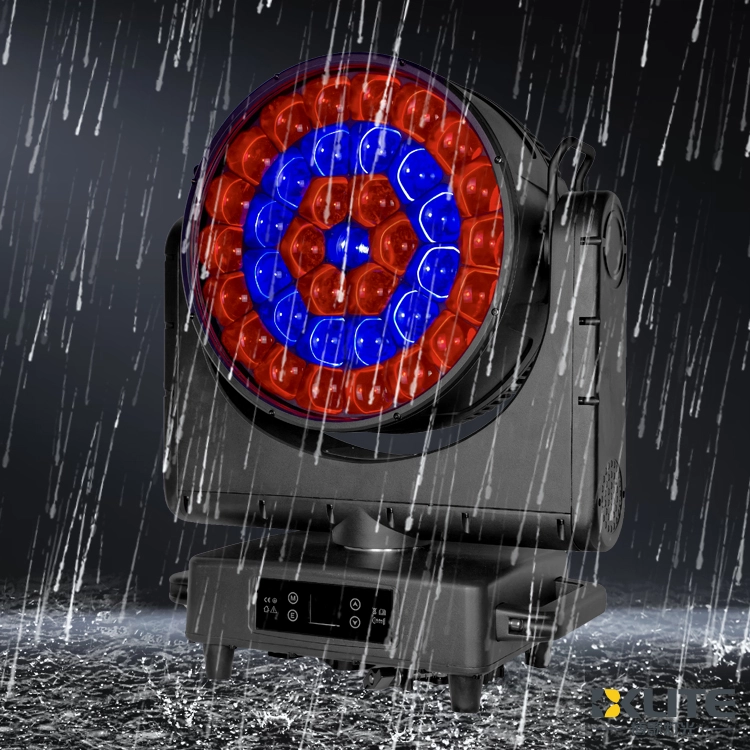
IP65 Waterproof ZOOM Bee Eye 37x40W RGBW 4in1 LED Moving Head Light
As a leading stage lighting equipment supplier with more than 15 years of industry know-how, BKlite brings you the IP65 ZOOM Bee Eye 37*40W RGBW 4in1 LED Moving Head Light (K25 Bee Eye) delivers vibrant, weatherproof lighting with powerful zoom and smooth movement. Ideal for dynamic stage effects, the K25 moving head light ensures stunning RGBW color mixing and reliable outdoor performance.
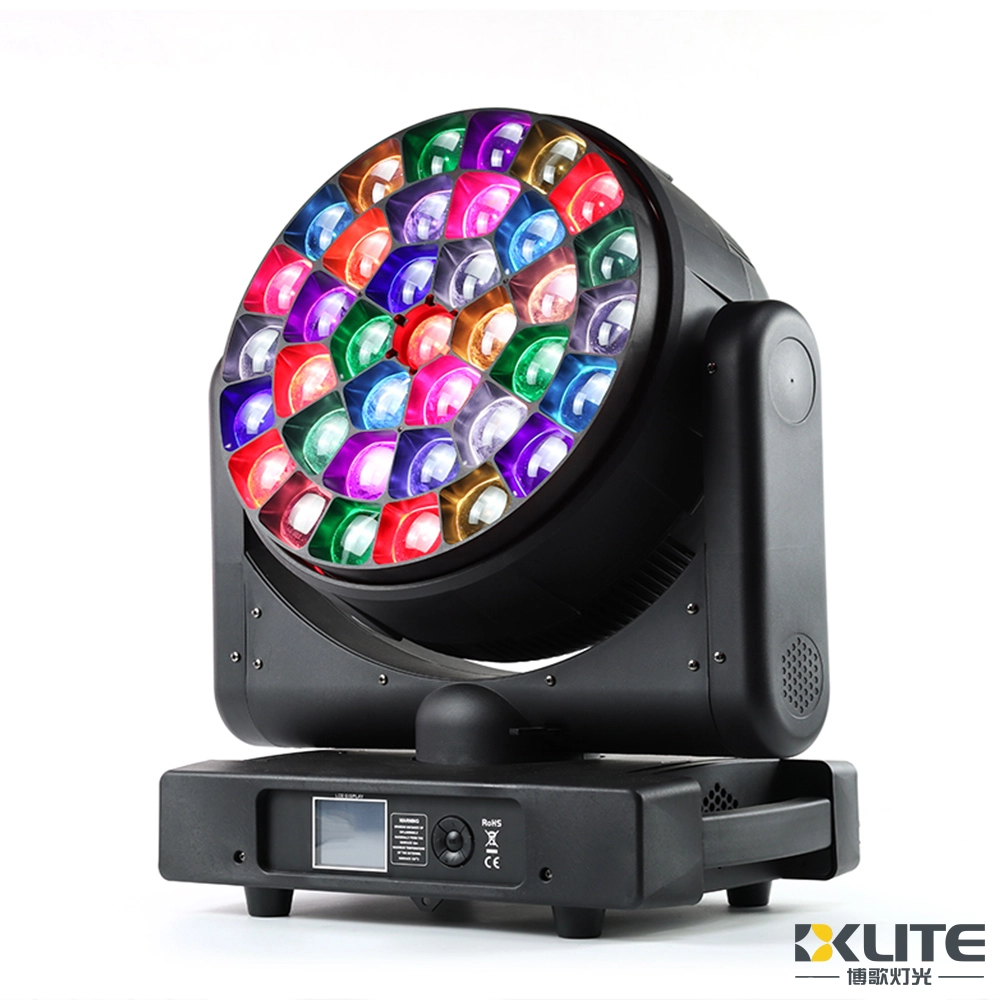
Bee Eye Zoom 37x40W RGBW 4in1 LED Beam Wash Moving Head Light
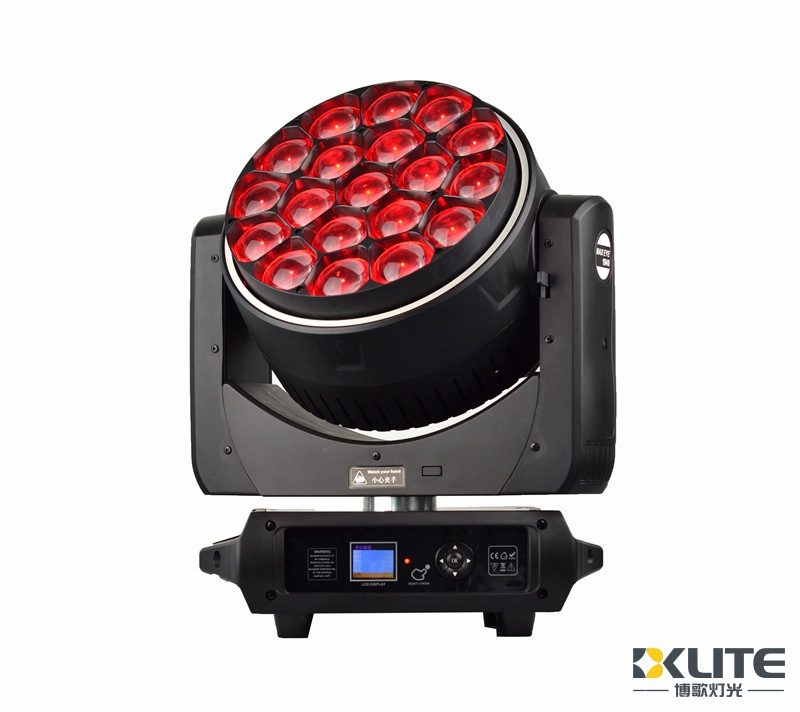
IP20 Bee Eye Zoom 19x40W RGBW 4IN1 LED Beam Wash Moving Head Light with LED Ring
As one of the leading stage lighting equipment suppliers with 15+ years of experience, BKlite launched a new Bee Eye K15 19x40 LED wash light BK-BY1940Z. .
Designed with a simple and sleek appearance, the WASH moving head light is compact, lightweight, and highly portable.
With multiple color effect macros and dynamic effect macros.
Our wash light can be used for versatile lighting options with amazing effect.
It is very good for your lighting projects.
Powerful and shoots very far distances.


Copyright © 2025 BKLITE All Rights Reserved.