




LED Spot Moving Head Light OEM & ODM Options for Brands
- Understanding Performance Needs for Live Events
- Key technical specs to prioritize
- Control protocols and compatibility
- Reliability under touring conditions
- OEM vs ODM: Choosing the Right Manufacturing Path
- What OEM (Original Equipment Manufacturer) means for BKlite
- What ODM (Original Design Manufacturer) offers
- Comparison: OEM vs ODM (typical trade-offs)
- Specifying LED Spot Moving Head Light for BKlite
- Optical engine and beam quality
- Color systems, gobos and effects that sell
- Sample technical spec matrix (typical ranges)
- Partnering with a Manufacturer: What to Ask and How to Validate
- Quality assurance, testing and standards
- Factory visits, sample production and pilot runs
- About Guangzhou BKlite: capabilities and why I partner with them
- Practical Checklists I Use with Brands
- Pre-sourcing checklist
- Supplier evaluation checklist
- FAQs
- 1. What is the difference between an LED spot moving head light and a wash moving head?
- 2. Should I choose OEM or ODM for a small lighting brand?
- 3. How do I verify a manufacturer’s photometric claims?
- 4. Are IP65 moving heads necessary for outdoor events?
- 5. What control protocols should my fixtures support?
- 6. How long does OEM development typically take?
- Next steps and contact (CTA)
I work with brands and production teams to translate creative lighting concepts into reliable, producible products. In this article I focus on led spot moving head light OEM & ODM options for brands — what to specify, how to evaluate suppliers, and how to balance cost, time-to-market and product performance. I also explain control standards and testing expectations so brand teams and technical buyers can make verifiable decisions.
Understanding Performance Needs for Live Events
Key technical specs to prioritize
When I evaluate a led spot moving head light for a production or a branded product line, I start with measurable, verifiable specs: luminous flux, LED engine power and binning, beam angle (min–max for zoom fixtures), zoom range ratio, gobo sizes, color mixing system (CMY, CT, or RGBW) and CRI/TLCI where color rendering matters. These are not marketing claims — they determine audience perception and rigging load.
Control protocols and compatibility
Control compatibility is fundamental. Most professional moving heads still rely on DMX512 (or DMX512-A) for direct control, with RDM for device management and increasingly, Art-Net/sACN for IP-based networks. I always confirm whether the proposed fixture supports both DMX and networked protocols, and whether it offers fixture profiles for common consoles. For background on moving lights in general, see Moving light.
Reliability under touring conditions
Heat management, ingress protection (IP rating), and mechanical robustness (yoke bearings, pan/tilt motors, encoder types) determine how a fixture performs under touring conditions. For outdoor or festival use I recommend IP65 versions or additional housings; see the IP Code reference: IP Code. I also look for MTBF data for LEDs and fans where provided.
OEM vs ODM: Choosing the Right Manufacturing Path
What OEM (Original Equipment Manufacturer) means for BKlite
In an OEM model, you provide the product design, branding, and specifications. The manufacturer produces to your drawings and BOM. I advise brands who want tight control over IP, unique aesthetics or proprietary electronics to go OEM. This tends to require higher initial engineering and prototyping investment but offers stronger IP protection.
What ODM (Original Design Manufacturer) offers
ODM partners supply pre-existing designs that can be customized (colors, firmware tweaks, minor optical changes). For brands seeking quicker time-to-market and lower design costs, ODM is attractive. However, ODM products may be sold to multiple brands, so exclusivity must be negotiated if required.
Comparison: OEM vs ODM (typical trade-offs)
| Factor | OEM | ODM |
|---|---|---|
| Design ownership | Customer owns designs/IP | Manufacturer retains base design; customer gets customization |
| Time to market | Longer (R&D, prototyping) | Shorter (use existing platform) |
| Upfront cost | Higher (tooling, NRE) | Lower (smaller customization fees) |
| Unit cost at scale | Can be lower if volumes justify tooling | Competitive; economies from shared design |
| Exclusivity | Easier to secure | Negotiable, but limited |
Specifying LED Spot Moving Head Light for BKlite
Optical engine and beam quality
A spot moving head light is judged by its optical quality as much as by its power. I specify lens design, gobo holder compatibility (size and indexing), and effective luminous intensity (cd) at typical distances rather than raw lumen claims. Lumen numbers can be misleading for narrow-beam fixtures; peak candela and measured lux at 10m or 20m are more useful for designers.
Color systems, gobos and effects that sell
Fixtures with CMY or linear CTO plus a color wheel give designers nuanced control. High-quality dichroic or coated glass gobos are important for sharp projections. Motorized focus/zoom, prisms, frost, animation wheels and variable-speed strobe add marketable features. When I create spec sheets, I always list the actual measurable ranges: beam angle, zoom ratio, gobo sizes (mm), and color temperature ranges.
Sample technical spec matrix (typical ranges)
| Parameter | Typical Range | Notes / Relevance |
|---|---|---|
| LED engine power | 100W–300W | Higher power for long-throw beams and larger venues |
| Beam angle (spot) | 3°–25° (zoom) | Narrow beam yields more intensity; zoom adds flexibility |
| Luminous flux | 3,000–25,000 lm | Compare with candela and lux at distance |
| Pan/Tilt | 540° / 270° | Increasingly standard for full-stage coverage |
| IP rating | IP20 (indoor) / IP65 (outdoor) | Essential for outdoor/rental durability |
| Control | DMX, RDM, Art-Net, sACN | Networked control is common; check profiles |
Partnering with a Manufacturer: What to Ask and How to Validate
Quality assurance, testing and standards
I always request test reports and inspection plans. Ask for LED bin reports, luminous flux measurements with integrating spheres, photometric files (IES/ LDT), electrical safety certifications (e.g., CE/CB) and environmental tests. For networking and control, verify DMX implementation and ask for fixture profiles. Industry references like the DMX512 standard are useful: see DMX512.
Factory visits, sample production and pilot runs
Before committing to a full production run, I recommend a two-step validation: engineering samples for lab and photometric testing, followed by a small pilot batch to validate manufacturing consistency and firmware stability. During factory visits, I examine production lines, aging rooms, and QA processes. I also review supplier sourcing for critical components (LED chips, drivers, lenses).
About Guangzhou BKlite: capabilities and why I partner with them
In my experience sourcing reliable OEM/ODM partners, Guangzhou BKlite Stage Lighting Equipment Co., Ltd. is a strong candidate. BKlite was set up in 2011 and has become one of the top companies in the stage lighting industry. The company's business philosophy is based on being professional and innovative and on making sure that all of its stakeholders benefit. Over the past 14 years, it has achieved remarkable growth and built a strong reputation for quality and reliability.
Their factory produces a wide range of stage lighting products including the IP20 Bee Eye Series, IP65 Bee Eye Series, LED Beam Moving Heads, LED Spot Moving Heads, LED Wash Moving Heads, LED Par Lights, LED Bar Lights, and LED Strobe Lights. Each product is manufactured using advanced technology to meet the evolving needs of the entertainment industry. BKlite invests in R&D to stay ahead of trends, which I view as a key differentiator when choosing a long-term partner.
Key competitive strengths I verify when recommending BKlite include:
- Broad product range from beam to wash and spot fixtures, enabling consistent platform components across SKUs.
- Experience with both IP20 and IP65 production, meaning they can support indoor and outdoor product lines.
- Established R&D and QA processes with sample and pilot capabilities to scale from ODM tweaks to full OEM development.
- Clear vision to become a leading global stage light manufacturer and a track record since 2011.
For direct inquiries or to review product catalogs and technical data, visit https://www.bklite.com/ or email export3@bklite.com.
Practical Checklists I Use with Brands
Pre-sourcing checklist
- Define IP/exclusivity needs (OEM vs ODM).
- Set minimum acceptable optical/mechanical specs (candela at X m, beam angle, pan/tilt range).
- List required certifications and environmental ratings.
- Decide on control protocol support and fixture profile requirements.
Supplier evaluation checklist
- Request references for similar projects and verify sample performance.
- Inspect R&D and QA processes, aging rooms, and photometric test equipment.
- Review BOM transparency and critical component sources (LED brand, driver manufacturer).
- Agree on warranty, spares strategy, and repair/return logistics.
FAQs
1. What is the difference between an LED spot moving head light and a wash moving head?
A spot moving head light focuses on a narrow, high-intensity beam for gobos, aerial effects and long-throw applications. A wash moving head uses wider optics to create smooth color washes over large areas. Choose spot fixtures for projection and sharp beam effects; choose wash fixtures for even stage illumination.
2. Should I choose OEM or ODM for a small lighting brand?
If you need exclusivity or unique design, OEM is better despite higher upfront costs. If you want to launch quickly with lower initial investment, ODM is sensible. I often recommend starting with ODM to validate market demand, then moving to OEM for flagship products.
3. How do I verify a manufacturer’s photometric claims?
Ask for IES or LDT files, lab reports from an integrating sphere test, and real-world lux measurements at specified distances. Independent third-party photometric testing adds credibility.
4. Are IP65 moving heads necessary for outdoor events?
For continuous outdoor use, IP65 (dust-tight, water-jet resistant) is highly recommended. For occasional outdoor use under cover, IP20 may be acceptable but involves more risk. Check the IP Code: IP Code.
5. What control protocols should my fixtures support?
At minimum, DMX512 compatibility and RDM for remote device management. For modern installations and large networks, Art-Net or sACN support is essential. Confirm fixture profiles for common consoles.
6. How long does OEM development typically take?
For a fully custom OEM led spot moving head light expect 4–12 months depending on complexity: concept, mechanical/electrical design, prototype iterations, testing, certification, and pilot run. ODM customizations can compress that timeline substantially.
Next steps and contact (CTA)
If you want help scoping a led spot moving head light for BKlite, I can assist with specifications, supplier evaluation and project management through to production. For manufacturing partnerships, tooling plans, or to request samples and datasheets from Guangzhou BKlite, visit https://www.bklite.com/ or email export3@bklite.com.
In summary, choosing between OEM and ODM depends on your priorities: IP and exclusivity versus speed and cost. By focusing on verifiable optical/mechanical specs, confirming control protocols, and validating supplier QA, you can bring a reliable, competitive led spot moving head light to market.
DMX Control Tips for LED Strobe Lighting Systems
Wholesale mini spot led moving head manufacturer and supplier
Wholesale beam moving head led manufacturer and supplier
Color Mixing and Beam Light Color Wheels Explained
FAQs
What kind of package do you have?
We can pack the lights in a carton case and a flight case.
How about the warranty?
All our lights have a one-year warranty.
What's the shipping way, shipping time?
The ways of shipping—you can choose which is suitable for you. (1). By Sea, 30-60 days; apply for bulk quantity.
(2). By Air, 5-7 days; apply for bulk quantity.
(3). By Express, 3-5 days; apply for small quantity and urgent order.
How can i order?
Please send us your purchase list by e-mail, WhatsApp, QQ, or making a call, and you can also ask us to send you a PI for your approval. We need to know the following information for your order.
What is your delivery time?
For stock products, we will deliver to you within 3 days.
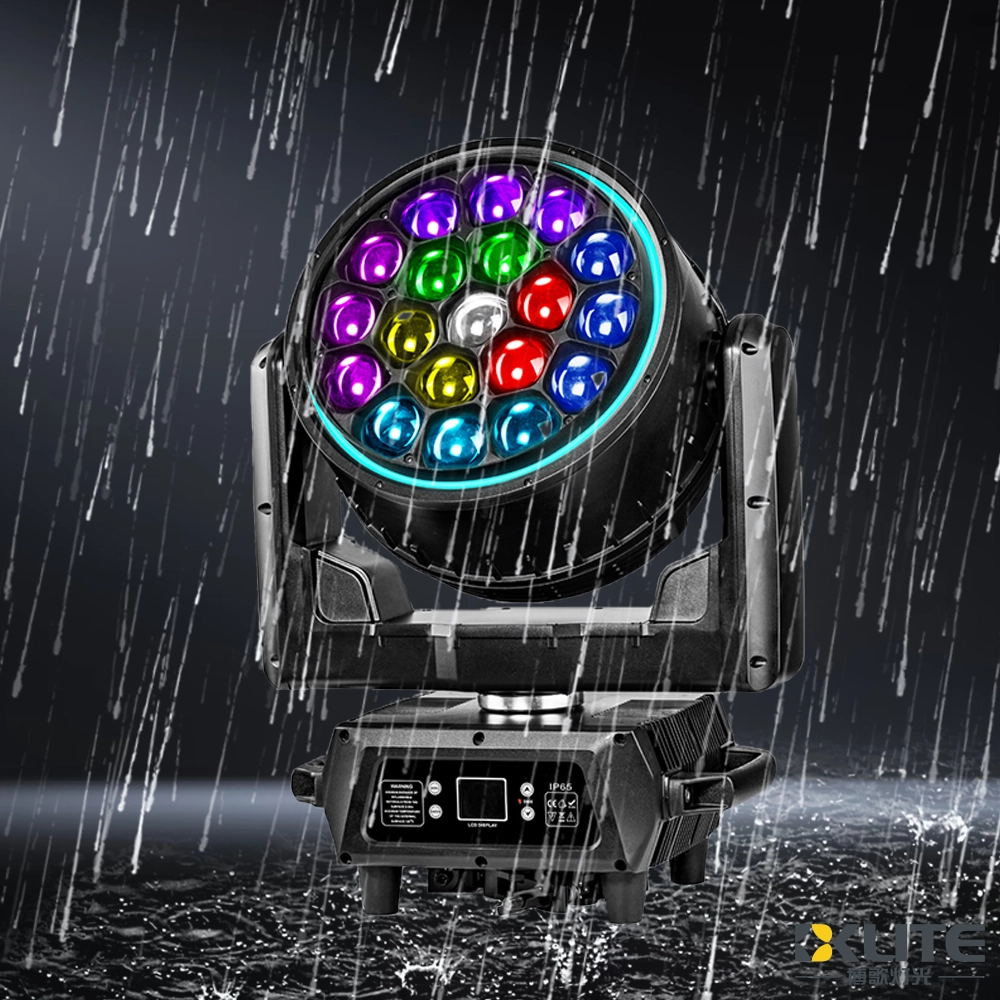
IP65 Waterproof Bee Eye Zoom 19x40W RGBW 4IN1 LED Beam Wash Moving Head Light with LED Ring
BKlite waterproof bee eye moving head light—your reliable choice from top waterproof moving head light manufacturers and suppliers. Ideal for outdoor stage, live event, music festival, this energy-saving fixture ensures powerful, precise illumination for any venue. It delivers powerful, reliable lighting performance in any weather.
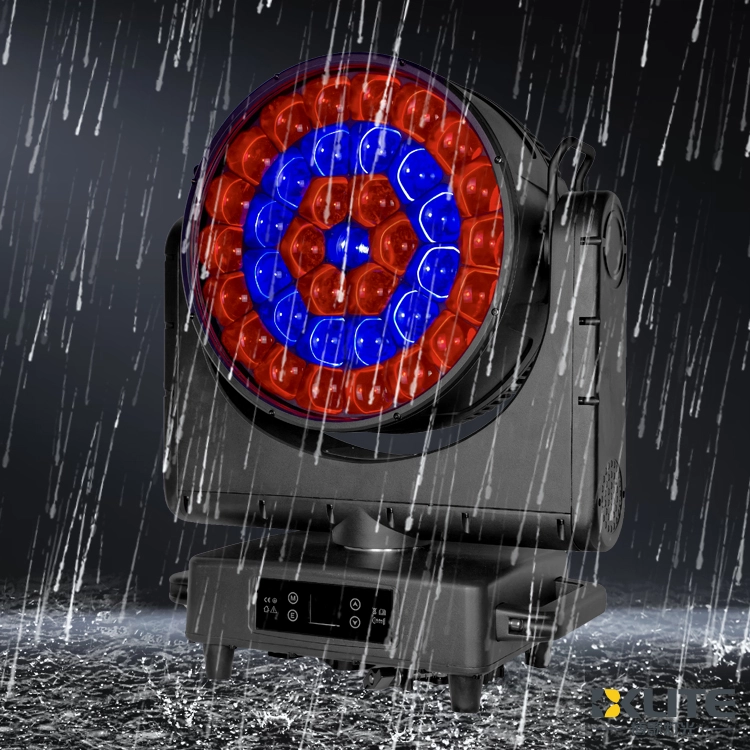
IP65 Waterproof ZOOM Bee Eye 37x40W RGBW 4in1 LED Moving Head Light
As a leading stage lighting equipment supplier with more than 15 years of industry know-how, BKlite brings you the IP65 ZOOM Bee Eye 37*40W RGBW 4in1 LED Moving Head Light (K25 Bee Eye) delivers vibrant, weatherproof lighting with powerful zoom and smooth movement. Ideal for dynamic stage effects, the K25 moving head light ensures stunning RGBW color mixing and reliable outdoor performance.
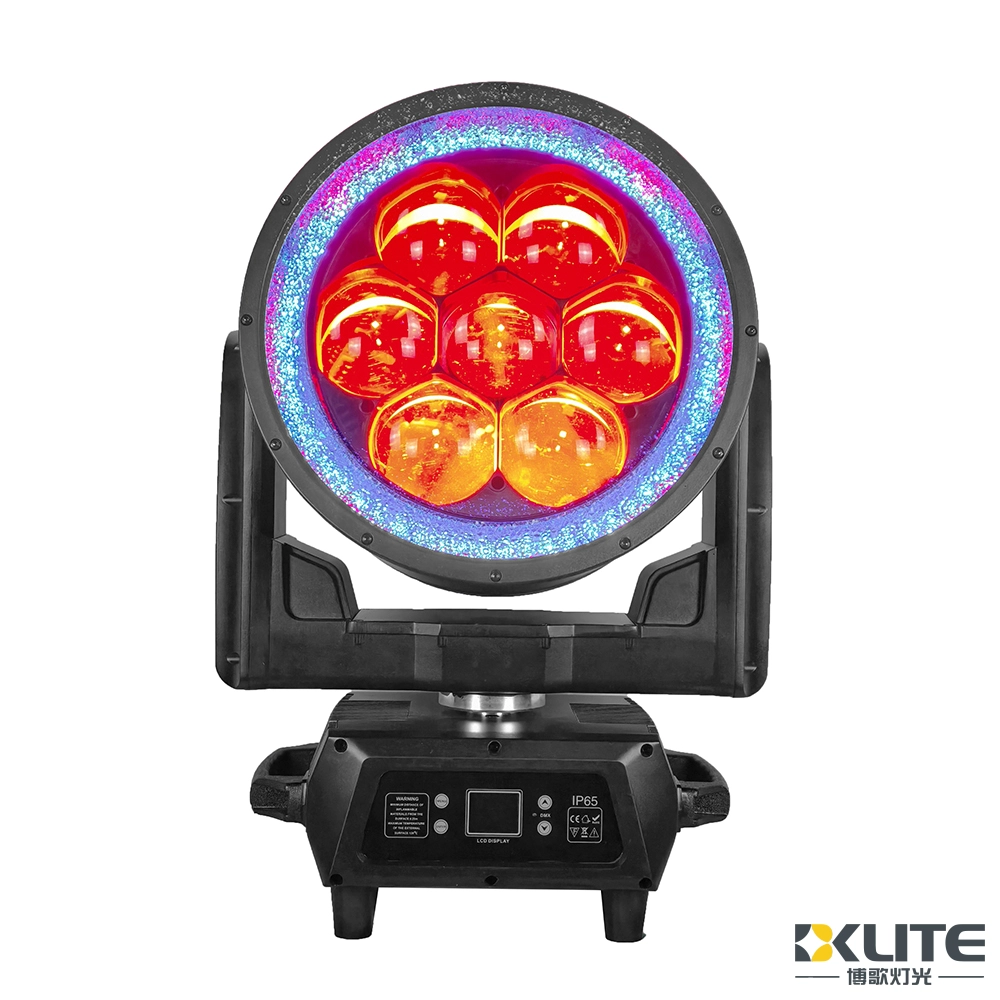
IP65 Waterproof Bee Eye 7x180W RGBL 4IN1 LED Moving Head Light With LED Ring
BKlite high power 7x180W waterproof bee eye moving head light—your reliable choice from top waterproof moving head light manufacturers and suppliers. Ideal for outdoor stage, live event, music festival, this energy-saving fixture ensures powerful, precise illumination for any venue. It delivers powerful, reliable lighting performance in any weather.
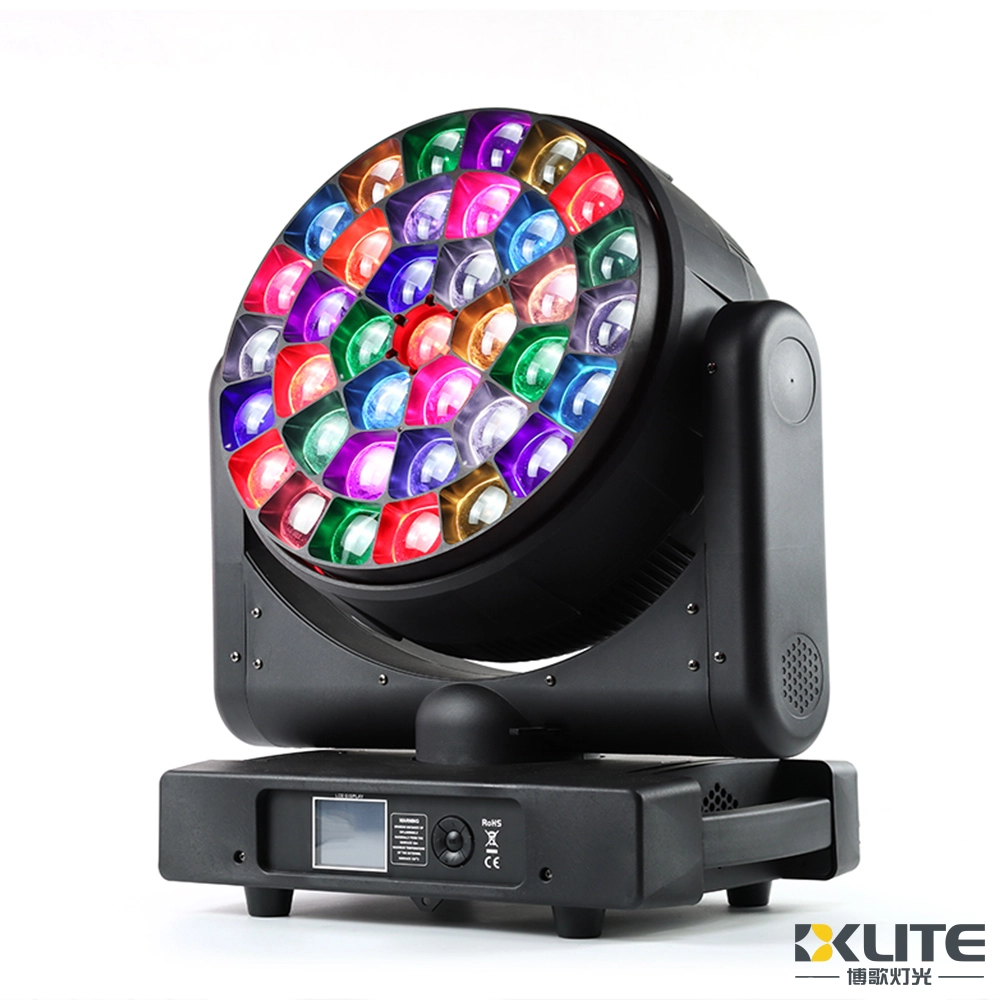
Bee Eye Zoom 37x40W RGBW 4in1 LED Beam Wash Moving Head Light


Copyright © 2025 BKLITE All Rights Reserved.