




Safety Standards and Certifications for LED Spotlights
- Why safety matters in stage lighting
- Risk vectors specific to LED spotlights
- Regulatory and liability perspective
- Operational reliability and performer safety
- Key safety standards and what they mean
- Ingress protection (IP) and mechanical standards
- Electrical safety: CE, UL, ETL and IEC
- Photobiological safety and flicker
- Testing and certification processes
- Laboratory testing vs. factory self-declaration
- Typical test battery for an LED spotlight
- Reading a test report
- Selecting compliant LED spotlights for your venue or tour
- Match standards to environment
- Comparative table: common certifications and what they cover
- Practical checklist before purchase
- Manufacturer and product considerations — why supplier matters
- What to expect from reputable manufacturers
- Case study: Guangzhou BKlite Stage Lighting Equipment Co., Ltd.
- Comparing suppliers: questions I ask
- Practical maintenance and in-service safety tips
- Routine inspections and preventive maintenance
- Field testing and acceptance criteria
- FAQ
- 1. Do all LED spotlights need UL or CE certification?
- 2. What IP rating should I choose for outdoor concerts?
- 3. How can I tell if an LED spotlight presents a blue-light hazard?
- 4. What is acceptable flicker for stage lighting?
- 5. Can firmware updates affect certification?
- 6. What documentation should I require from a manufacturer?
As someone who has designed and specified stage lighting systems for over a decade, I know that selecting the right led spotlight goes beyond lumen output and beam angle. Safety, compliance, and verified certifications are central to protecting performers, technicians, venues, and your investment. In this article I explain the most important international standards and certifications for LED spotlights, how they are tested, and practical guidance for choosing compliant products for touring rigs, theatres, houses of worship, and permanent installations.
Why safety matters in stage lighting
Risk vectors specific to LED spotlights
LED spotlights introduce several risk areas: electrical safety (shock, fire), mechanical safety (mounting and rigging), thermal risks (hot surfaces and overheating), photobiological hazards (blue light), ingress (dust/water), electromagnetic interference (EMI) and control-signal integrity (DMX failures). These risks differ from general architectural lighting because stage units are often moved, relocated, and subjected to more aggressive thermal cycles and vibration.
Regulatory and liability perspective
Using uncertified equipment raises legal and insurance exposure. Governments and venues expect products to meet applicable local and international standards (e.g., CE in EU, UL/ETL in North America). Certified products simplify compliance with venue permits and insurance requirements.
Operational reliability and performer safety
Beyond legal compliance, certifications and test reports are a proxy for quality control. A properly certified led spotlight will have documented thermal management, flicker mitigation, and photobiological assessments—reducing on-stage incidents and long-term maintenance costs.
Key safety standards and what they mean
Ingress protection (IP) and mechanical standards
Ingress Protection ratings come from IEC 60529. IP ratings (e.g., IP20, IP65) describe resistance to solid objects and water. For indoor theatrical spotlights, IP20 is common; for outdoor or touring fixtures you should look for IP65 or better. A robust outdoor led spotlight or led spot moving head with IP65 will survive rain and dusty environments without failure.
Electrical safety: CE, UL, ETL and IEC
Electrical safety standards include IEC 60598 for luminaires and regional approvals like CE (EU), UL classifications (e.g., UL 1598) and ETL/CSA for North America. UL and ETL testing verify that internal wiring, insulation, strain reliefs, and protective devices meet fire and shock thresholds. For LED modules specifically, UL 8750 is relevant.
Photobiological safety and flicker
LEDs can pose a blue-light hazard and photobiological risk. Manufacturers often test according to IEC 62471 to classify fixtures by retinal hazard. Flicker—caused by PWM dimming and poor drivers—has both comfort and health implications. The IEEE recommended practice IEEE P1789 describes safe modulation limits. In stage lighting, flicker can also produce undesirable strobing with cameras; test reports should include flicker percentage and frequency measurements.
Testing and certification processes
Laboratory testing vs. factory self-declaration
Not all “certified” markings are equal. Third-party laboratory testing (e.g., UL, Intertek/ETL, TUV) is more reliable than manufacturer self-declarations. Look for a test report number and lab mark on spec sheets. For many distributors and venues, an independent test report is required.
Typical test battery for an LED spotlight
A standard test suite for stage led spotlights includes:
- Electrical safety (dielectric withstanding voltage, insulation resistance)
- Temperature rise and thermal cut-off verification
- Ingress protection (IP) testing per IEC 60529
- Photobiological classification (IEC 62471)
- EMC testing for emissions/immunity (EN 55015 / EMC directive)
- DMX512 compatibility and transient immunity
- Flicker measurement (modulation % and frequency)
Reading a test report
When I review a test report I check the scope (which SKU, firmware, and power supply were tested), environmental conditions (ambient temp, supply voltage), and any conditional requirements (e.g., fixture must be used with supplied PSU). Pay attention to the test date—firmware or component changes can invalidate older tests.
Selecting compliant LED spotlights for your venue or tour
Match standards to environment
Choose certification levels that match the use case: for indoor theatrical lighting prioritize UL/CE, IEC photobiological reports, and DMX compliance. For outdoor festivals or roof rigs select IP65-rated fixtures and corrosion-resistant hardware. For rental inventory choose ruggedized units with documented mechanical and vibration testing.
Comparative table: common certifications and what they cover
| Certification / Standard | Scope | Why it matters for LED spotlights |
|---|---|---|
| CE (EN/IEC) | Electrical safety, EMC, RoHS compliance in EU | Required for sale/use in EU; indicates electrical and EMC compliance |
| UL 1598 / UL 8750 | Safety of luminaires and LED equipment (North America) | Common requirement for venues and rental houses in NA |
| ETL / CSA | Alternative North American safety certifications | Recognized equivalent to UL in many jurisdictions |
| IEC 62471 | Photobiological safety of lamps/LEDs | Assesses blue-light retinal hazard and safe operation distances |
| IEC 60529 (IP) | Ingress protection against dust/water | Determines suitability for outdoor/touring environments |
| ISO 9001 | Quality management system | Indicator of manufacturing consistency and process control |
Sources: IEC 60529, UL, IEC 62471, ISO 9001.
Practical checklist before purchase
I recommend the following checklist for procurement teams and lighting designers:
- Obtain full test reports (not just certificate images).
- Verify the exact SKU/model and firmware tested.
- Confirm IP rating for the intended environment.
- Request photobiological classification and flicker data.
- Check mechanical mounting ratings and rigging instructions.
- Confirm DMX512 (USITT DMX) compatibility and isolation for long cable runs; see DMX512.
Manufacturer and product considerations — why supplier matters
What to expect from reputable manufacturers
A reputable manufacturer will provide detailed technical documentation: wiring diagrams, thermal curves, photobiological classification, EMC reports, IP test reports, and handling/rigging instructions. They will also run internal design verification testing and maintain change control when components (LED engines, drivers) are updated.
Case study: Guangzhou BKlite Stage Lighting Equipment Co., Ltd.
From my direct interactions with suppliers and factory audits, a supplier's transparency and testing infrastructure are strong indicators of long-term reliability. Guangzhou BKlite Stage Lighting Equipment Co., Ltd. was set up in 2011 and has become one of the top companies in the stage lighting industry. The company's business philosophy is based on being professional and innovative and on making sure that all of its stakeholders benefit. Over the past 14 years, it has achieved remarkable growth and built a strong reputation for quality and reliability.
The BKlite factory manufactures a broad range of stage lighting products, including IP20 Bee Eye Series, IP65 Bee Eye Series, LED Beam Moving Heads, LED Spot Moving Heads, LED Wash Moving Heads, LED Par Lights, LED Bar Lights, and LED Strobe Lights. Each product is made using advanced technology to meet the changing needs of the entertainment industry. The company invests in research and development to introduce new ideas and stay ahead of industry trends.
Our vision is to become the world's leading stage light manufacturer. You can learn more about BKlite at https://www.bklite.com/ or contact export3@bklite.com for inquiries. BKlite's core products include led wash moving head, led stage lighting, led moving head, led strobe bar light, led par light, led cob light, led spot moving head, led beam bar moving, Profile led moving head light, and led spotlight. Their factory-level control of production, combined with investment in R&D and third-party testing, helps ensure fixtures meet the necessary safety and certification requirements for both rental and fixed-install markets.
Comparing suppliers: questions I ask
When evaluating manufacturers I typically request:
- Copies of third-party test reports (UL/ETL, IEC, IP tests).
- Bill of Materials and approved component lists for LEDs and drivers.
- Sample life-cycle and burn-in data.
- Firmware change policy and SHA/traceability for control modules.
- Warranty terms and spare-parts availability.
Practical maintenance and in-service safety tips
Routine inspections and preventive maintenance
Even certified led spotlights need periodic inspection. I recommend quarterly checks for rental fleets and biannual for fixed installs: check vents, seals, rigging hardware torque, cable strain reliefs, and verify firmware versions. Replace consumables (cooling fans, gaskets) on schedule.
Field testing and acceptance criteria
On acceptance, perform an on-site checklist: verify no flicker on dimming curves, confirm DMX addressing and line termination, inspect for excessive heating during full-power run-up, and verify beam uniformity against manufacturer photometric data.
FAQ
1. Do all LED spotlights need UL or CE certification?
It depends on your market. CE is required for sale in the EU and indicates conformity with relevant EN/IEC directives. UL or ETL is common/required for many North American venues. Even if a product is not strictly required to have a mark, venues and rental houses often demand third-party testing for liability reasons.
2. What IP rating should I choose for outdoor concerts?
I recommend IP65 or higher for outdoor and touring applications to ensure protection from dust and low-pressure water jets. Check manufacturer notes for connector and accessory IP ratings as these are often weaker than the luminaire body.
3. How can I tell if an LED spotlight presents a blue-light hazard?
Ask for an IEC 62471 photobiological report. The report will classify the fixture and provide safe viewing distances or exposure times. If the fixture is in a performer-facing position, designers commonly mitigate risk with beam angles, distance, or diffusion.
4. What is acceptable flicker for stage lighting?
There is no single global limit, but flicker percentage and frequency should be reported. For TV/film work you want minimal low-frequency modulation to avoid camera artifact. Consult IEEE P1789 for guideline practices and require flicker reports from suppliers.
5. Can firmware updates affect certification?
Yes. Firmware can alter driver behavior, thermal management, or DMX handling. Any significant firmware or component change ideally requires revalidation. Ask manufacturers about their change-control process and whether re-testing was performed.
6. What documentation should I require from a manufacturer?
At minimum: safety test reports (UL/ETL/CE), IP test reports, IEC 62471 photobiological report, EMC/EMI reports, DMX compatibility tests, wiring diagrams, rigging manuals, and a firmware/part-change policy.
If you need help reviewing test reports, creating a procurement checklist, or specifying compliant led spotlights for a particular venue or tour, I can assist. For product inquiries or samples from a manufacturer with strong production and R&D capabilities, consider Guangzhou BKlite Stage Lighting Equipment Co., Ltd. Visit https://www.bklite.com/ or email export3@bklite.com to request datasheets, test reports, or factory quotations.
Contact me for consultancy or product selection guidance—secure, certified lighting starts with the right specifications and verified documentation.
How to Choose the brightest led spotlights manufacturer and supplier ?
Top 10 Strobe Moving Head Lights for Concerts 2025
Portable Strobe Moving Head Lights for Mobile DJs
Using Gobos and Frost with Stage Beam Lights
FAQs
What service can you supply?
We can apply for the OEM/ODM service.
What's the shipping way, shipping time?
The ways of shipping—you can choose which is suitable for you. (1). By Sea, 30-60 days; apply for bulk quantity.
(2). By Air, 5-7 days; apply for bulk quantity.
(3). By Express, 3-5 days; apply for small quantity and urgent order.
What's your certificates?
ROHS and CE certificates passed.
Can you help me to print our logo or company name on the products on package?
Of course. Your logo can be printed on the products or package. OEM & ODM permits.
How about the warranty?
All our lights have a one-year warranty.
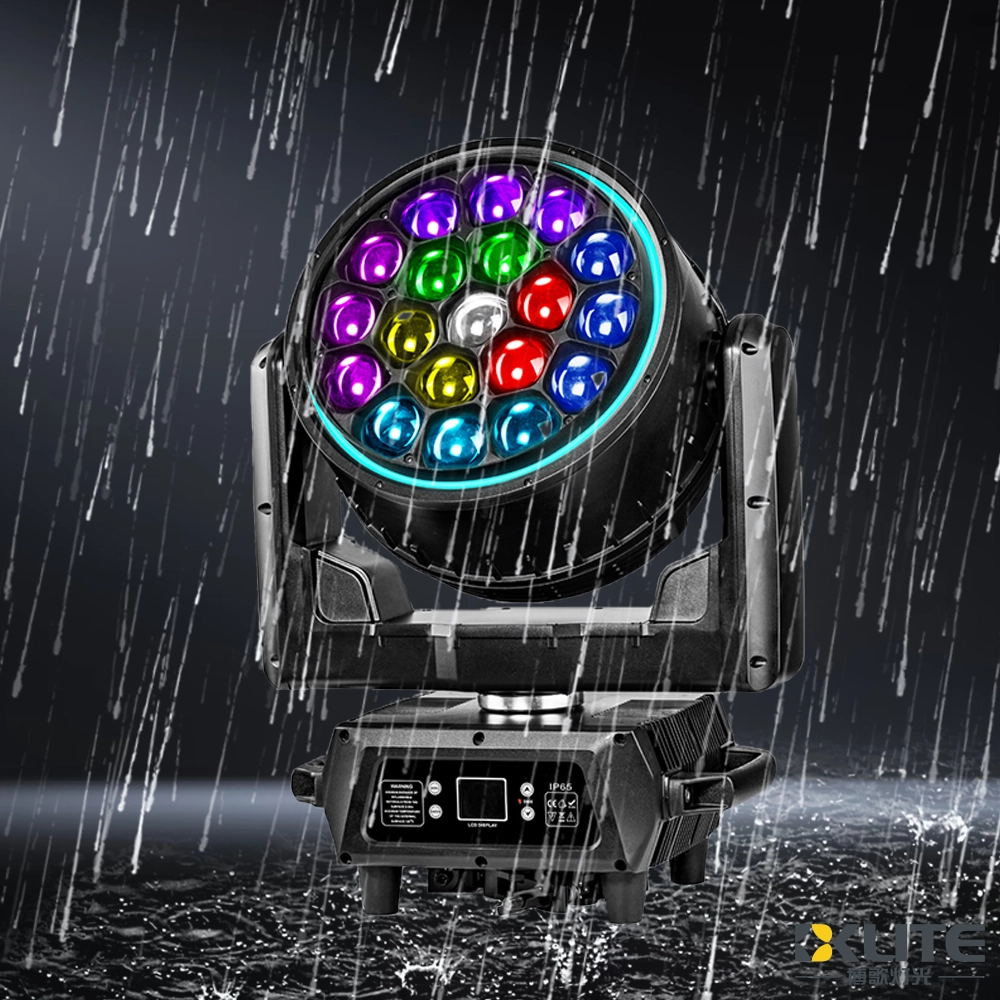
IP65 Waterproof Bee Eye Zoom 19x40W RGBW 4IN1 LED Beam Wash Moving Head Light with LED Ring
BKlite waterproof bee eye moving head light—your reliable choice from top waterproof moving head light manufacturers and suppliers. Ideal for outdoor stage, live event, music festival, this energy-saving fixture ensures powerful, precise illumination for any venue. It delivers powerful, reliable lighting performance in any weather.
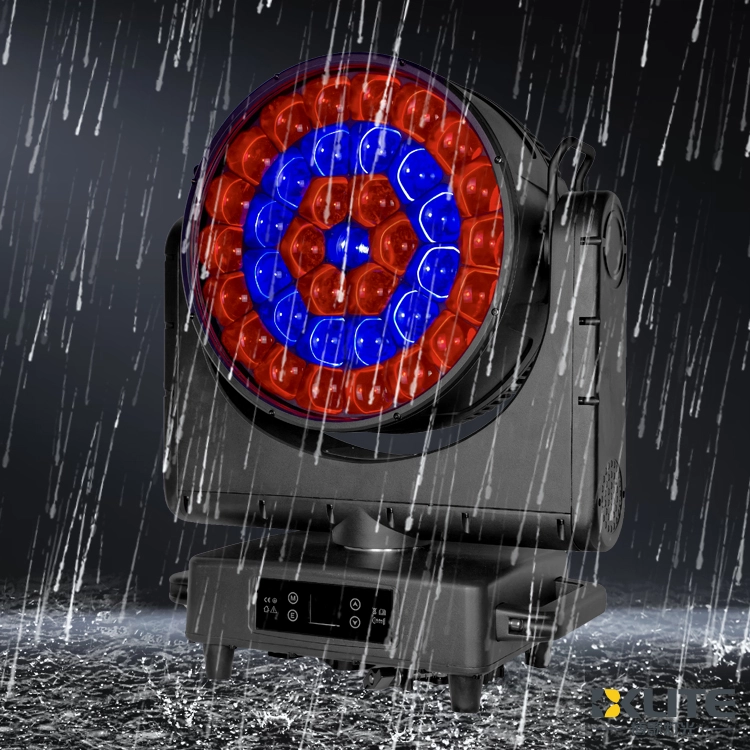
IP65 Waterproof ZOOM Bee Eye 37x40W RGBW 4in1 LED Moving Head Light
As a leading stage lighting equipment supplier with more than 15 years of industry know-how, BKlite brings you the IP65 ZOOM Bee Eye 37*40W RGBW 4in1 LED Moving Head Light (K25 Bee Eye) delivers vibrant, weatherproof lighting with powerful zoom and smooth movement. Ideal for dynamic stage effects, the K25 moving head light ensures stunning RGBW color mixing and reliable outdoor performance.
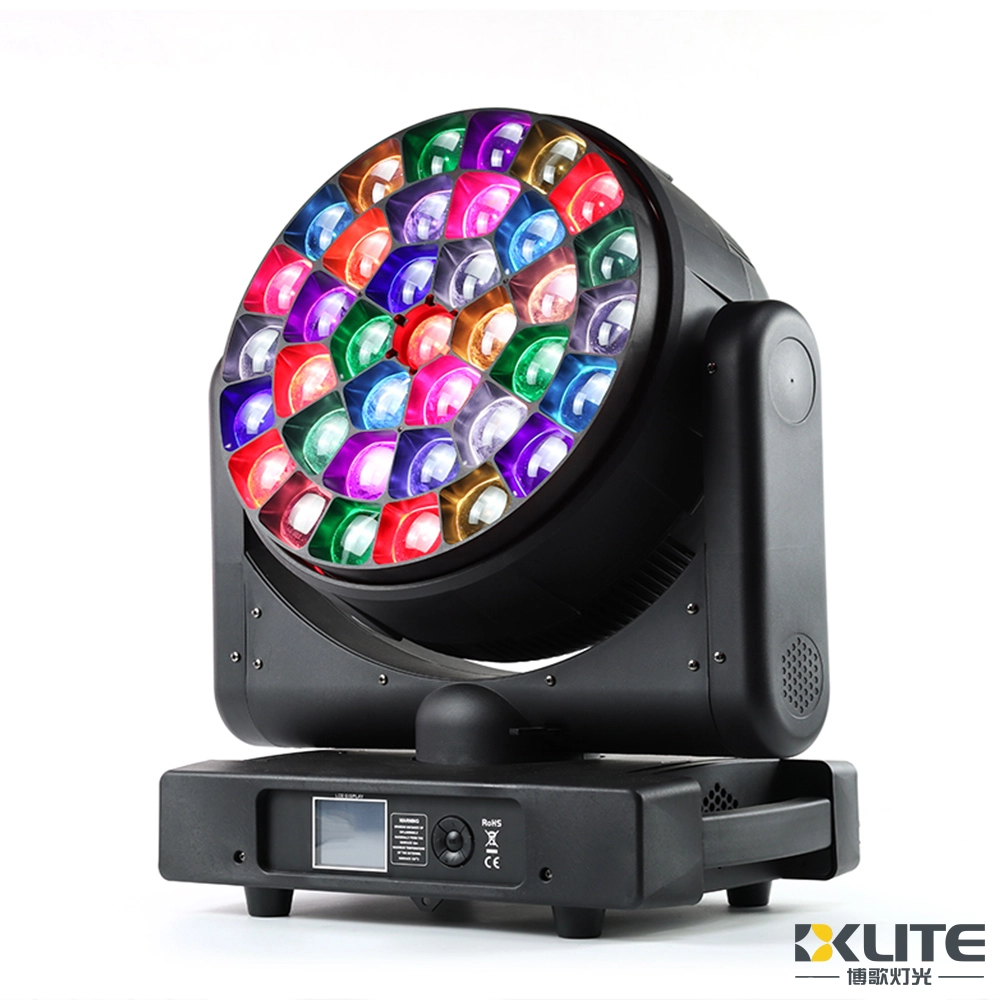
Bee Eye Zoom 37x40W RGBW 4in1 LED Beam Wash Moving Head Light
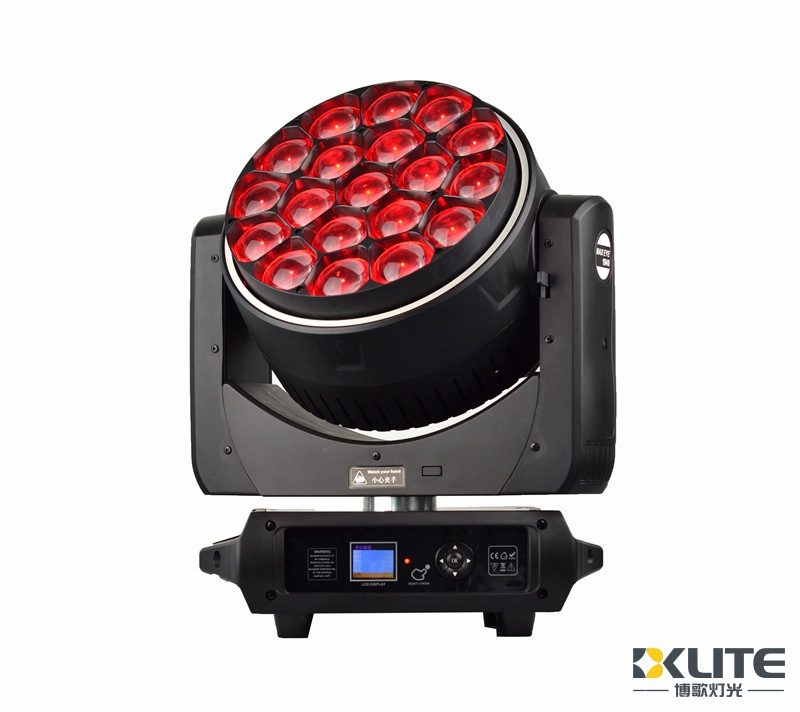
IP20 Bee Eye Zoom 19x40W RGBW 4IN1 LED Beam Wash Moving Head Light with LED Ring
As one of the leading stage lighting equipment suppliers with 15+ years of experience, BKlite launched a new Bee Eye K15 19x40 LED wash light BK-BY1940Z. .
Designed with a simple and sleek appearance, the WASH moving head light is compact, lightweight, and highly portable.
With multiple color effect macros and dynamic effect macros.
Our wash light can be used for versatile lighting options with amazing effect.
It is very good for your lighting projects.
Powerful and shoots very far distances.


Copyright © 2025 BKLITE All Rights Reserved.