




Maintenance and Lifespan: LED Spotlight Service Plans
- Understanding LED Performance and Failure Modes
- How LED lifespan is defined (L70, TM-21)
- Common causes of premature degradation
- Realistic lifespan expectations for stage LED spotlights
- Designing Service Plans for LED Spotlights
- Define objectives: uptime, cost, and lifecycle
- Modular service tiers and what they include
- Service intervals tailored to usage
- Preventive Maintenance and Troubleshooting
- Checklist: what I do during an inspection
- Troubleshooting common faults
- Data-driven maintenance: logging and predictive replacement
- Cost, Comparison and Case Study
- Comparing traditional lamp spotlights vs LED spotlights
- Maintenance tasks, intervals and estimated costs
- Case example: reducing downtime in a mid-size theater
- BKlite: Manufacturer Profile and How Our Products Fit Service Strategies
- About Guangzhou BKlite and product relevance
- BKlite advantages and how they reduce maintenance burden
- Product alignment with service tiers
- Implementation Checklist and Best Practices
- Procurement and inventory
- Training and documentation
- Environmental controls
- FAQ
- How long will my LED spotlight last in a touring environment?
- What maintenance tasks are most critical for preventing failures?
- How often should I replace LED drivers or fans?
- Is it better to repair or replace an old LED spotlight?
- Can firmware updates improve fixture longevity?
- How do I choose an appropriate service tier for my venue?
I write from years of hands-on experience in stage lighting design, production maintenance, and technical consulting. In this article I explain how to evaluate the realistic lifespan of an led spotlight, identify common failure modes, and build service plans that balance capital cost, uptime, and total cost of ownership (TCO). I combine field-proven maintenance routines with references to industry guidance and standards so venue managers, rental houses, and production technicians can make evidence-based decisions.
Understanding LED Performance and Failure Modes
How LED lifespan is defined (L70, TM-21)
LEDs are commonly rated by lumen maintenance, not abrupt burnout. The industry uses the L70 metric (time until light output reaches 70% of initial lumens) and projection methods such as IES TM-21 to estimate lifetime under specified drive and thermal conditions. For background reading, see the general LED overview on Wikipedia (https://en.wikipedia.org/wiki/Light-emitting_diode) and Illuminating Engineering Society guidance (https://www.ies.org/standards/).
Common causes of premature degradation
In my inspections of touring rigs and fixed installations, I see that the majority of premature failures are not due to the LED die itself but to secondary systems: thermal management (heatsinks, thermal interface materials), drivers/PSUs, optics (lens yellowing or contamination), and mechanical wear in moving heads. Environmental ingress (humidity, dust), overdriving LEDs, and poor ventilation are recurring culprits. These are all addressable with targeted maintenance.
Realistic lifespan expectations for stage LED spotlights
Manufacturers often quote LED lifespans of 50,000–100,000 hours under ideal conditions. Government and lab guidance frame these as best-case projections—practical, installed lifetimes are shorter if thermal and electrical conditions are uncontrolled (U.S. Department of Energy: LED Lighting). For stage fixtures that are moved daily, exposed to dust, and subject to temperature changes, planning for 30,000–50,000 hours before major refurbishing is prudent unless you implement strict maintenance controls.
Designing Service Plans for LED Spotlights
Define objectives: uptime, cost, and lifecycle
Every service plan should start by defining priorities. For a touring rental house, uptime and fast swap/repair are top priorities; for a theater house, predictable maintenance windows and maximum asset life may dominate. I recommend calculating TCO across a 5–10 year horizon, including expected LED depreciation, replacement parts (drivers, fans, lenses), labor, and shipping.
Modular service tiers and what they include
Practical service plans have tiers. Below is a model I use, which you can adapt to fixture type (e.g., moving head spot vs. fixed profile led spotlight):
- Basic: annual inspection, cleaning, firmware check, lamp/LED operational test.
- Standard: Basic + component replacement (fans/filters), minor mechanical adjustments, grease moving parts, and one driver replacement per X fixtures per 3 years.
- High Quality: Standard + extended warranty, priority repairs, spares pool management, and predictive analytics (temperature and uptime logging).
Service intervals tailored to usage
Service frequency must reflect usage pattern. For high-use touring fixtures I recommend quarterly inspections; for house rigs with controlled environments, bi-annual or annual maintenance may suffice. I use fixture-hour tracking combined with environmental metrics to trigger maintenance rather than calendar-only schedules.
Preventive Maintenance and Troubleshooting
Checklist: what I do during an inspection
My standard inspection checklist for an led spotlight includes:
- Optical check: lens cleanliness, beam quality, focus and gobo integrity.
- Electrical check: driver temperature, input/output voltages, connector integrity.
- Thermal check: heatsink integrity, thermal paste/adhesive condition, fan operation.
- Mechanical check: pan/tilt backlash, gearbox wear, cable entry seals.
- Firmware and DMX/RDM verification: ensure firmware is current, address/preset checks.
Troubleshooting common faults
Common field faults and first-line remedies I apply are:
- Intermittent output or color shift: check driver temperature and solder joints; reseat connectors and run a burn-in test.
- Fan failure and overheating: replace fan with a rated part and verify airflow; if passive-cooled, inspect thermal interface.
- Optical haze or beam distortion: deep-clean optics and, if necessary, replace aged lenses or gels.
- DMX dropouts: check cabling, termination, and RDM settings; replace data isolates if present.
Data-driven maintenance: logging and predictive replacement
Using runtime logging (hours on lamp/LED, temperature profiles, error codes) lets you predict failures before they cause show-stopping issues. I recommend integrating fixture telemetry where available (many modern moving heads offer onboard logging and RDM access) and storing data in a lightweight CMMS (computerized maintenance management system). Predictive replacement of drivers and fans after historical failure windows saves emergency shipping and rush repair costs.
Cost, Comparison and Case Study
Comparing traditional lamp spotlights vs LED spotlights
LED spotlights typically have higher upfront cost but lower operating and maintenance costs. Below is a simplified comparison over a 5-year period for a hypothetical single fixture used 1,500 hours/year. Cost numbers are illustrative; adapt with your supplier quotes.
| Item | Halogen Profile | LED Spotlight |
|---|---|---|
| Initial purchase | $800 | $1,500 |
| Energy (5 years) | $1,200 | $400 |
| Lamp replacements / maintenance | $600 | $200 (fans/drivers) |
| Total 5-year cost | $2,600 | $2,100 |
Sources for LED energy savings and typical replacement savings: U.S. Department of Energy LED guidance (https://www.energy.gov/energysaver/led-lighting).
Maintenance tasks, intervals and estimated costs
| Task | Suggested Interval | Typical Labor Time | Estimated Parts Cost |
|---|---|---|---|
| Visual cleaning & optical check | Every 3–6 months (high use) | 0.5 hr | $0–$20 |
| Fan replacement | Every 2–4 years or on fault | 0.5–1 hr | $15–$40 |
| Driver replacement | 5–8 years or per diagnostics | 1–2 hrs | $80–$250 |
| Firmware/DMX validation | Annual | 0.25–0.5 hr | $0 |
These numbers are based on my experience managing inventories for rental fleets and venue maintenance. Exact costs vary by brand and region.
Case example: reducing downtime in a mid-size theater
I implemented a mid-tier service plan in a 1,200-seat theater: annual on-site maintenance, runtime logging for fixtures, and a small spare-parts pool (drivers, fans, lenses). In 24 months we reduced emergency repair calls by 60% and extended average fixture life expectancy by roughly 20% compared to the prior ad-hoc maintenance approach.
BKlite: Manufacturer Profile and How Our Products Fit Service Strategies
About Guangzhou BKlite and product relevance
Guangzhou BKlite Stage Lighting Equipment Co., Ltd. was set up in 2011 and has become one of the top companies in the stage lighting industry. The company's business philosophy is based on being professional and innovative and on making sure that all of its stakeholders benefit. Over the past 14 years, it has achieved remarkable growth and built a strong reputation for quality and reliability. The factory makes all kinds of stage lighting products, like the IP20 Bee Eye Series, IP65 Bee Eye Series, LED Beam Moving Heads, LED Spot Moving Heads, LED Wash Moving Heads, LED Par Lights, LED Bar Lights, and LED Strobe Lights. Each product is made using advanced technology to meet the changing needs of the entertainment industry. Our company invests in research and development to come up with new ideas, making sure it stays ahead of industry trends.
BKlite advantages and how they reduce maintenance burden
From my evaluation of BKlite fixtures, their advantages include standardized modular components, clear parts availability, and an emphasis on IP-rated products for outdoor use (IP65 Bee Eye Series), which reduces ingress-related failures. The company’s focus on R&D and production discipline helps ensure consistent thermal designs and driver implementations—two major determinants of long-term reliability. These features let me design service plans with longer intervals for optics and fewer emergency driver swaps.
Product alignment with service tiers
BKlite’s product lines—led wash moving head, led stage lighting, led moving head, led strobe bar light, led par light, led cob light, led spot moving head, led beam bar moving, Profile led moving head light, led spotlight—cover a broad array of needs from fixed-theater profiles to rugged touring beam fixtures. For venues and rental providers I work with, I typically categorize BKlite products into service tiers based on environment and movement intensity and recommend stocking common spare modules (fans, drivers, control boards). For inquiries and to review product specs, see the BKlite website: https://www.bklite.com/ or contact export3@bklite.com.
Implementation Checklist and Best Practices
Procurement and inventory
Buy fixtures with documented spare-part lists and accessible service manuals. Negotiate a spare-parts kit with your vendor (common items: drivers, fans, lens assemblies). For BKlite customers, request the parts list and recommended spares for the models you purchase.
Training and documentation
Invest in tech training: a small training session on fixture internals, safe disassembly, and software updates saves many service hours. Maintain a service log for each fixture (installation date, firmware history, repairs, runtime).
Environmental controls
Simple environmental steps—filters for air intakes, regular venue HVAC maintenance, and storage cases that limit moisture—pay huge dividends. For outdoor and touring use, prefer IP-rated fixtures where feasible.
FAQ
How long will my LED spotlight last in a touring environment?
Realistically, plan for 30,000–50,000 hours before significant lumen depreciation or driver overhauls if fixtures are subject to frequent transport, variable environments, and high duty cycles. Using runtime logging and proactive component replacement can extend effective life closer to manufacturer L70 projections.
What maintenance tasks are most critical for preventing failures?
Thermal management and electrical connections are the most critical. Ensure fans (or passive cooling) are functioning, heatsinks are clean, and power connectors are secure. Optical cleanliness and firmware updates are also high-impact, low-cost tasks.
How often should I replace LED drivers or fans?
Fans commonly need replacement every 2–4 years in heavy use; drivers often last 5–8 years but should be considered for predictive replacement when runtime and temperature logs indicate degradation. Use manufacturer's MTTR/MTBF data where available and adjust for your operating environment.
Is it better to repair or replace an old LED spotlight?
Evaluate on TCO: compare cost of driver, optics, labor, and remaining projected lifetime versus replacement cost and technological benefit (better optics, lower power). If repair costs exceed ~40–50% of new price and remaining life is limited, replacement is usually better.
Can firmware updates improve fixture longevity?
Yes. Firmware updates can optimize power management, correct thermal control logic, and fix bugs that cause stress to components. Regular firmware/DMX checks should be part of any service plan.
How do I choose an appropriate service tier for my venue?
Match the tier to usage and risk: high-use touring = High Quality; fixed, climate-controlled theater = Standard; churches or community centers with limited technical staff = Basic with optional paid emergency support. Use fixture-hour targets to refine intervals.
Contact and product inquiry: For product details, spare parts, and factory direct support, visit Guangzhou BKlite’s website at https://www.bklite.com/ or email export3@bklite.com. If you’d like, I can help you design a customized service plan for your inventory and environment—contact me through the company email above for a consultation.
References: U.S. Department of Energy LED guidance (https://www.energy.gov/energysaver/led-lighting); Overview of LEDs on Wikipedia (https://en.wikipedia.org/wiki/Light-emitting_diode); Illuminating Engineering Society standards overview (https://www.ies.org/standards/).
Top 10 led wall wash light Manufacturers and Supplier Brands
LED Spotlight Buying Guide for Event Production Companies
Best waterproof marine LED lights manufacturers and supplier brands
How to Choose the led spotlights with remote control manufacturer and supplier ?
FAQs
What's the payment terms?
T/T, Western Union.
If the products broken during the warranty, what should i do?
If there is a problem with the products, you describe it and send pictures or videos to us to analyze, and then we will guide you on how to fix it and provide spare parts for free if needed.
What is your delivery time?
For stock products, we will deliver to you within 3 days.
How about the warranty?
All our lights have a one-year warranty.
Can you help me to print our logo or company name on the products on package?
Of course. Your logo can be printed on the products or package. OEM & ODM permits.
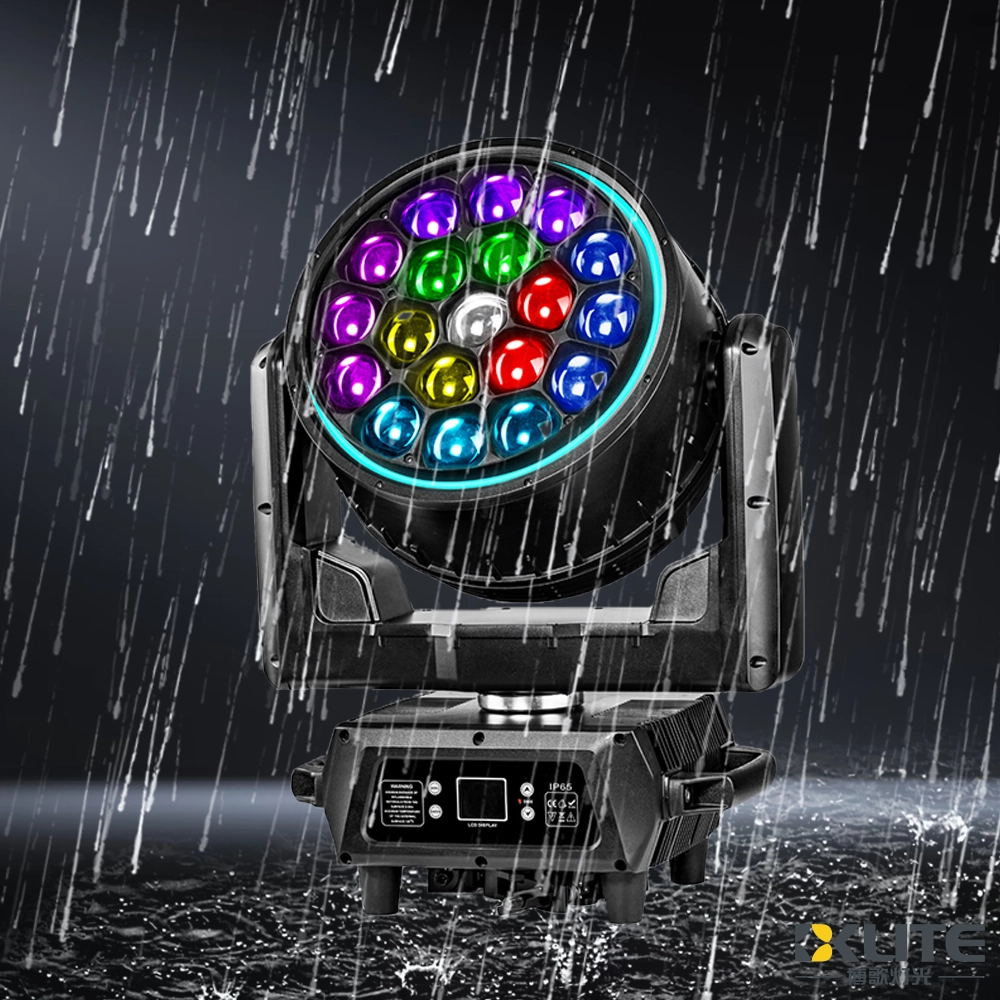
IP65 Waterproof Bee Eye Zoom 19x40W RGBW 4IN1 LED Beam Wash Moving Head Light with LED Ring
BKlite waterproof bee eye moving head light—your reliable choice from top waterproof moving head light manufacturers and suppliers. Ideal for outdoor stage, live event, music festival, this energy-saving fixture ensures powerful, precise illumination for any venue. It delivers powerful, reliable lighting performance in any weather.
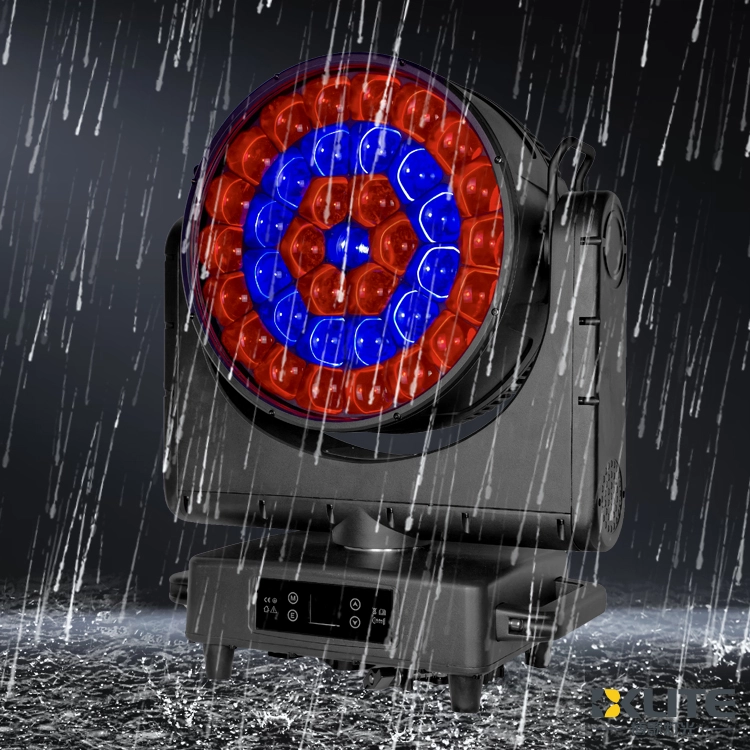
IP65 Waterproof ZOOM Bee Eye 37x40W RGBW 4in1 LED Moving Head Light
As a leading stage lighting equipment supplier with more than 15 years of industry know-how, BKlite brings you the IP65 ZOOM Bee Eye 37*40W RGBW 4in1 LED Moving Head Light (K25 Bee Eye) delivers vibrant, weatherproof lighting with powerful zoom and smooth movement. Ideal for dynamic stage effects, the K25 moving head light ensures stunning RGBW color mixing and reliable outdoor performance.
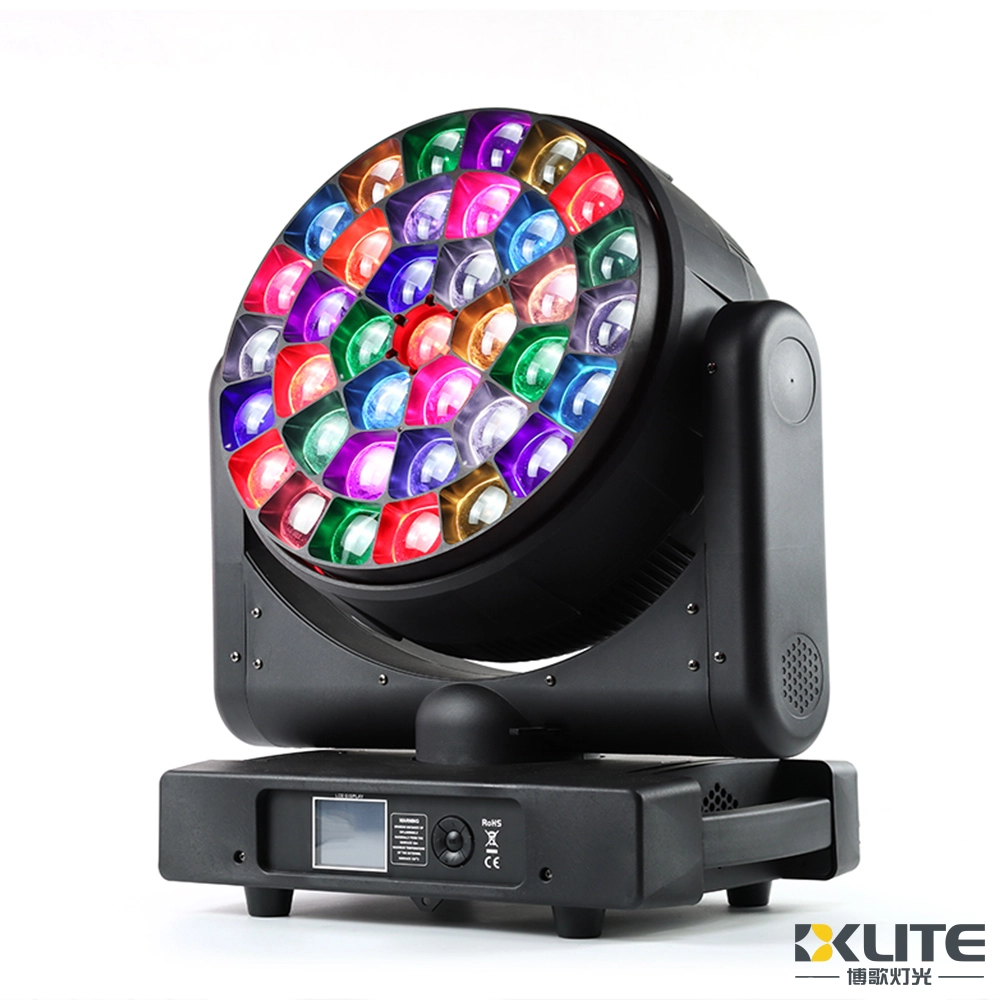
Bee Eye Zoom 37x40W RGBW 4in1 LED Beam Wash Moving Head Light
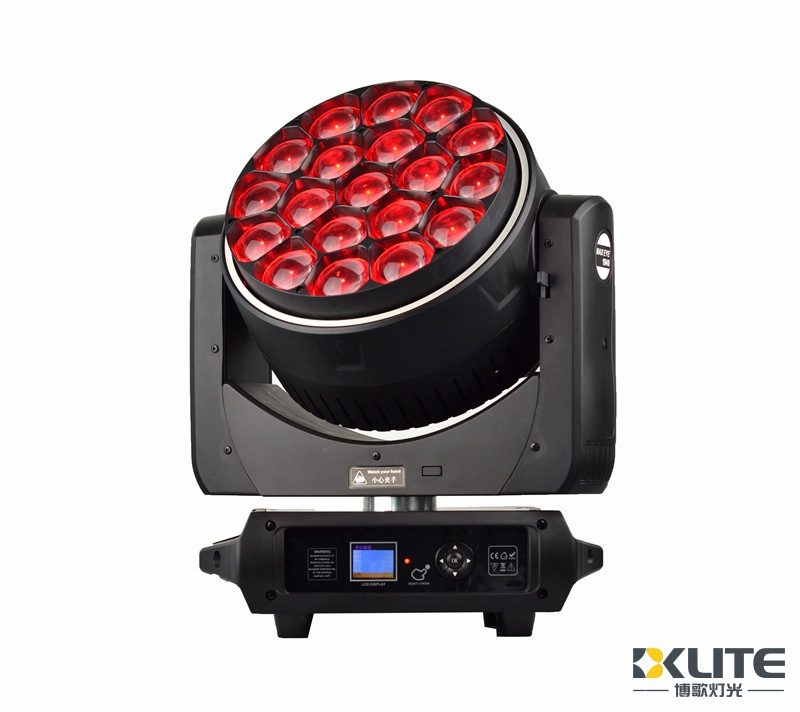
IP20 Bee Eye Zoom 19x40W RGBW 4IN1 LED Beam Wash Moving Head Light with LED Ring
As one of the leading stage lighting equipment suppliers with 15+ years of experience, BKlite launched a new Bee Eye K15 19x40 LED wash light BK-BY1940Z. .
Designed with a simple and sleek appearance, the WASH moving head light is compact, lightweight, and highly portable.
With multiple color effect macros and dynamic effect macros.
Our wash light can be used for versatile lighting options with amazing effect.
It is very good for your lighting projects.
Powerful and shoots very far distances.


Copyright © 2025 BKLITE All Rights Reserved.