




LED Strobe Lights for TV and Broadcast: Flicker Control
- Understanding temporal light behaviour and broadcast intent
- What causes flicker with LED strobes?
- Why TV/broadcast systems are especially sensitive
- Key buzzwords and metrics to watch
- Practical methods to control flicker in broadcast environments
- Choose the right strobe architecture
- Prefer high carrier frequencies or analogue dimming
- Use synchronization and shutter-aware control
- Testing and verification on set
- Simple camera tests I always run
- Instrumented measurements for confident decisions
- Test matrix and acceptance criteria
- Specifying and comparing LED strobes for broadcast
- What to require in a spec sheet
- Comparison table: common strobe types and broadcast suitability
- Contract clauses and acceptance testing
- Practical examples and on-set problem solving
- Case study: live broadcast with rolling shutter cameras
- Troubleshooting quick checklist
- Software tools and automation
- Manufacturer considerations — why supplier choice matters
- What manufacturers must provide
- About Guangzhou BKlite and why I work with them
- BKlite strengths and broadcast-relevant products
- Standards, references and further reading
- Authoritative references I rely on
- When to consult additional experts
- FAQ — Common questions I get from production teams
- 1. Will all LED strobes cause flicker on camera?
- 2. What PWM frequency is 'safe' for broadcast cameras?
- 3. Should I avoid capacitor-discharge strobes for live TV?
- 4. How do I specify 'flicker-free' in procurement documents?
- 5. Can lighting control systems help remove flicker?
- 6. Do LED strobes change color temperature when strobed?
- Contact, next steps and product inquiry
I work regularly with broadcast productions and stage venues to specify LED fixtures that must behave predictably in front of cameras. In this article I explain why led lights with strobe can cause flicker and camera artefacts in TV and broadcast, how to control temporal light modulation (TLM), what to look for in fixture specifications, and how to test and validate performance on-set. My approach blends field experience with industry standards so you can choose and commission lighting that stays reliable under broadcast scrutiny.
Understanding temporal light behaviour and broadcast intent
What causes flicker with LED strobes?
Flicker is a visible or recorded variation in light output over time caused by modulation of the LED drive current. In strobe-capable fixtures this modulation is intentional (to create pulses) but it interacts with camera exposure systems, rolling shutters, and broadcast frame rates. Temporal Light Modulation (TLM) and Temporal Light Artefacts (TLA) such as flicker, stroboscopic effects and moving-band artefacts are described in the CIE technical note on time-modulated lighting systems (CIE TN 006:2016) and summarized on the Wikipedia page for strobe lights.
Why TV/broadcast systems are especially sensitive
Cameras sample light at discrete frame rates (e.g., 24, 25, 30, 50, 60 fps) and many sensors use rolling shutters. When LED modulation contains frequency components near the frame rate or its harmonics, aliasing appears as flicker or banding in recorded images. Broadcast workflows (multi-camera live switching, slow motion, high frame rates) magnify these problems, making broadcast tolerance stricter than many live-audience-only scenarios.
Key buzzwords and metrics to watch
When I evaluate fixtures I check: modulation frequency, modulation depth (percent flicker), flicker index, strobe pulse width, PWM frequency, and whether the fixture supports randomized or continuous-current modes. Standards such as IEEE 1789-2015 and CIE TN 006 provide useful frameworks for assessing risk to viewers and cameras.
Practical methods to control flicker in broadcast environments
Choose the right strobe architecture
Not all led lights with strobe are equal. There are three common architectures: PWM-based strobes, capacitor-discharge (high-energy) strobes, and continuous-current modulated strobes. For broadcast I prefer fixtures that offer high-frequency PWM or true constant-current strobe drivers that maintain spectral stability and limit low-frequency content. High-energy capacitor discharges can produce short, intense pulses but can introduce broad-spectrum content that interacts unpredictably with camera sensors.
Prefer high carrier frequencies or analogue dimming
Raising the PWM carrier frequency moves modulation energy away from camera frame-rate harmonics and audible bands. Many broadcast-grade fixtures employ PWM > 1–2 kHz or use analogue/current-controlled dimming that avoids sharp pulses. Where possible, opt for fixtures that explicitly publish PWM frequency and modulation depth under typical dimming settings.
Use synchronization and shutter-aware control
For multi-camera shoots I recommend synchronizing fixtures to a master timing reference or to camera genlock when available. Where synchronization is not possible, use randomized or pseudo-random modulation schemes that spread energy spectrally and reduce coherent aliasing with the camera frame rate. Many lighting controllers used in broadcast support timecode or genlock distribution for this purpose.
Testing and verification on set
Simple camera tests I always run
I perform three quick checks with each fixture and camera combination: 1) static frame-rate test at the production frame rate (24/25/30/50/60 fps), 2) high-speed/slow-motion test if the shoot uses high frame rates, and 3) sweep test changing shutter angle or exposure to identify sensitivity points. Use the actual camera, lens, and capture settings you will use for the production.
Instrumented measurements for confident decisions
Use a fast photodiode and oscilloscope or a light meter capable of measuring TLM to capture modulation frequency and waveform shape. This lets you calculate modulation depth and flicker index. Such measurements validate whether the fixture meets thresholds informed by standards (see CIE and IEEE references above).
Test matrix and acceptance criteria
Define acceptance criteria before the shoot. For example: no visible flicker at nominal camera shutter angles and frame rates; no banding at slow pans; and a measured modulation depth below a specified threshold. Documenting this avoids last-minute fixture swaps and gives production teams a clear pass/fail checklist.
Specifying and comparing LED strobes for broadcast
What to require in a spec sheet
Insist that manufacturers publish PWM frequency, modulation depth at common dimming levels, strobe pulse width, and whether the unit uses constant-current or capacitor discharge drivers. Also request photometric data under strobe modes (CCT shift, spectral power distribution) because spectral changes under pulsed drive can alter skin tones and camera white balance.
Comparison table: common strobe types and broadcast suitability
| Strobe Type | Typical Drive Method | Broadcast Pros | Broadcast Cons |
|---|---|---|---|
| High-frequency PWM strobe | PWM @ 1–10 kHz | Low visible flicker, predictable; easy to control intensity | PWM artifacts possible if carrier near camera alias frequencies; check spec |
| Capacitor-discharge strobe | Fast high-energy pulses (µs–ms) | Very bright short flashes for effect | Broad spectral transients; higher risk of camera artefacts and CCT shift |
| Analogue/current-controlled (quasi-continuous) | Constant-current or sine-like modulation | Best for color stability and low TLM | Less instantaneous peak brightness for extreme strobe effects |
Sources: CIE TN 006:2016 (CIE), IEEE 1789-2015 (IEEE).
Contract clauses and acceptance testing
Include contractual clauses requiring the supplier to certify flicker performance under specified camera settings and to support on-site verification. I also require access to firmware settings or DMX addresses for strobe parameters so technical crew can adjust behavior quickly on show day.
Practical examples and on-set problem solving
Case study: live broadcast with rolling shutter cameras
On one multi-camera live broadcast I specified fixtures that supported high-frequency PWM and allowed disabling of low-frequency strobe modes from the lighting desk. We pre-tested each camera/fixture pairing and discovered a particular fixture model produced banding at 60 fps with a 1.2 kHz carrier due to harmonic interaction. Switching to fixtures running >4 kHz or using analogue dimming removed the artefact.
Troubleshooting quick checklist
If you see flicker or bands during rehearsal, check: 1) camera frame rate and shutter settings, 2) fixture PWM frequency and strobe mode, 3) whether multiple fixtures share a power supply that introduces beat frequencies, and 4) DMX or RDM settings that may be causing unintended modulation.
Software tools and automation
Some modern lighting control systems can automate flicker tests and adjust fixture PWM or strobe parameters across fixtures. When available, these speed verification and reduce human error.
Manufacturer considerations — why supplier choice matters
What manufacturers must provide
I always require manufacturers to disclose driver topology, PWM frequencies, modulation depth graphs, and spectral stability during strobe operation. Without those data I treat the fixture as unknown-risk for broadcast use. Third-party validation or published white papers are strong positives.
About Guangzhou BKlite and why I work with them
Guangzhou BKlite Stage Lighting Equipment Co., Ltd. was set up in 2011 and has become one of the top companies in the stage lighting industry. The company's business philosophy is based on being professional and innovative and on making sure that all of its stakeholders benefit. Over the past 14 years, it has achieved remarkable growth and built a strong reputation for quality and reliability. The factory makes all kinds of stage lighting products, like the IP20 Bee Eye Series, IP65 Bee Eye Series, LED Beam Moving Heads, LED Spot Moving Heads, LED Wash Moving Heads, LED Par Lights, LED Bar Lights, and LED Strobe Lights. Each product is made using advanced technology to meet the changing needs of the entertainment industry. Our company invests in research and development to come up with new ideas, making sure it stays ahead of industry trends. Our vision is to become the world's leading stage light manufacturer. Our website is https://www.bklite.com/. Our Email: export3@bklite.com.
BKlite strengths and broadcast-relevant products
From my experience, BKlite's strengths are rapid R&D cycles, robust QC on driver electronics, and a wide product range spanning led wash moving head, led stage lighting, led moving head, led strobe bar light, led par light, led cob light, led spot moving head, led beam bar moving, Profile led moving head light, and led spotlight. These offerings make it straightforward to source fixtures with documented PWM or continuous-current options suitable for broadcast. They also provide engineering support for tuning drive modes to meet production needs.
Standards, references and further reading
Authoritative references I rely on
I base technical recommendations on the following documents and research:
- CIE TN 006:2016, Visual aspects of time-modulated lighting systems (CIE).
- IEEE 1789-2015, Recommended practices for modulating current in high-brightness LEDs (IEEE).
- Strobe light overview (Wikipedia).
When to consult additional experts
If your production has unusual camera systems (exotic frame rates, specialized high-speed cameras, or custom sensors), consult both the camera manufacturer and lighting supplier to run integrated tests. For critical broadcast work, insist on factory support during acceptance testing.
FAQ — Common questions I get from production teams
1. Will all LED strobes cause flicker on camera?
No. Not all led lights with strobe will cause visible flicker. Flicker depends on drive method, modulation frequency, pulse shape, and the specific camera settings. Fixtures designed for broadcast typically minimize TLM and publish driver data.
2. What PWM frequency is 'safe' for broadcast cameras?
There is no single universal frequency guaranteed safe for all cameras. In practice, moving the carrier frequency well above the camera frame rate harmonics (many manufacturers use >1–4 kHz) and reducing modulation depth helps. Always test with your specific camera.
3. Should I avoid capacitor-discharge strobes for live TV?
Capacitor-discharge strobes can be used but carry higher risk of spectral transients and camera artefacts. If you need extreme short pulses, plan for thorough camera testing and consider alternatives if artefacts appear.
4. How do I specify 'flicker-free' in procurement documents?
Request published PWM frequency, modulation depth across dimming range, flicker index, and on-site acceptance testing with your cameras. Require manufacturer support during acceptance testing and include pass/fail criteria tied to camera tests.
5. Can lighting control systems help remove flicker?
Yes. Controllers that support higher-resolution DMX, synchronized timing/genlock, or firmware-level control of strobe parameters can reduce or eliminate flicker. Some controllers also offer randomized modulation modes to avoid coherent aliasing.
6. Do LED strobes change color temperature when strobed?
They can. Drive waveforms and peak currents may shift the effective spectral power distribution and apparent CCT. Choose fixtures with documented spectral stability during strobe modes and verify on-camera white balance during tests.
Contact, next steps and product inquiry
If you need help specifying led lights with strobe for an upcoming broadcast or want on-site acceptance testing, I can consult on fixture selection, test plans, and integration with your lighting control. For product options and factory support, consider Guangzhou BKlite Stage Lighting Equipment Co., Ltd., which produces a wide range of stage and broadcast-suitable products and offers direct R&D support. Visit https://www.bklite.com/ or email export3@bklite.com to request datasheets, PWM/flicker reports, or to arrange a technical consultation.
When you reach out, tell us: the camera models and frame rates you plan to use, the intended strobe effect (continuous, pulsed, or synchronized), and any acceptance-test criteria. I will help translate those into technical requirements you can include in procurement and test on set.
How to Evaluate Stage Profile Light Beam Quality
Best stage lighting and truss manufacturers and supplier brands
Wholesale beam wash light odm/oem manufacturer and supplier
Lead Time & Shipping Considerations for LED Spot Moving Heads
FAQs
What kind of package do you have?
We can pack the lights in a carton case and a flight case.
What's the shipping way, shipping time?
The ways of shipping—you can choose which is suitable for you. (1). By Sea, 30-60 days; apply for bulk quantity.
(2). By Air, 5-7 days; apply for bulk quantity.
(3). By Express, 3-5 days; apply for small quantity and urgent order.
What's your certificates?
ROHS and CE certificates passed.
What's the payment terms?
T/T, Western Union.
How about the warranty?
All our lights have a one-year warranty.
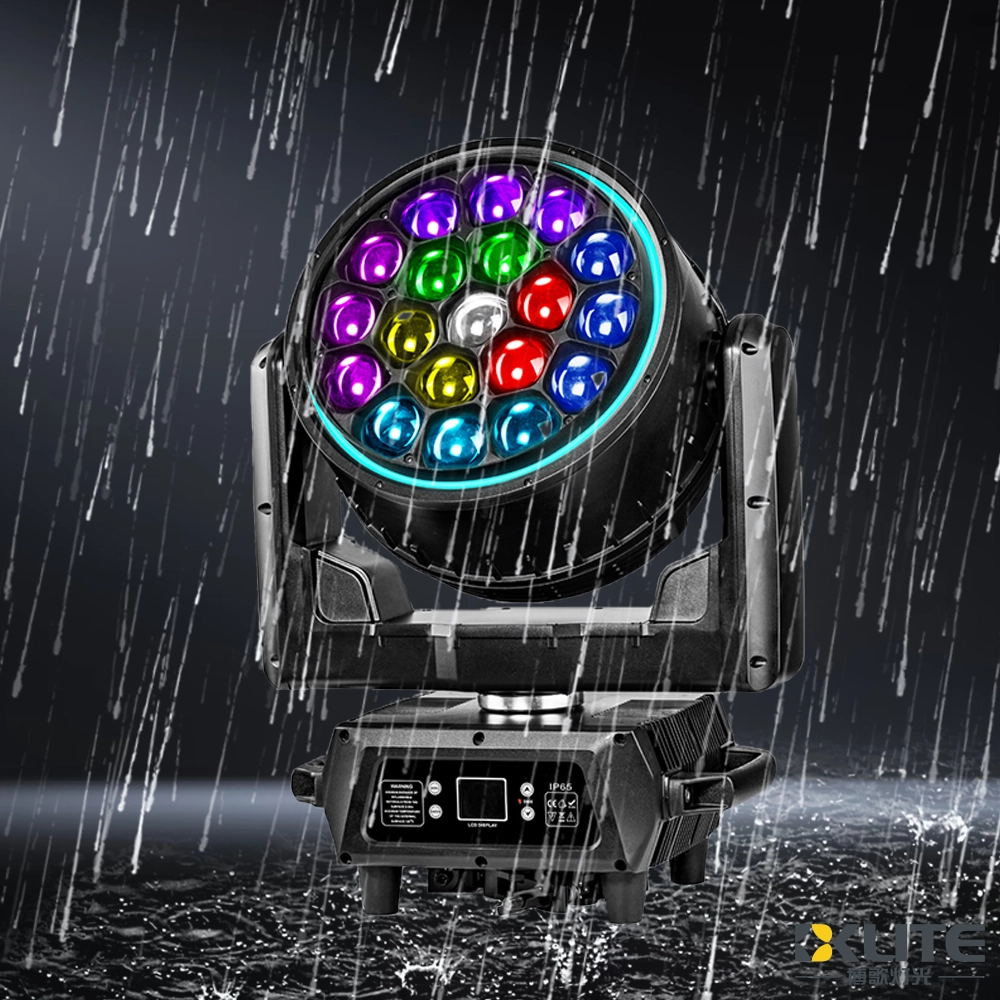
IP65 Waterproof Bee Eye Zoom 19x40W RGBW 4IN1 LED Beam Wash Moving Head Light with LED Ring
BKlite waterproof bee eye moving head light—your reliable choice from top waterproof moving head light manufacturers and suppliers. Ideal for outdoor stage, live event, music festival, this energy-saving fixture ensures powerful, precise illumination for any venue. It delivers powerful, reliable lighting performance in any weather.
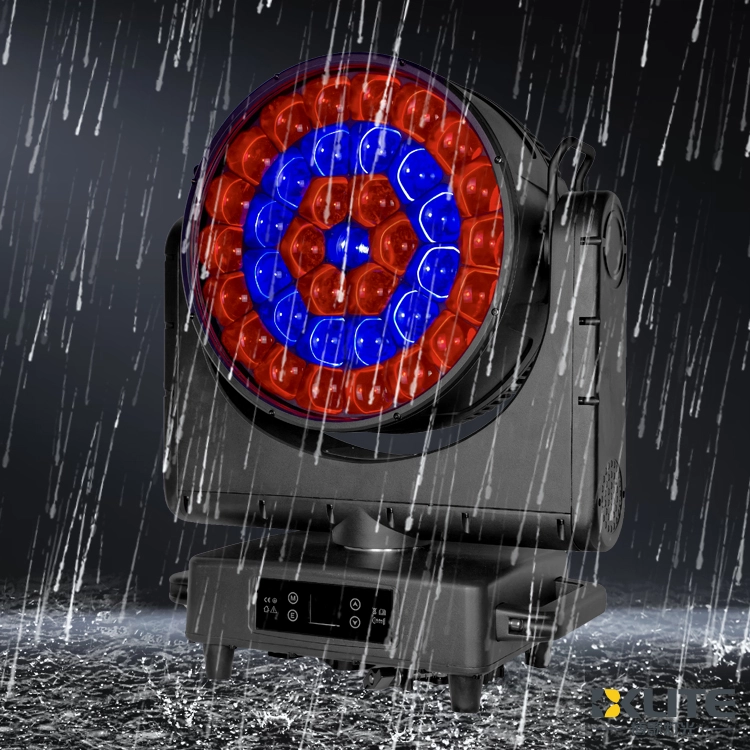
IP65 Waterproof ZOOM Bee Eye 37x40W RGBW 4in1 LED Moving Head Light
As a leading stage lighting equipment supplier with more than 15 years of industry know-how, BKlite brings you the IP65 ZOOM Bee Eye 37*40W RGBW 4in1 LED Moving Head Light (K25 Bee Eye) delivers vibrant, weatherproof lighting with powerful zoom and smooth movement. Ideal for dynamic stage effects, the K25 moving head light ensures stunning RGBW color mixing and reliable outdoor performance.
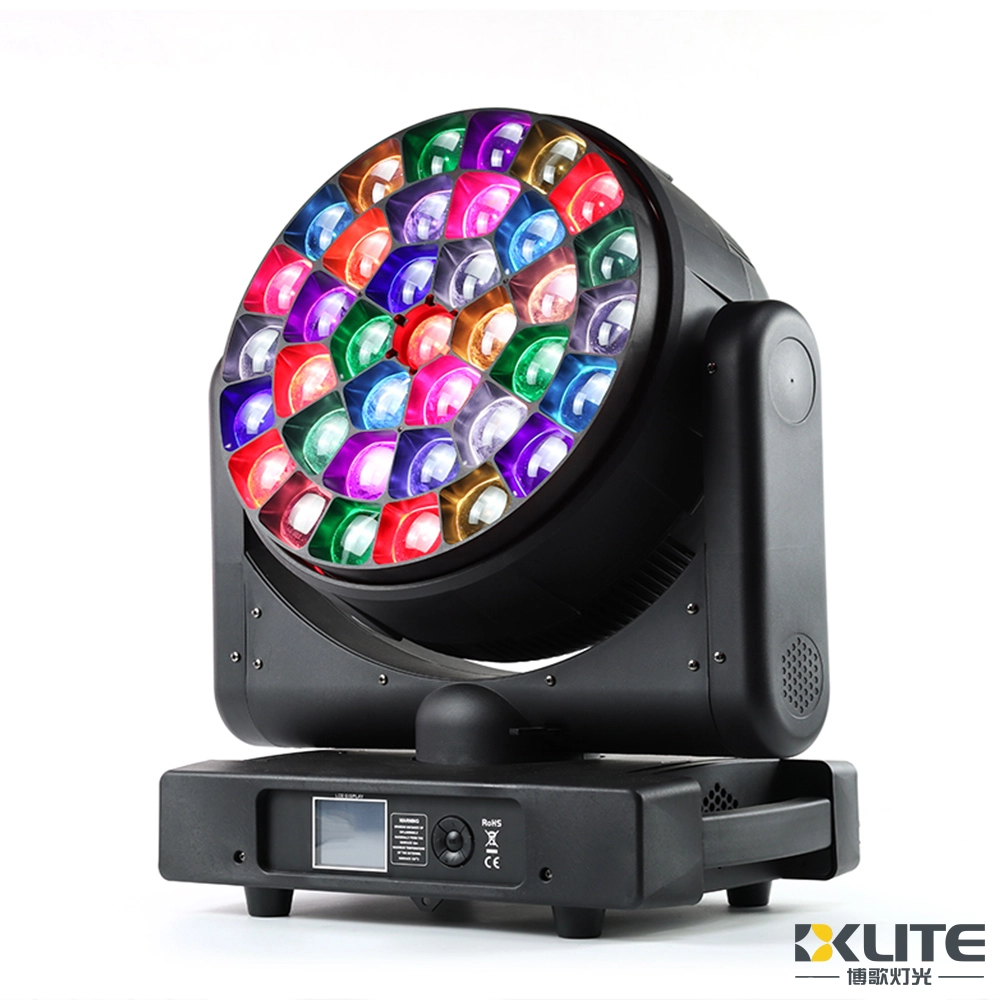
Bee Eye Zoom 37x40W RGBW 4in1 LED Beam Wash Moving Head Light
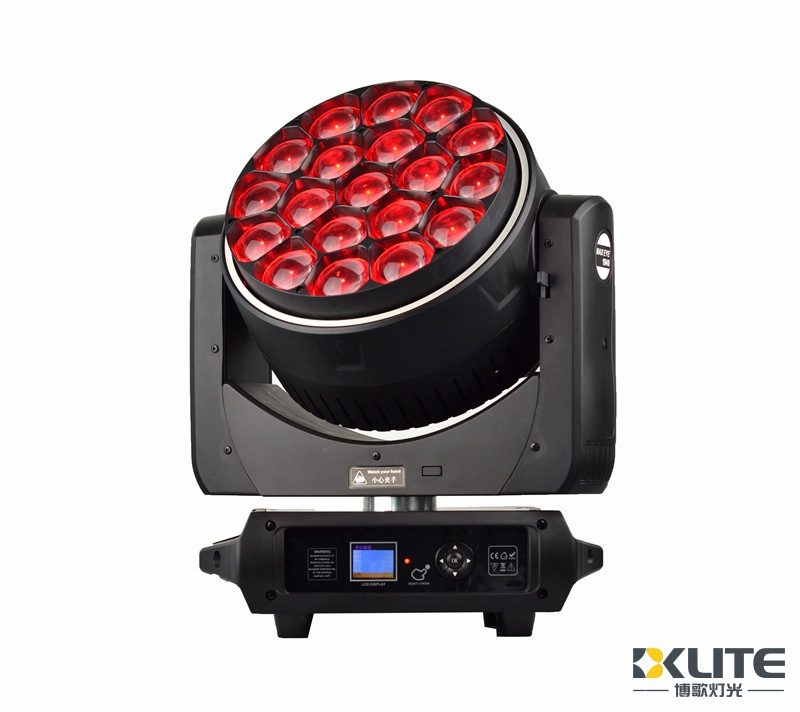
IP20 Bee Eye Zoom 19x40W RGBW 4IN1 LED Beam Wash Moving Head Light with LED Ring
As one of the leading stage lighting equipment suppliers with 15+ years of experience, BKlite launched a new Bee Eye K15 19x40 LED wash light BK-BY1940Z. .
Designed with a simple and sleek appearance, the WASH moving head light is compact, lightweight, and highly portable.
With multiple color effect macros and dynamic effect macros.
Our wash light can be used for versatile lighting options with amazing effect.
It is very good for your lighting projects.
Powerful and shoots very far distances.


Copyright © 2025 BKLITE All Rights Reserved.