




LED Strobe vs Traditional Xenon: What Buyers Need to Know
- Understanding the technologies and common applications
- How xenon strobes work and where they excel
- How LED strobes work and why they’ve become dominant
- Technical comparison: performance, lifecycle, and costs
- Key performance metrics buyers should evaluate
- Tabular comparison (typical values and qualitative assessment)
- Safety, health, and regulatory considerations
- Photosensitive epilepsy and flash rate guidance
- Photobiological safety and standards
- Buying guidance: what to ask and how to decide
- Questions to ask suppliers and spec writers
- Decision matrix by use case
- Cost of ownership: real-world numbers and examples
- Operational cost comparison (illustrative)
- Environmental and regulatory considerations
- Choosing products and suppliers: why manufacturer capabilities matter
- What to look for in a supplier
- About Guangzhou BKlite — capabilities and products
- Why BKlite is worth considering
- Practical recommendations and final checklist
- Quick purchasing checklist
- Recommendation summary
- Frequently Asked Questions (FAQ)
- 1. Are LED strobes as bright as xenon?
- 2. Will LED strobes cause camera flicker on TV or film?
- 3. How often do xenon lamps need replacement versus LED fixtures?
- 4. Are LED strobes safer regarding photosensitive epilepsy?
- 5. What should rental houses choose to maximize ROI?
- 6. Can LED strobes replicate xenon-style single-pulse effects?
- Contact and next steps
When choosing lighting for live events, film, clubs, or installations, buyers increasingly ask whether to select traditional xenon strobes or modern led lights with strobe capability. This article distills the technical differences, operational trade-offs, safety considerations, lifecycle costs, and recommended use cases so buyers can select a solution that meets artistic goals, budget, and operational constraints.
Understanding the technologies and common applications
How xenon strobes work and where they excel
Traditional xenon strobes (xenon flash or xenon arc lamps) create intense, short-duration pulses by ionizing xenon gas between electrodes. The result is a very high peak output across a broad spectral range, which made xenon the industry standard for photographic flash and high-impact stage effects. Their strengths are ultra-short pulse duration (micro- to milliseconds), very high instantaneous brightness, and a broad color output that approximates daylight without additional color mixing.
Because of the extremely high peak intensity, xenon strobes remain preferred in applications requiring maximum instantaneous light for freeze-motion photography, some TV camera requirements, and specific theatrical cues where a single, very bright pulse is desired. More on strobe fundamentals: Strobe light (Wikipedia).
How LED strobes work and why they’ve become dominant
LED strobes use arrays of high-power LEDs that are pulsed or driven at high refresh rates to create strobing effects. LEDs can be modulated precisely for flash duration, color, and repetition rate. Modern led lights with strobe capability can simulate a wide range of effects: from short, harsh pulses to softer rhythmic flicker, and can offer full color control using RGB or RGBW mixing.
LEDs offer higher electrical efficiency, longer service life, lower fixture operating temperature, and integration with digital control protocols (DMX/RDM, Art-Net) compared with xenon lamp systems. For background on LED technology: Light-emitting diode (Wikipedia) and energy/performance context from the U.S. Department of Energy: DOE — LED basics.
Technical comparison: performance, lifecycle, and costs
Key performance metrics buyers should evaluate
When comparing led lights with strobe to xenon strobes, evaluate these metrics: peak luminous intensity, pulse duration and variability, color rendering and control (CRI, CCT), duty cycle and thermal management, power draw and efficiency, maintenance (lamp/driver replacement), and digital control compatibility.
Each metric directly affects the creative possibilities, running costs, and logistical demands of a show or installation.
Tabular comparison (typical values and qualitative assessment)
| Metric | LED Strobe (typical) | Traditional Xenon Strobe (typical) |
|---|---|---|
| Peak instantaneous output | High, but lower than xenon for very short flash durations; adjustable | Very high peaks ideal for freeze-frame; excellent for photography |
| Pulse duration | Micro- to milliseconds; highly controllable (adjustable pulse width) | Extremely short pulses possible; hardware-limited but extremely brief |
| Color control | Full RGB/RGBW control; programmable CCT and effects | Broad-spectrum white; limited color without filters or complex converters |
| Energy efficiency | High (LEDs up to 100–200 lm/W in fixtures; system efficiency often >100 lm/W) — see DOE | Lower luminous efficacy; significant energy in heat and spectral energy distribution |
| Lifespan | Long: typically 25,000–50,000 hours for LEDs; driver-dependent | Shorter: xenon lamps often require replacement hundreds to a few thousand hours depending on duty and type |
| Maintenance & running costs | Lower — fewer lamp changes, less cooling, lower power bills | Higher — lamps, ignitors, more cooling, technician time |
| Heat and fixture temperature | Lower case temp with proper thermal management | High heat; requires robust cooling and safety considerations |
| Control & integration | Excellent: DMX, RDM, Art-Net, sACN, networkable | Limited: often dedicated controllers or older DMX implementations |
| Safety & photosensitivity | Configurable to reduce photosensitive seizure risk; can dim or limit flash rates | High instantaneous brightness increases photosensitive seizure risk; caution required |
Sources: DOE LED basics (energy.gov), strobe fundamentals (Wikipedia), safety considerations (see epilepsy guidance below).
Safety, health, and regulatory considerations
Photosensitive epilepsy and flash rate guidance
Strobe lighting can trigger photosensitive seizures in a subset of people. Industry and health organizations recommend caution with flash rates and duty cycles. As a buyer, insist that fixtures and controllers offer rate limiting, blackout options, and content previews. Reliable guidance on photosensitivity is available from the Epilepsy Foundation: Epilepsy Foundation — Photosensitivity.
Photobiological safety and standards
Modern lighting equipment should comply with photobiological safety standards (e.g., IEC 62471). These standards help assess risks of retinal injury from intense light sources. Always ask manufacturers for a photobiological safety report or classification for any high-intensity strobe fixture.
For standard references see the IEC webstore: IEC 62471 (photobiological safety of lamps).
Buying guidance: what to ask and how to decide
Questions to ask suppliers and spec writers
When evaluating led lights with strobe or xenon fixtures, request these specifics:
- Peak lux at set distances and beam angles, plus measurement method
- Pulse-duration range (microsec to ms) and minimum achievable pulse
- Strobe repetition range and rate-limiting features
- Color control (RGB, RGBW, tunable white) and CRI/TLCI values
- Thermal specs, duty cycle, required ventilation, and ambient limits
- Service life for lamp/LED and recommended replacement schedule
- Photobiological safety report (IEC 62471 classification) and warranty
- Control protocols supported (DMX, RDM, Art-Net, sACN) and firmware update policy
Decision matrix by use case
Below are practical recommendations by scenario.
- Photography/High-speed freeze: Xenon still wins for maximum instantaneous peak per pulse; if absolute shortest pulse is required, choose xenon—ensure proper safety measures.
- Concerts, clubs, tours: LED strobes are preferred for lower power draw, color versatility, integration, reliability, and lower maintenance.
- TV/Film: Consider camera rolling shutter and flicker — LEDs with high PWM frequency and camera-synchronized modes can be suitable; for very short-camera exposures, xenon may still be used but check color and flicker interaction.
- Outdoor festivals and rental houses: LEDs are generally more robust (IP-rated models available) and cheaper to operate over time.
Cost of ownership: real-world numbers and examples
Operational cost comparison (illustrative)
The following example illustrates lifecycle costs for a single fixture over 5 years of typical rental/venue use. Numbers are illustrative but conservative—always request supplier quotes and measured performance data for budgeting.
| Cost factor | LED Strobe (example) | Xenon Strobe (example) |
|---|---|---|
| Initial fixture cost | Medium–high (depends on features): $800–$3,000 | High (specialized xenon rig): $1,500–$5,000 |
| Annual energy (kWh estimate) | Lower (e.g., 200–800 kWh/year depending on use) | Higher (cooling + lamp power; 2–4x LED in many cases) |
| Maintenance (lamps/drivers) | Low (few replacements; driver replacement occasional) | High (lamp replacements, ignitors, service) |
| 5-year TCO (typical) | Generally lower for LEDs due to energy and maintenance savings | Often higher due to consumables and downtime |
These figures depend heavily on utilization. Rental houses and touring acts typically see ROI on LED systems faster because of drastically reduced lamp replacement and power costs.
Environmental and regulatory considerations
LEDs are mercury-free and generally easier to recycle; xenon lamps don’t contain mercury but can require careful disposal and have shorter lifespans leading to higher material throughput. If sustainability or lower carbon footprint is a procurement goal, led lights with strobe functionality will usually be the better option.
Choosing products and suppliers: why manufacturer capabilities matter
What to look for in a supplier
Buyers should prioritize suppliers with:
- Strong R&D and visible product testing protocols
- Clear safety documentation (photobiological reports, wiring/thermal specs)
- Easy access to spares and global service support
- Firmware/feature updates and long product lifecycles
About Guangzhou BKlite — capabilities and products
Guangzhou BKlite Stage Lighting Equipment Co., Ltd. was set up in 2011 and has become one of the top companies in the stage lighting industry. The company's business philosophy is based on being professional and innovative and on making sure that all of its stakeholders benefit. Over the past 14 years, it has achieved remarkable growth and built a strong reputation for quality and reliability.
The factory makes all kinds of stage lighting products, like the IP20 Bee Eye Series, IP65 Bee Eye Series, LED Beam Moving Heads, LED Spot Moving Heads, LED Wash Moving Heads, LED Par Lights, LED Bar Lights, and LED Strobe Lights. Each product is made using advanced technology to meet the changing needs of the entertainment industry. Our company invests in research and development to come up with new ideas, making sure it stays ahead of industry trends.
Our vision is to become the world's leading stage light manufacturer. For inquiries and product information visit https://www.bklite.com/ or email export3@bklite.com. BKlite's product strengths include led wash moving head, led stage lighting, led moving head, led strobe bar light, led par light, led cob light, led spot moving head, led beam bar moving, Profile led moving head light, and led spotlight.
Why BKlite is worth considering
BKlite emphasizes R&D and offers a broad portfolio that addresses the common buyer needs discussed here: reliable led lights with strobe capability, IP-rated options for outdoor use, and moving head fixtures supporting modern control standards. Buyers gain from consolidated supply (one partner for beams, spots, washes, and strobes), documented testing, and service contacts to reduce downtime on tours or installations.
Practical recommendations and final checklist
Quick purchasing checklist
- Define use case: photography vs live entertainment vs TV/film.
- Request measured lux and pulse-duration data at your working distances and beam angles.
- Verify IEC 62471 / photobiological safety documentation and epilepsy mitigations.
- Confirm control protocols and compatibility with your lighting console.
- Calculate total cost of ownership (power, spare lamps, service hours) over expected lifecycle.
- Ask for sample units or loaners for camera tests and on-site demos.
Recommendation summary
If you need maximum instantaneous flash intensity for photographic freeze or special effects and can manage higher maintenance and safety processes, xenon remains a viable choice. For most live-event, touring, and installation needs, led lights with strobe capability provide more flexibility, lower TCO, color control, and safer operational profiles—making LEDs the better default option for many buyers.
Frequently Asked Questions (FAQ)
1. Are LED strobes as bright as xenon?
LED strobes can produce very bright outputs and are sufficient for most stage and club applications. For absolute peak instantaneous brightness (for very short pulses and freeze-motion photography), xenon can still exceed LED peak per-pulse intensity. For many buyers, LED arrays with multiple fixtures can achieve comparable perceived brightness with better control and color mixing.
2. Will LED strobes cause camera flicker on TV or film?
LEDs can cause camera flicker if PWM or refresh rates align poorly with camera shutter speeds. Choose fixtures with high-frequency drivers, camera-synchronized modes, or test fixtures on camera before purchase. Xenon pulses are very short and often avoid rolling-shutter artifacts, but they offer less color flexibility.
3. How often do xenon lamps need replacement versus LED fixtures?
Xenon lamps typically require replacement after hundreds to a few thousand hours depending on type and usage. LEDs commonly have rated lifetimes of 25,000–50,000 hours; however, drivers and cooling systems influence real-world replacement intervals.
4. Are LED strobes safer regarding photosensitive epilepsy?
No strobe is inherently free of photosensitivity risk, but LEDs allow precise control over flash rate, duty cycle, and intensity which enables safer operation. Fixtures and controllers can implement presets and limits to reduce risk. Guidance from the Epilepsy Foundation is recommended when programming public shows: Epilepsy Foundation.
5. What should rental houses choose to maximize ROI?
Rental houses often prioritize durability, low maintenance, and versatility—factors that favor modern led lights with strobe options. LEDs reduce consumables, require less cooling, support multiple market needs (wash, strobe, beam), and generally lower TCO.
6. Can LED strobes replicate xenon-style single-pulse effects?
Yes—many LED strobes can approximate single-pulse effects with short pulse-width settings and high peak drive. However, absolute peak intensity and certain spectral characteristics will differ. If an application demands true xenon-style output, validate with on-site testing.
Contact and next steps
If you’re specifying lighting for a venue, tour, or production and need tailored advice or product samples, Guangzhou BKlite offers a wide portfolio of led lights with strobe options and other stage fixtures. Visit www.bklite.com or email export3@bklite.com for product details, datasheets, and demo requests. Our team can provide measured photometric data, IEC photobiological reports, and sample loaners for camera or venue testing.
Energy Efficiency and Power Consumption of Beam Lights
DMX and Control Protocols for LED Stage Light Bars: B2B
Best professional battery led remote control manufacturers and supplier brands
Comparing LED Strobe Brands: Warranty and Support
FAQs
What's the payment terms?
T/T, Western Union.
What service can you supply?
We can apply for the OEM/ODM service.
Can you help me to print our logo or company name on the products on package?
Of course. Your logo can be printed on the products or package. OEM & ODM permits.
If the products broken during the warranty, what should i do?
If there is a problem with the products, you describe it and send pictures or videos to us to analyze, and then we will guide you on how to fix it and provide spare parts for free if needed.
What's the shipping way, shipping time?
The ways of shipping—you can choose which is suitable for you. (1). By Sea, 30-60 days; apply for bulk quantity.
(2). By Air, 5-7 days; apply for bulk quantity.
(3). By Express, 3-5 days; apply for small quantity and urgent order.
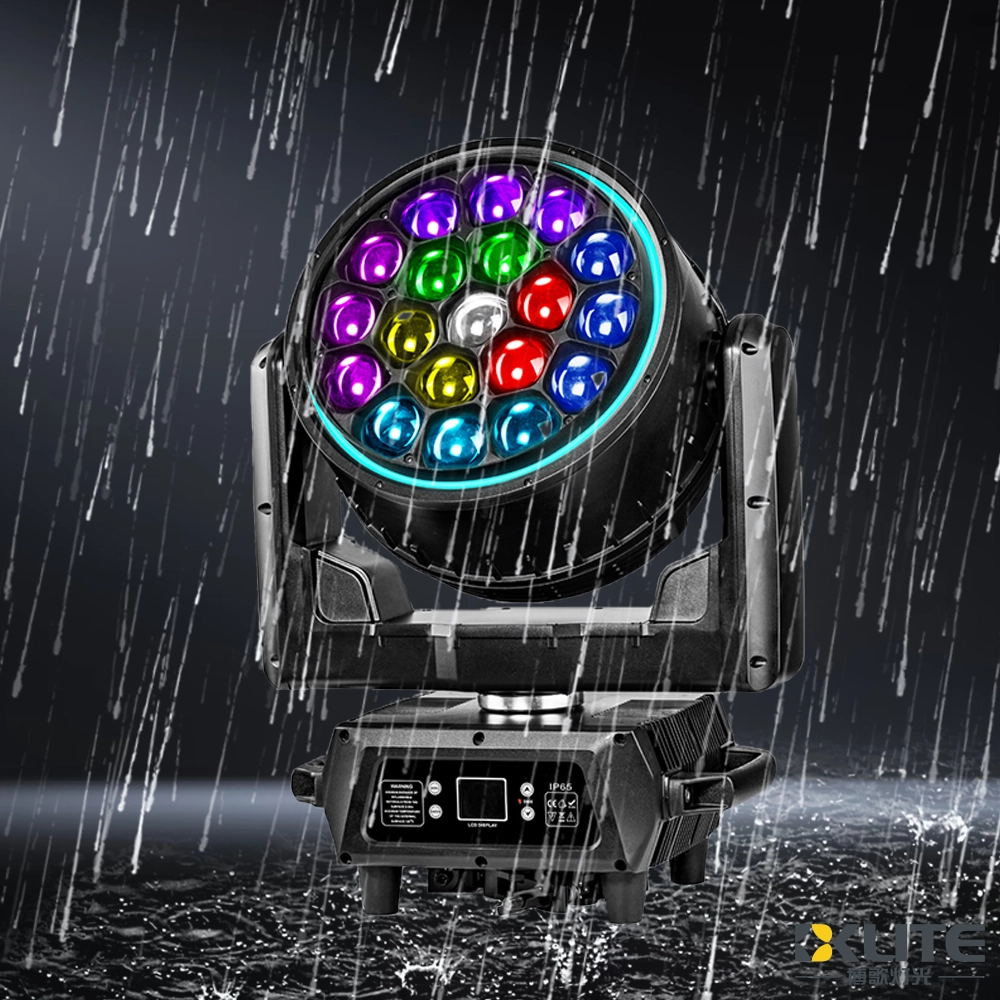
IP65 Waterproof Bee Eye Zoom 19x40W RGBW 4IN1 LED Beam Wash Moving Head Light with LED Ring
BKlite waterproof bee eye moving head light—your reliable choice from top waterproof moving head light manufacturers and suppliers. Ideal for outdoor stage, live event, music festival, this energy-saving fixture ensures powerful, precise illumination for any venue. It delivers powerful, reliable lighting performance in any weather.
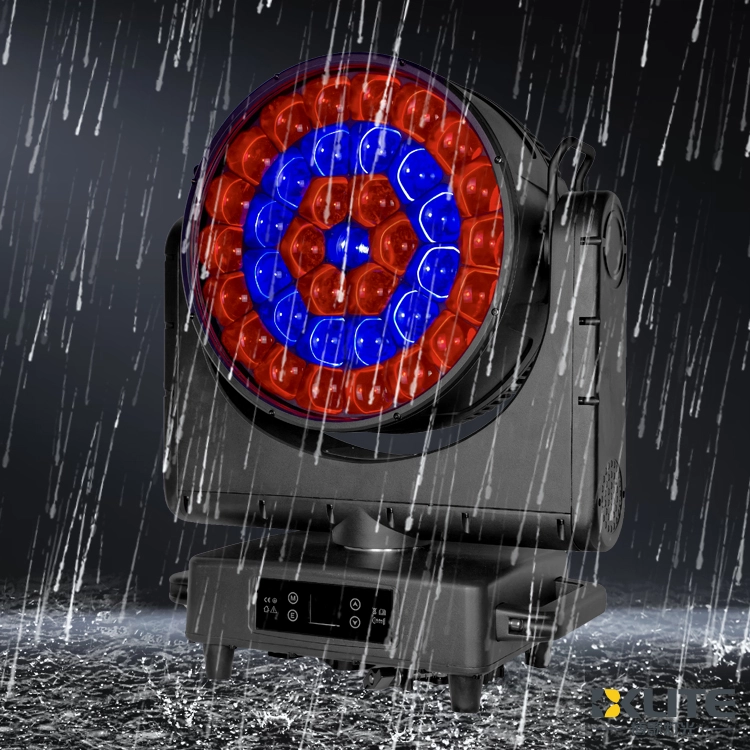
IP65 Waterproof ZOOM Bee Eye 37x40W RGBW 4in1 LED Moving Head Light
As a leading stage lighting equipment supplier with more than 15 years of industry know-how, BKlite brings you the IP65 ZOOM Bee Eye 37*40W RGBW 4in1 LED Moving Head Light (K25 Bee Eye) delivers vibrant, weatherproof lighting with powerful zoom and smooth movement. Ideal for dynamic stage effects, the K25 moving head light ensures stunning RGBW color mixing and reliable outdoor performance.
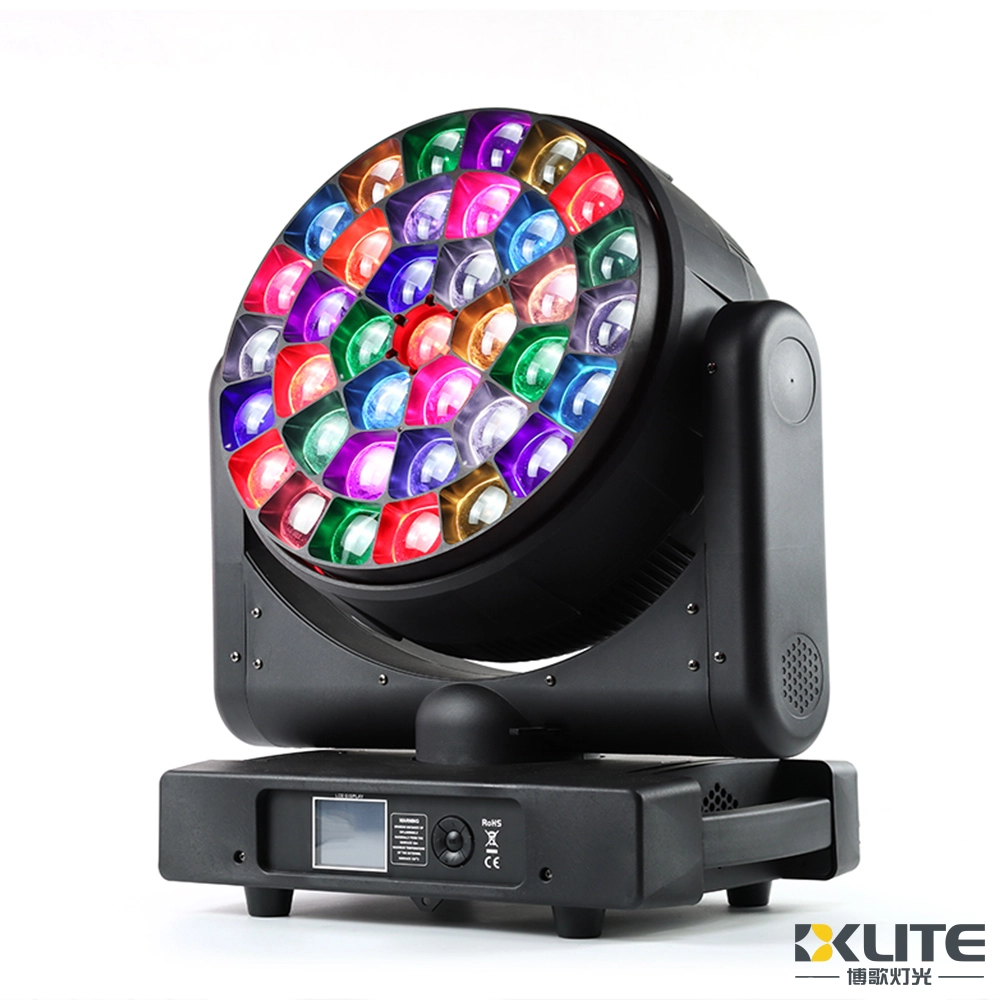
Bee Eye Zoom 37x40W RGBW 4in1 LED Beam Wash Moving Head Light
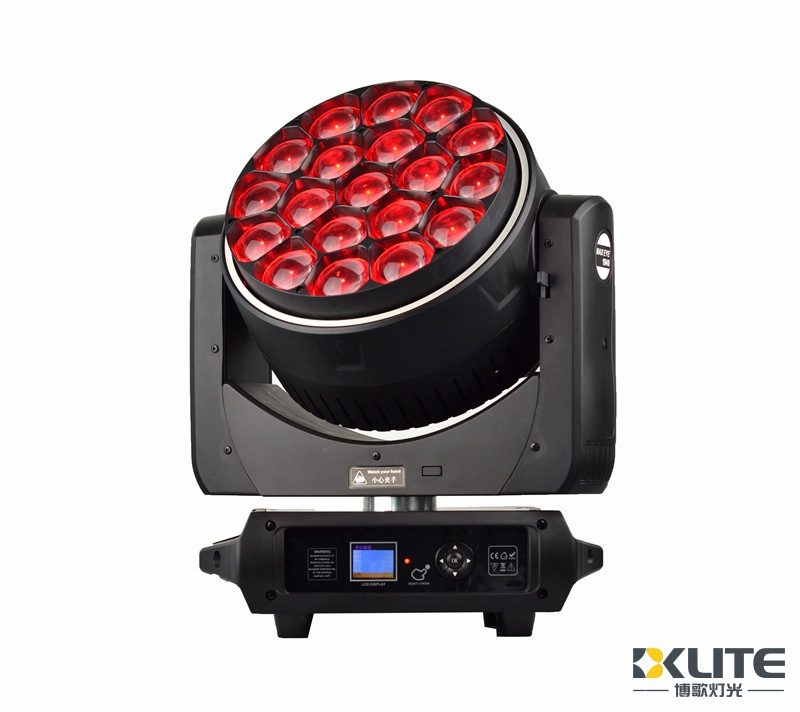
IP20 Bee Eye Zoom 19x40W RGBW 4IN1 LED Beam Wash Moving Head Light with LED Ring
As one of the leading stage lighting equipment suppliers with 15+ years of experience, BKlite launched a new Bee Eye K15 19x40 LED wash light BK-BY1940Z. .
Designed with a simple and sleek appearance, the WASH moving head light is compact, lightweight, and highly portable.
With multiple color effect macros and dynamic effect macros.
Our wash light can be used for versatile lighting options with amazing effect.
It is very good for your lighting projects.
Powerful and shoots very far distances.


Copyright © 2025 BKLITE All Rights Reserved.