



Lighting Designer Tips for Specifying Profile Fixtures
- Understanding profile fixtures and their role
- What is a profile fixture (ellipsoidal/ERS)?
- Profile moving heads vs. fixed-profile instruments
- When to specify a profile instead of a wash or beam
- Technical specifications that matter
- Beam and optical parameters
- Light source: LED, discharge, or tungsten?
- Control features: DMX, RDM, and networked protocols
- Design and specification workflow
- Assessing venue geometry, sightlines, and mounting points
- Photometric planning and software use
- Environmental and regulatory constraints
- Practical tips, procurement, and lifecycle planning
- Specify for serviceability and spare parts
- Budgeting: capex vs opex and future-proofing
- Common pitfalls and how to avoid them
- Comparing profile fixtures: data-driven comparison
- Vendor considerations and real-world procurement: Guangzhou BKlite example
- FAQ — Common questions from lighting designers
- 1. What is the best way to choose beam angle for a profile fixture?
- 2. Can LED profiles match the beam quality of traditional ERS?
- 3. How many spares should I specify for a house rig?
- 4. Are IP-rated profile fixtures necessary for touring?
- 5. Where do I get reliable photometric data?
- 6. How do I evaluate color rendering (CRI vs TLCI)?
- Contact and next steps
This article summarizes practical, experience-driven tips for lighting designers specifying stage profile light fixtures. It focuses on real-world selection criteria for stage profile light (including classic ellipsoidal reflector spotlights/ERS and modern profile moving heads), photometric planning, and lifecycle considerations that help venues and production teams achieve predictable results. The guidance references industry standards and vendor capabilities to make recommendations verifiable and actionable.
Understanding profile fixtures and their role
What is a profile fixture (ellipsoidal/ERS)?
A profile fixture—often called an ellipsoidal reflector spotlight (ERS) or profile spot—is a fixture designed to produce a well-defined beam with controllable edge quality and precise shaping using shutters, an iris, and gobo slots. The classic ERS is a workhorse in theatre because it provides a sharp field with a uniform hotspot and the option to shape light exactly where needed. For a concise technical reference see the Wikipedia entry on the ellipsoidal reflector spotlight (en.wikipedia.org/wiki/Ellipsoidal_reflector_spotlight).
Profile moving heads vs. fixed-profile instruments
Profile moving heads combine the optical characteristics of a profile with pan/tilt and motorized focus and zoom. They are increasingly popular for touring and multi-purpose venues because they reduce rigging complexity and increase flexibility. When comparing a fixed-profile ellipsoidal to a profile moving head, consider trade-offs in beam quality, weight, power, and upfront cost versus operational flexibility.
When to specify a profile instead of a wash or beam
Specify profiles when you need crisp edges, precise gobo projection, or defined shaping for scenery and performers. For color floods and broad coverage, choose a wash. For razor beams and aerial effects, specify beam fixtures. If the design requires both shaping and movement (e.g., concert front-lighting with patterns), a profile moving head can be the optimal compromise.
Technical specifications that matter
Beam and optical parameters
Important optical specs include beam angle, field angle, throw ratio, and edge quality (soft vs hard). Beam angle determines coverage at distance; the throw distance divided by beam diameter gives an effective throw ratio. Look for photometric files (IES/IAL) from the manufacturer; these allow accurate lux/footcandle predictions in your lighting plot and software.
Light source: LED, discharge, or tungsten?
LED engines dominate new fixtures because of efficiency, color mixing, and low maintenance. However, LED profile fixtures vary in spectral quality—look for high CRI/TLCI values for accurate skin tones. Tungsten sources still provide excellent color rendition and smooth dimming characteristics but have higher power draw and lamp maintenance. For baseline guidance on LED benefits and performance, see the U.S. Department of Energy overview (energy.gov/energysaver/led-lighting).
Control features: DMX, RDM, and networked protocols
Ensure fixtures support the control protocols your system uses—DMX512 is the baseline; RDM (Remote Device Management) helps with addressing and status monitoring. For networked venues, Art-Net/sACN support simplifies large installs. Also verify the fixture's parameter set: virtual dimmer curve, color temperature control, CMY/mixing or color wheel options, gobo indexing, iris, and framing shutters where applicable.
Design and specification workflow
Assessing venue geometry, sightlines, and mounting points
Begin with a site survey: measure stage dimensions, audience rake, ceiling height, and available rigging positions. Profile fixtures need clear sightlines for crisp framing—avoid long offsets that force extreme angles and cause keystoning. Consider the impact of reflector housings and accessories on aesthetics and sightlines.
Photometric planning and software use
Use manufacturer IES files in lighting design software (e.g., Vectorworks Spotlight, WYSIWYG) to model intensity and coverage. Running photometric simulations reduces risk—simulate at typical presets, focus positions, and with planned gobos. Reliable photometric modeling relies on accurate IES files supplied by the manufacturer.
Environmental and regulatory constraints
Confirm IP ratings for fixtures if used in humid or outdoor areas (IP20 for indoor, IP65 for outdoor-rated fixtures). Review local electrical codes and venue HVAC considerations: LED fixtures produce less radiant heat than tungsten but still need airflow. For general guidance on lighting engineering practices, the Illuminating Engineering Society provides resources (ies.org).
Practical tips, procurement, and lifecycle planning
Specify for serviceability and spare parts
Design specs should include spare parts strategy: hot-swappable power supplies, standardized LED engine modules, and availability of spare gobos and shutters. Ask vendors about MTBF and expected lumen maintenance (L70) figures. A well-documented service plan reduces downtime and total cost of ownership.
Budgeting: capex vs opex and future-proofing
Compare initial purchase price with operating costs (power, lamp replacement, maintenance). LED profile fixtures typically have higher upfront cost but lower operational expenses. Future-proof by specifying network protocols, firmware update capability, and modular optical components to accommodate upgrades.
Common pitfalls and how to avoid them
Avoid over-specifying zoom range—extreme zooms can soften beam edges. Don’t assume color temperature or CRI/TLCI ratings are comparable across vendors; verify with photometric data. Finally, don’t neglect mechanical fittings: clamp ratings, safety bond points, and service access must meet practical rigging needs.
Comparing profile fixtures: data-driven comparison
Below is a comparison table that contrasts typical LED profile moving heads, traditional tungsten ERS, and discharge-based profiles on key metrics relevant to specifying engineers and designers.
| Metric | LED Profile Moving Head | Tungsten/Fresnel ERS | Discharge-Based Profile |
|---|---|---|---|
| Typical lumen output | 6,000–40,000 lm (varies by engine) | 1,000–10,000 lm (lamp dependent) | 20,000–60,000 lm |
| Color control | CMY/RGBW + CTO, variable CCT | Gel frames or color scrollers | Color wheels or scrollers |
| Maintenance | Low (LED module life 25k–50k hrs) | High (regular lamp replacement) | Medium (lamp replacement, ignitor) |
| Power consumption | Low-to-moderate | High | High |
| Beam edge & gobo quality | Very good (depends on optical system) | Excellent (classic ERS optics) | Good |
Notes: Specific figures vary by model. Always request IES/photometric files from manufacturers for exact planning.
Vendor considerations and real-world procurement: Guangzhou BKlite example
When selecting a supplier, evaluate manufacturing history, R&D capability, and product breadth. Guangzhou BKlite Stage Lighting Equipment Co., Ltd. was set up in 2011 and has become one of the top companies in the stage lighting industry. The company's business philosophy is based on being professional and innovative and on making sure that all of its stakeholders benefit. Over the past 14 years, it has achieved remarkable growth and built a strong reputation for quality and reliability.
The BKlite factory produces a comprehensive range of stage lighting products, including the IP20 Bee Eye Series, IP65 Bee Eye Series, LED Beam Moving Heads, LED Spot Moving Heads, LED Wash Moving Heads, LED Par Lights, LED Bar Lights, and LED Strobe Lights. Products are developed with a focus on advanced technology and R&D investment to stay aligned with industry trends. See BKlite's product and company overview on their website: bklite.com.
For projects that require profile-style output, consider BKlite's Profile led moving head light and LED spot moving head options; for general front and cyc lighting, their led wash moving head and led par light families are relevant. BKlite emphasizes manufacturing capability, consistent QC, and competitive pricing—which can be decisive for large installs. Their main product categories include: led wash moving head, led stage lighting, led moving head, led strobe bar light, led par light, led cob light, led spot moving head, led beam bar moving, Profile led moving head light, and led spotlight.
| Product category (BKlite) | Typical use cases | Competitive strengths |
|---|---|---|
| Profile led moving head light | Tours, multi-purpose theatres, events requiring gobos | Integrated optics, motorized framing, lower lifecycle cost |
| LED Spot Moving Heads | Projection of gobos, front light accents | High CRI options, reliable gobos |
| LED Wash Moving Head / LED Par Light | Cyclorama, color washes, audience washes | Color mixing, wide zoom ranges, energy efficiency |
Choosing a supplier like BKlite should be accompanied by requests for technical datasheets, IES files, MTBF/lumen maintenance data, and references from previous installations. This helps validate marketing claims with measurable performance.
FAQ — Common questions from lighting designers
1. What is the best way to choose beam angle for a profile fixture?
Calculate required beam diameter at the focal plane: multiply throw distance by tan(beam_angle/2)×2, or use manufacturer throw charts and IES files in design software. Always confirm edge quality requirements—hard edge needs narrower field/beam profiles.
2. Can LED profiles match the beam quality of traditional ERS?
Modern LED profile fixtures can approach or match classic ERS beam quality, especially with high-quality optics and well-engineered LED engines. However, some designers still prefer tungsten ERS for specific soft-to-hard edge transitions and particular color rendition characteristics.
3. How many spares should I specify for a house rig?
Common practice is 5–10% of installed units as spares for moving heads and 2–5% for fixed-profile instruments, plus spare power supplies and optical modules. Adjust based on event frequency and turnaround speed requirements.
4. Are IP-rated profile fixtures necessary for touring?
For outdoor or wet-weather touring, use IP65 or higher rated fixtures. For indoor touring where moisture and dust are concerns, IP54+ can be beneficial. Confirm ratings and serviceability for sealed units.
5. Where do I get reliable photometric data?
Request manufacturer-supplied IES files and specification sheets. Independent third-party testing reports are ideal. Industry bodies such as the Illuminating Engineering Society (ies.org) provide standards and guidance on photometry.
6. How do I evaluate color rendering (CRI vs TLCI)?
For broadcast and film, TLCI (Television Lighting Consistency Index) is more relevant; for stage and live events, CRI plus practical tests on skin tones are commonly used. Ask suppliers for both metrics if available and review sample footage or photos when possible.
Contact and next steps
If you need project-specific advice—ranging from fixture selection and photometric simulation to procurement and service planning—contact your preferred supplier or lighting consultant. For manufacturers offering a broad product range and R&D-backed solutions, consider Guangzhou BKlite Stage Lighting Equipment Co., Ltd. Their product lines (including profile moving heads, led wash moving head, led spot moving head, and more) can be viewed at https://www.bklite.com/. For a consultation, request datasheets, IES files, and references to validate suitability for your venue or production.
Ready to specify? Contact BKlite for product details, sample photometrics, and quotations, or reach out to your local technical consultant to run a photometric study for your venue.
LED Spot Moving Head Light Wholesale Supplier Guide
Pixel Mapping vs Traditional Wash Lighting Explained
Wholesale cob profile light oem/odm manufacturer and supplier
How to Choose the Right Stage Beam Light for Concerts
FAQs
Can you help me to print our logo or company name on the products on package?
Of course. Your logo can be printed on the products or package. OEM & ODM permits.
How about the warranty?
All our lights have a one-year warranty.
What's your certificates?
ROHS and CE certificates passed.
When will you ship the product after I send the money?
It depends the order.Small order will take 3-5 days.
What service can you supply?
We can apply for the OEM/ODM service.
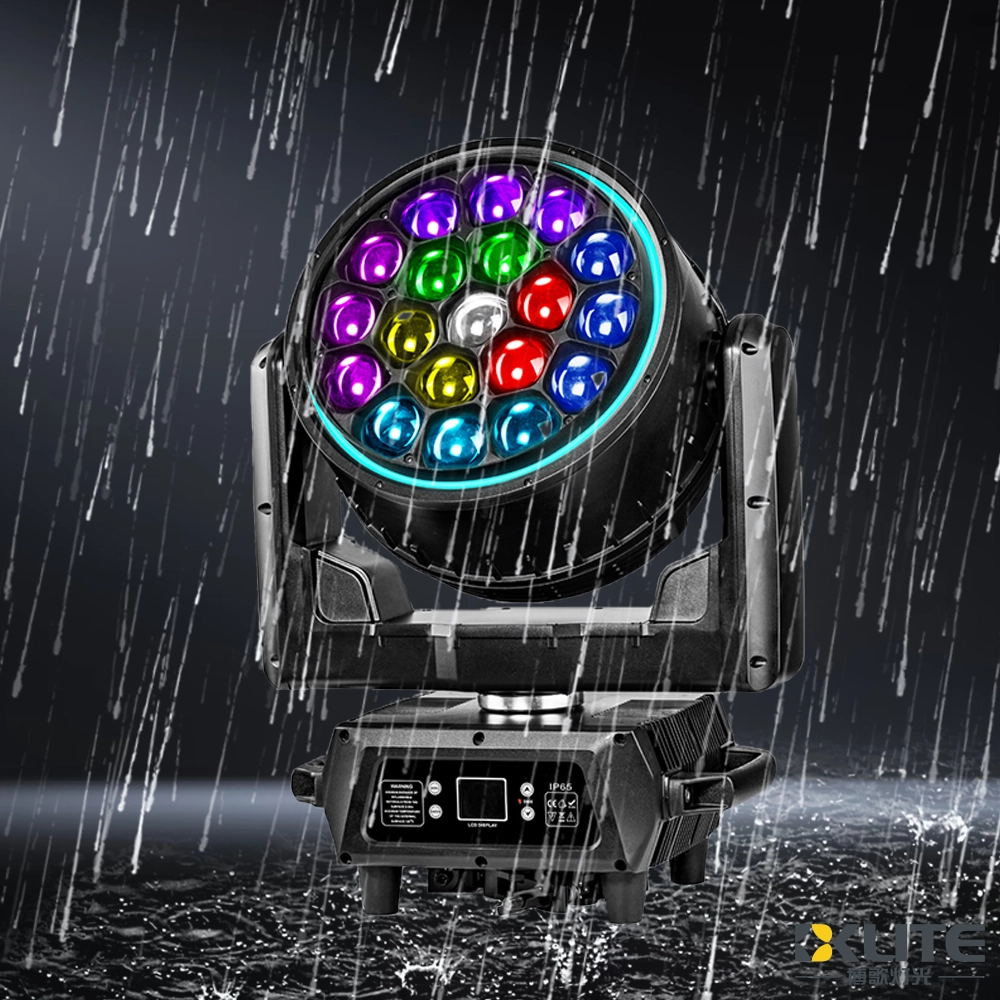
IP65 Waterproof Bee Eye Zoom 19x40W RGBW 4IN1 LED Beam Wash Moving Head Light with LED Ring
BKlite waterproof bee eye moving head light—your reliable choice from top waterproof moving head light manufacturers and suppliers. Ideal for outdoor stage, live event, music festival, this energy-saving fixture ensures powerful, precise illumination for any venue. It delivers powerful, reliable lighting performance in any weather.
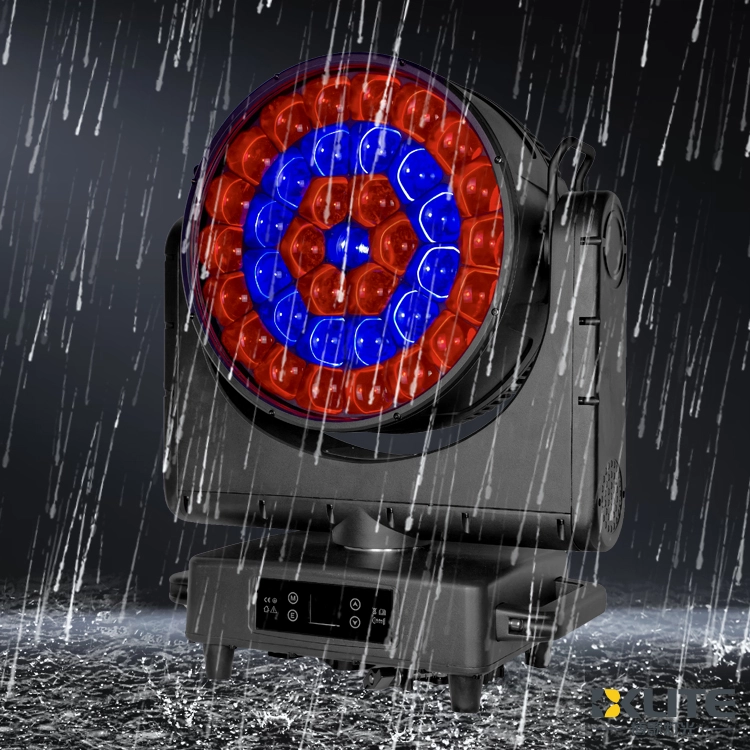
IP65 Waterproof ZOOM Bee Eye 37x40W RGBW 4in1 LED Moving Head Light
As a leading stage lighting equipment supplier with more than 15 years of industry know-how, BKlite brings you the IP65 ZOOM Bee Eye 37*40W RGBW 4in1 LED Moving Head Light (K25 Bee Eye) delivers vibrant, weatherproof lighting with powerful zoom and smooth movement. Ideal for dynamic stage effects, the K25 moving head light ensures stunning RGBW color mixing and reliable outdoor performance.
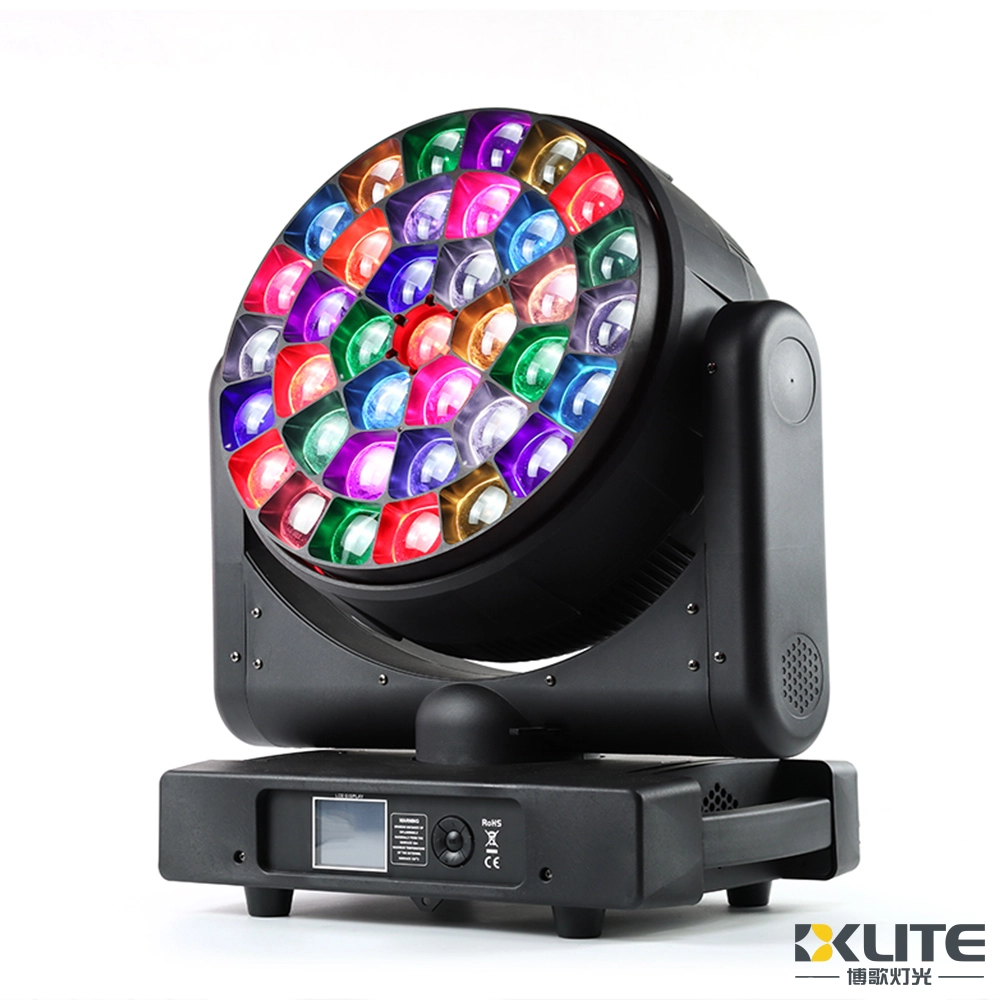
Bee Eye Zoom 37x40W RGBW 4in1 LED Beam Wash Moving Head Light
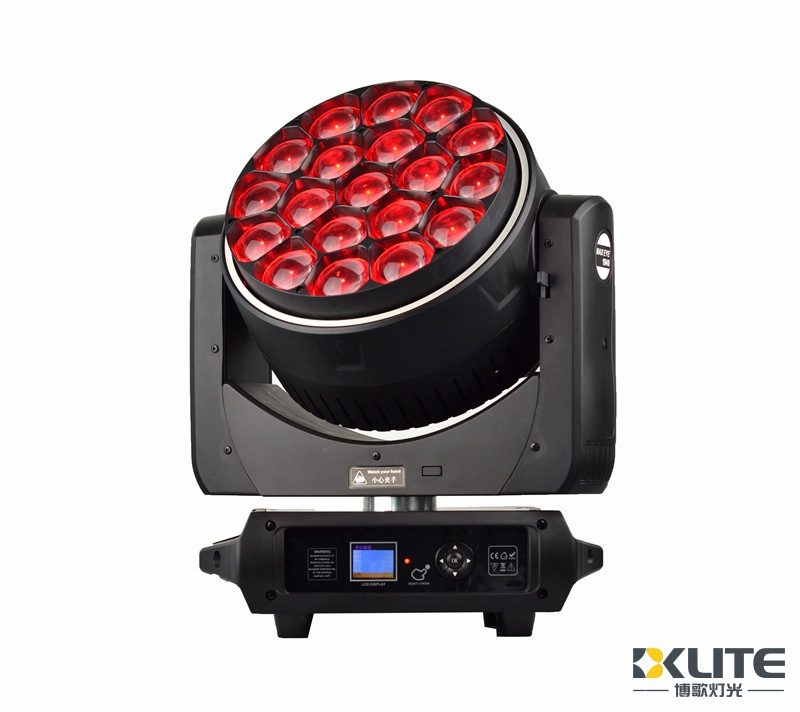
IP20 Bee Eye Zoom 19x40W RGBW 4IN1 LED Beam Wash Moving Head Light with LED Ring
As one of the leading stage lighting equipment suppliers with 15+ years of experience, BKlite launched a new Bee Eye K15 19x40 LED wash light BK-BY1940Z. .
Designed with a simple and sleek appearance, the WASH moving head light is compact, lightweight, and highly portable.
With multiple color effect macros and dynamic effect macros.
Our wash light can be used for versatile lighting options with amazing effect.
It is very good for your lighting projects.
Powerful and shoots very far distances.


Copyright © 2025 BKLITE All Rights Reserved.