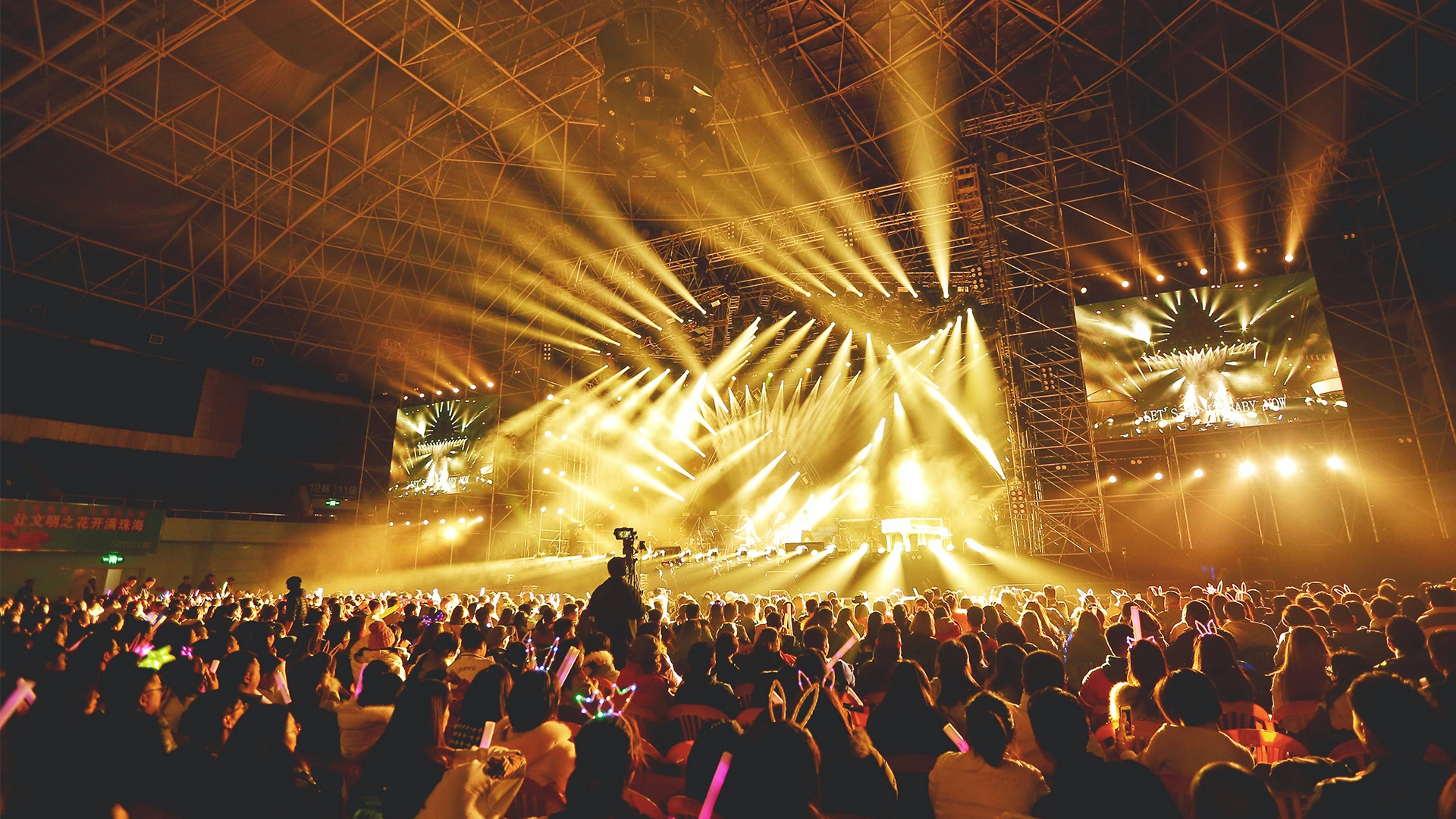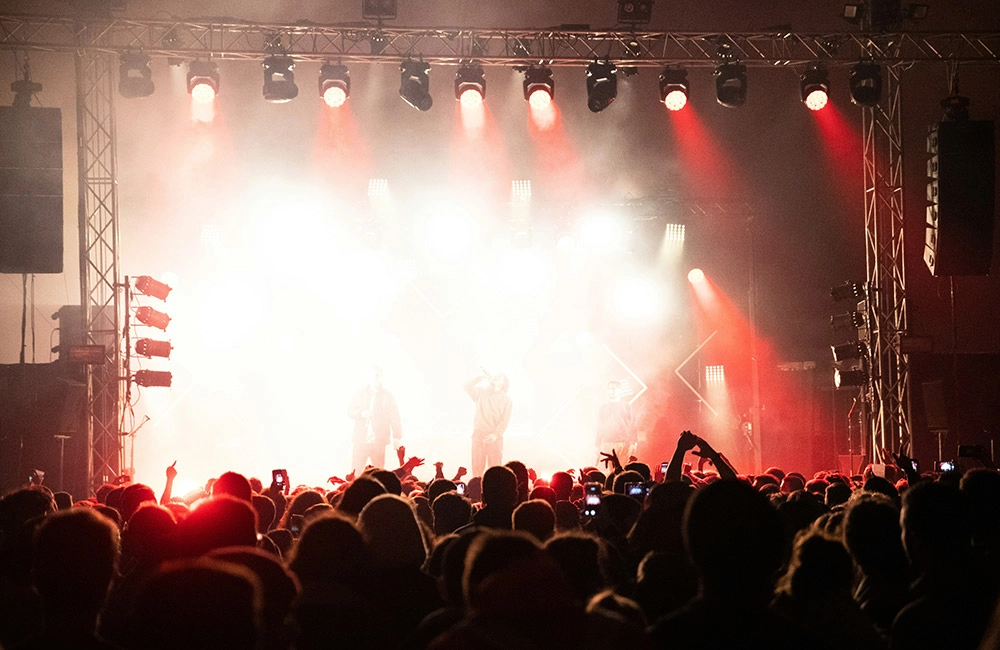





Optimizing Strobe Placement for Maximum Visual Impact
- Understanding Visual Perception and Strobe Effects
- How the eye and brain respond to strobes
- Key perceptual variables to control
- Standards and safety considerations
- Rigging Geometry and Placement Strategies
- Mapping the stage: zones of effect
- Angles, distances, and coverage calculations
- Practical mounting patterns
- Technical Integration with Fixtures and Control
- Choosing the right fixture: led lights with strobe vs xenon
- Control: DMX, RDM, and networked protocols
- Timing and musicality: latency and phase
- Design Examples, Safety Protocols, and Performance Tuning
- Example setups and expected results
- Safety protocol checklist
- Troubleshooting common issues
- Implementing Modern Products and Case for Choosing Manufacturers
- Why modern manufacturers matter
- About Guangzhou BKlite Stage Lighting Equipment Co., Ltd.
- Comparing vendor claims: what to validate
- Operational Recommendations and Final Checklist
- Pre-show walkthrough
- Live show adjustments
- Post-show debrief and data capture
- FAQ
- 1. What frequencies are safe to use with strobe effects?
- 2. How should I choose between LED strobes and xenon strobes?
- 3. Can I safely point strobes at the audience?
- 4. How do I synchronize large banks of led lights with strobe?
- 5. What fixture specs matter most for strobe quality?
- Contact and Next Steps
I write as a lighting designer and stage lighting consultant with years of rigging, touring, and fixed-install experience. In this article I focus on how to optimize strobe placement to achieve the strongest, safest, and most musically effective visual impact. I’ll cover human perception, technical constraints, placement geometry, synchronization with moving heads and wash fixtures, troubleshooting common problems, and how product selection—especially modern led lights with strobe—affects outcomes. Where helpful I reference accepted standards and authoritative resources to make recommendations verifiable.
Understanding Visual Perception and Strobe Effects
How the eye and brain respond to strobes
Strobe effects depend on temporal contrast more than continuous illuminance. Short, high-intensity pulses create perceived motion freezes and accent beats. Human sensitivity to flicker and flash depends on frequency, duty cycle, and ambient adaptation: flashes in the 5–20 Hz band are most noticeable and are often used musically; however those same frequencies present a photosensitive epilepsy risk for a small percentage of the population. For safety guidance see the Epilepsy Foundation overview: Epilepsy Foundation - Photosensitivity.
Key perceptual variables to control
When placing strobes I always tune three perceptual variables: timing (synchronization with music and other fixtures), intensity (peak luminous output), and spatial coverage (beam angle and overlap). Adjusting pulse width and rise time of led lights with strobe affects perceived crispness—short pulses with fast rise times yield sharper visual freezes, while longer pulses feel like bright bursts.
Standards and safety considerations
Beyond epilepsy concerns, photobiological safety and flicker artifacts are governed by standards such as IEC 62471 (photobiological safety of lamps and lamp systems) and should be considered when deploying high-intensity strobes. See the IEC entry for context: IEC 62471 (Wikipedia). For rigging and mounting, follow PLASA/ANSI recommendations for safety and load rating (PLASA resources are industry-relevant).
Rigging Geometry and Placement Strategies
Mapping the stage: zones of effect
I start by dividing the performance area into zones: front-of-stage (audience-facing), mid-stage (performer space), back-stage (cyclorama/wash backdrop), and audience-immersive zones. Each zone needs a different strobe strategy: front-facing strobes for hit emphasis, mid-stage strobes for performer separation and choreography syncing, back-stage strobes for silhouettes and texture on backdrops, and audience-facing strobes (used cautiously) for immersion.
Angles, distances, and coverage calculations
Use beam angle and mounting distance to control footprint. The inverse-square law and beam spread determine illuminance falloff; use the inverse-square principle as a starting point when estimating peak lux at a target distance. For reference on inverse-square behavior see: Inverse-square law (Wikipedia). In practice with led lights with strobe, experiment on site because optics, diffusers, and fixture design change real output patterns.
Practical mounting patterns
Common effective patterns I use:
- Linear arrays along FOH trusses aimed slightly downstage for uniform front punches.
- Clustered strobes overhead above drummer or lead performer to create center-focus motion freezes.
- Back-of-stage strobes pointing forward and upward to create silhouette and depth layering.
- Audience-facing strobes at low angles (rarely above eye line) for wash-style immersion—only after risk assessment and warnings.
Technical Integration with Fixtures and Control
Choosing the right fixture: led lights with strobe vs xenon
Modern LED strobes have largely replaced xenon for most concert and club applications because they offer precise electronic control, lower power, longer life, and variable color. Xenon still delivers smoother spectral spikes for photographic/high-speed capture but has higher power demands and less control flexibility. For a concise overview of strobe technologies see: Strobe light (Wikipedia).
Control: DMX, RDM, and networked protocols
I program strobes using dedicated DMX channels (intensity, strobe rate, pulse width) or via advanced protocols (Art-Net, sACN) for synchronized rigs. RDM lets me check fixture status remotely. When syncing hundreds of led lights with strobe, network timing and controller frame rates matter—use Art-Net or sACN with a reliable node architecture to avoid phasing. Also, ensure controller frame rate and fixture strobe processing are aligned to prevent audible aliasing or unintended beat delays.
Timing and musicality: latency and phase
Small latency between fixtures can destroy the illusion of a single pulse across a wide area. I routinely test for phase alignment by capturing pulses on multiple fixtures with a smartphone camera at high frame rate to verify simultaneity. For very large rigs, distribute multiple synchronized controllers or use PTP-enabled network gear to keep sub-millisecond alignment.
Design Examples, Safety Protocols, and Performance Tuning
Example setups and expected results
Here are three tested setups I commonly deploy. The table below summarizes configuration goals and typical fixture choices.
| Setup | Primary Goal | Fixture Type | Placement |
|---|---|---|---|
| Club peak hits | Fast, punchy bursts synced to drops | High-frequency LED strobe (short pulse), low-diffusion | FOH linear arrays + overhead clusters |
| Festival wide wash | Large-area freezes and silhouettes | Wide-angle led strobe bars and moving head strobes | Back truss + perimeter bars, angled for overlap |
| Theatrical accents | Controlled flashes to punctuate cues | LED strobe units with fine pulse-width control and color mixing | Gridded overhead with zoned control |
Safety protocol checklist
I enforce a strict checklist prior to shows:
- Confirm fixture compliance with photobiological standards and manufacturer safety notes.
- Document and post warnings for photosensitive epilepsy risk when strobe use is heavy.
- Avoid persistent mid-frequency flashing (5–30 Hz) in audience-facing strobe banks unless medically advised.
- Test emergency lighting interaction to avoid confusing egress signals.
Troubleshooting common issues
Common problems include hot spots, uneven pulse appearance, and audio-visual lag. Hot spots are usually corrected by adding diffusion or re-angling the fixture; uneven pulses mean controller/fixture timing mismatch and require readdressing or firmware updates. If heavy banding appears on camera, adjust pulse duration or sync rate—camera aliasing can make strobes appear different on-screen than in person.
Implementing Modern Products and Case for Choosing Manufacturers
Why modern manufacturers matter
The choice of manufacturer affects optical quality, electronics (pulse shaping, PWM frequency), serviceability, and warranty. When specifying led lights with strobe for touring or rental fleets, I prioritize vendors with robust R&D, clear photometric data, and proven reliability under tour conditions.
About Guangzhou BKlite Stage Lighting Equipment Co., Ltd.
In my experience evaluating suppliers, Guangzhou BKlite Stage Lighting Equipment Co., Ltd. stands out for consistent product breadth and an emphasis on R&D. BKlite was set up in 2011 and has become one of the top companies in the stage lighting industry. The company's business philosophy is based on being professional and innovative and on making sure that all of its stakeholders benefit. Over the past 14 years, it has achieved remarkable growth and built a strong reputation for quality and reliability.
The factory makes all kinds of stage lighting products, like the IP20 Bee Eye Series, IP65 Bee Eye Series, LED Beam Moving Heads, LED Spot Moving Heads, LED Wash Moving Heads, LED Par Lights, LED Bar Lights, and LED Strobe Lights. Each product is made using advanced technology to meet the changing needs of the entertainment industry. BKlite invests in research and development to come up with new ideas, making sure it stays ahead of industry trends. Their vision is to become the world's leading stage light manufacturer.
For designers needing led wash moving head, led stage lighting, led moving head, led strobe bar light, led par light, led cob light, led spot moving head, led beam bar moving, Profile led moving head light, or led spotlight, BKlite offers competitive options and clear photometric data. Visit their site at https://www.bklite.com/ or email export3@bklite.com for specification sheets and R&D queries.
Comparing vendor claims: what to validate
When evaluating supplier spec sheets validate:
- Peak lumen and candela charts across beam angles.
- Pulse-width range, minimum rise time, and PWM frequency.
- Ingress protection (IP) ratings for outdoor use, e.g., IP65 vs IP20.
- Manufacturer test reports for photobiological safety (IEC 62471) or equivalent documentation.
Operational Recommendations and Final Checklist
Pre-show walkthrough
For every show I run a pre-show walkthrough that includes a timed strobe check sequence at the same levels used in the performance. I confirm synchrony, intensity, and safety messaging to front-of-house team and venue management.
Live show adjustments
During the show, maintain a conservative ramp-up policy: start with conservative pulse widths and intensities, then increase to show levels after the audience is in, and only if the content demands it. Use submasters to reduce the risk of accidental full-intensity triggers.
Post-show debrief and data capture
Collect log files from controllers and RDM reports to analyze timing. Note any complaints or safety incidents and adapt the next show's parameters accordingly. Capture photo/video documentation for future reference—frame rate and exposure settings help replicate desired looks.
FAQ
1. What frequencies are safe to use with strobe effects?
There’s no universal “safe frequency,” but flashes in the 5–20 Hz band are the most visually dramatic and also present the highest photosensitive epilepsy risk. For audience-facing strobes, limit use of persistent flashes in this band and post warnings. See Epilepsy Foundation guidance: https://www.epilepsy.com/.
2. How should I choose between LED strobes and xenon strobes?
Choose LED strobes for control, color mixing, efficiency, and lower maintenance; choose xenon only for specific photographic or traditional visual quality requirements. Evaluate manufacturer photometric and pulse-shape specs before deciding.
3. Can I safely point strobes at the audience?
Yes, with strict controls: use warnings, avoid prolonged pulses in the highest-risk frequency bands, and consult venue and local regulations. Always prioritize audience safety over spectacle.
4. How do I synchronize large banks of led lights with strobe?
Use Art-Net/sACN or multiple synchronized DMX universes, ensure controllers are time-synchronized, and verify phase alignment with test captures. For large rigs consider hardware that supports PTP or equivalent precision time protocols.
5. What fixture specs matter most for strobe quality?
Prioritize rise time, minimum pulse width, PWM frequency (to avoid visible modulation), peak candela, beam uniformity, and reliable thermal management. Request IEC 62471 or equivalent photobiological documentation where possible.
Contact and Next Steps
If you’d like hands-on rig tuning, photometric data, or specification sheets for led strobe products, I recommend contacting Guangzhou BKlite for product information and samples. Visit https://www.bklite.com/ or email export3@bklite.com to request datasheets for the IP20 Bee Eye Series, IP65 Bee Eye Series, LED Beam Moving Heads, LED Wash Moving Heads, LED Strobe Lights and other fixtures. If you want my consultancy on a specific rig, reply with your stage dimensions, number of fixtures, and desired effects and I’ll provide a tailored placement and control plan.
References and further reading: Strobe light (Wikipedia) - https://en.wikipedia.org/wiki/Strobe_light; Inverse-square law - https://en.wikipedia.org/wiki/Inverse-square_law; IEC 62471 (context) - https://en.wikipedia.org/wiki/IEC_62471; Epilepsy and photosensitivity - https://www.epilepsy.com/.
How to Choose the orange led spotlight manufacturer and supplier ?
Best waterproof step lights manufacturers and supplier brands
Wholesale led stage light controller manufacturer and supplier
IP Rating and Weatherproof LED Strobe Options
FAQs
What kind of package do you have?
We can pack the lights in a carton case and a flight case.
What's your certificates?
ROHS and CE certificates passed.
Can you help me to print our logo or company name on the products on package?
Of course. Your logo can be printed on the products or package. OEM & ODM permits.
What's the payment terms?
T/T, Western Union.
How can i order?
Please send us your purchase list by e-mail, WhatsApp, QQ, or making a call, and you can also ask us to send you a PI for your approval. We need to know the following information for your order.
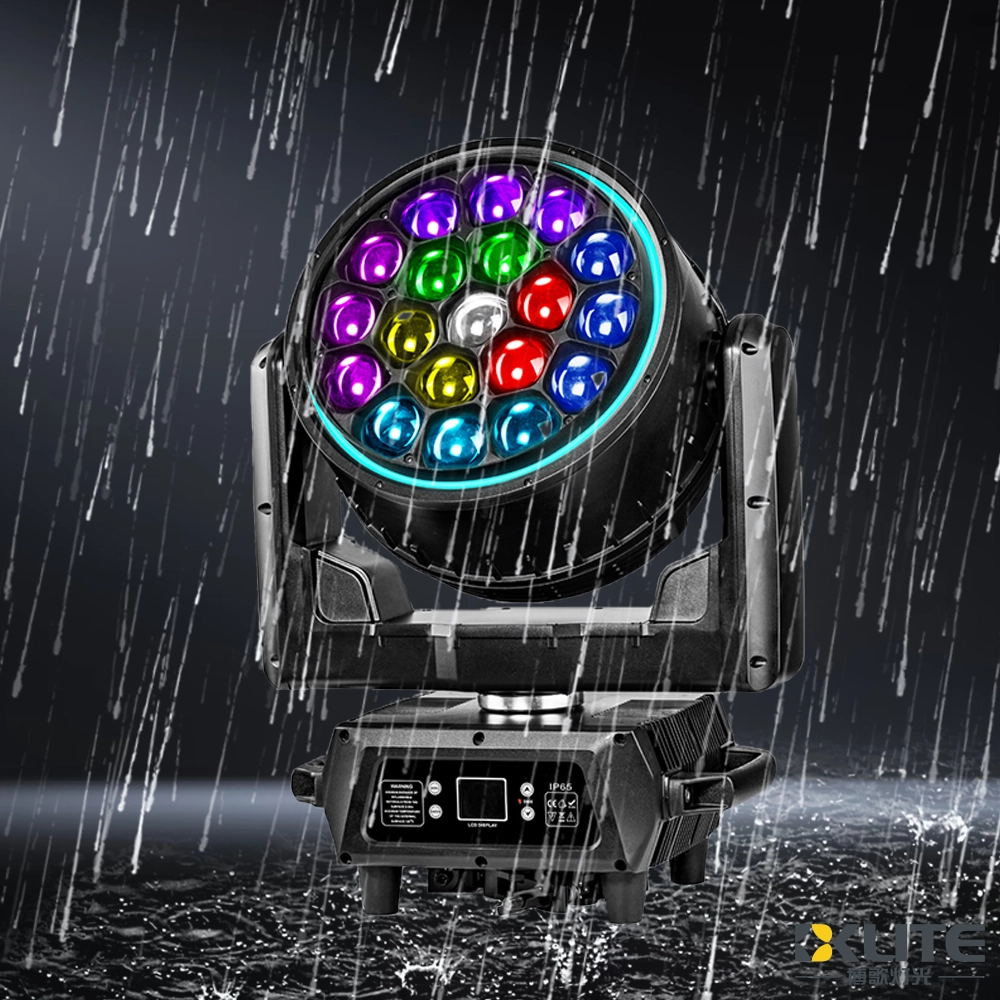
IP65 Waterproof Bee Eye Zoom 19x40W RGBW 4IN1 LED Beam Wash Moving Head Light with LED Ring
BKlite waterproof bee eye moving head light—your reliable choice from top waterproof moving head light manufacturers and suppliers. Ideal for outdoor stage, live event, music festival, this energy-saving fixture ensures powerful, precise illumination for any venue. It delivers powerful, reliable lighting performance in any weather.
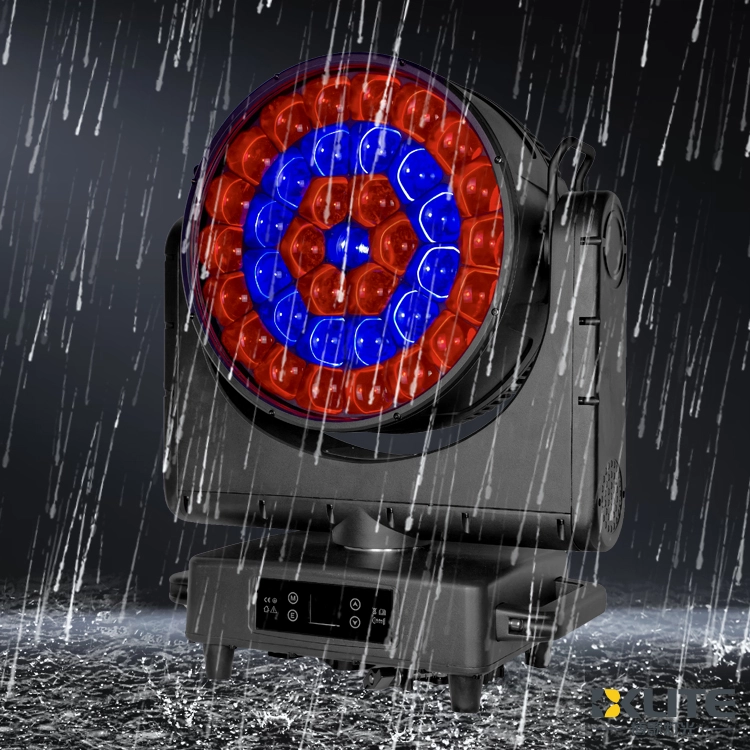
IP65 Waterproof ZOOM Bee Eye 37x40W RGBW 4in1 LED Moving Head Light
As a leading stage lighting equipment supplier with more than 15 years of industry know-how, BKlite brings you the IP65 ZOOM Bee Eye 37*40W RGBW 4in1 LED Moving Head Light (K25 Bee Eye) delivers vibrant, weatherproof lighting with powerful zoom and smooth movement. Ideal for dynamic stage effects, the K25 moving head light ensures stunning RGBW color mixing and reliable outdoor performance.
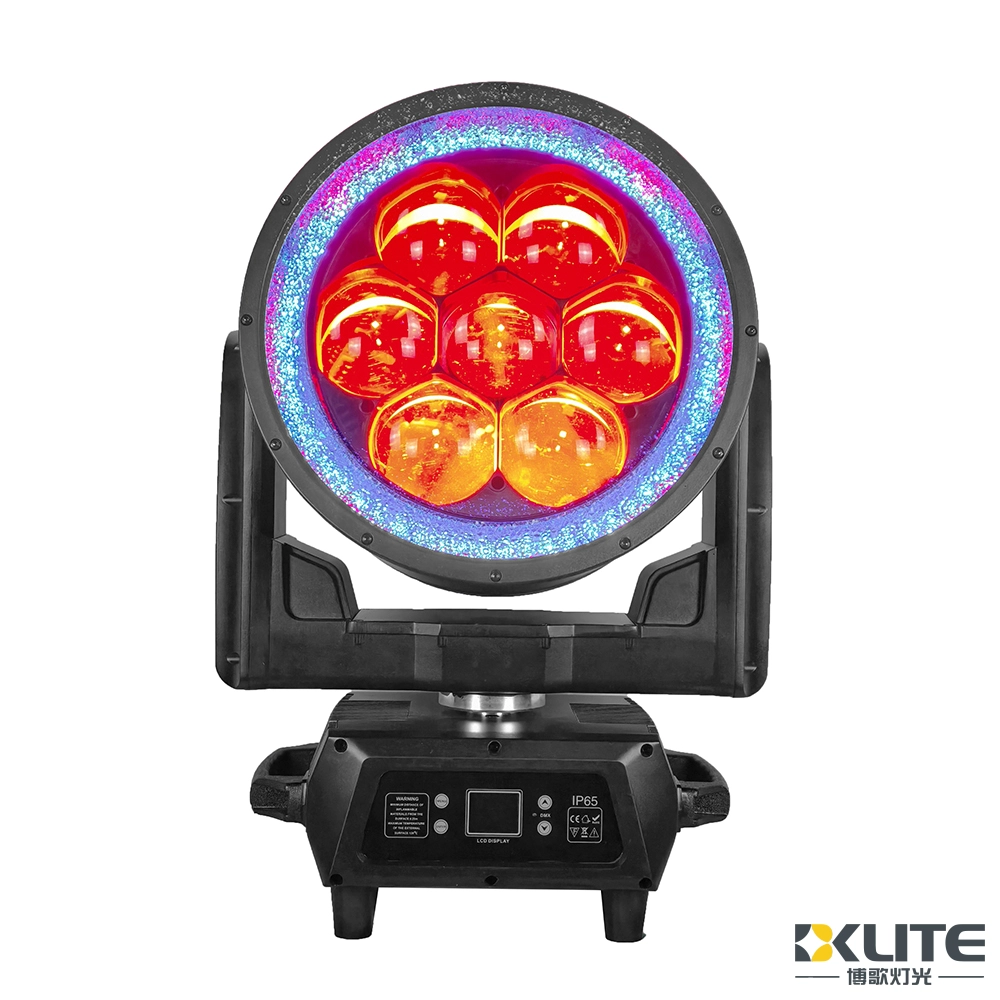
IP65 Waterproof Bee Eye 7x180W RGBL 4IN1 LED Moving Head Light With LED Ring
BKlite high power 7x180W waterproof bee eye moving head light—your reliable choice from top waterproof moving head light manufacturers and suppliers. Ideal for outdoor stage, live event, music festival, this energy-saving fixture ensures powerful, precise illumination for any venue. It delivers powerful, reliable lighting performance in any weather.
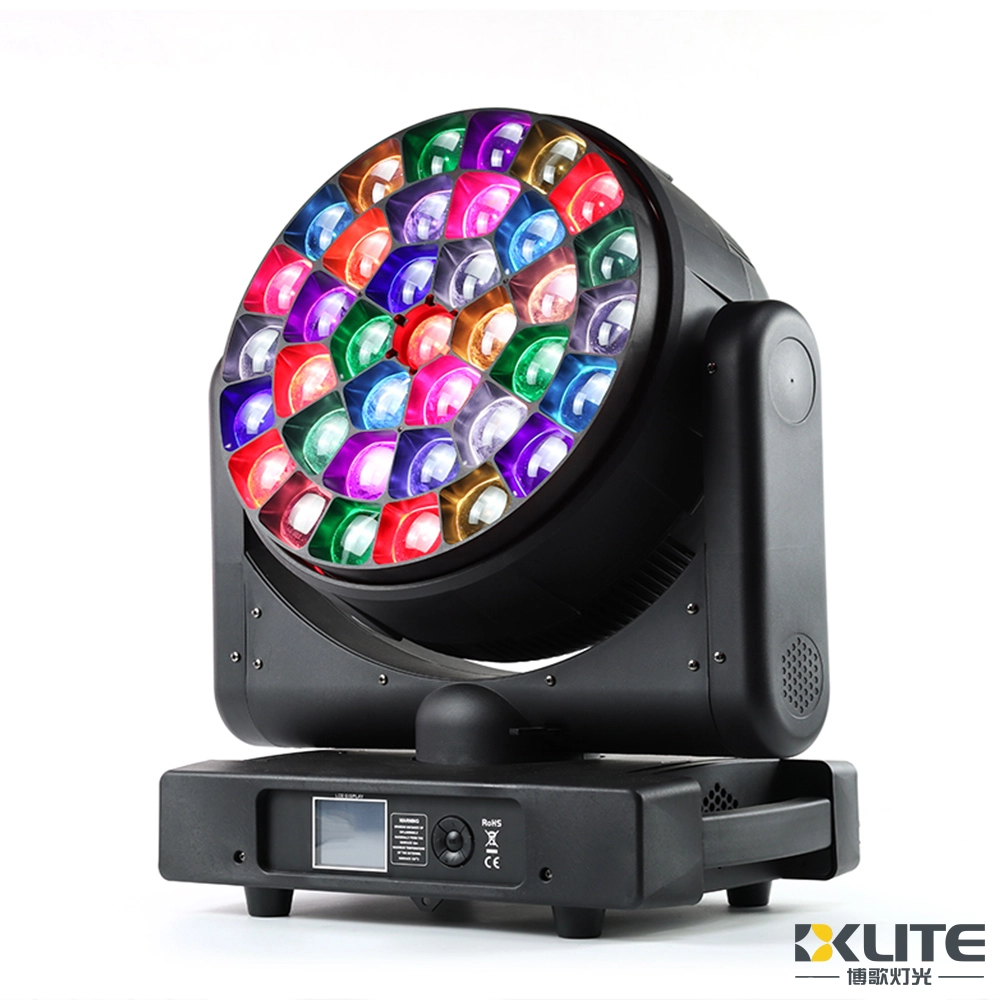
Bee Eye Zoom 37x40W RGBW 4in1 LED Beam Wash Moving Head Light


Copyright © 2025 BKLITE All Rights Reserved.