




Power Management and Heat Dissipation in LED Spotlights
- Why power and thermal design matter for performance and life
- LED spotlight basics and failure modes
- Operational impacts: lumen maintenance, color and reliability
- Regulatory and safety context
- Power management strategies for LED spotlights
- Driver selection and dimming methods
- Power factor, surge protection and cabling
- Thermal-aware power budgeting
- Heat dissipation techniques and thermal management
- Passive cooling: heatsinks, materials and surface treatments
- Active cooling: fans, heat pipes and hybrid approaches
- Layout, optics and airflow considerations
- Testing, standards, reliability and design comparisons
- Thermal testing and measurement methods
- Standards, certification and quality systems
- Design trade-offs: a comparative table
- Choosing a manufacturer and a real-world example: why BKlite
- Manufacturer considerations and quality signals
- Guangzhou BKlite — profile and strengths
- BKlite technical advantages and product relevance
- Practical recommendations and checklist
- Design and procurement checklist
- On-site testing I recommend
- Maintenance and lifecycle tips
- FAQ
- 1. How hot can an LED spotlight get before it damages the LED?
- 2. Is passive cooling always better than active cooling for spotlights?
- 3. How do I test for flicker in LED spotlights?
- 4. What are realistic lifetime expectations for a well-designed LED spotlight?
- 5. How should I specify IP-rated spotlights to maintain thermal performance?
- 6. What documentation should I request from a supplier before purchase?
I write from experience as a stage lighting consultant and technical content specialist. In this article I provide a practical, evidence-backed guide to power management and heat dissipation in led spotlight products used in stage, theatre, architectural and rental applications. I cover driver choices, dimming strategies, power factor and surge protection, and then dive into thermal paths, heatsink materials, active vs passive cooling, testing methods and standards. I reference authoritative sources so you can verify numbers, follow testing protocols and make design or procurement decisions that reduce downtime and extend fixture life.
Why power and thermal design matter for performance and life
LED spotlight basics and failure modes
An led spotlight is only as reliable as its thermal and electrical systems. The light-emitting diode itself is resilient, but its luminous flux, color stability and lifetime are strongly influenced by junction temperature and electrical stress. Elevated junction temperature accelerates lumen depreciation and color shift; excessive electrical transients or poor driver design can cause immediate failures or long-term reliability issues. For general background on LED operation and temperature effects see the LED overview on Wikipedia.
Operational impacts: lumen maintenance, color and reliability
I routinely see fixtures with premature lumen depreciation because of inadequate thermal paths or overdriven LEDs. Manufacturers typically specify L70 (time to 70% initial lumen output) at a given case or junction temperature; keeping junction temperature lower improves L70 and color-point stability. Design decisions that seem small—choice of driver topology, PCB thermal vias, or the heatsink finish—compound over thousands of hours of operation.
Regulatory and safety context
LED luminaires must meet safety and electromagnetic requirements (e.g., IEC standards for luminaires) and often require certification for professional use. Referencing standards early in design helps avoid rework; for example, general luminaire standards can be found via the IEC and guidance on lighting practice from the Illuminating Engineering Society (IES).
Power management strategies for LED spotlights
Driver selection and dimming methods
Choosing the right driver is the first control point for performance. I favor constant-current drivers with high-quality regulation and protections (over-voltage, over-current, short-circuit, thermal foldback). For stage lighting, good dimming behaviour (smooth low-end output, no flicker at 1–1000 Hz capture rates) is essential. Prefer drivers with programmable dim curves, low Total Harmonic Distortion (THD), and industry-standard control interfaces (DMX/RDM, 0–10V, DALI where applicable).
When specifying drivers, check manufacturer documentation and test dimming with the actual LED load. Driver-LED interaction determines flicker, minimum dim level, and color stability during dimming.
Power factor, surge protection and cabling
For professional installations, high power factor and low THD reduce upstream stress and allow more fixtures per circuit without nuisance tripping. Many modern LED drivers implement active PFC. For venues with frequent transient events (on-stage power cycles, reflector movement), add surge protection and consider soft-start features to limit inrush current. Consult local electrical codes for circuit breaker selection and derating factors.
Thermal-aware power budgeting
I recommend designing to a thermal budget: specify maximum allowable case/junction temperatures and size power output accordingly. For example, decreasing LED drive current by 10–20% can proportionally reduce junction temperature and significantly extend lifetime without unacceptable light loss. Use thermal simulations and prototype measurements to set conservative drive currents for sealed or IP65 fixtures where natural convection is limited.
Heat dissipation techniques and thermal management
Passive cooling: heatsinks, materials and surface treatments
Passive cooling is the most robust long-term solution for stage fixtures since it has no moving parts. Aluminum alloys with high thermal conductivity (e.g., 6061-T6 or 6063-T5) are the standard for heatsinks; die-casting or extrusion lets you build fins and thermal flanges integral to the housing. If you need a primer on heat sink basics, see the Heat sink article.
Surface area and fin design determine convective heat transfer. Black anodizing increases emissivity and helps thermal radiation. In sealed IP-rated fixtures (IP65/66), thermal paths must move heat from the LED and PCB to an external heatsink because you cannot rely on internal convection.
Active cooling: fans, heat pipes and hybrid approaches
Active cooling adds capacity but introduces noise and moving-part failure modes. For touring fixtures where weight and compactness are critical, I often recommend a hybrid approach: a low-Rth (thermal resistance) heatsink coupled with a low-speed fan that remains off under moderate loads. Heat pipes and vapor chambers can transport heat efficiently from the LED star PCB to remote heatsink banks where space allows.
When using fans, specify dust-tolerant, high-MTBF units, filter access for maintenance, and control strategy (on-demand vs continuous) to optimize life and acoustic performance.
Layout, optics and airflow considerations
Optics and mechanical layout influence thermal performance. Optical assemblies that trap heat near the LED (narrow reflectors sealed close to the emitter) can create hot spots. I design a thermal path that avoids insulating the LED with optical components; place drivers and electronics away from the primary heat source or thermally decouple them. Ensure airflow paths in housings direct convective flow across heatsinks or fans without creating dead zones.
Testing, standards, reliability and design comparisons
Thermal testing and measurement methods
Measure Tc (case) and Tj (junction) where possible. Thermocouples at the LED PCB thermistor location and IR thermography help identify hot spots. For consistent test methods consult manufacturer recommendations and lab standards. Third-party thermal labs and fixture manufacturers run steady-state tests under rated ambient (commonly 25°C or 40°C) and measure lumen output, color, and temperature over extended hours to develop L70 projections.
Standards, certification and quality systems
Compliance matters for venue operators and rental companies. Relevant references include the IEC luminaire standards and regional safety regulations. For manufacturer quality systems, certification such as ISO 9001 reflects process control. Industry best practice is documented by organizations like the IES.
Design trade-offs: a comparative table
Below I summarize common cooling approaches and their practical trade-offs for led spotlight applications.
| Approach | Advantages | Limitations | Best use cases |
|---|---|---|---|
| Passive heatsink | Silent, reliable, low maintenance, simple | Bulky for high power, limited in sealed fixtures | Theatre fixtures, long-life installations |
| Active cooling (fan) | Higher heat removal per volume, compact fixtures | Noise, moving part wear, ingress concerns | Touring fixtures, compact moving heads |
| Heat pipes / vapor chamber | Efficient heat spread, enables remote heatsink | Higher cost and design complexity | High-power compact spotlights, LED moving heads |
| Liquid cooling | Very high heat removal | Complex, heavy, rare for stage lighting | Specialized high-power installations (rare) |
These trade-offs should be evaluated against service expectations and maintenance capabilities at the venue.
Choosing a manufacturer and a real-world example: why BKlite
Manufacturer considerations and quality signals
When selecting fixtures, insist on clear thermal data (Tc point, allowed ambient), driver specifications (PFC, THD), and warranty terms that reference operating temperature. Ask for lifecycle tests (e.g., LM-80 / TM-21 style lumen maintenance data) or equivalent internal testing. Quality management certifications such as ISO 9001 and transparent R&D investment are positive signals.
Guangzhou BKlite — profile and strengths
Guangzhou BKlite Stage Lighting Equipment Co., Ltd. was set up in 2011 and has become one of the top companies in the stage lighting industry. The company's business philosophy is based on being professional and innovative and on making sure that all of its stakeholders benefit. Over the past 14 years, it has achieved remarkable growth and built a strong reputation for quality and reliability. The factory makes all kinds of stage lighting products, like the IP20 Bee Eye Series, IP65 Bee Eye Series, LED Beam Moving Heads, LED Spot Moving Heads, LED Wash Moving Heads, LED Par Lights, LED Bar Lights, and LED Strobe Lights. Each product is made using advanced technology to meet the changing needs of the entertainment industry. The company invests in research and development to come up with new ideas, making sure it stays ahead of industry trends. Their vision is to become the world's leading stage light manufacturer.
BKlite technical advantages and product relevance
From my assessment, BKlite's competitive strengths include focused R&D in moving-head optics and thermal packaging, a broad product line (led wash moving head, led stage lighting, led moving head, led strobe bar light, led par light, led cob light, led spot moving head, led beam bar moving, profile led moving head light, led spotlight) and factory-scale manufacturing that supports consistent QA. For procurement, their long history (since 2011), stated R&D investment and the emphasis on product varieties like IP20 and IP65 Bee Eye Series indicate they are addressing both indoor theatrical and outdoor-rated use cases.
Contact & product inquiry: Visit https://www.bklite.com/ or email export3@bklite.com to request datasheets, thermal curves, and sample policy.
Practical recommendations and checklist
Design and procurement checklist
- Request driver datasheets: PFC, THD, dimming behaviour, protections.
- Require thermal specifications: Tc point location, max ambient, thermal resistance or junction temp limits.
- Ask for lumen maintenance testing or OEM lifetime projections and method used.
- For portable/touring gear, prioritize robust connectors, serviceable fans/filters, and shock-resistant heatsink mounts.
- Specify surge protection and soft-start in venue power infrastructure.
On-site testing I recommend
Before accepting a shipment, run a soak test on a sample fixture at target drive level for 48–72 hours while recording Tc and lumen output if possible. Use IR imaging to find thermal anomalies and verify that the fixture returns to safe temperatures after a power cycle. For dimming tests, verify no visible flicker across the expected camera frame rates (24–60 fps) and DMX channels.
Maintenance and lifecycle tips
Schedule periodic cleaning of heatsink fins and fan filters; replace fans based on MTBF data before noisy failure. If fixtures are sealed for IP ratings, check seals and desiccant if provided. Log operating hours and conditions to compare against warranty and lifetime projections.
FAQ
1. How hot can an LED spotlight get before it damages the LED?
It depends on the LED and manufacturer guidance, but most high-power LEDs specify a maximum junction temperature (Tj,max) often in the 125°C range, while practical designs keep Tj well below that (commonly < 85°C to maximize life). Always follow the LED package datasheet and manufacturer-recommended Tc (case) limits. See general LED thermal info on Wikipedia.
2. Is passive cooling always better than active cooling for spotlights?
Not always. Passive is more reliable and silent, making it ideal for theatres and fixed installations. Active cooling supports higher power density in smaller housings, useful for compact moving heads or touring fixtures, but adds maintenance and noise considerations. Choose based on power density, acoustic limits and maintenance capabilities.
3. How do I test for flicker in LED spotlights?
Use a high-speed camera or a flicker meter; verify dimming across the expected control range and capture at multiple frame rates (24, 30, 60 fps). Also test with actual dimmers/drivers (DMX, analog) under load. Poor driver design is the most common cause of flicker.
4. What are realistic lifetime expectations for a well-designed LED spotlight?
With proper thermal management and conservative drive currents, many fixtures achieve 25,000–50,000 hours to L70 (70% initial lumen output), and sometimes more. Real-world lifetime depends on junction temperature, duty cycle, and electrical stress. Request manufacturer test reports and warranty terms.
5. How should I specify IP-rated spotlights to maintain thermal performance?
When specifying IP65/66 fixtures, recognize that sealed housings reduce convective cooling. Require the manufacturer to provide thermal performance at your intended ambient temperature and consider derating luminous output or using larger heatsinks/heat pipes to compensate. Verify with a soak test at rated ambient.
6. What documentation should I request from a supplier before purchase?
Request driver and LED datasheets, Tc measurement location and limits, lumen maintenance or equivalent test data, dimming behaviour documentation, MTBF/MTTR for fans (if any), and warranty terms. For professional use, ask about quality certifications (e.g., ISO 9001).
If you need help reviewing datasheets, running a thermal acceptance test, or specifying fixtures for a venue or tour, contact me or reach out to manufacturers like Guangzhou BKlite for product data and samples. For product inquiries and technical support visit BKlite or email export3@bklite.com.
For bespoke led spotlight solutions, thermal test reports, or to request sample fixtures (led spot moving head, led wash moving head, led par light, led cob light, led strobe bar light), contact Guangzhou BKlite at export3@bklite.com or visit https://www.bklite.com/.
Energy Efficiency: LED Strobe vs Conventional Strobes
Integration with Lighting Consoles and Software for LED Bars
Stage Lighting Setup: LED Wash for Theaters
Best IP67 waterproof light manufacturers and supplier brands
FAQs
What's the shipping way, shipping time?
The ways of shipping—you can choose which is suitable for you. (1). By Sea, 30-60 days; apply for bulk quantity.
(2). By Air, 5-7 days; apply for bulk quantity.
(3). By Express, 3-5 days; apply for small quantity and urgent order.
What's the payment terms?
T/T, Western Union.
Can you help me to print our logo or company name on the products on package?
Of course. Your logo can be printed on the products or package. OEM & ODM permits.
What service can you supply?
We can apply for the OEM/ODM service.
How can i order?
Please send us your purchase list by e-mail, WhatsApp, QQ, or making a call, and you can also ask us to send you a PI for your approval. We need to know the following information for your order.
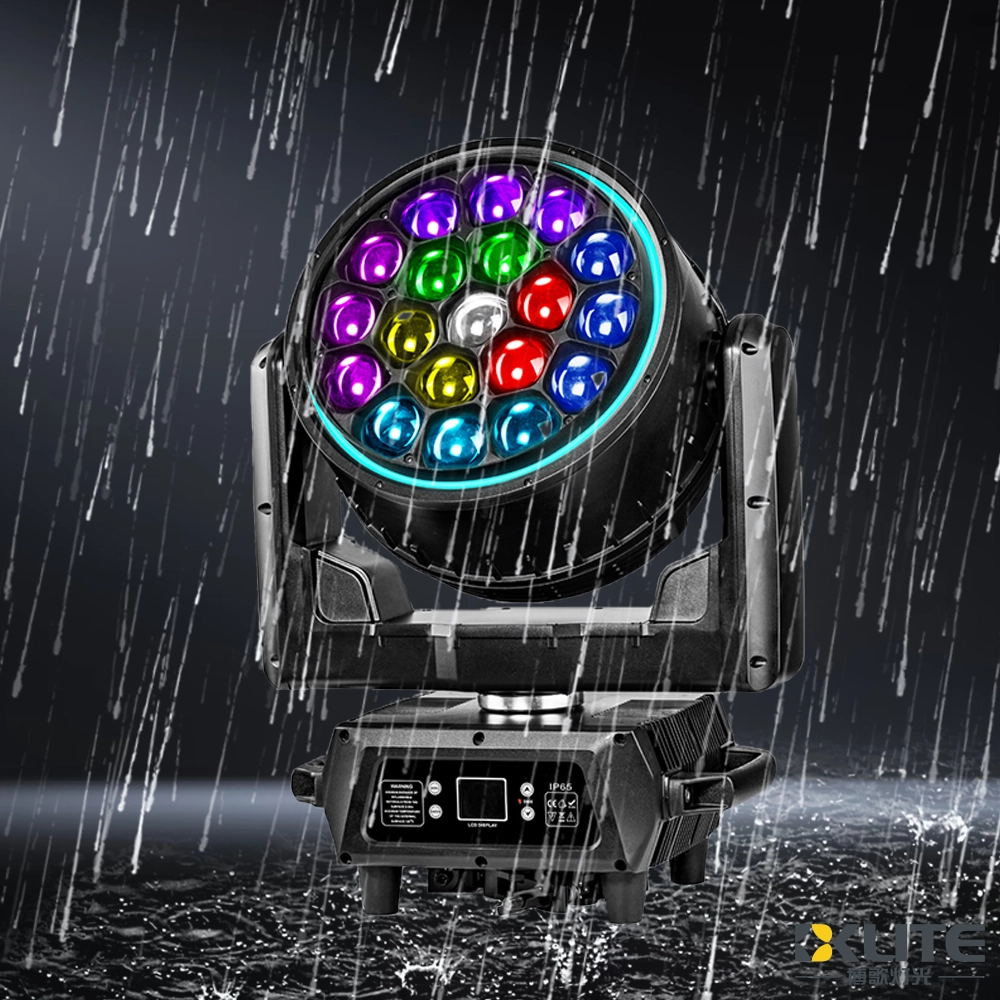
IP65 Waterproof Bee Eye Zoom 19x40W RGBW 4IN1 LED Beam Wash Moving Head Light with LED Ring
BKlite waterproof bee eye moving head light—your reliable choice from top waterproof moving head light manufacturers and suppliers. Ideal for outdoor stage, live event, music festival, this energy-saving fixture ensures powerful, precise illumination for any venue. It delivers powerful, reliable lighting performance in any weather.
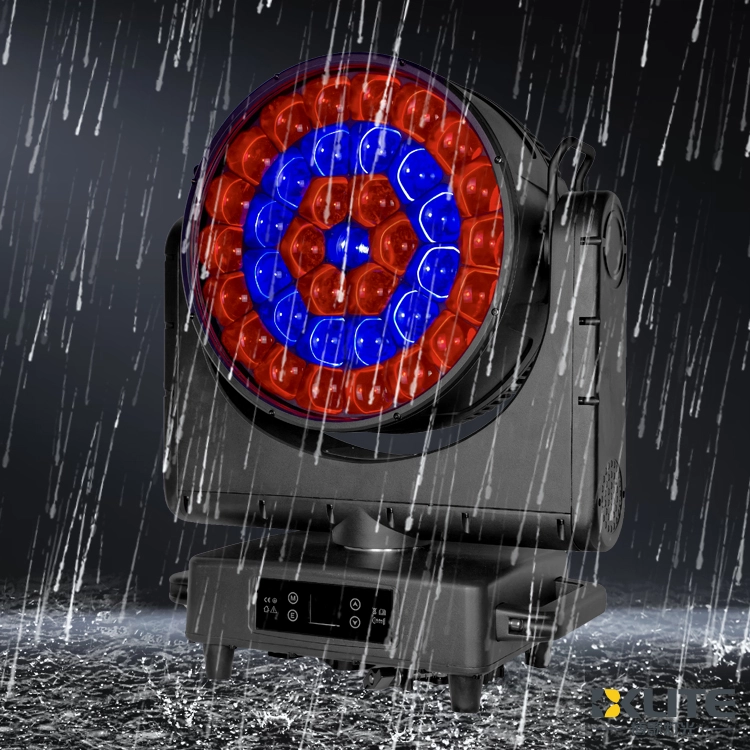
IP65 Waterproof ZOOM Bee Eye 37x40W RGBW 4in1 LED Moving Head Light
As a leading stage lighting equipment supplier with more than 15 years of industry know-how, BKlite brings you the IP65 ZOOM Bee Eye 37*40W RGBW 4in1 LED Moving Head Light (K25 Bee Eye) delivers vibrant, weatherproof lighting with powerful zoom and smooth movement. Ideal for dynamic stage effects, the K25 moving head light ensures stunning RGBW color mixing and reliable outdoor performance.
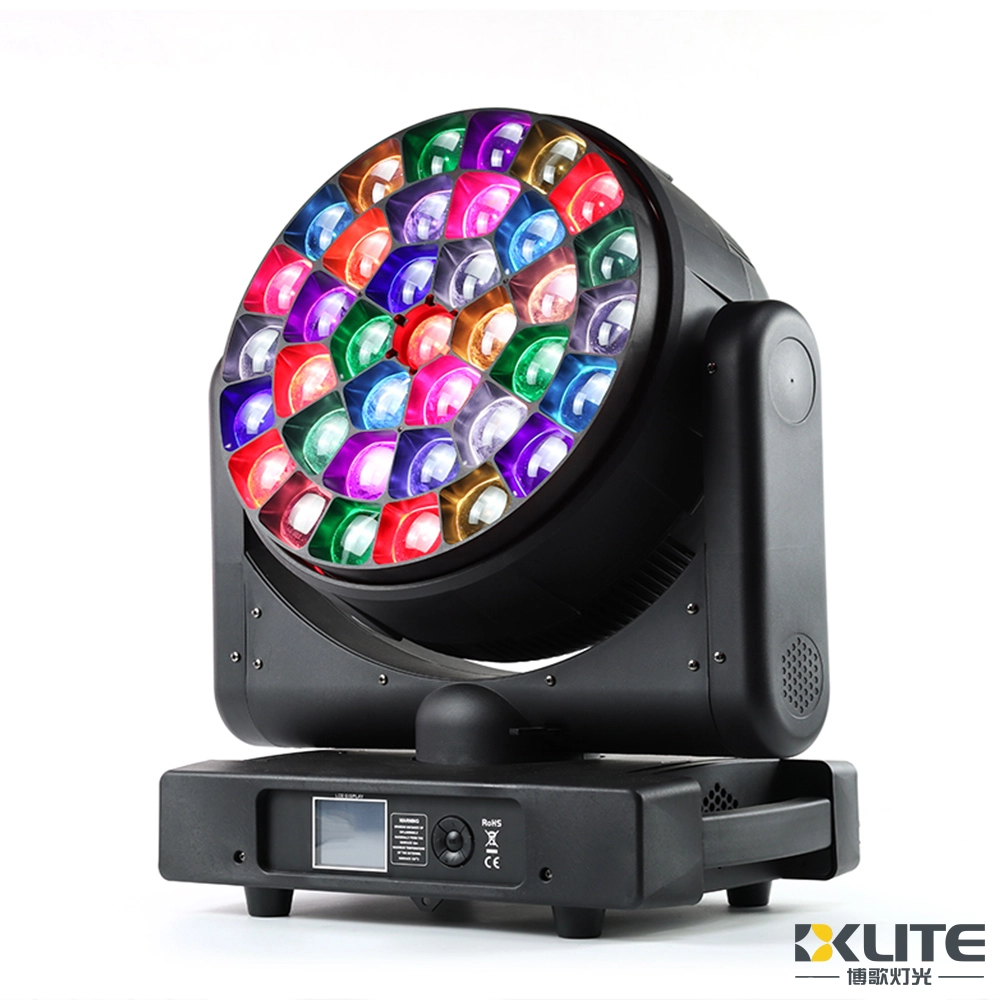
Bee Eye Zoom 37x40W RGBW 4in1 LED Beam Wash Moving Head Light
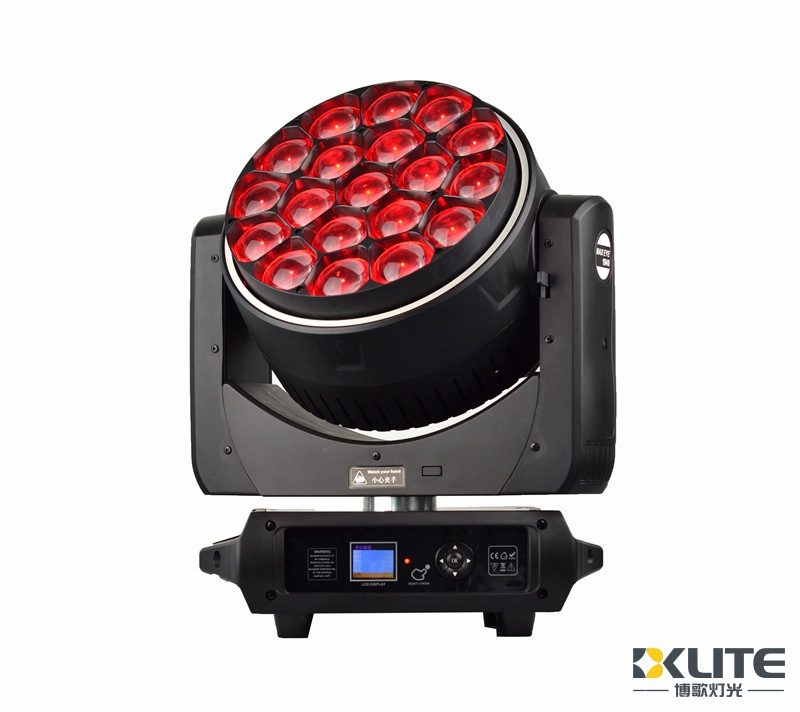
IP20 Bee Eye Zoom 19x40W RGBW 4IN1 LED Beam Wash Moving Head Light with LED Ring
As one of the leading stage lighting equipment suppliers with 15+ years of experience, BKlite launched a new Bee Eye K15 19x40 LED wash light BK-BY1940Z. .
Designed with a simple and sleek appearance, the WASH moving head light is compact, lightweight, and highly portable.
With multiple color effect macros and dynamic effect macros.
Our wash light can be used for versatile lighting options with amazing effect.
It is very good for your lighting projects.
Powerful and shoots very far distances.


Copyright © 2025 BKLITE All Rights Reserved.