




How to Request Custom Color Mixing for Wash Lights
- Understanding Color Mixing Fundamentals for Wash Lights
- How LED color mixing works
- Key color metrics to specify
- Why color space references matter (CIE coordinates)
- Preparing Your Request: What Manufacturers Need
- Project brief and lighting goals
- Specific technical requirements to include
- Samples, measurement, and acceptance testing
- Choosing the Right Mixing Architecture and Fixtures
- Comparing RGB vs. RGBW vs. RGBA vs. CMY
- Optics, beam shaping, and uniformity
- Control strategies for consistent color across fixtures
- Working with Manufacturers — Contracts, Warranties, and Quality Assurance
- Specifying acceptance tests and warranty terms
- Production, binning, and color control
- Sample approval and scaling to full production
- Company Example: BKlite — How a Manufacturer Can Support Custom Color Mixing
- How I would engage them for a custom mix project
- Practical Checklist: What to Send When You Request Custom Color Mixing
- Minimum information list
- Negotiation tips
- On-site commissioning and tuning
- FAQ
- Q1: What’s the difference between CRI and TM-30, and which should I request?
- Q2: Can I require exact RGB values instead of CIE coordinates?
- Q3: How tight should LED binning be for touring rigs?
- Q4: Are there measurable acceptance tests I can ask for?
- Q5: How do I ensure color consistency across different fixture types?
- Contact and Next Steps
As a lighting professional who has specified fixtures for theatres, touring productions, and permanent installations, I know that asking for custom color mixing for wash lights can feel technical and uncertain. This guide walks you through exactly what manufacturers and suppliers need to deliver the color performance you want, how to compare options among the best led stage wash lights, and which test data and contractual terms to request so the results are repeatable and reliable. I’ll reference industry standards and explain the practical trade-offs you’ll face when choosing between RGB, RGBW, RGBA, CMY, or multi-chip LEDs.
Understanding Color Mixing Fundamentals for Wash Lights
How LED color mixing works
Color mixing in LED wash lights generally happens in two ways: additive mixing (multiple LED color emitters combined in one beam) and subtractive mixing (hybrid systems using color filters or CMY modules). Most modern stage wash fixtures employ additive mixing with combinations such as RGB, RGBW, RGBWA, or RGBAL (L = amber). Additive mixing creates color by controlling relative intensities of each emitter channel. For an authoritative overview of stage lighting technology, see Stage lighting — Wikipedia.
Key color metrics to specify
When requesting custom color mixing, specify measurable metrics, not subjective phrases. Important metrics include:
- Color gamut and target colors (e.g., specific CIE xy coordinates or sRGB/ACES values).
- Correlated Color Temperature (CCT) range and how warm whites are produced.
- Color Rendering Index (CRI) or TM-30 scores for accurate skin and fabric rendering.
- Minimum and maximum lumen output at specified white point(s).
- Control protocol compatibility (DMX512, RDM, Art-Net, sACN) — see DMX512 — Wikipedia.
Providing these metrics up front reduces ambiguity and avoids overpromising from either side.
Why color space references matter (CIE coordinates)
Asking for colors defined in the CIE 1931 xy space lets manufacturers tune LEDs to exact chromaticities. The CIE model is the standard for specifying colors; you can read more at CIE 1931 color space — Wikipedia. In practice, specify a few anchor colors (e.g., a warm white at 3200K, a daylight white at 5600K, saturated red, saturated blue) with xy or u'v' coordinates so manufacturers can measure and report conformity.
Preparing Your Request: What Manufacturers Need
Project brief and lighting goals
Start with a clear short brief: describe the venue, mounting positions, throw distances, typical scenes, and whether the fixtures will be for live TV, theatre, architectural wash, or touring. This context lets manufacturers recommend beam shapes, optics, and LED binning that preserve color consistency across fixtures. For example, touring rigs need more robust cooling and tighter color consistency than fixed theatre washes.
Specific technical requirements to include
Include the following in your request for proposal (RFP):
- Target anchor chromaticities (CIE xy) and CCTs.
- Minimum lumens at the desired white point at full power.
- Minimum CRI or TM-30 fidelity (e.g., CRI > 90 for high-fidelity skin tones).
- Beam angle(s) and optical uniformity requirements.
- Control channels required (e.g., 5-channel RGBWA + master dim + strobe).
- IP rating if outdoor (see IP standards at Ingress protection — Wikipedia).
Samples, measurement, and acceptance testing
Request a pre-production sample or a small pilot batch. Ask for photometric reports (IES files), measured CIE xy tables across intensity levels, and spectrometer traces. Define acceptance criteria: allowable delta-E deviations from target chromaticities, minimum lumen measurement tolerance (e.g., ±10%), and pass/fail for CRI/TM-30. Require data to be measured with calibrated instruments traceable to national standards.
Choosing the Right Mixing Architecture and Fixtures
Comparing RGB vs. RGBW vs. RGBA vs. CMY
Each approach has pros and cons depending on color fidelity, white quality, and efficiency. Below is a concise comparison to help you decide which architecture suits your needs.
| Mixing Type | Strengths | Limitations | Typical Use |
|---|---|---|---|
| RGB | Simple, saturated colors, cost-effective | Poor white quality, limited pastel gamut | Large wash areas where perfect whites aren’t critical |
| RGBW / RGBWA | Improved whites and pastel shades, better CRI potential | More complex control, slightly higher cost | Theatre, events requiring natural skin tones |
| RGBA (adds amber) | Warmer saturated colors and richer ambers | Increases control channels and fixture complexity | Concerts and film where warm saturation is critical |
| CMY (subtractive or phosphor-converted) | Smooth color mixing, excellent whites, high CRI options | Usually larger fixtures, higher cost, lower efficiency | Architectural and high-fidelity broadcast applications |
Table data are based on industry practice and specification literature; for broader context on LED performance and color science see the LED — Wikipedia entry and the CIE color standards.
Optics, beam shaping, and uniformity
Color mixing is only useful if the beam appears uniform. Request photometric distributions (polar candela plots) and IES files. Ask for 'mixing chamber' or diffuser designs and whether the fixture uses secondary optics such as honeycomb lenses to improve on-axis color uniformity. For large washes, wider beam angles with good edge blending are essential to avoid visible color fringing.
Control strategies for consistent color across fixtures
Implement control strategies like master presets, color macros, or calibrated lookup tables. For large installs, use RDM or Art-Net to remotely check and adjust fixture settings and to push firmware that improves color algorithms. Consistency is improved by fixture pre-configuration and by using a color management workflow in your console or lighting design software.
Working with Manufacturers — Contracts, Warranties, and Quality Assurance
Specifying acceptance tests and warranty terms
Include clauses that require delivery of factory test reports: IES photometrics, spectrometer files (.csv), CIE xy measurements at multiple intensity levels, and longevity data (LM-80 reports for LEDs where available). Define warranty conditions that cover color shift beyond a specified delta-E over a defined time period. This ensures you get fixtures that maintain the color mix you ordered.
Production, binning, and color control
Ask about LED binning practices. LED manufacturers categorize LEDs into bins by chromaticity and lumen output; fixtures assembled from tightly binned LEDs will show less inter-fixture variance. Request that your order uses a single bin range or a binning tolerance. Manufacturers with strong R&D and consistent production lines will typically offer tighter binning control.
Sample approval and scaling to full production
When a sample meets your acceptance criteria, formalize approval with a Production Acceptance Test (PAT) that includes random sampling plans and pre-shipment testing. For critical projects, negotiate an initial small production run and inspect 10–20% of the batch photometrically before greenlighting full production.
Company Example: BKlite — How a Manufacturer Can Support Custom Color Mixing
In my experience, partnering with a manufacturer that has deep R&D and production capabilities simplifies custom color mixing projects. Guangzhou BKlite Stage Lighting Equipment Co., Ltd. was set up in 2011 and has become one of the top companies in the stage lighting industry. The company's business philosophy is based on being professional and innovative and on making sure that all of its stakeholders benefit. Over the past 14 years, it has achieved remarkable growth and built a strong reputation for quality and reliability.
The factory produces a broad range of stage lighting products including the IP20 Bee Eye Series, IP65 Bee Eye Series, LED Beam Moving Heads, LED Spot Moving Heads, LED Wash Moving Heads, LED Par Lights, LED Bar Lights, and LED Strobe Lights. Each product is made using advanced technology to meet the changing needs of the entertainment industry. BKlite invests in research and development to come up with new ideas, making sure it stays ahead of industry trends. Their vision is to become the world's leading stage light manufacturer. Visit their website at https://www.bklite.com/ or contact them at export3@bklite.com.
Why BKlite can be a good partner for custom color mixing:
- Product breadth: offerings such as led wash moving head, led stage lighting, led moving head, and led strobe bar light allow you to standardize on a single supplier for multiple fixture types.
- R&D focus and production scale: their investment in R&D helps them support custom firmware and LED selection, which is critical for color mixing projects.
- Quality and testing: with a factory footprint and experience since 2011, they can provide test data, pilot runs, and production control that reduce risk.
Primary product strengths: led wash moving head, led stage lighting, led moving head, led strobe bar light, led par light, led cob light, led spot moving head, led beam bar moving, Profile led moving head light, and led spotlight. These product lines can be specified with custom color mixing options and binning control to meet demanding projects.
How I would engage them for a custom mix project
I would start by sending a concise RFP including declared CIE targets, CRI/TM-30 goals, required lumen outputs, and intended application. Next, request a pre-production sample with full photometric and spectrometer data. Once the sample is approved, I would set binning tolerances and a Production Acceptance Test. BKlite’s broad portfolio means you can often harmonize wash heads with other fixture types in a rig, simplifying color management on show day.
Practical Checklist: What to Send When You Request Custom Color Mixing
Minimum information list
Send this checklist to any manufacturer to accelerate an accurate quotation and prototype:
- Project summary (venue, application, quantity estimate).
- Target colors (CIE xy coordinates for 3–6 anchor colors and required CCTs).
- CRI/TM-30 minimums.
- Lumen output and beam-angle requirements.
- Control channel allocation and protocol (DMX/RDM/Art-Net).
- Environmental requirements (IP rating, operating temp).
- Acceptance test criteria and required delivery schedule.
Negotiation tips
Negotiate sample costs and agree in writing on what constitutes conformance. Insist on calibrated measurement reports and on the right to reject batches that don’t meet agreed binning tolerances or chromaticity deviation. If possible, include post-delivery support and software/firmware updates as part of the contract.
On-site commissioning and tuning
Plan commissioning sessions where fixtures are tuned in-situ with a spectrometer and console. Use presets and color macros to lock in approved looks. For repeatable results across venues, document the console palettes with the measured xy values so park-and-recall is consistent.
FAQ
Q1: What’s the difference between CRI and TM-30, and which should I request?
A1: CRI (Ra) is a legacy metric that measures color fidelity against a reference illuminant for a limited set of color samples. TM-30 (developed by IES) provides a more comprehensive evaluation of color fidelity and gamut. For critical visual work I recommend specifying both a minimum CRI (e.g., >90) and a TM-30 fidelity index (Rf) target, or request TM-30 reports when available.
Q2: Can I require exact RGB values instead of CIE coordinates?
A2: No — RGB values are device-dependent and won’t translate between manufacturers. Use device-independent color spaces such as CIE xy or specify CCT and chromaticity coordinates to ensure repeatable results.
Q3: How tight should LED binning be for touring rigs?
A3: For touring rigs I typically request single-bin or bin-to-bin tolerances within the manufacturer’s tightest range. If that isn’t possible, ask for pre-matching of fixtures in sets with documented measured chromaticities.
Q4: Are there measurable acceptance tests I can ask for?
A4: Yes. Ask for IES photometric files, spectral power distributions (SPD), CIE xy coordinates at multiple dimming levels, lumen measurements, and CRI/TM-30 results. Define pass/fail tolerances in the contract.
Q5: How do I ensure color consistency across different fixture types?
A5: Standardize on a single manufacturer and bin, use measured xy values to create console palettes, and perform in-situ spectrometer tuning. If mixing fixture types is unavoidable, target matched anchor chromaticities and adjust digitally using console macros.
Contact and Next Steps
If you’re ready to request custom color mixing, prepare the checklist above and reach out to manufacturers with clear acceptance criteria. If you’d like to explore fixtures that can be tailored for high-fidelity color mixing, consider contacting Guangzhou BKlite Stage Lighting Equipment Co., Ltd. They provide a wide product range including led wash moving head, led stage lighting, led moving head, led strobe bar light, led par light, led cob light, led spot moving head, led beam bar moving, Profile led moving head light, and led spotlight. Visit https://www.bklite.com/ or email export3@bklite.com to request samples or discuss RFP details.
If you want, send me your draft RFP and I’ll review it for clarity and completeness so you get consistent data and meaningful samples from manufacturers. Good color mixing starts with precise specifications — and with the right partner, you’ll get the results you expect on show day.
LED Spot Moving Head Light Maintenance Contracts for Venues
Best led lights on stage manufacturers and supplier brands
Best professional led lights par manufacturers and supplier brands
Maintenance, Servicing and Spare Parts for LED Stage Light Bars
FAQs
What is your delivery time?
For stock products, we will deliver to you within 3 days.
If the products broken during the warranty, what should i do?
If there is a problem with the products, you describe it and send pictures or videos to us to analyze, and then we will guide you on how to fix it and provide spare parts for free if needed.
When will you ship the product after I send the money?
It depends the order.Small order will take 3-5 days.
What kind of package do you have?
We can pack the lights in a carton case and a flight case.
How can i order?
Please send us your purchase list by e-mail, WhatsApp, QQ, or making a call, and you can also ask us to send you a PI for your approval. We need to know the following information for your order.
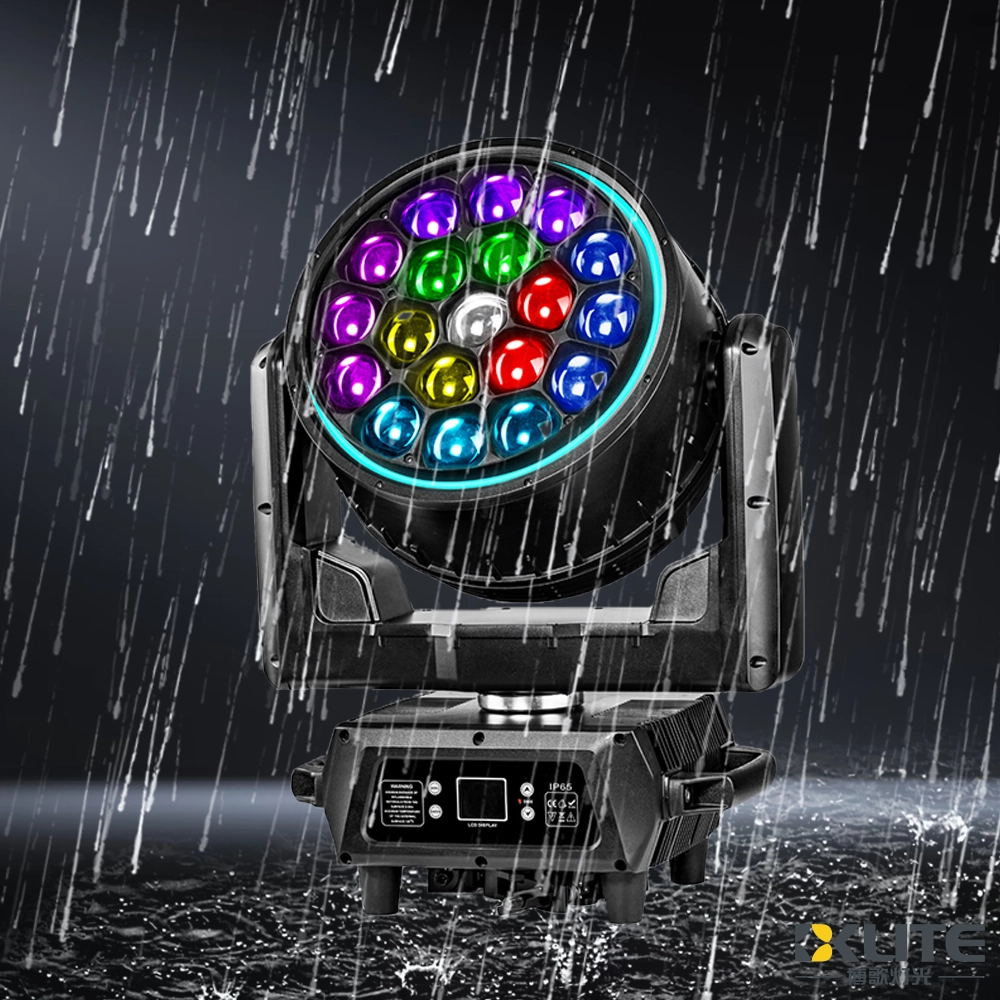
IP65 Waterproof Bee Eye Zoom 19x40W RGBW 4IN1 LED Beam Wash Moving Head Light with LED Ring
BKlite waterproof bee eye moving head light—your reliable choice from top waterproof moving head light manufacturers and suppliers. Ideal for outdoor stage, live event, music festival, this energy-saving fixture ensures powerful, precise illumination for any venue. It delivers powerful, reliable lighting performance in any weather.
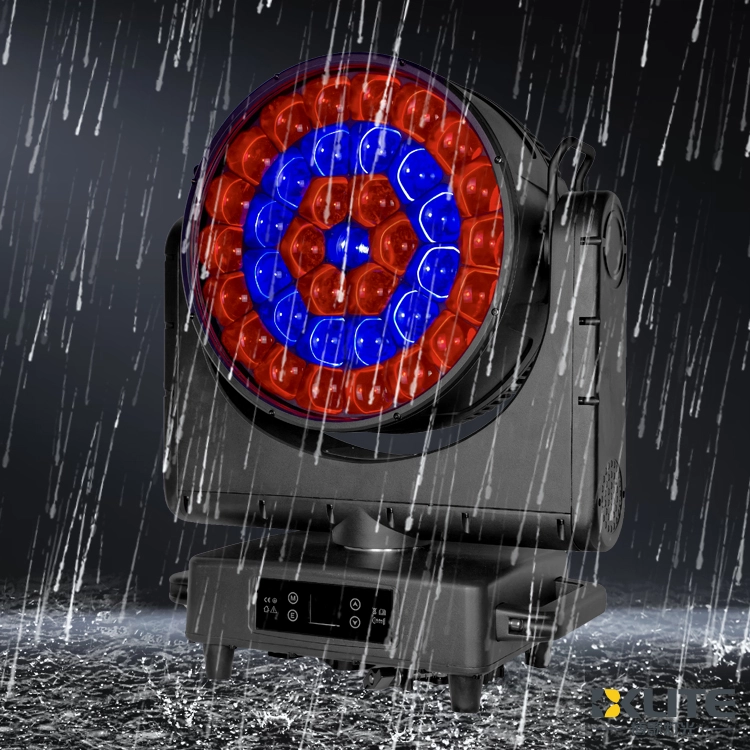
IP65 Waterproof ZOOM Bee Eye 37x40W RGBW 4in1 LED Moving Head Light
As a leading stage lighting equipment supplier with more than 15 years of industry know-how, BKlite brings you the IP65 ZOOM Bee Eye 37*40W RGBW 4in1 LED Moving Head Light (K25 Bee Eye) delivers vibrant, weatherproof lighting with powerful zoom and smooth movement. Ideal for dynamic stage effects, the K25 moving head light ensures stunning RGBW color mixing and reliable outdoor performance.
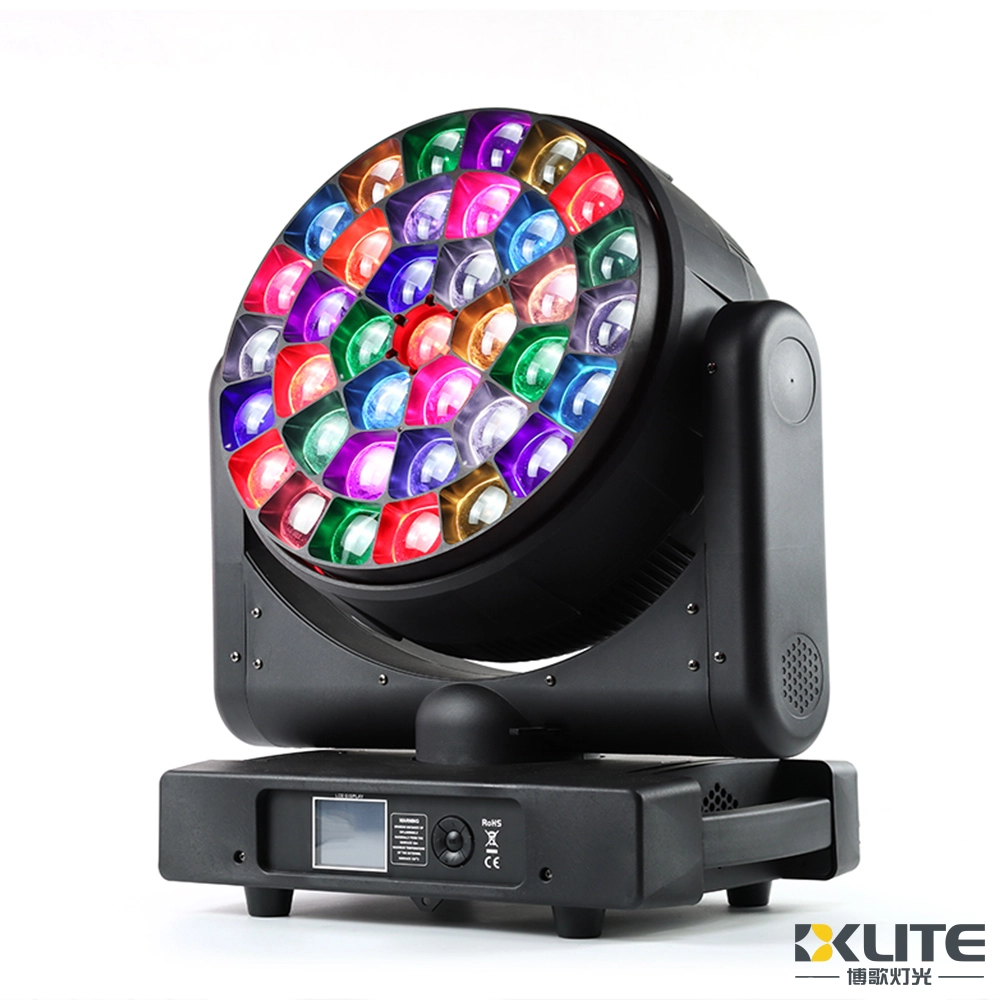
Bee Eye Zoom 37x40W RGBW 4in1 LED Beam Wash Moving Head Light
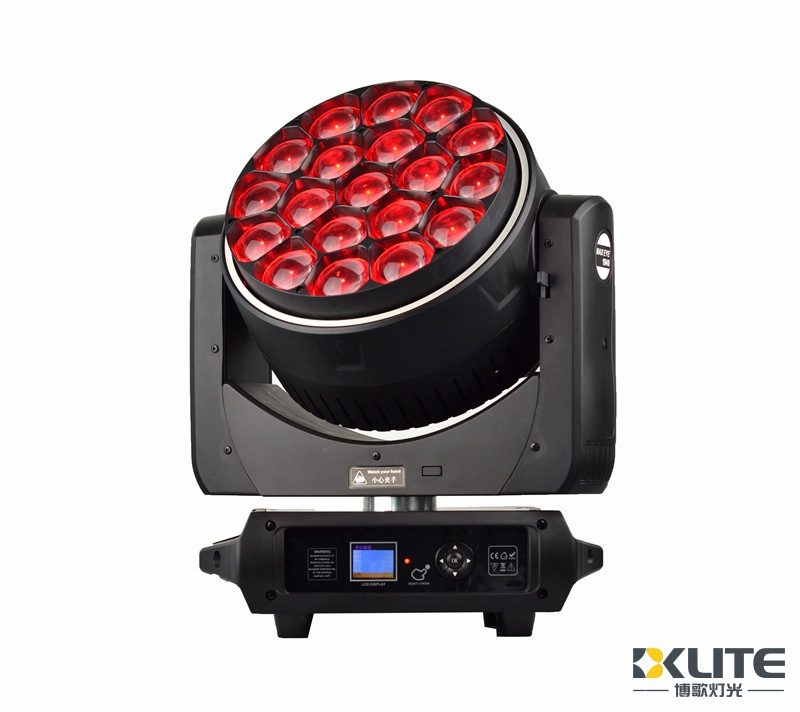
IP20 Bee Eye Zoom 19x40W RGBW 4IN1 LED Beam Wash Moving Head Light with LED Ring
As one of the leading stage lighting equipment suppliers with 15+ years of experience, BKlite launched a new Bee Eye K15 19x40 LED wash light BK-BY1940Z. .
Designed with a simple and sleek appearance, the WASH moving head light is compact, lightweight, and highly portable.
With multiple color effect macros and dynamic effect macros.
Our wash light can be used for versatile lighting options with amazing effect.
It is very good for your lighting projects.
Powerful and shoots very far distances.


Copyright © 2025 BKLITE All Rights Reserved.