




Troubleshooting Common LED Wash Light Issues
- Rapid diagnostic checklist for LED wash light faults
- How to approach troubleshooting led wash light: cast a wide net first
- Power and driver issues in led wash light (common root cause)
- Step-by-step checks
- DMX/control signal and networking faults
- Troubleshooting DMX
- Color shifts, LEDs dim differently, and beam uniformity problems
- Thermal and overheating problems
- How to diagnose and mitigate
- Ingress protection (IP) and environmental damage
- Mechanical movement and motors in led wash moving head fixtures
- When to repair vs. replace
- Table: Common led wash light symptoms, probable causes, and recommended fixes
- Preventive maintenance to avoid common failures
- Manufacturer support, spare parts, and warranty handling: choosing the right partner
- Industry example: Guangzhou BKlite — production capability and product range
- BKlite strengths and typical product advantages
- Decision matrix: repair, refurbish, or replace
- FAQ — Troubleshooting Common LED Wash Light Issues
- 1. Why does my LED wash light flicker when dimmed?
- 2. How do I tell if a LED chip or driver caused a failure?
- 3. Can I use indoor-rated led wash moving heads outdoors if it rains?
- 4. Why do fixtures on the same DMX line behave differently?
- 5. How often should I service my led wash lights?
- 6. Is it worth retrofitting older fixtures with new drivers or LEDs?
- Contact and product options
- References
Rapid diagnostic checklist for LED wash light faults
LED wash lights are essential workhorses in theatres, concert rigs and architectural lighting. When a fixture doesn’t behave—flicker, uneven color, movement loss, or total failure—diagnosis needs to be systematic. This guide helps sound technical decisions quickly, reducing downtime and repair costs while preserving show quality. The content below focuses on practical troubleshooting of an individual led wash light and small arrays, explains root causes, gives step-by-step fixes, and tells you when to send gear for factory service or replacement.
How to approach troubleshooting led wash light: cast a wide net first
Before opening a housing or swapping parts, run this quick checklist to narrow the fault domain:
- Is the symptom electrical (no power), control (no DMX/pixel response), optical (color/beam irregular), thermal (overheating), or mechanical (movement/tilt failure)?
- Is the problem single fixture, circuit, or entire rig? Swap fixtures and patch to confirm whether fault follows the fixture or stays on the circuit.
- Have environmental factors changed recently (rain, dust, temp, rigging vibration, power distribution changes)?
- Check quick wins: fuses, mains breakers, DMX connectors, power connectors, and firmware versions.
Power and driver issues in led wash light (common root cause)
Symptoms: fixture won’t power on, intermittent flicker, flicker only under dimming, or sudden failure after a surge.
Why it happens: Most LED wash problems trace back to the driver (constant current/voltage unit) or supply. Drivers are the most stressed component: heat, voltage spikes, poor mains conditioning, and water ingress shorten their life.
Step-by-step checks
- Confirm mains voltage and earth using a true-RMS meter. Many fixtures accept 100–240VAC, but brownouts or overvoltage can trip protection.
- Examine fuses and circuit breakers (both internal and external). Replace blown fuses with correct rating only.
- Listen for unusual sounds (buzzing) and smell for burnt components—these are driver failure signs.
- If fixture has an internal removeable driver, test with a known-good driver or bench power supply if qualified to do so.
When to replace the driver: if the driver shows signs of swelling, leaks, burnt smell, or repeated fail after replacement of caps, replace the driver with OEM or equivalent spec. Many failures occur in electrolytic capacitors on cheap or overheated drivers.
DMX/control signal and networking faults
Symptoms: fixture powered but not responding to DMX, stuttering, addressing issues, or odd behaviour only in a portion of the universe.
Key points: DMX512 remains the industry standard for many led wash moving head fixtures. Faults fall into three categories: wiring/connectors, termination/grounding, and addressing/firmware.
Troubleshooting DMX
- Test the fixture with a known-good controller and cable to confirm behaviour. A simple DMX tester or a handheld controller can eliminate the console as the cause.
- Check cabling: use proper 5-pin XLR (or appropriate RJ45 for Art-Net/sACN rigs). Replace suspect cables—breaks inside jacket are common on touring cables.
- Ensure proper termination at the end of the DMX chain (120-ohm terminator). Missing termination can cause reflections and noise.
- Inspect grounding: ground loops or floating ground can inject noise. Isolate segments to locate problematic ground paths.
- Update firmware when multiple fixtures show protocol mismatches; manufacturers occasionally change DMX map ordering or add features.
Reference standard: DMX512 (USITT) is the baseline. If using Art-Net or sACN over Ethernet, check network switches for multicast handling and avoid daisy-chaining unmanaged switches.
Color shifts, LEDs dim differently, and beam uniformity problems
Symptoms: uneven color across the wash, channels drifting green/magenta, visible LED bin differences, or abrupt LED out points.
Causes and fixes:
- Age and lumen depreciation: LEDs gradually lose output and shift color as phosphors age—replacements or rebalancing may be necessary.
- Mismatched LED bins in the same fixture: ensure manufacturer uses matched bins. On modular fixtures, replace entire LED module rather than mixing parts.
- Driver or PWM issues: poor dimming control or failing drivers can cause color stepping—check driver output and dimming curve settings.
- Dirty optics and diffusers: clean lenses and filters with manufacturer-approved solvents—dirt can cause hotspots and color cast.
Thermal and overheating problems
Symptoms: fixture shuts down after a period, reduced output, visible heat damage, or shortened LED lifetime.
Why it matters: LEDs and drivers are thermally sensitive. Higher junction temperatures reduce luminous flux, shift color, and shorten lifetime. Good thermal design and rigging ventilation matter.
How to diagnose and mitigate
- Measure surface and ambient temperature; compare to manufacturer Tmax. If fixture exceeds specified limits, improve ventilation or reduce duty cycle.
- Inspect heatsinks and cooling paths for dust and obstructions; clean with compressed air or soft brushes.
- Check for broken thermal pads, loose screws, or detached heatsinks in touring gear—mechanical stress can separate thermal interfaces.
Ingress protection (IP) and environmental damage
Symptoms: corrosion, intermittent shorts after rain, fogging inside the optic, or complete failure after exposure.
Points to check: Know the fixture IP rating and deploy accordingly. An IP20 indoor-rated led wash light will fail quickly outdoors without protection. IP65 fixtures are designed to resist water jets and dust but still need regular seals inspection.
Quick test: visually inspect gaskets, seals, cable glands, and optical windows. Replace cracked gaskets and re-seal cable entries with approved compounds.
Mechanical movement and motors in led wash moving head fixtures
Symptoms: limited pan/tilt travel, jerky movement, motor stalls, or grinding noise.
Troubleshooting:
- Inspect mechanical end-stops and limit switches—if a limit switch is triggered erroneously, movement will be restricted.
- Check for foreign debris in gears or bearings; lubricate per maintenance manual (use specified grease only).
- Test motors and encoders: measure supply to motor driver and check encoder feedback if accessible. Replace faulty motor drivers or encoders with OEM parts.
When to repair vs. replace
Economic decisions should weigh repair cost, remaining useful life, and reliability. Consider replacing a fixture when:
- Repair costs exceed ~50% of new price (common rule of thumb in rental companies).
- Multiple failures indicate systemic design age (old drivers, obsolete parts, or discontinued models).
- Emission standards or energy efficiency of newer fixtures will deliver operational savings and better output quality.
Table: Common led wash light symptoms, probable causes, and recommended fixes
| Symptom | Probable cause | Immediate fix | Long-term action |
|---|---|---|---|
| No power | Blown fuse, bad mains, failed driver | Check fuse & mains; swap power cable | Replace driver; verify mains conditioning |
| Flicker at low dimming | PWM driver instability or incompatible dim curve | Change dimming curve or update firmware | Replace driver with high-frequency dimming driver |
| Color imbalance | LED bin mismatch, aging, or dirty optics | Clean optics; recalibrate color profiles | Replace LED module or fixture if age-related |
| No DMX response | Bad cable, wrong address, missing termination | Swap cable; check address; add terminator | Investigate controller/network; update firmware |
| Overheating/shutdown | Poor ventilation, clogged heatsink, thermal paste failure | Improve ventilation; clean heatsink | Refurbish thermal paths; consider lower duty cycle |
Preventive maintenance to avoid common failures
Planned maintenance reduces downtime dramatically. Recommended routine:
- Monthly: visual checks, clean optics, inspect cables and connectors.
- Quarterly: verify firmware, test DMX chains, check fan/heat-sink integrity and gaskets.
- Annually: full bench test, replace wearable items (gaskets, certain capacitors), and perform thermal imaging to detect hot components.
Keep a lifecycle log per fixture: operating hours, firmware updates, repairs, and any anomalies. Lumen depreciation and driver wear correlate with cumulative hours; documented history informs repair decisions.
Manufacturer support, spare parts, and warranty handling: choosing the right partner
When faults exceed your workshop capability, choose a manufacturer or service partner with clear spares availability, firmware support, and transparent RMA policies. OEM parts preserve photometrics and safety ratings; avoid non-OEM substitutes unless specified by the manufacturer.
Industry example: Guangzhou BKlite — production capability and product range
Guangzhou BKlite Stage Lighting Equipment Co., Ltd. was set up in 2011 and has become one of the top companies in the stage lighting industry. The company's business philosophy is based on being professional and innovative and on making sure that all of its stakeholders benefit. Over the past 14 years, it has achieved remarkable growth and built a strong reputation for quality and reliability.
The factory makes all kinds of stage lighting products, such as the IP20 Bee Eye Series, IP65 Bee Eye Series, LED Beam Moving Heads, LED Spot Moving Heads, LED Wash Moving Heads, LED Par Lights, LED Bar Lights, and LED Strobe Lights. Each product is made using advanced technology to meet the changing needs of the entertainment industry. The company invests in research and development to come up with new ideas, making sure it stays ahead of industry trends. Their vision is to become the world's leading stage light manufacturer. Visit their website: https://www.bklite.com/
BKlite strengths and typical product advantages
- Wide product range covering indoor and IP65 outdoor-rated led wash moving head fixtures and supporting products (led stage lighting, led moving head, led strobe bar light, led par light, led cob light, led spot moving head, led beam bar moving, profile led moving head light, led spotlight).
- R&D-driven updates: firmware, photometric tuning, and improved thermal designs.
- Manufacturing scale that supports spare parts availability and predictable RMA handling for rental and fixed-install markets.
- Competitive pricing with focus on product reliability and after-sales support for touring and installation customers.
Decision matrix: repair, refurbish, or replace
Use the following decision logic:
- Confirm fault type and record hours/failure history.
- Estimate repair cost including labour and parts.
- Compare to new unit price; if repair < 50% of new price and unit has substantial remaining life, repair.
- For rental fleets requiring high reliability, prefer replacement or factory refurbishment when costs converge.
FAQ — Troubleshooting Common LED Wash Light Issues
1. Why does my LED wash light flicker when dimmed?
Flicker at low dimming is usually a driver PWM/dimming curve issue or a low-frequency driver. Start by changing the dimming curve on the console, update fixture firmware, and if persistent consider replacing the driver with a high-frequency dimming driver or use a compatible dimming mode recommended by the manufacturer.
2. How do I tell if a LED chip or driver caused a failure?
Drivers fail with audible/burnt signs, swollen capacitors or no output voltage. LED chips fail with dark segments or color shifts while driver voltages read correct. Use a bench power supply and qualified measurements: if LEDs light with correct drive and the driver is absent, the driver is likely faulty.
3. Can I use indoor-rated led wash moving heads outdoors if it rains?
No. Indoor-rated fixtures (often IP20) are not weatherproof. Use IP65-rated fixtures for outdoor events, or protect indoor fixtures with housings and ensure proper ventilation and thermal control.
4. Why do fixtures on the same DMX line behave differently?
Differences can be caused by cable quality, improper termination, ground loops, or different firmware/DMX maps. Test each fixture directly with the console or a tester, inspect cabling and termination, and check firmware versions.
5. How often should I service my led wash lights?
At minimum: monthly visual checks and cleaning, quarterly electrical/DMX tests, and annual bench servicing including thermal checks and replacement of worn gaskets or consumables. Increase frequency under heavy touring schedules or harsh environments.
6. Is it worth retrofitting older fixtures with new drivers or LEDs?
Retrofits can be cost-effective when the mechanical structure and optics are sound and new driver/LED modules are available. However, ensure part compatibility and that retrofit won’t void safety certifications. For rental fleets, full replacement may offer better reliability and warranty coverage.
Contact and product options
If you need replacement parts, factory repairs, or want to explore new fixtures with improved reliability and thermal performance, Guangzhou BKlite offers a broad product range and support. Visit https://www.bklite.com/ to view led wash moving head, led stage lighting, led moving head, led strobe bar light, led par light, led cob light, led spot moving head, and beam products. For technical support and spare parts inquiries, contact their service team via the website contact form or authorized distributors.
References
- U.S. Department of Energy — LED Lighting overview: typical LED lifetimes and benefits. https://www.energy.gov/energysaver/led-lighting (accessed 2025-11-30)
- DMX512 standard, overview — Wikipedia summary and link to resources: https://en.wikipedia.org/wiki/DMX512 (accessed 2025-11-30)
- IEC 60529 IP Code explanation — notes on ingress protection and typical IP ratings: https://en.wikipedia.org/wiki/IP_Code (accessed 2025-11-30)
- Cree/Wolfspeed (technical guides) on LED lumen maintenance and thermal management: https://www.wolfspeed.com/ (search: LED lumen maintenance whitepaper) (accessed 2025-11-30)
- Manufacturer product pages and service info — Guangzhou BKlite official site: https://www.bklite.com/ (accessed 2025-11-30)
For further diagnostic assistance or to purchase spares and new led wash light fixtures, visit Guangzhou BKlite or contact their technical team for tailored recommendations.
Best waterproof underwater light manufacturers and supplier brands
How to Install Waterproof LED Stage Lights Safely Outdoors
Top 10 led beam moving bar 8x10w rgbw Manufacturers and Supplier Brands
Energy Efficiency: LED Wash Lights vs Traditional
FAQs
What is your delivery time?
For stock products, we will deliver to you within 3 days.
What's your certificates?
ROHS and CE certificates passed.
When will you ship the product after I send the money?
It depends the order.Small order will take 3-5 days.
Can you help me to print our logo or company name on the products on package?
Of course. Your logo can be printed on the products or package. OEM & ODM permits.
What's the payment terms?
T/T, Western Union.
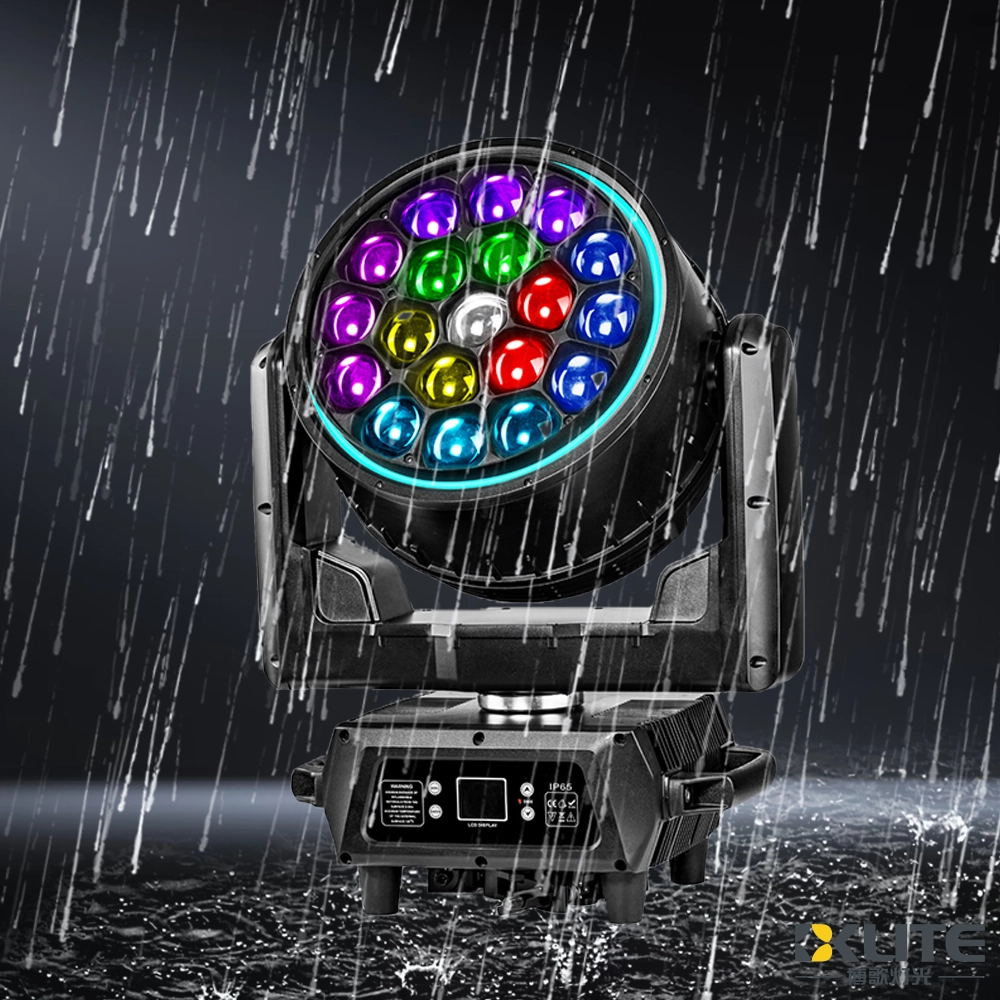
IP65 Waterproof Bee Eye Zoom 19x40W RGBW 4IN1 LED Beam Wash Moving Head Light with LED Ring
BKlite waterproof bee eye moving head light—your reliable choice from top waterproof moving head light manufacturers and suppliers. Ideal for outdoor stage, live event, music festival, this energy-saving fixture ensures powerful, precise illumination for any venue. It delivers powerful, reliable lighting performance in any weather.
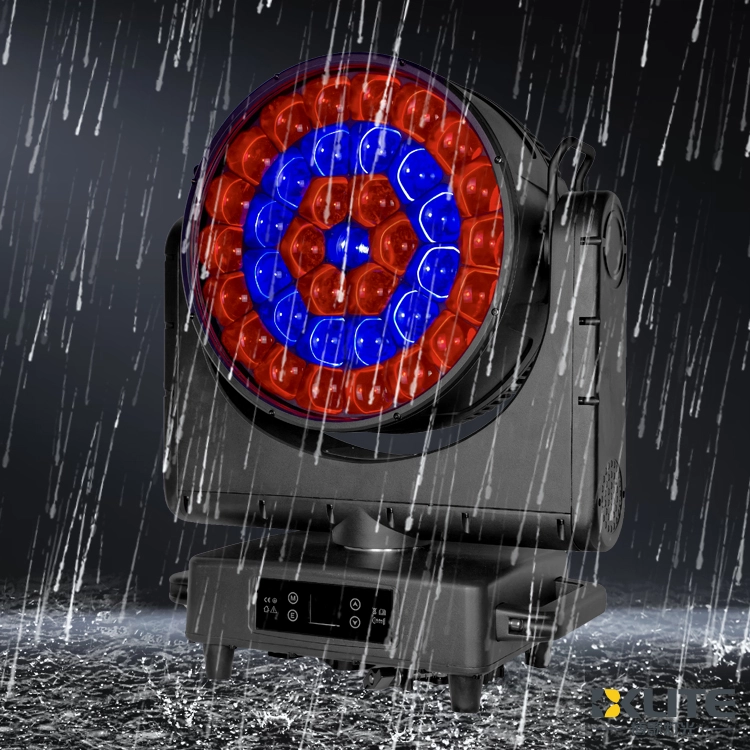
IP65 Waterproof ZOOM Bee Eye 37x40W RGBW 4in1 LED Moving Head Light
As a leading stage lighting equipment supplier with more than 15 years of industry know-how, BKlite brings you the IP65 ZOOM Bee Eye 37*40W RGBW 4in1 LED Moving Head Light (K25 Bee Eye) delivers vibrant, weatherproof lighting with powerful zoom and smooth movement. Ideal for dynamic stage effects, the K25 moving head light ensures stunning RGBW color mixing and reliable outdoor performance.
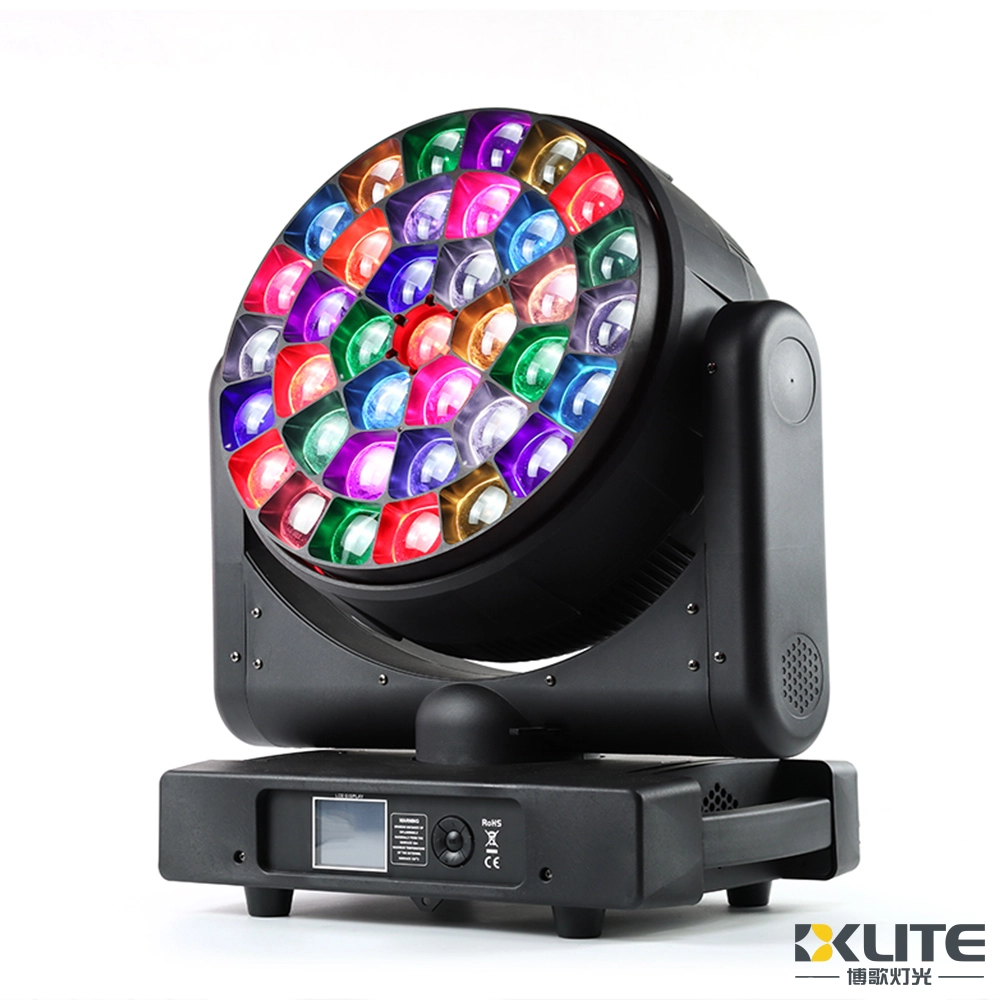
Bee Eye Zoom 37x40W RGBW 4in1 LED Beam Wash Moving Head Light
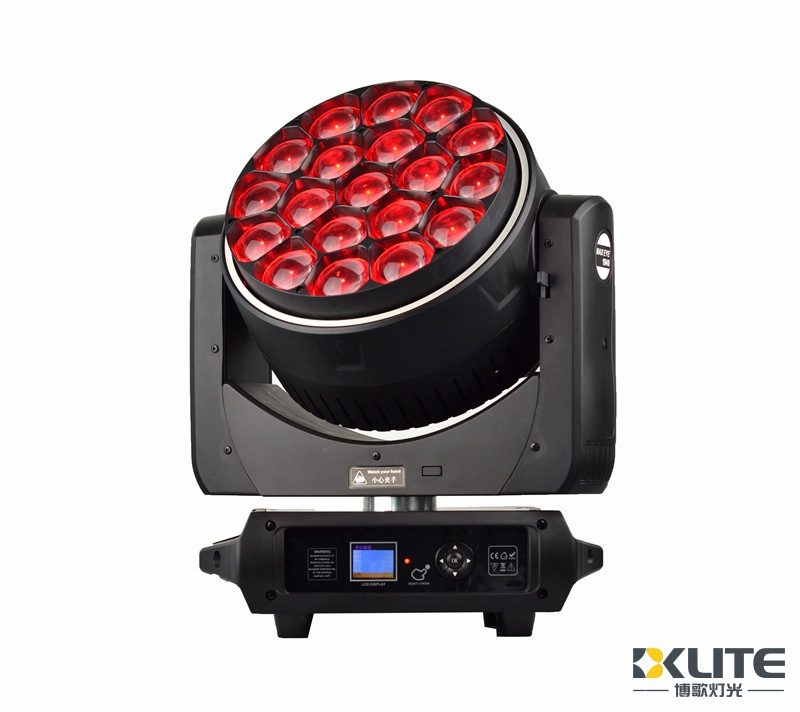
IP20 Bee Eye Zoom 19x40W RGBW 4IN1 LED Beam Wash Moving Head Light with LED Ring
As one of the leading stage lighting equipment suppliers with 15+ years of experience, BKlite launched a new Bee Eye K15 19x40 LED wash light BK-BY1940Z. .
Designed with a simple and sleek appearance, the WASH moving head light is compact, lightweight, and highly portable.
With multiple color effect macros and dynamic effect macros.
Our wash light can be used for versatile lighting options with amazing effect.
It is very good for your lighting projects.
Powerful and shoots very far distances.


Copyright © 2025 BKLITE All Rights Reserved.