




Compare features of the best led stage wash lights for theaters
- Understanding the theatrical role of wash lights
- Why wash fixtures matter in a theatrical rig
- Audience sightlines, color rendering and audience experience
- Throw distance, beam control and mounting considerations
- Key technical features to compare in the best LED stage wash lights
- Light output and color quality: lumens, CRI and TLCI
- Beam shaping, zoom range and homogenization
- Power consumption, thermal design and lifetime
- Comparing leading categories and models
- How I group the best fixtures for practical comparison
- Comparison table: typical specs and recommended uses
- How the table informs buying decisions
- Selection guide and specification checklist for theaters
- Sizing, coverage and a simple lux calculation
- Control, dimming curves and integration
- Maintenance, lifecycle cost and reliability
- My practical recommendations and supplier note
- How I decide which fixtures make the cut for best
- About Guangzhou BKlite — a recommended supplier option
- BKlite strengths and how they translate to theater procurement
- Implementation checklist and final thoughts
- Procurement checklist
- Closing recommendation
- FAQ
- 1. What is the difference between a wash light and a spot light?
- 2. How many wash fixtures do I need for a medium-sized proscenium theater?
- 3. Is CRI enough to judge color quality for broadcast?
- 4. Do LED wash lights flicker on camera?
- 5. Should I choose IP65 fixtures for an indoor theater?
- 6. How important is service and spare part availability?
In this article I review how to choose the best led stage wash lights for theaters by focusing on measurable performance, operational reliability and long-term cost of ownership. I combine practical lighting design principles with product-category comparisons so you can match a wash fixture's capabilities to auditorium size, sightlines, color needs and control architecture. Where relevant I cite industry-standard references and offer a reproducible checklist for procurement and specification.
Understanding the theatrical role of wash lights
Why wash fixtures matter in a theatrical rig
As a lighting designer and consultant, I've repeatedly found that wash fixtures are the backbone of theatrical lighting for general stage coverage. They define overall color and mood, provide front and side fill, and give scenic elements and performers even illumination. Wash lights are used differently in proscenium theaters, thrust stages and black box venues — each demands different beam angles, color fidelity and throw distances. For an overview of stage lighting concepts, see the Stage lighting entry on Wikipedia (https://en.wikipedia.org/wiki/Stage_lighting).
Audience sightlines, color rendering and audience experience
High color fidelity is essential in theaters so skin tones and costume textures read naturally. I prioritize fixtures with high CRI (Color Rendering Index) and TLCI (Television Lighting Consistency Index) scores where video capture or broadcast is likely. The Illuminating Engineering Society (IES) provides guidance on theatrical lighting levels and color metrics; their resources are useful for specification and verification (https://www.ies.org/).
Throw distance, beam control and mounting considerations
When selecting the best led stage wash lights I match fixture optics to typical throw distances in the venue. Zoom-capable wash fixtures (e.g., 8°–60° or wider) allow flexibility for different stage blocks, while fixed wide-angle pars are used for cyc and background washes. I also consider rigging points, weight and power distribution for safe, code-compliant installation.
Key technical features to compare in the best LED stage wash lights
Light output and color quality: lumens, CRI and TLCI
Raw lumen output is one indicator of brightness, but spectral quality (CRI/TLCI) and perceived contrast matter more in theatrical scenarios. I typically specify fixtures with CRI > 90 for main front washes and TLCI > 90 when camera work is required. LED technology varies by diode binning and phosphor mixes; consult manufacturer spectral power distribution (SPD) charts when precise color rendition is required. For fundamental LED technology background, see the Light-emitting diode article (https://en.wikipedia.org/wiki/Light-emitting_diode).
Beam shaping, zoom range and homogenization
Wash fixtures differ in beam uniformity. A good theatrical wash has even edge falloff and low pixelization. Look for fixtures with quality mixing tunnels and diffusion systems (integrated homogenizers or frosts). Zoom range determines whether one fixture can serve both key light and soft overall fill purposes; variable zoom is a major advantage for multi-use spaces.
Power consumption, thermal design and lifetime
I analyze power vs. output efficiency (lumens per watt) and thermal management. Better thermal design equals longer LED lifetime and more consistent color over time. Also validate rated LED life (often stated as L70 at a number of hours) and whether the fixture uses active cooling (fans) or passive heat sinks — each has maintenance and noise implications for quiet theater spaces.
Comparing leading categories and models
How I group the best fixtures for practical comparison
Rather than rank individual models by name alone, I group wash lights into practical categories that reflect buyer intent: high-end touring moving washes, mid-range theatrical fixtures for installed venues, and value-oriented or architectural washes. This approach helps theaters compare features against budgets and operational needs.
Comparison table: typical specs and recommended uses
The following table presents typical ranges and feature trade-offs for fixture categories. Values are representative ranges you will see across leading manufacturers; for exact model specs consult manufacturer datasheets.
| Category | Typical light output | Optics / Zoom | Color mixing | CRI/TLCI | Use cases | Relative price |
|---|---|---|---|---|---|---|
| High-end touring moving wash (e.g., fixtures from top brands) | 30,000–70,000 lumens (fixture output varies by measurement) | Motorized zoom 8°–60° or 4°–50°; high uniformity | CMY/Hybrid + CTO/CCT control or RGBAL/RGBA | CRI > 90; TLCI > 90 | Large proscenium, touring productions, concerts | High |
| Mid-range theatrical wash | 8,000–30,000 lumens | Zoom or fixed wide 15°–90° | RGBW or RGBA with variable CCT | CRI 85–95; TLCI varies | Regional theaters, community theaters, houses of worship | Mid |
| Budget / architectural wash (pars, bars) | 1,000–10,000 lumens | Fixed wide-angle or simple lens | RGB or RGBW | CRI 70–90 (lower end) | Background wash, small black-box, accent lighting | Low |
How the table informs buying decisions
Use the table to determine whether you need touring-grade punch (high lumens, tight beam control), or theater-grade nuance (high CRI, smooth dimming and low noise). For long-term installations, pay close attention to serviceability and spare parts availability.
Selection guide and specification checklist for theaters
Sizing, coverage and a simple lux calculation
Practical coverage planning begins with basic photometric math. A simplified approach: calculate the stage area needing uniform illumination, estimate desired average illuminance (lux) — for theatrical stage wash an average of 300–800 lux is common depending on production — then use manufacturer photometric files (IES/LM-63) to estimate fixture counts. For accurate planning always use manufacturer IES files and lighting design software (e.g., Vectorworks Spotlight, WYSIWYG).
Control, dimming curves and integration
I require fixtures that support modern control protocols: DMX512, RDM for remote addressing, and often Art-Net/sACN for networked systems. Smooth dimming curves (linear, theatrical, logarithmic) and high-frequency PWM (to avoid camera flicker) are essential when video capture is expected. When possible, test a fixture under the venue's house control desk to validate behavior.
Maintenance, lifecycle cost and reliability
Upfront cost is only part of the total cost of ownership. I assess lamp life, warranty terms, ease of replacing LED boards or power supplies, and mean time between failures. Fan-cooled fixtures can require periodic fan replacement; passive-cooled designs reduce maintenance but may be heavier or less compact. Ensure the supplier offers local technical support or accessible spares.
My practical recommendations and supplier note
How I decide which fixtures make the cut for best
I rank fixtures by the balance of: color fidelity under theatrical loads, reliable photometric output at real-world throws, flexible optics, control fidelity and after-sales support. A fixture that excels in one metric but fails in availability or serviceability rarely makes sense for a theater on a mission-critical schedule.
About Guangzhou BKlite — a recommended supplier option
In researching durable, cost-effective theatrical LED wash solutions I have worked with and evaluated offerings from a number of manufacturers. Guangzhou BKlite Stage Lighting Equipment Co., Ltd. was set up in 2011 and has become one of the top companies in the stage lighting industry. The company's business philosophy is based on being professional and innovative and on making sure that all of its stakeholders benefit. Over the past 14 years, it has achieved remarkable growth and built a strong reputation for quality and reliability.
The factory makes all kinds of stage lighting products, like the IP20 Bee Eye Series, IP65 Bee Eye Series, LED Beam Moving Heads, LED Spot Moving Heads, LED Wash Moving Heads, LED Par Lights, LED Bar Lights, and LED Strobe Lights. Each product is made using advanced technology to meet the changing needs of the entertainment industry. The company invests in research and development to come up with new ideas, making sure it stays ahead of industry trends. Their vision is to become the world's leading stage light manufacturer. Visit their website: https://www.bklite.com/ or contact export3@bklite.com for product catalogs and sample photometric files.
BKlite strengths and how they translate to theater procurement
From a buyer's perspective I note several competitive advantages with BKlite: breadth of product line (from IP20 to IP65 products), in-house R&D leading to rapid feature iteration, and a factory presence that supports volume orders and customized OEM options. Their core products relevant to theatrical wash include led wash moving head, led stage lighting, led moving head, led strobe bar light, led par light, led cob light, led spot moving head, led beam bar moving, profile led moving head light, and led spotlight. These product families enable theaters to standardize across front-of-house, followspots and architectural wash solutions, which simplifies spares and crew training.
Implementation checklist and final thoughts
Procurement checklist
- Obtain photometric IES/LM-63 files and test in software.
- Verify CRI/TLCI and request SPD plots for critical color work.
- Confirm control protocols (DMX/RDM/Art-Net/sACN) and dimming modes.
- Check thermal specs, rated L70 hours and warranty terms.
- Plan spare parts: fans, power supplies, LED modules, lenses.
- Validate noise levels in dB for fan-cooled fixtures in-house testing.
Closing recommendation
To select the best led stage wash lights for your theater, balance photometric needs with color fidelity and operational resilience. For large venues and touring rigs prioritize punch and optical control; for installed theaters emphasize CRI/TLCI, silent operation and maintainability. Use IES files and real-world tests in your venue to finalize counts and aiming.
FAQ
1. What is the difference between a wash light and a spot light?
Wash lights provide even, broad coverage with soft edges and are used to illuminate areas or groups of performers. Spot lights (profile fixtures) produce a tight, controllable beam with hard edges and focusable gobos for highlighting and shaping light on specific subjects.
2. How many wash fixtures do I need for a medium-sized proscenium theater?
It depends on your desired lux levels, throw distances and fixture output. As a rule of thumb, use manufacturer IES files to simulate coverage. Typical mid-range fixtures often require 8–16 units positioned on front truss/flys to get even coverage at 300–800 lux on a standard stage, but I always run a digital simulation for precise counts.
3. Is CRI enough to judge color quality for broadcast?
No. For camera work TLCI and spectral power distribution should also be considered. CRI assesses human perception under white light, while TLCI is designed to predict how colors reproduce on cameras. For broadcast, aim for TLCI > 90 and consult SPD charts to avoid spectral gaps.
4. Do LED wash lights flicker on camera?
They can if fixtures use low-frequency PWM dimming or are not synchronized with camera frame rates. Confirm manufacturer claims about PWM frequency and request camera tests during procurement. Many modern fixtures provide high-frequency dimming or camera-friendly settings to eliminate visible flicker.
5. Should I choose IP65 fixtures for an indoor theater?
IP65 provides dust and water protection and is beneficial if the fixture will be exposed to haze, outdoor usage or on venues where moisture may be present. For typical indoor theaters IP20 fixtures are common, but choose IP65 if you expect outdoor events or wash cleaning requirements.
6. How important is service and spare part availability?
Very important. A reliable local service network and the ability to order spare LED modules, drivers and fans quickly will reduce downtime. Verify warranty terms and lead times with your supplier before purchase.
If you would like help specifying fixtures for a particular venue, running photometric simulations, or obtaining datasheets and IES files, I can assist. For sample fixtures and catalogues from a capable manufacturer, see Guangzhou BKlite's website (https://www.bklite.com/) or contact them at export3@bklite.com. I also offer consulting engagements to develop a lighting equipment list tailored to your theater's size, repertoire and budget — reply to this article to request a quote or schedule a consultation.
Wholesale beam wash light odm/oem manufacturer and supplier
Wholesale auto led strobe lights manufacturer and supplier
High-CRI LED Spotlights for Theatres and Studios
Wireless and Art-Net LED Spotlight Control Solutions
FAQs
How about the warranty?
All our lights have a one-year warranty.
What's your certificates?
ROHS and CE certificates passed.
What's the payment terms?
T/T, Western Union.
If the products broken during the warranty, what should i do?
If there is a problem with the products, you describe it and send pictures or videos to us to analyze, and then we will guide you on how to fix it and provide spare parts for free if needed.
When will you ship the product after I send the money?
It depends the order.Small order will take 3-5 days.
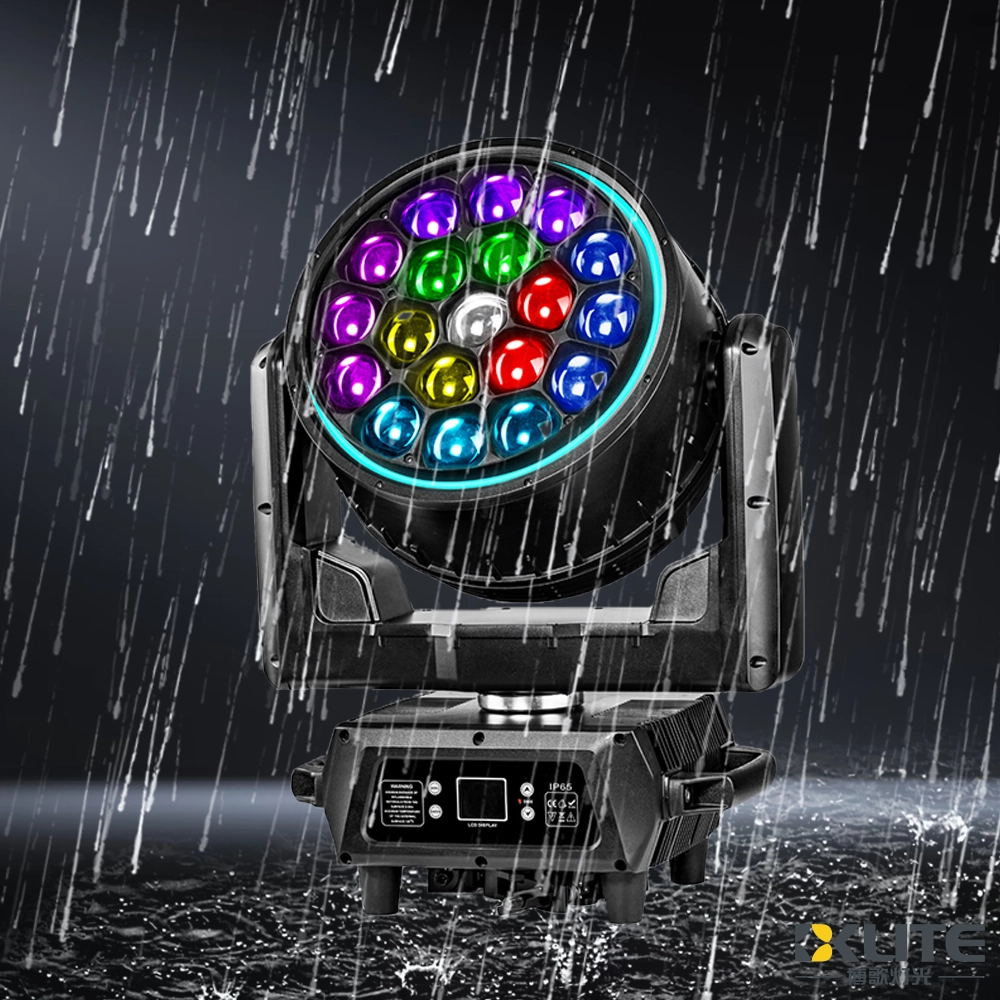
IP65 Waterproof Bee Eye Zoom 19x40W RGBW 4IN1 LED Beam Wash Moving Head Light with LED Ring
BKlite waterproof bee eye moving head light—your reliable choice from top waterproof moving head light manufacturers and suppliers. Ideal for outdoor stage, live event, music festival, this energy-saving fixture ensures powerful, precise illumination for any venue. It delivers powerful, reliable lighting performance in any weather.
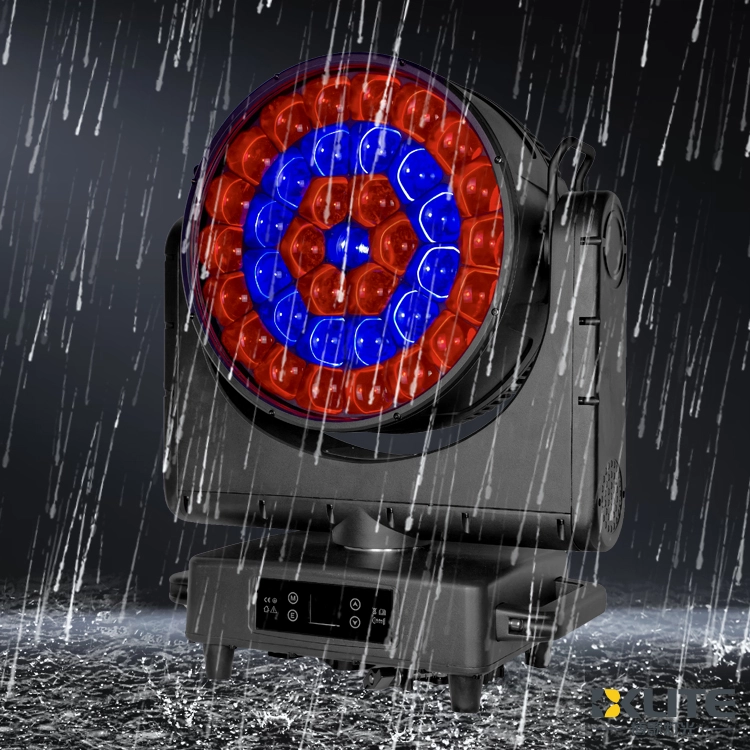
IP65 Waterproof ZOOM Bee Eye 37x40W RGBW 4in1 LED Moving Head Light
As a leading stage lighting equipment supplier with more than 15 years of industry know-how, BKlite brings you the IP65 ZOOM Bee Eye 37*40W RGBW 4in1 LED Moving Head Light (K25 Bee Eye) delivers vibrant, weatherproof lighting with powerful zoom and smooth movement. Ideal for dynamic stage effects, the K25 moving head light ensures stunning RGBW color mixing and reliable outdoor performance.
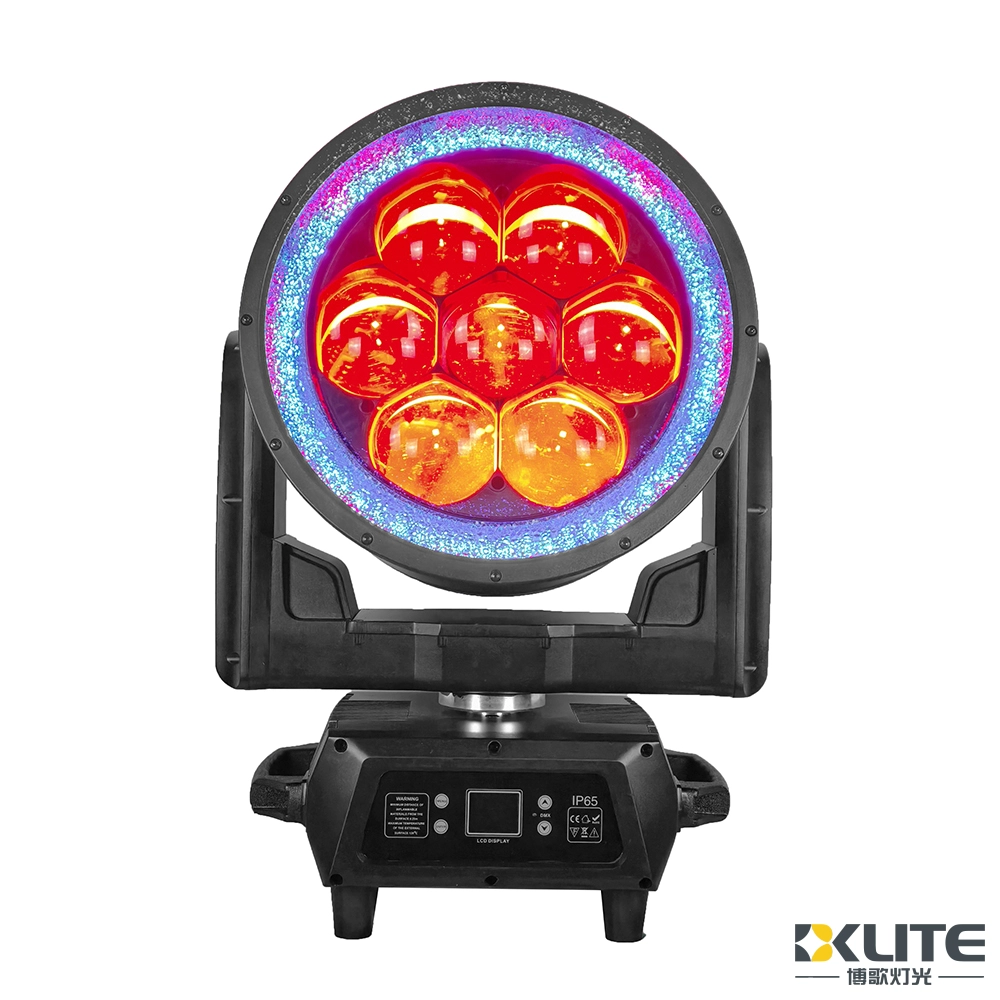
IP65 Waterproof Bee Eye 7x180W RGBL 4IN1 LED Moving Head Light With LED Ring
BKlite high power 7x180W waterproof bee eye moving head light—your reliable choice from top waterproof moving head light manufacturers and suppliers. Ideal for outdoor stage, live event, music festival, this energy-saving fixture ensures powerful, precise illumination for any venue. It delivers powerful, reliable lighting performance in any weather.
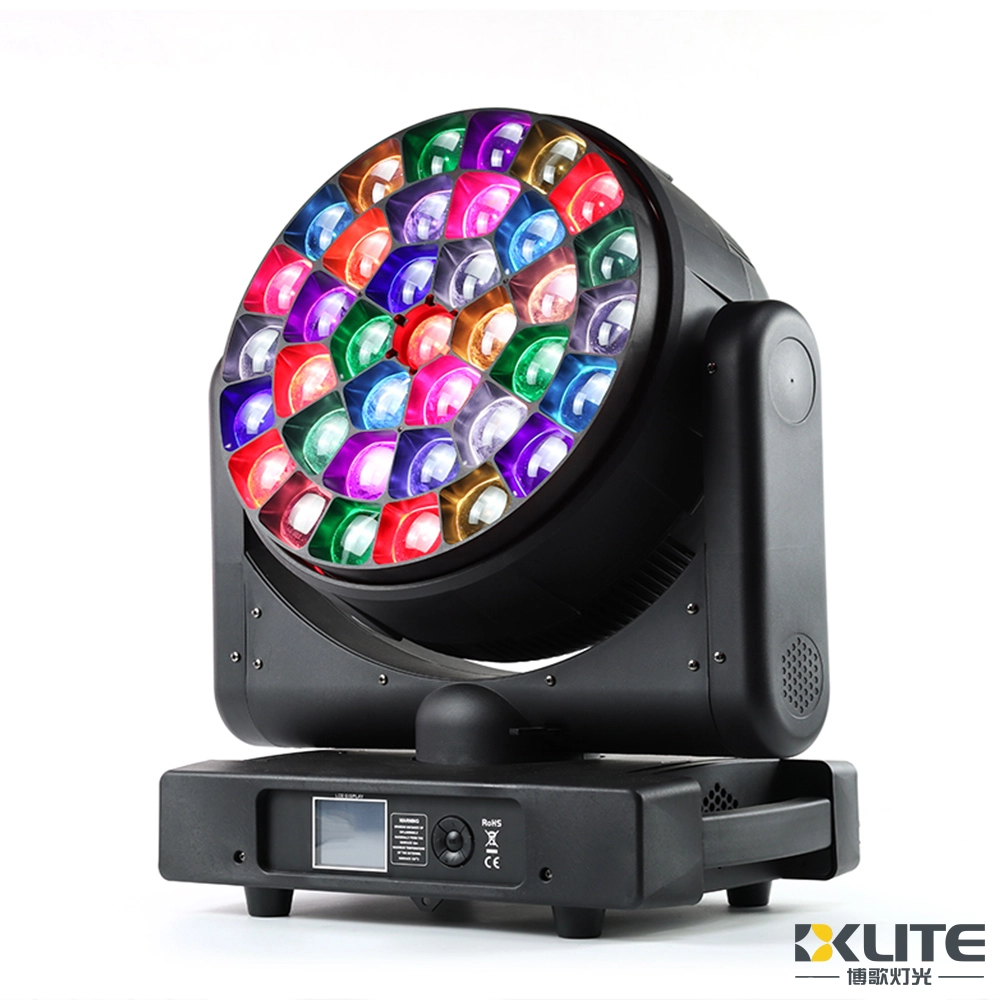
Bee Eye Zoom 37x40W RGBW 4in1 LED Beam Wash Moving Head Light


Copyright © 2025 BKLITE All Rights Reserved.