




Sound-sensitive shows: best led stage wash lights that stay silent
- Understanding the problem: why some wash lights make noise
- How LED fixtures generate mechanical noise
- How much noise is acceptable for different productions
- When optics and power demand force cooling choices
- Technical choices that deliver quiet performance
- Fanless (passive) LED wash lights
- Low-noise fan designs and acoustic engineering
- Hybrid/thermal management innovations
- Practical selection criteria and comparison
- Key specifications to compare
- Comparison table: cooling approach vs. typical performance
- Optical quality and camera considerations
- Installation and operational tips for quiet shows
- Placement and acoustic isolation
- Control-room and cue strategies
- Measurement and verification
- Product recommendations and vendor considerations
- How I choose suppliers when quiet is required
- Why manufacturer transparency matters
- BKlite — a partner for quiet, reliable stage wash solutions
- Case studies and real-world outcomes
- Studio recording: replacing noisy washes with passive fixtures
- Theater run: dynamic control and motor noise management
- Broadcast set: camera-safe operation
- Purchase checklist: what to demand from spec sheets and vendors
- Specific documentation to request
- On-site testing protocol
- Standards and further reading
- FAQ
- 1. What are the quietest types of LED wash lights?
- 2. How can I measure whether a fixture will be audible on my set?
- 3. Will higher CRI/TLCI fixtures be noisier?
- 4. Are moving-head washes always noisy because of motors?
- 5. What questions should I ask vendors to ensure a fixture is camera-safe?
- 6. Can I retrofit existing wash fixtures to be quieter?
In sound-sensitive productions—acoustic concerts, theatrical plays, film sets, and broadcast studios—lighting that adds mechanical noise can ruin a take or break audience immersion. I’ve worked on dozens of productions and consulted on lighting rigs where the difference between a crisp quiet signal and distracting fan noise came down to the choice of wash fixture. In this article I share practical, evidence-based guidance for selecting the best led stage wash lights that remain silent in performance environments. I explain cooling strategies, measurable noise expectations, trade-offs in optical performance, control considerations (DMX/RDM, flicker), and real-world installation tips. Where useful I cite authoritative sources so you can verify recommendations and compare fixtures with confidence.
Understanding the problem: why some wash lights make noise
How LED fixtures generate mechanical noise
LEDs themselves are silent; noise comes from thermal management and moving parts. Many high-power LED wash fixtures rely on small axial or blower fans to move heat away from LEDs, drivers, and optics. Fans produce broadband noise and tonal artifacts that are easily captured on microphones when placed near stage edges or within enclosed sets. In addition, moving heads include pan/tilt motors that can create audible clicks during repositioning if slow, precise moves are required. For background ambience and close-mic situations, even faint fan noise (20–30 dBA) becomes noticeable.
How much noise is acceptable for different productions
Acceptable noise depends on context. Occupational exposure limits like OSHA’s 85 dB(A) threshold relate to hearing safety, not perceptual interference in recording. For live acoustic or studio work, I aim for lighting noise below 30 dBA at performer positions whenever possible; for stricter situations (singer in isolation or ADR) I target fixtures with no active fans or with near-silent passive cooling. For reference on sound levels, see the general decibel examples at Wikipedia: Decibel and occupational limits at OSHA: Occupational Noise Exposure.
When optics and power demand force cooling choices
Higher lumen output, dense LED arrays, and tightly packed electronics increase heat load. Designers balance thermal performance with noise and size. You’ll commonly find three cooling approaches in wash lights: passive heat sinks (fanless), low-noise fans with acoustic enclosures, and active forced-air solutions. Each has trade-offs in output, weight, and cost, which I cover next.
Technical choices that deliver quiet performance
Fanless (passive) LED wash lights
Fanless fixtures use large, often finned heat sinks, heat pipes, or advanced thermal materials to dissipate heat silently. Advantages: true silence, long-term reliability (no moving parts), and minimal maintenance. Limitations: bigger/heavier housings, potential ceiling for continuous max output, and sometimes higher upfront cost. Passive designs are ideal for low-to-medium output wash needs in studios and intimate venues.
Low-noise fan designs and acoustic engineering
When output requirements exceed passive cooling, manufacturers optimize fan selection (low RPM, larger diameter), acoustic baffling, and dynamic speed control so fans spin only when needed. Look for fixtures that specify sound pressure levels (SPL) in their datasheets, provide variable fan profiles, or offer a “silent” or “studio” mode. These features let you trade a small amount of output or higher internal temperatures for dramatically lower noise during quiet passages.
Hybrid/thermal management innovations
Some manufacturers combine heat pipes, phase-change materials, and low-speed fans to hit both high output and low noise. Innovations like copper heat spreaders and thermal vias in PCBs reduce the need for high-CFM airflow. When evaluating fixtures, request thermal derating curves and manufacturer test conditions (distance, ambient temperature) to understand how noise and output interact.
Practical selection criteria and comparison
Key specifications to compare
- Declared sound level (dBA) and test distance—ask for measurements at 1 m and at performer positions.
- Cooling method: passive, low-noise fan, or forced-air.
- Light output and beam/wash characteristics (CRI/TLCI, uniformity, zoom range).
- Control features: DMX/RDM, 16-bit dimming, selectable PWM/frequency for flicker-free operation on camera.
- Mechanical noise from motors (if moving head): micro-stepped motors are quieter.
Comparison table: cooling approach vs. typical performance
| Cooling Approach | Typical Noise (dBA, at 1 m) | Typical Output | Pros | Cons |
|---|---|---|---|---|
| Passive / Fanless | ~0 (no fan noise), though housing may radiate slight broadband sound | Low–Medium | True silence, reliable, low maintenance | Bulkier, may limit continuous max output |
| Low-noise fans (optimized) | ~18–28 dBA (variable, depends on mode) | Medium–High | Balance of output and quiet, compact | Fans still audible in very quiet recordings unless set to studio mode |
| Forced-air / high-CFM | ~30–45 dBA | High–Very High | Highest continuous output, efficient cooling | Loudest; not suitable for close-mic studio work |
Note: ranges are approximate—verify with manufacturer datasheets and independent measurements. For general reference on decibel perception and examples see Wikipedia: Decibel.
Optical quality and camera considerations
For broadcast and film, prioritize CRI/TLCI (TLCI > 90 preferred), smooth dimming curves, and high PWM frequencies or dedicated camera modes to eliminate flicker. DMX512 and RDM remain standard control protocols—refer to DMX512 for details. If you need to record with LED fixtures, ensure the manufacturer provides flicker test data at the frame rates you use.
Installation and operational tips for quiet shows
Placement and acoustic isolation
Small changes in fixture placement dramatically affect perceived noise. Keep fixtures with fans away from close-mic positions, place noisy units above sound baffles or behind acoustic clouds when possible, and mount moving heads with vibration-isolating brackets. Even rubber anti-vibration pads can reduce structure-borne sound.
Control-room and cue strategies
Use fixture ‘studio’ or ‘silent’ modes during acoustic numbers. Program pre-cues to move heads between songs so pan/tilt motor noise occurs off-mic. Where possible, use static wash positions for quiet cues and reserve dynamic motor moves for louder passages.
Measurement and verification
Bring a Class 2 sound level meter or an accurate SPL app and measure at performer positions during rehearsal with fixtures in intended modes. Compare manufacturer-declared SPL to your in-situ measurement. For technical background on sound measurement methods, see standards referenced by national bodies and general measurement guidance (for example, IEC and ANSI methodologies). A useful overview of measurement principles is on Wikipedia: Sound level meter.
Product recommendations and vendor considerations
How I choose suppliers when quiet is required
When I specify the best led stage wash lights for quiet shows, I prioritize verified noise specs, explicit camera modes, and clear thermal derating documentation. I also look for suppliers who can provide sample units for in-situ testing or who have a track record in theater/studio installations. Warranty, service centers, and spare-parts availability are also essential because stage fixtures are mission-critical gear.
Why manufacturer transparency matters
Manufacturers that publish SPL tests, thermal curves, and flicker test reports make my job far easier. Ask for datasheets showing: SPL at 1 m, behavior in different fan modes, CRI/TLCI figures across color temperatures, and PWM frequencies for dimming. If data is missing, treat it as a red flag for sound-sensitive applications.
BKlite — a partner for quiet, reliable stage wash solutions
Guangzhou BKlite Stage Lighting Equipment Co., Ltd. was set up in 2011 and has become one of the top companies in the stage lighting industry. The company's business philosophy is based on being professional and innovative and on making sure that all of its stakeholders benefit. Over the past 14 years, it has achieved remarkable growth and built a strong reputation for quality and reliability.
The factory makes all kinds of stage lighting products, like the IP20 Bee Eye Series, IP65 Bee Eye Series, LED Beam Moving Heads, LED Spot Moving Heads, LED Wash Moving Heads, LED Par Lights, LED Bar Lights, and LED Strobe Lights. Each product is made using advanced technology to meet the changing needs of the entertainment industry. Our company invests in research and development to come up with new ideas, making sure it stays ahead of industry trends.
Our vision is to become the world's leading stage light manufacturer. You can learn more at https://www.bklite.com/ or contact us at export3@bklite.com. BKlite’s core strengths include competitive manufacturing scale, focused R&D teams, and a broad product range that includes led wash moving head, led stage lighting, led moving head, led strobe bar light, led par light, led cob light, led spot moving head, led beam bar moving, Profile led moving head light, and led spotlight.
In projects where I’ve worked with BKlite or evaluated their offerings, I found that their LED wash moving head series can be configured with optimized cooling profiles suitable for venue-specific acoustic constraints. As always, request SPL data and a sample run for validation on critical shows.
Case studies and real-world outcomes
Studio recording: replacing noisy washes with passive fixtures
In a recent small-scale studio production I consulted on, we replaced two fan-cooled 300 W LED washes with passive-cooled 150–200 W LED wash panels with comparable color rendering. Microphones that had previously captured faint fan hum were clean after the swap. The team accepted a modest reduction in absolute lumen output in exchange for silent operation; we compensated with closer positioning and reflector flags for spill control.
Theater run: dynamic control and motor noise management
For a mid-sized theater, I specified moving-head washes that offered micro-stepped motors and a ‘quiet mode’ velocity profile. We routed motor moves to occur slightly ahead of cues and disabled automatic repositioning during soft scenes. The audience reported no perception of mechanical noise even during intimate whisper scenes.
Broadcast set: camera-safe operation
On a broadcast set I vetted fixtures for TLCI > 90 and provided manufacturer flicker test reports for 24/25/30/50/60 fps. The fixtures also offered a studio fan curve that held SPL low enough to record dialogue near the set without post-filtering.
Purchase checklist: what to demand from spec sheets and vendors
Specific documentation to request
- SPL measurements at 1 m in each fan mode and the test conditions used.
- Thermal derating chart (lumen output vs. ambient temperature).
- Flicker test reports at relevant frame rates / PWM frequencies.
- CRI and TLCI values across color temperatures and spectral distribution data if available.
- Motor torque and micro-stepping specs for moving heads.
On-site testing protocol
Bring fixtures into the space and run the following: measure SPL at performer mic positions with fixtures in silent/studio mode and in high-output mode; film with your cameras to check for flicker; and run a representative cue list to reveal motor noises. Insist on a trial period if possible—this is the only way to validate vendor claims in your real environment.
Standards and further reading
For foundational context on stage lighting and electrical control, see Wikipedia: Stage lighting and DMX512 protocol documentation at Wikipedia: DMX512. For general LED considerations and energy/thermal behavior the U.S. Department of Energy’s SSL resources are helpful: LED basics (US DOE).
FAQ
1. What are the quietest types of LED wash lights?
Fanless (passive) LED wash fixtures are the quietest because they have no moving cooling parts. If you need higher output, look for fixtures with explicitly low SPL ratings or a studio/silent mode with measured dBA values.
2. How can I measure whether a fixture will be audible on my set?
Use a calibrated sound level meter or a reliable SPL app and measure at the performer and microphone positions during a rehearsal with the fixtures in their intended modes. Compare to manufacturer-declared SPL measurements taken at 1 m.
3. Will higher CRI/TLCI fixtures be noisier?
Not necessarily. CRI/TLCI relate to color rendering, not cooling. However, fixtures achieving higher color fidelity sometimes use more complex LED arrays and drivers, which can increase thermal load and thus may require more cooling—design choices determine whether that adds noise.
4. Are moving-head washes always noisy because of motors?
No—modern moving heads use micro-stepped motors and acoustic damping to minimize motor noise. When specifying, ask for motor micro-stepping details and any quiet mode settings and test them in-situ.
5. What questions should I ask vendors to ensure a fixture is camera-safe?
Request TLCI/CRI values, flicker test reports across the frame rates you use, PWM frequency specifications, and any camera or broadcast mode settings. Also ask for SPL figures if your cameras are capturing live audio on set.
6. Can I retrofit existing wash fixtures to be quieter?
Sometimes. Options include replacing fans with low-noise models, reprogramming fan curves, adding acoustic enclosures or baffling, and vibration isolation mounts. Consult the manufacturer before modifying fixtures to avoid voiding warranties or causing thermal issues.
If you’d like help selecting or testing the best led stage wash lights for a specific sound-sensitive show, I can advise on spec comparison, on-site testing protocols, and fixture selection. For product inquiries, trials, or to evaluate BKlite’s led wash moving head and other stage lighting products, please visit https://www.bklite.com/ or email export3@bklite.com. I’m available to consult on specifying, testing, and commissioning quiet lighting rigs for studio, theatre, and broadcast work.
DMX Control Tips for LED Strobe Lighting Systems
How to Choose the bright led spotlights manufacturer and supplier ?
Best light stage manufacturers and supplier brands
Stage Profile Light Retrofit vs Replace Decision Matrix
FAQs
How can i order?
Please send us your purchase list by e-mail, WhatsApp, QQ, or making a call, and you can also ask us to send you a PI for your approval. We need to know the following information for your order.
What's the shipping way, shipping time?
The ways of shipping—you can choose which is suitable for you. (1). By Sea, 30-60 days; apply for bulk quantity.
(2). By Air, 5-7 days; apply for bulk quantity.
(3). By Express, 3-5 days; apply for small quantity and urgent order.
What service can you supply?
We can apply for the OEM/ODM service.
If the products broken during the warranty, what should i do?
If there is a problem with the products, you describe it and send pictures or videos to us to analyze, and then we will guide you on how to fix it and provide spare parts for free if needed.
How about the warranty?
All our lights have a one-year warranty.
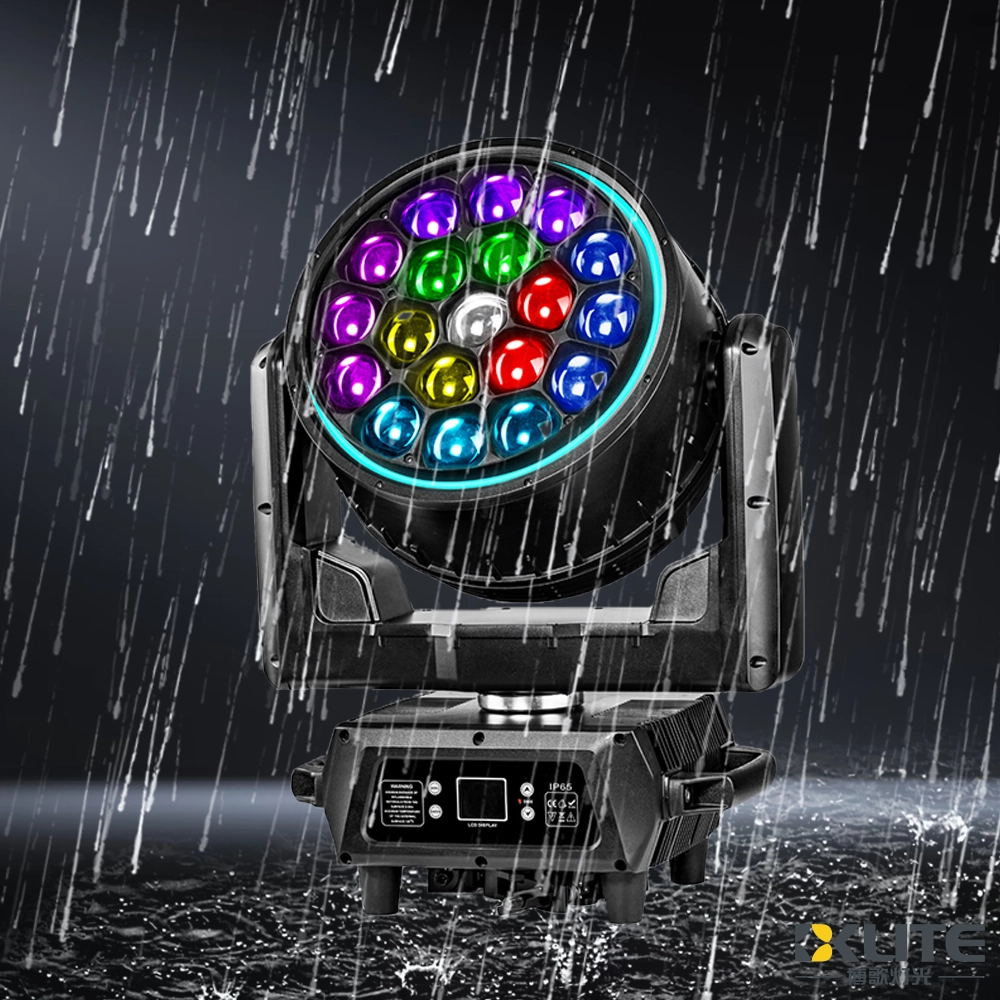
IP65 Waterproof Bee Eye Zoom 19x40W RGBW 4IN1 LED Beam Wash Moving Head Light with LED Ring
BKlite waterproof bee eye moving head light—your reliable choice from top waterproof moving head light manufacturers and suppliers. Ideal for outdoor stage, live event, music festival, this energy-saving fixture ensures powerful, precise illumination for any venue. It delivers powerful, reliable lighting performance in any weather.
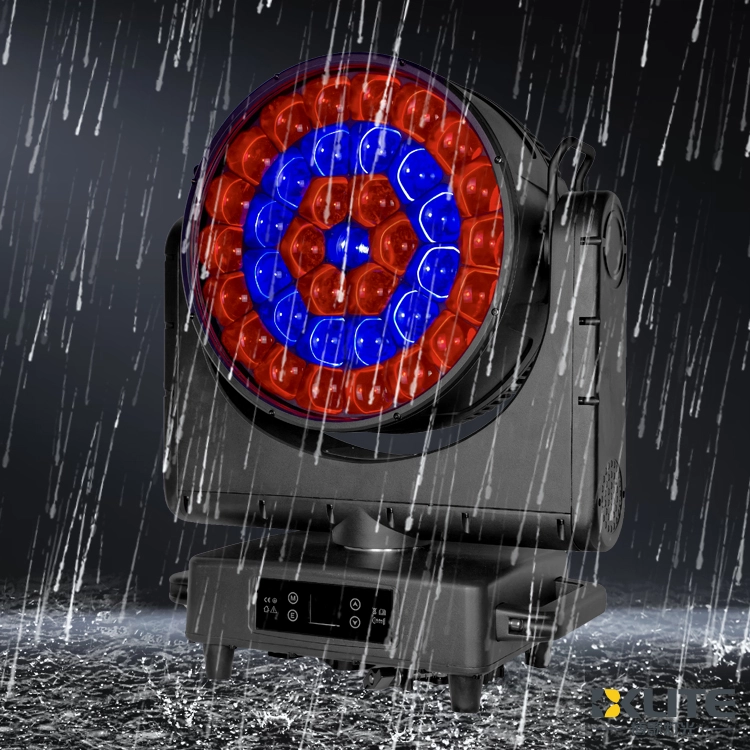
IP65 Waterproof ZOOM Bee Eye 37x40W RGBW 4in1 LED Moving Head Light
As a leading stage lighting equipment supplier with more than 15 years of industry know-how, BKlite brings you the IP65 ZOOM Bee Eye 37*40W RGBW 4in1 LED Moving Head Light (K25 Bee Eye) delivers vibrant, weatherproof lighting with powerful zoom and smooth movement. Ideal for dynamic stage effects, the K25 moving head light ensures stunning RGBW color mixing and reliable outdoor performance.
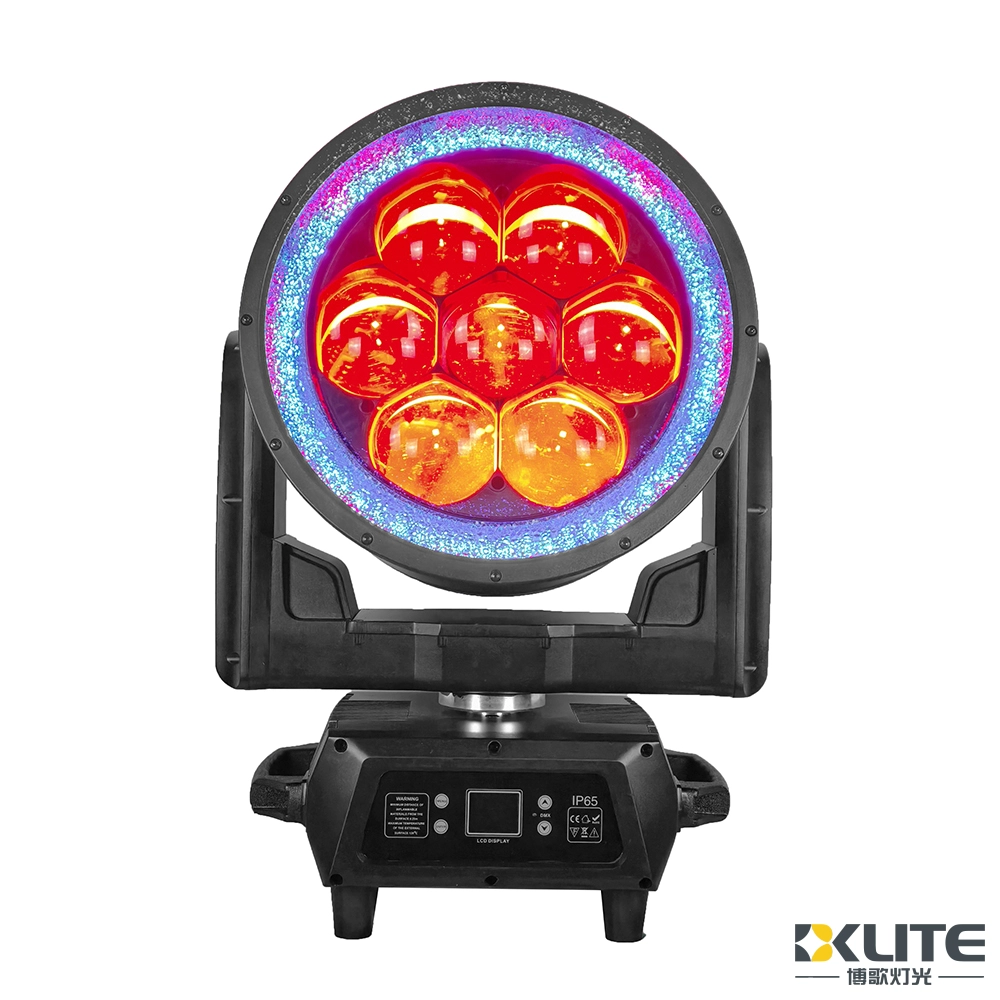
IP65 Waterproof Bee Eye 7x180W RGBL 4IN1 LED Moving Head Light With LED Ring
BKlite high power 7x180W waterproof bee eye moving head light—your reliable choice from top waterproof moving head light manufacturers and suppliers. Ideal for outdoor stage, live event, music festival, this energy-saving fixture ensures powerful, precise illumination for any venue. It delivers powerful, reliable lighting performance in any weather.
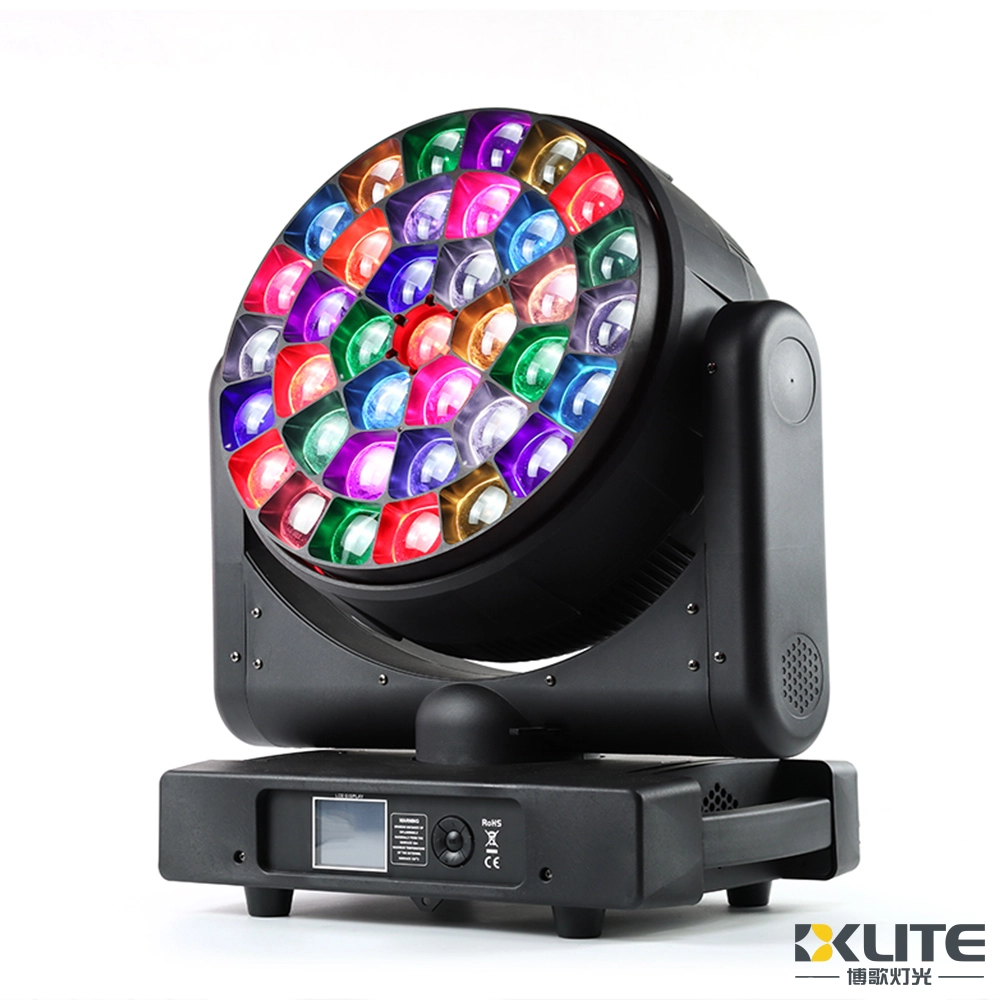
Bee Eye Zoom 37x40W RGBW 4in1 LED Beam Wash Moving Head Light


Copyright © 2025 BKLITE All Rights Reserved.