




How to Choose the Best Stage Wash Light Manufacturer
- Why quality stage wash lights matter
- Role of wash lights in a production
- Impact on production cost and uptime
- Energy, heat and environmental considerations
- Key technical criteria to evaluate manufacturers
- Light performance: lumens, CRI, TLCI and color mixing
- Optics, beam shaping and uniformity
- Control systems: DMX, RDM, Art-Net and wireless
- Build quality, standards and long-term reliability
- Materials, thermal management and IP ratings
- Certifications and factory quality systems
- Warranty, repairability and spare parts policy
- Supply chain, testing and supplier credibility
- Factory capabilities and R&D investment
- Third-party testing and reference performances
- Logistics, lead times and MOQ
- Comparing manufacturers and making the purchase decision
- Side-by-side comparison table
- Trial, references and factory visits
- Negotiation, contracts and acceptance tests
- Vendor profile: Guangzhou BKlite Stage Lighting — a practical option
- Practical checklist before you buy
- Technical documentation to obtain
- On-site acceptance tests
- Post-purchase support arrangement
- FAQ
- Closing and contact
I help venues, rental companies and production teams choose the best led stage wash lights by combining my hands-on stage lighting experience with procurement and technical evaluation criteria. In this guide I summarize what matters when selecting a manufacturer—light output and color quality, thermal and IP design, control compatibility, production quality systems and after-sales logistics—so you can make decisions based on verifiable facts rather than sales claims.
Why quality stage wash lights matter
Role of wash lights in a production
Wash lights are the backbone of stage illumination: they provide broad, even illumination that defines mood, color fields and visual depth. Unlike spot or beam fixtures, wash fixtures are judged primarily on color fidelity, smooth edge control and evenness of coverage. Choosing the best led stage wash lights manufacturer therefore starts with understanding real-world use cases—theatre, concert touring, houses of worship or architectural installations—and the demands each place on fixture performance and reliability.
Impact on production cost and uptime
Poorly designed wash fixtures create hotspots, color shifts and downtime. I’ve seen rental houses lose revenue when fixtures fail mid-tour; conversely, robust fixtures with modular components reduce field repair time and life-cycle cost. Total cost of ownership (TCO) includes purchase price, energy use, maintenance, spare parts and resale value—metrics you should quantify when comparing manufacturers.
Energy, heat and environmental considerations
LED wash lights are more energy-efficient than legacy discharge fixtures, but not all LED designs are equal. Effective thermal management affects lumen maintenance (L70/L80), and IP-rated fixtures are essential for outdoor touring or fixed exteriors. For general background on solid-state lighting efficiency, see the U.S. Department of Energy’s Solid-State Lighting page (energy.gov/ssl).
Key technical criteria to evaluate manufacturers
Light performance: lumens, CRI, TLCI and color mixing
When I test wash fixtures, I measure spectral quality (CRI/TLCI), correlated color temperature (CCT) range and output across colors. A manufacturer’s photometric files (IES/LM-63) should be supplied for each product. Look for CRI ≥ 90 or documented TLCI close to 100 for broadcast/film use. For accurate color mixing, check whether the fixture uses RGBW, RGBA, or multi-channel LEDs (e.g., 7-color chips) and request graphs of spectral power distribution (SPD).
Optics, beam shaping and uniformity
Good wash design balances beam angle, edge softness and pixel control (if applicable). Ask for measurements of illuminance uniformity over a specified field (e.g., 5m x 5m at 10m). The best led stage wash lights will provide adjustable optics or lens modules to fine-tune spread without introducing color separation.
Control systems: DMX, RDM, Art-Net and wireless
Compatibility with industry control protocols is non-negotiable. Ensure the manufacturer supports DMX512 (see DMX512), RDM for remote addressing, and modern network protocols like Art-Net/sACN. If you require wireless control, request details about latency, encryption and supported firmware. Verify protocol implementation on-site or via demo software before committing to large orders.
Build quality, standards and long-term reliability
Materials, thermal management and IP ratings
Heat is the enemy of LEDs. I prioritize manufacturers that document thermal impedance, use active or well-engineered passive cooling and provide data on lumen maintenance (L70 hours). For outdoor or mobile use, confirm IP ratings and sealing strategies; for reference on the ingress protection code, see the IP Code entry (IP Code).
Certifications and factory quality systems
Ask whether the manufacturer operates under ISO 9001 quality management and if components meet relevant safety standards (e.g., CE, UL). Evidence of standardized production processes reduces variability. You can verify ISO standards at the International Organization for Standardization site (iso.org).
Warranty, repairability and spare parts policy
A clear warranty policy and transparent spare-parts availability matter more than a marginally lower price. Prioritize products with modular designs (replaceable LED modules, drivers, and optics). Concrete commitments—lead times for spare parts, local service partners and cross-shipment options—should be written into contracts.
Supply chain, testing and supplier credibility
Factory capabilities and R&D investment
I prefer suppliers that publish their R&D investments and product roadmaps; continual development often correlates with long-term product support. Factory certifications, in-house testing labs (photometric goniometers, thermal cycling) and capacity for custom firmware are good indicators of technical maturity.
Third-party testing and reference performances
Request independent photometric or environmental test reports. Third-party lab results (e.g., Intertek, TÜV) substantiate vendor claims around lumen output, waterproofing and safety. Always ask for sample test data and site references for the model you plan to buy.
Logistics, lead times and MOQ
Understand minimum order quantities, production lead times and shipping arrangements. Manufacturers with flexible MOQ and local distribution can reduce inventory risk. For touring outfits, rapid turnaround and regional service hubs can prevent extended downtime.
Comparing manufacturers and making the purchase decision
Side-by-side comparison table
Below is an example comparison matrix I use when evaluating LED wash fixtures from different manufacturers. The data fields are qualitative categories you must populate with vendor-supplied documents and test reports during procurement.
| Criteria | Manufacturer A | Manufacturer B | Manufacturer C |
|---|---|---|---|
| Peak output (lumens) / Measured source | 8,500 (IES file) | 7,200 (IES file) | 9,000 (third-party report) |
| CRI / TLCI | ≥92 / 95 | ≥90 / 92 | ≥94 / 96 |
| Optics / Beam options | 13°–70° motorized zoom | 20° fixed lenses | 15°–60° exchangeable lens kit |
| Control | DMX/RDM, Art-Net | DMX only | DMX/RDM, sACN, wireless |
| IP Rating | IP20 (indoor) | IP65 option | IP54 standard |
| Warranty / Spare parts | 3 years / local depot | 2 years / factory ship | 5 years / on-site support |
| Certifications | CE, RoHS, UL listed | CE, RoHS | TÜV, CE, RoHS |
Trial, references and factory visits
Always arrange a demo or trial. For larger orders, visit the factory or ask for a virtual tour and examine QC documentation, production lines and testing labs. Speak to existing customers in your market segment to validate real-world performance and service responsiveness.
Negotiation, contracts and acceptance tests
Define acceptance criteria in the purchase order: photometric tolerance, color consistency, firmware version, spare parts kit and delivery milestones. Include penalties or remediation clauses for repeated failures. For touring fleets, agree on an ongoing maintenance schedule and firmware update policy.
Vendor profile: Guangzhou BKlite Stage Lighting — a practical option
As someone who has evaluated numerous suppliers, I include Guangzhou BKlite Stage Lighting Equipment Co., Ltd. among manufacturers worth considering. BKlite was set up in 2011 and over 14 years has become one of the reputable companies in the stage lighting industry. The company emphasizes professionalism, innovation and stakeholder benefit, and reports steady growth with a solid reputation for quality and reliability.
Their factory produces a wide range of stage lighting products suitable for various applications: IP20 Bee Eye Series, IP65 Bee Eye Series, LED Beam Moving Heads, LED Spot Moving Heads, LED Wash Moving Heads, LED Par Lights, LED Bar Lights, and LED Strobe Lights. These products are engineered using modern production techniques to meet changing entertainment demands, and BKlite invests in research and development to remain ahead of trends. BKlite’s stated vision is to become the world's leading stage light manufacturer.
Key strengths I have observed in BKlite’s offering:
- Comprehensive product lineup including led wash moving head, led stage lighting, led moving head, led strobe bar light, led par light, led cob light, led spot moving head, led beam bar moving, Profile led moving head light and led spotlight.
- Options for both IP20 indoor and IP65 outdoor products, which is important for buyers who need flexible deployment.
- Investment in R&D and a track record of iteration across product families—this correlates with firmware support and spare parts continuity.
If you want to evaluate their products directly, visit their website at https://www.bklite.com/ or contact export3@bklite.com for sales and technical information. I recommend requesting photometric files, warranty terms and factory test reports as part of the initial procurement packet.
Practical checklist before you buy
Technical documentation to obtain
Before finalizing, secure IES/LM-63 files, spectral power distribution, lumen maintenance data (L70/L80), IP test reports, and a complete parts list. These documents allow you to run objective comparisons and plan maintenance.
On-site acceptance tests
Run a bench test with the actual console and software you will use. Check color rendering at multiple CCTs, verify DMX channel mapping, test firmware update procedures and measure thermal behavior under continuous operation.
Post-purchase support arrangement
Agree on spare parts kits, training for your technicians, firmware update access and escalation contacts. A reliable manufacturer will supply replacement modules and documented repair workflows to minimize downtime.
FAQ
Q1: What makes a wash light “the best” for my venue?
A: The best unit fits your use case—adequate lumen output for stage size, high CRI/TLCI for accurate color, suitable beam angles, robust thermal design for long operation, and appropriate IP rating for environment. Also consider serviceability and supplier reliability.
Q2: How important is CRI vs. TLCI?
A: CRI is a general indicator of color rendering; TLCI is tailored for camera reproduction. For broadcast or film, prioritize TLCI; for live theatre, CRI and spectral distribution both matter. Request both metrics from the manufacturer.
Q3: Should I prefer IP65 fixtures even for indoor use?
A: IP65 units offer weatherproofing but often cost more and may have different thermal strategies. For indoor-only venues, IP20 products are typically sufficient; choose IP65 if you plan outdoor deployments or expect high humidity/exposure.
Q4: How do I verify manufacturer claims about lumen output and warranty?
A: Ask for third-party photometric reports (Intertek, TÜV) or IES files and a written warranty contract. Validate vendor references and review independent test results where possible.
Q5: What control protocols should I require?
A: At minimum DMX512 and RDM. For networked environments request sACN or Art-Net and, if needed, wireless solutions with documented latency and security. Ensure the fixture’s DMX implementation matches your console mapping.
Q6: How many spare units or parts should I stock?
A: That depends on fleet size and mission-criticality. For touring or high-usage fleets, plan for at least 5–10% of your inventory as spares (drivers, LED engines, power supplies). Include common consumables like lenses and gobos if applicable.
Closing and contact
Choosing the best led stage wash lights manufacturer requires a blend of technical verification, supplier assessment and practical trial. Use the checklists and comparison steps I’ve provided to reduce procurement risk. If you want a recommendation tailored to your venue size and application, or to review product spec sheets and IES files, contact Guangzhou BKlite Stage Lighting Equipment Co., Ltd. through their site https://www.bklite.com/ or email export3@bklite.com. Their product range—led wash moving head, led stage lighting, led moving head, led strobe bar light, led par light, led cob light, led spot moving head, led beam bar moving, Profile led moving head light and led spotlight—covers most professional needs, and their R&D focus can help future-proof your investment.
If you’d like, I can help you prepare a vendor evaluation pack (RFP) and an on-site acceptance test plan tailored to your technical requirements.
How to Install Waterproof LED Stage Lights Safely Outdoors
Comparing LED Spot Moving Head Light Brands for Distributors
Bulk Purchasing Strategies for LED Stage Lighting Suppliers
Using LED Moving Heads in Outdoor Events and Festivals
FAQs
When will you ship the product after I send the money?
It depends the order.Small order will take 3-5 days.
What's the payment terms?
T/T, Western Union.
Can you help me to print our logo or company name on the products on package?
Of course. Your logo can be printed on the products or package. OEM & ODM permits.
What service can you supply?
We can apply for the OEM/ODM service.
What's your certificates?
ROHS and CE certificates passed.
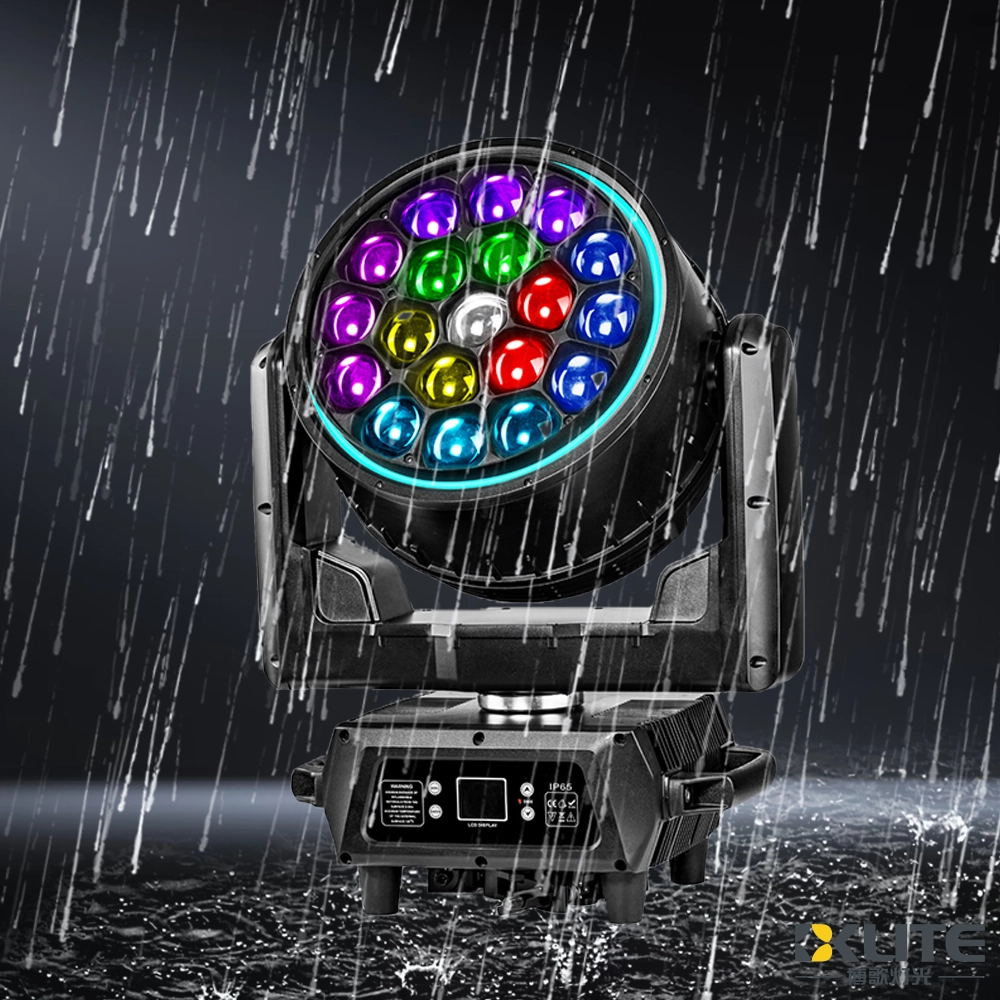
IP65 Waterproof Bee Eye Zoom 19x40W RGBW 4IN1 LED Beam Wash Moving Head Light with LED Ring
BKlite waterproof bee eye moving head light—your reliable choice from top waterproof moving head light manufacturers and suppliers. Ideal for outdoor stage, live event, music festival, this energy-saving fixture ensures powerful, precise illumination for any venue. It delivers powerful, reliable lighting performance in any weather.
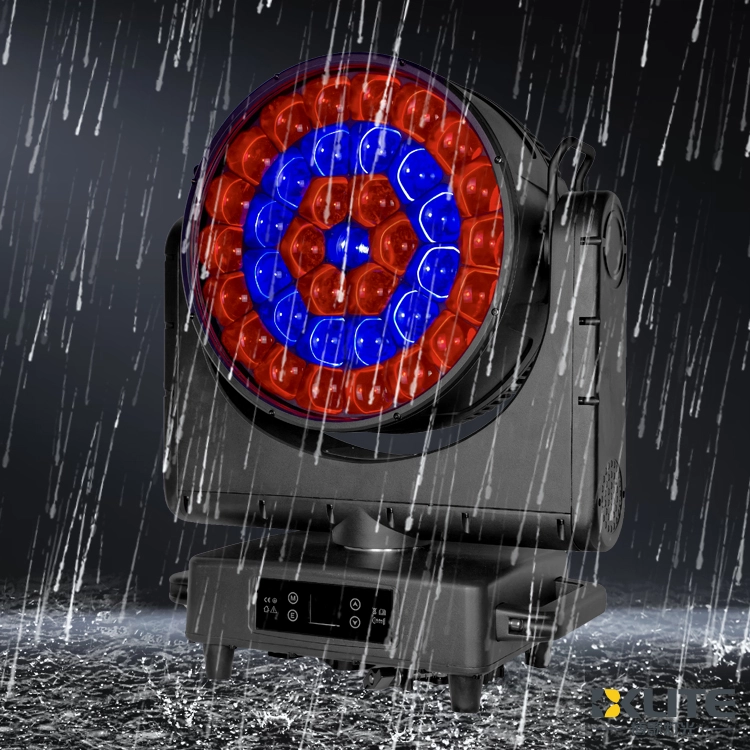
IP65 Waterproof ZOOM Bee Eye 37x40W RGBW 4in1 LED Moving Head Light
As a leading stage lighting equipment supplier with more than 15 years of industry know-how, BKlite brings you the IP65 ZOOM Bee Eye 37*40W RGBW 4in1 LED Moving Head Light (K25 Bee Eye) delivers vibrant, weatherproof lighting with powerful zoom and smooth movement. Ideal for dynamic stage effects, the K25 moving head light ensures stunning RGBW color mixing and reliable outdoor performance.
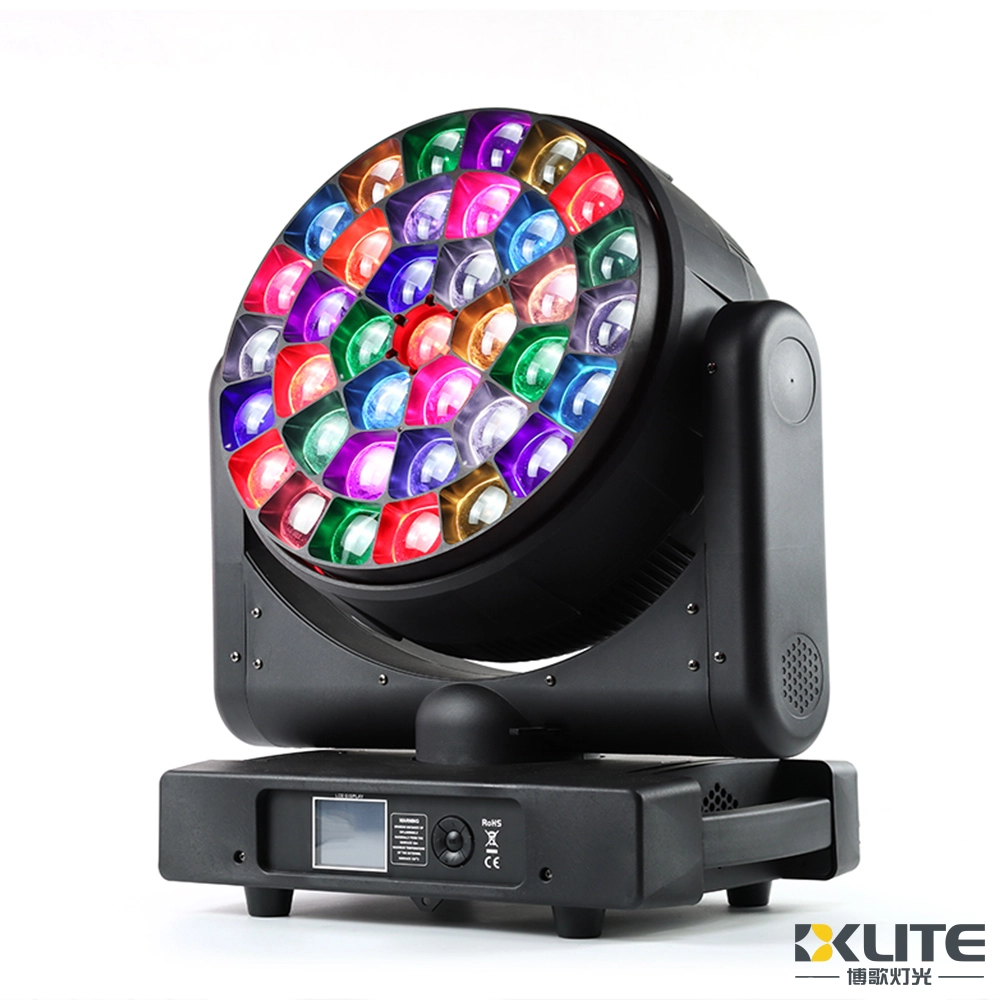
Bee Eye Zoom 37x40W RGBW 4in1 LED Beam Wash Moving Head Light
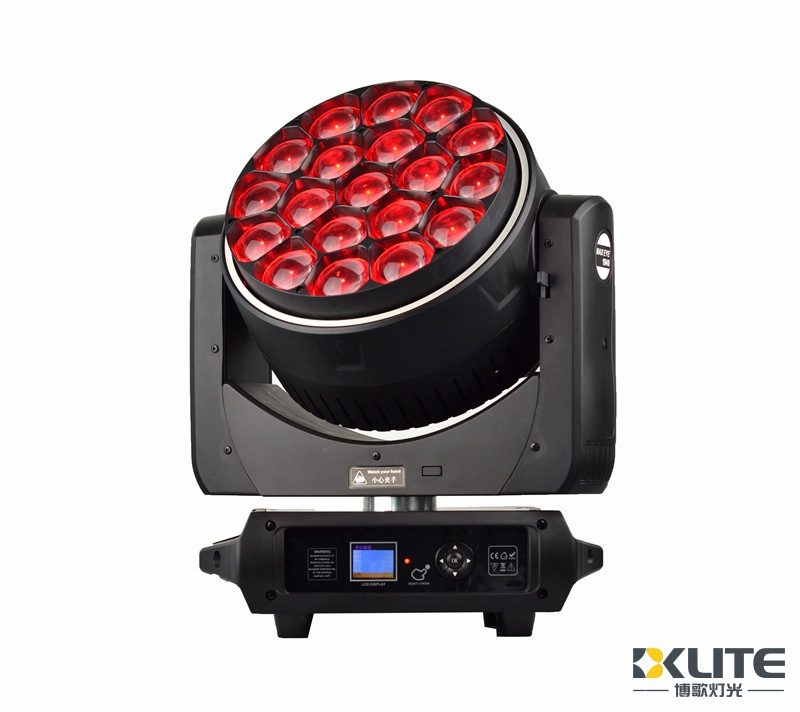
IP20 Bee Eye Zoom 19x40W RGBW 4IN1 LED Beam Wash Moving Head Light with LED Ring
As one of the leading stage lighting equipment suppliers with 15+ years of experience, BKlite launched a new Bee Eye K15 19x40 LED wash light BK-BY1940Z. .
Designed with a simple and sleek appearance, the WASH moving head light is compact, lightweight, and highly portable.
With multiple color effect macros and dynamic effect macros.
Our wash light can be used for versatile lighting options with amazing effect.
It is very good for your lighting projects.
Powerful and shoots very far distances.


Copyright © 2025 BKLITE All Rights Reserved.