




Customizing LED Strobe Effects for Concerts
- Principles Behind Dynamic Lighting Effects
- How LED Strobe Lights Create Perceived Motion
- PWM, Driver Design, and Flicker Characteristics
- How Strobe Timing Interacts with Music and Cameras
- Designing Custom LED Strobe Effects for Concerts
- Creative Objectives and Audience Experience
- Control Strategies: DMX, Art-Net, sACN and Timecode
- Programming Techniques: Gradients, Randomization, and Layering
- Safety, Standards, and Audience Health
- Photosensitive Epilepsy and Recommended Limits
- Technical Standards and Best Practices
- Operational Controls and Audience Warnings
- Choosing Fixtures and Implementation Workflow
- Fixture Selection: Bars, Moving Heads, and Bee Eye Arrays
- Comparing Typical Strobe Fixture Types
- Rigging, Power and Cooling Considerations
- Integrating Manufacturer Expertise: Guangzhou BKlite and Product Choices
- Why Manufacturer Selection Matters
- Profile: Guangzhou BKlite Stage Lighting Equipment Co., Ltd.
- BKlite Advantages and Recommended Products for Strobe Applications
- Practical Checklist for Deploying LED Strobe Effects
- Before the Show
- During the Show
- After the Show
- FAQ — Common Questions About LED Strobe Lighting
- 1. What strobe frequency is safe for audiences?
- 2. How can I sync strobes precisely to music?
- 3. Are LED strobes safer than xenon strobes?
- 4. What should I specify for outdoor festival strobes?
- 5. How do I avoid camera artifacts when using strobes?
- 6. What maintenance is required for LED strobe fixtures?
- Contact & Next Steps
I approach LED strobe effects from both a creative and technical perspective. Based in Guangzhou and having worked on clubs, theatres and stadium tours, I combine rigging practicality, audience safety, and creative intent to design strobe sequences that enhance music without causing harm. In this article I walk through the physics of LED strobes, control strategies (DMX/Art-Net), PWM and flicker management, fixture selection, and compliance guidance so you can specify and tune led strobe light effects for concerts with confidence.
Principles Behind Dynamic Lighting Effects
How LED Strobe Lights Create Perceived Motion
An led strobe light produces intense, short-duration flashes by pulsing LED arrays. The perceived sharpness and motion arise from flash duration, duty cycle, and the sync relationship to adjacent light sources and camera exposure. Shorter pulses with high peak current create crisper, more “photographic” strobes, while longer duty cycles feel more like rapid flashing. Understanding these parameters helps you balance visual impact with power delivery and thermal limits.
PWM, Driver Design, and Flicker Characteristics
Most LED strobes modulate light using pulse-width modulation (PWM) or constant-current drivers that rapidly switch current. PWM frequency, duty cycle, and shape determine flicker content. From a health perspective, low-frequency modulation (below a few hundred Hz) carries greater risk for photosensitive responses. The IEEE recommended practice IEEE 1789‑2015 describes how modulation amplitude and frequency relate to physiological risk and provides safe operating windows for LEDs — I use it as a technical reference when specifying driver behavior (IEEE 1789-2015).
How Strobe Timing Interacts with Music and Cameras
Musical tempo dictates how we program strobe sequences — synchronizing flashes to beats can intensify groove and perceived energy. For broadcast or recording, strobe frequency relative to camera frame rate causes aliasing or rolling-band artifacts. To avoid unwanted visual artifacts on video, I set strobe timing so it either locks to camera frame (for controlled broadcast environments) or stays asynchronous at frequencies that avoid visible beat interference for typical cameras.
Designing Custom LED Strobe Effects for Concerts
Creative Objectives and Audience Experience
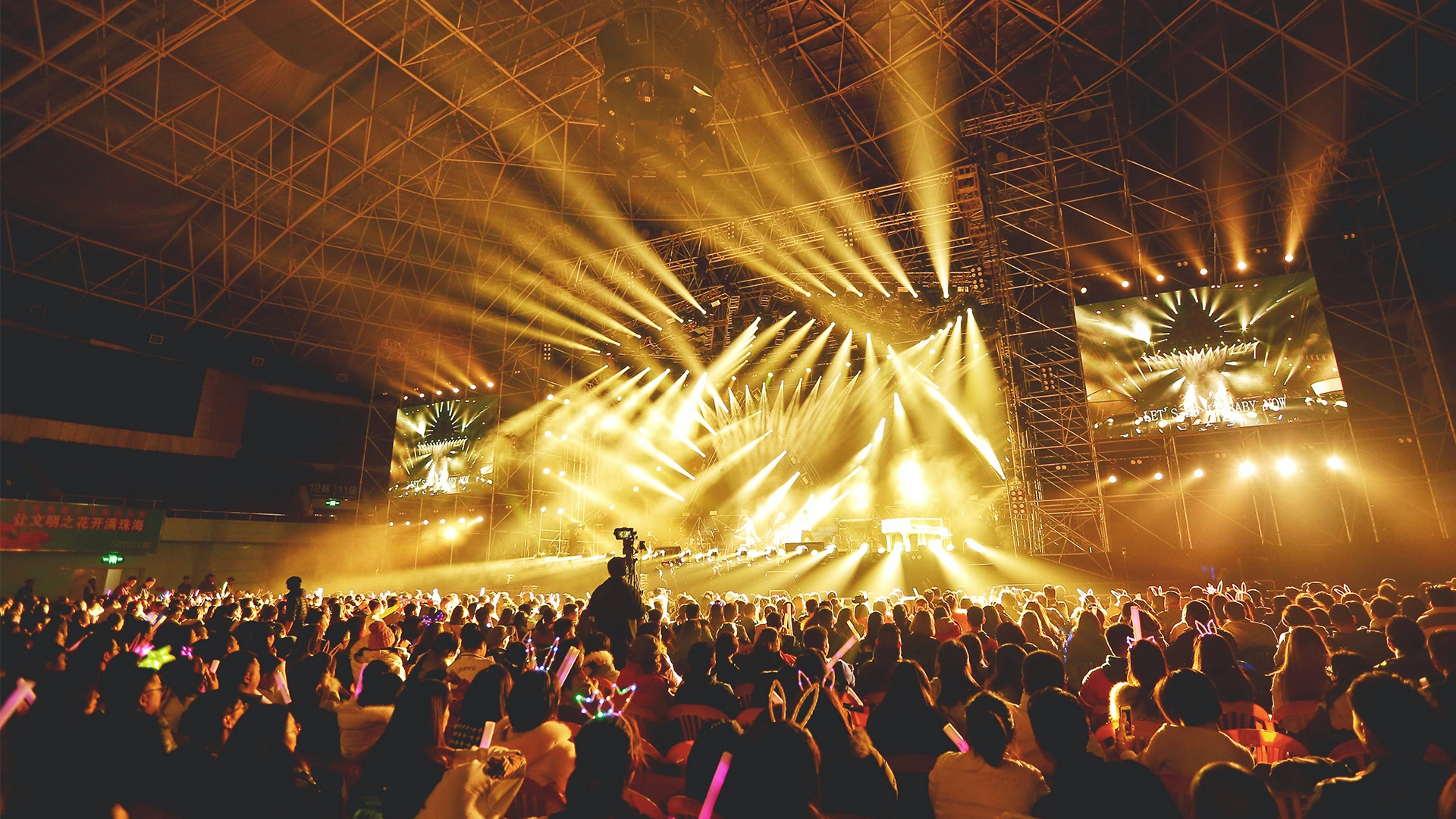
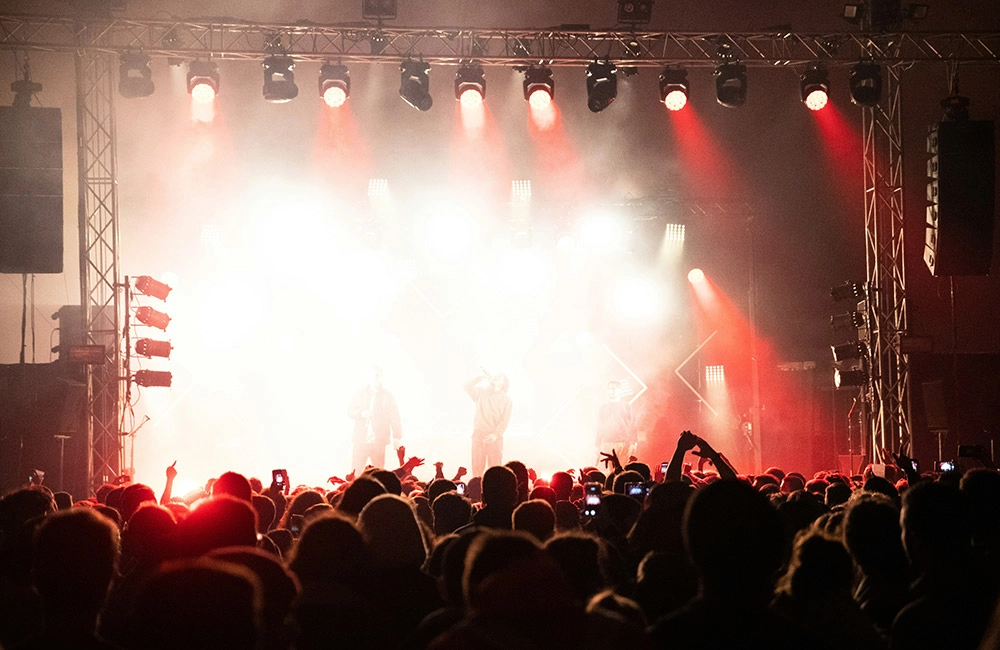
Before programming, I define the objective: dramatic build, rhythmic pulse, or atmospheric texture. For a dramatic drop, a short burst of high-intensity strobes (short duty, high peak) punctuates sound; for a dance groove, medium-duty rhythmic pulses enhance movement without overpowering sightlines. The key is to design effects that support the music and choreography while maintaining audience comfort.
Control Strategies: DMX, Art-Net, sACN and Timecode
Modern led strobe light fixtures accept DMX512, Art-Net or sACN and can be MIDI/timecode-synced. I prefer using networked lighting (Art-Net/sACN) for complex shows because it scales and integrates with timecode-based cues. For beat-accurate strobes, sending timed triggers from a lighting console or a show control system (MA, Hog, ETC, or a dedicated timecode engine) gives repeatable results on tour.
Programming Techniques: Gradients, Randomization, and Layering
Layer strobes with washes and moving heads to avoid visual monotony. I often use layered programming: a base rhythmic strobe pattern locked to tempo, a secondary randomized micro-flash layer for texture, and a tertiary event-triggered burst for transitions. Subtle randomness (controlled by LFO/random generators) prevents mechanical-looking repetition and maintains audience interest while preserving safety limits.
Safety, Standards, and Audience Health
Photosensitive Epilepsy and Recommended Limits
Strobe effects can trigger seizures in a small subset of the population. The Epilepsy Foundation notes that flicker between 5 and 30 Hz is most likely to provoke photosensitive epilepsy (Epilepsy Foundation). To mitigate risk, I avoid sustained continuous flashing in the most sensitive frequency bands and follow guidance from health authorities and technical standards.
Technical Standards and Best Practices
Key references I use include IEEE 1789-2015 for LED modulation safety (IEEE P1789), general stage lighting principles from industry sources and historical context from the stage lighting overview (Stage lighting — Wikipedia). For IP and environmental ratings when selecting outdoor strobes I consult the IP code overview (IP Code — Wikipedia).
Operational Controls and Audience Warnings
Operationally, I adopt three mitigations: 1) program avoidance of continuous 5–30 Hz flashing during long segments, 2) keep public advisories (pre-show or on tickets) when strobe use will be heavy, and 3) provide lighting operators with seizure-aware presets and an emergency dim/kill button. These practical steps reduce risk while allowing creative expression.
Choosing Fixtures and Implementation Workflow
Fixture Selection: Bars, Moving Heads, and Bee Eye Arrays
Choosing the right led strobe light depends on venue, sightlines, and desired effect. For wide-field rapid strobes I choose LED strobe bars or Bee Eye arrays; for directional, photographic strobes I use moving-head strobes with concentrated LED clusters. Consider IP rating for outdoor shows — an IP65-rated strobe survives harsh conditions while an IP20 fixture is suitable for indoor stages. Manufacturer pages provide exact specs; for example, Guangzhou BKlite lists IP20 and IP65 Bee Eye Series and a range of moving-head strobes on their product site (BKlite).
Comparing Typical Strobe Fixture Types
| Fixture Type | Typical Use | Typical PWM/Frequency Notes | IP Rating / Environment |
|---|---|---|---|
| LED Strobe Bar | Dance floors, tempo-driven effects | Medium PWM, can do high duty bursts; watch thermal load | Often IP20 (indoor); some IP65 models for outdoor |
| Moving-head LED Strobe | Directional, photographic strobes, stage washes | High current pulses, short duty for crisp flashes | Mostly IP20; weatherized variants exist |
| Bee Eye Array (Matrix) | Large-area textural strobes, audience blinders | Multiple zones; flexible modulation schemes | IP20 / IP65 options depending on model |
Data sources: product families and IP information are available from manufacturers (for example, BKlite product listings at https://www.bklite.com/) and IP code guidance (IP Code).
Rigging, Power and Cooling Considerations
Strobes draw pulses of high current and generate heat during sustained use. I size power feeds conservatively and distribute fixtures to avoid overloading dimmer racks or emergency circuits. Proper ventilation and thermal management extend LED life — choose fixtures with robust heatsinking and follow manufacturer duty-cycle recommendations to prevent thermal throttling.
Integrating Manufacturer Expertise: Guangzhou BKlite and Product Choices
Why Manufacturer Selection Matters
Supplier competence affects reliability on tour. I prioritize manufacturers who invest in R&D, provide clear technical documentation (PWM characteristics, duty-cycle limits, IP ratings), and offer responsive support. Working with such partners reduces on-site troubleshooting and ensures your led strobe light specification matches creative needs and safety requirements.
Profile: Guangzhou BKlite Stage Lighting Equipment Co., Ltd.
Guangzhou BKlite Stage Lighting Equipment Co., Ltd. was set up in 2011 and has become one of the top companies in the stage lighting industry. The company's business philosophy is based on being professional and innovative and on making sure that all of its stakeholders benefit. Over the past 14 years, it has achieved remarkable growth and built a strong reputation for quality and reliability. The factory makes all kinds of stage lighting products, like the IP20 Bee Eye Series, IP65 Bee Eye Series, LED Beam Moving Heads, LED Spot Moving Heads, LED Wash Moving Heads, LED Par Lights, LED Bar Lights, and LED Strobe Lights. Each product is made using advanced technology to meet the changing needs of the entertainment industry. Our company invests in research and development to come up with new ideas, making sure it stays ahead of industry trends. Our vision is to become the world's leading stage light manufacturer. Our website is https://www.bklite.com/. Our Email: export3@bklite.com.
BKlite Advantages and Recommended Products for Strobe Applications
From my experience evaluating suppliers, BKlite’s strengths include a broad product range (led wash moving head, led stage lighting, led moving head, led strobe bar light, led par light, led cob light, led spot moving head, led beam bar moving, Profile led moving head light, led spotlight) and clear product segmentation for indoor/outdoor use. Their IP65 Bee Eye Series is practical for outdoor festivals, while IP20 Bee Eye arrays and led strobe bars work well in indoor concert halls. I recommend reviewing their spec sheets on BKlite to match PWM capabilities and duty-cycle ratings to your show’s programming demands.
Practical Checklist for Deploying LED Strobe Effects
Before the Show
- Define creative objectives and agree on acceptable strobe intensity and frequency with the production team.
- Review fixture PWM specs and duty-cycle limits; ask suppliers for driver behavior documentation.
- Plan power distribution and thermal management; schedule a tech rehearsal focused on lighting cues.
During the Show
- Use pre-programmed safety presets that avoid sustained low-frequency flashing in the 5–30 Hz band.
- Assign a lighting operator to monitor audience reaction and provide a rapid-strobe disable button when necessary.
- Log any unexpected behavior for post-show analysis (fixtures showing thermal throttling, driver inconsistencies, etc.).
After the Show
- Collect feedback, inspect fixtures for thermal stress, and update patching and presets as needed.
- Review recordings to check for camera aliasing and adjust timing or PWM settings accordingly.
FAQ — Common Questions About LED Strobe Lighting
1. What strobe frequency is safe for audiences?
There is no single “safe” frequency, but sustained flashing in the 5–30 Hz range is most often associated with photosensitive epilepsy risk. Use short, infrequent bursts in that band and prefer higher-frequency micro-flashes or single-frame pulses for dramatic effect. Consult the Epilepsy Foundation guidance (Epilepsy Foundation) and IEEE 1789 for technical parameters.
2. How can I sync strobes precisely to music?
Use a lighting console with beat-sync features or a show control system that accepts MIDI or LTC/SMPTE timecode. For networked fixtures, Art-Net or sACN with timecode gives the most repeatable, low-latency sync for touring rigs.
3. Are LED strobes safer than xenon strobes?
Both have safety considerations. LED strobes offer finer PWM control, lower power needs, and longer life; xenon strobes have very short flash durations and high peak intensity but require high-voltage capacitors and specialized maintenance. Choose based on desired pulse character, maintenance resources, and safety preferences.
4. What should I specify for outdoor festival strobes?
Specify IP65-rated fixtures (ingress protection against dust and water) and confirm that the manufacturer certifies outdoor use. Check thermal performance at ambient outdoor temperatures and ensure cabling and power distribution comply with venue regulations.
5. How do I avoid camera artifacts when using strobes?
Test strobes against likely broadcast frame rates. You can either lock strobe timing to camera frame for controlled broadcasts or avoid frequencies that interact strongly with typical frame rates (e.g., 24/25/30/50/60 Hz). Review recordings from rehearsals and adjust timing or PWM as needed.
6. What maintenance is required for LED strobe fixtures?
Regularly check power connectors, control cables, lenses, and thermal pathways. Inspect LEDs for color shift and drivers for unusual heat. Follow manufacturer maintenance intervals and request driver or firmware updates when available.
Contact & Next Steps
If you need help specifying fixtures, creating a programming plan, or sourcing reliable led strobe light hardware, I recommend starting with a technical brief (venue, capacity, broadcast requirements, and desired effects). For trusted manufacturing partners, consider Guangzhou BKlite Stage Lighting (website: https://www.bklite.com/, email: export3@bklite.com) — their product range (led wash moving head, led stage lighting, led moving head, led strobe bar light, led par light, led cob light, led spot moving head, led beam bar moving, Profile led moving head light, led spotlight) and R&D focus make them a practical option for concert deployments.
Contact me for a consultation or to review your rigging and programming plans — I’ll help translate artistic goals into safe, repeatable led strobe light implementations.
Color Mixing and Gobo Options for LED Spotlights
Heat Management and Cooling in LED Strobe Fixtures
Choosing LED Stage Profile Lights: Specs B2B Buyers Need
Wholesale led mini stage light manufacturer and supplier
FAQs
What service can you supply?
We can apply for the OEM/ODM service.
What's the shipping way, shipping time?
The ways of shipping—you can choose which is suitable for you. (1). By Sea, 30-60 days; apply for bulk quantity.
(2). By Air, 5-7 days; apply for bulk quantity.
(3). By Express, 3-5 days; apply for small quantity and urgent order.
What kind of package do you have?
We can pack the lights in a carton case and a flight case.
What's your certificates?
ROHS and CE certificates passed.
How can i order?
Please send us your purchase list by e-mail, WhatsApp, QQ, or making a call, and you can also ask us to send you a PI for your approval. We need to know the following information for your order.

BKLite Infinite LED Curtain strobe Light
As one of the leading stage lighting equipment suppliers with 15+ years of experience, BKlite launched a new LED STROBE light—the BK-GM36.
Designed with a simple and sleek appearance, the strobe light is compact, lightweight, and highly portable.
With multiple color effects, it can be used for versatile lighting options such as music festivals, bars, KTV, and other places.
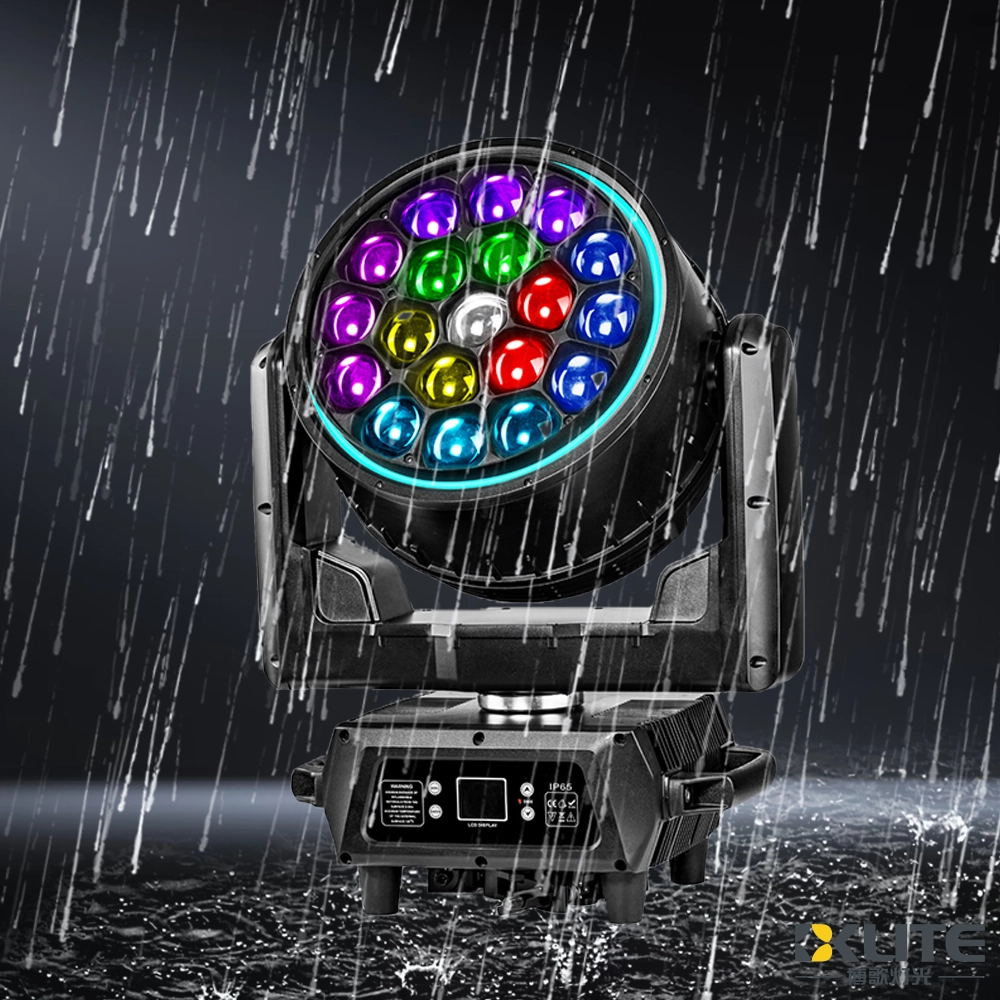
IP65 Waterproof Bee Eye Zoom 19x40W RGBW 4IN1 LED Beam Wash Moving Head Light with LED Ring
BKlite waterproof bee eye moving head light—your reliable choice from top waterproof moving head light manufacturers and suppliers. Ideal for outdoor stage, live event, music festival, this energy-saving fixture ensures powerful, precise illumination for any venue. It delivers powerful, reliable lighting performance in any weather.
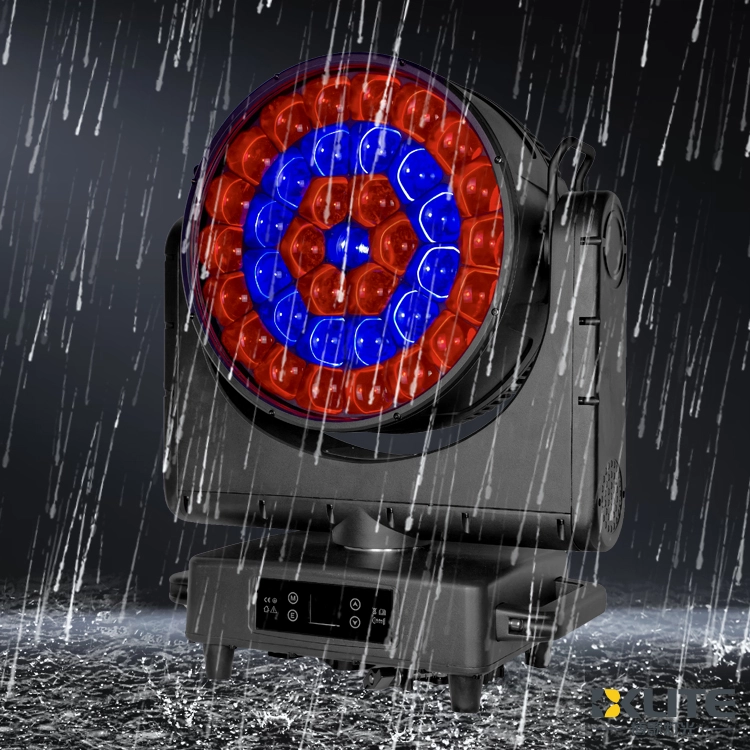
IP65 Waterproof ZOOM Bee Eye 37x40W RGBW 4in1 LED Moving Head Light
As a leading stage lighting equipment supplier with more than 15 years of industry know-how, BKlite brings you the IP65 ZOOM Bee Eye 37*40W RGBW 4in1 LED Moving Head Light (K25 Bee Eye) delivers vibrant, weatherproof lighting with powerful zoom and smooth movement. Ideal for dynamic stage effects, the K25 moving head light ensures stunning RGBW color mixing and reliable outdoor performance.
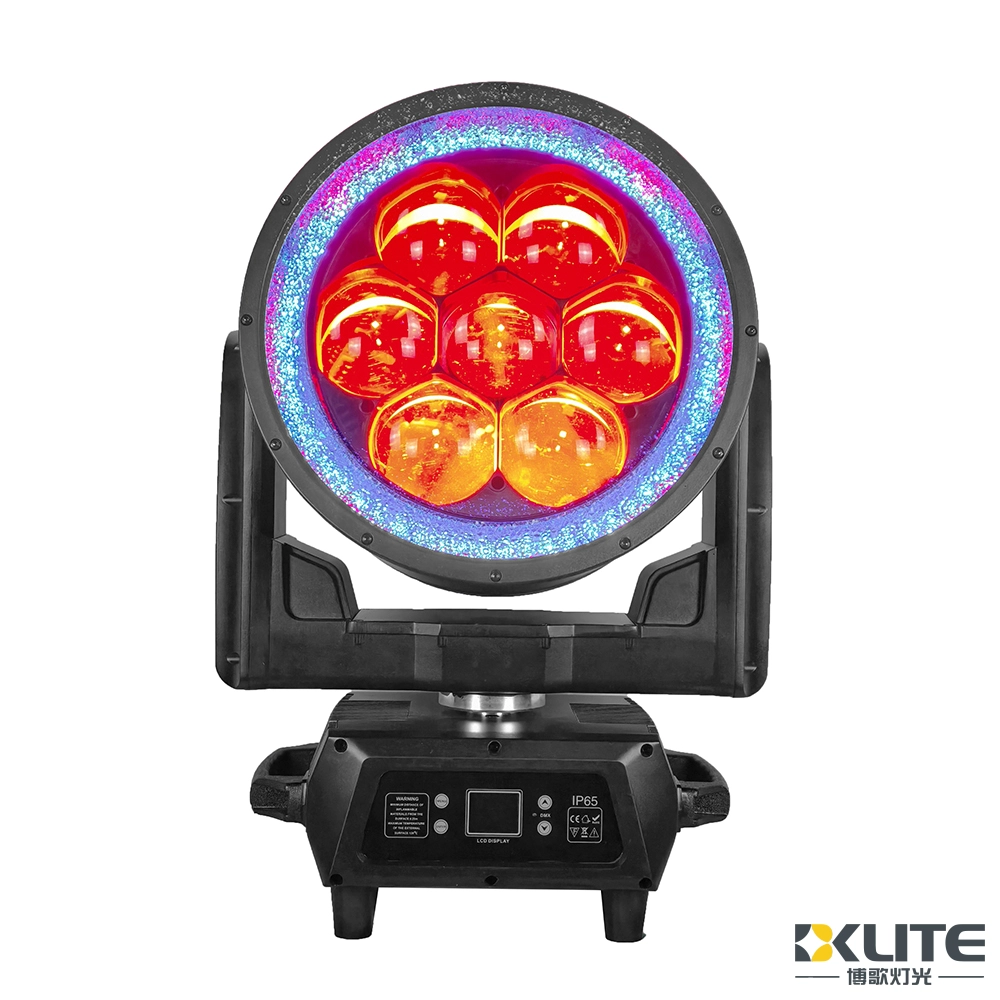
IP65 Waterproof Zoom Bee Eye 7x180W RGBL 4IN1 LED Moving Head Light With LED Ring
BKlite high power 7x180W waterproof bee eye moving head light—your reliable choice from top waterproof moving head light manufacturers and suppliers. Ideal for outdoor stage, live event, music festival, this energy-saving fixture ensures powerful, precise illumination for any venue. It delivers powerful, reliable lighting performance in any weather.


Copyright © 2025 BKLITE All Rights Reserved.