




DMX and Control Protocols for LED Stage Light Bars: B2B
- Understanding control protocols for stage lighting integration
- Why control protocols matter for LED Stage Light Bars
- DMX512: The baseline for LED Stage Light Bars
- Key DMX considerations for LED bars (: buy LED Stage Light Bars compatible with DMX)
- Example channel calculation (H2 keyword embedded: LED Stage Light Bars channel planning)
- Ethernet-based protocols: Art‑Net and sACN for large LED pixel deployments
- When to choose Art‑Net vs. sACN (: LED stage lighting systems scalability)
- RDM and device management — operational efficiency for B2B buyers
- Benefits of RDM (: LED bar lifecycle management)
- Wireless DMX and redundancy strategies
- Pixel mapping, refresh rates and perceived quality
- Practical installation considerations for LED Stage Light Bars ( LED Stage Lighting installation checklist)
- Comparative table: protocol choice by project type (: buy LED Stage Light Bars for project needs)
- Cost vs. performance tradeoffs and ROI for B2B buyers
- Case study: Addressing and universe planning example for a 100m LED pixel run
- Guangzhou BKlite Stage Lighting Equipment Co., Ltd. — supplier profile and product alignment
- BKlite advantages for buyers of LED Stage Light Bars (: source LED bar suppliers)
- Procurement checklist for purchasing LED Stage Light Bars (B2B)
- FAQ — Frequently asked questions about DMX and control protocols for LED Stage Light Bars
- 1. What is the difference between DMX512 and Art‑Net for LED Stage Light Bars?
- 2. How many DMX channels does an addressable LED Stage Light Bar need?
- 3. Should I use wireless DMX for touring or fixed installs?
- 4. What is RDM and do I need it?
- 5. How do I prevent visible flicker on camera with LED Stage Light Bars?
- 6. How many universes do I need for a project with 200 LED bars of 16 pixels each (RGB)?
- Contact and product enquiry
- References
Understanding control protocols for stage lighting integration
The rise of LED Stage Light Bars has transformed theatrical, touring, and architectural lighting. For B2B buyers — lighting rental companies, system integrators, AV houses and venue technical managers — selecting the right control protocols is as important as the LED hardware itself. This article explains DMX and modern control protocols (Art‑Net, sACN, RDM, wireless DMX), pixel mapping strategies, addressing examples, cabling and power best practices, and procurement guidance to help you buy, integrate and support LED stage light bars reliably at scale.
Why control protocols matter for LED Stage Light Bars
LED Stage Light Bars are often used as multi‑pixel fixtures (individually addressable LEDs), color wash sources, or combined beam/wash units. Control protocols determine how you send color, intensity, and pixel data to fixtures, which affects:
- Scalability — number of fixtures and pixels per control system (universes).
- Latency and refresh rate — critical for pixel effects and synchronized shows.
- Reliability — error detection, device discovery, and remote troubleshooting.
- Installation complexity — cabling, network architecture (Ethernet vs. DMX cabling).
Choosing the correct control protocol reduces downtime, prevents flicker or pixel mapping errors, and lowers commissioning time — all important cost drivers for B2B operations.
DMX512: The baseline for LED Stage Light Bars
DMX512 remains the foundation of lighting control. Developed in the 1980s, DMX512 is a unidirectional serial protocol that transmits up to 512 channels per universe at roughly 44 Hz (conservative typical refresh) depending on channel count. For many LED Stage Light Bars used as fixtures with a limited channel set (RGBW, RGB + effects), DMX512 is sufficient and broadly compatible with consoles and dimmer racks.
Key DMX considerations for LED bars (: buy LED Stage Light Bars compatible with DMX)
- Channel footprint: Know how many DMX channels each bar consumes (e.g., 4ch RGBW, 16ch pixel modes, 48ch addressable).
- Addressing and universes: Stay within 512 channels per DMX universe; use multiple universes for large pixel installations.
- Termination and grounding: Proper termination (120Ω) and single‑ended grounding prevent data reflections and noise.
- DMX512-A / RDM: Use RDM (Remote Device Management) for bidirectional device discovery/configuration where supported.
Example channel calculation (H2 keyword embedded: LED Stage Light Bars channel planning)
| Fixture type | Channels per pixel | Pixels per bar | Total DMX channels | DMX universes required |
|---|---|---|---|---|
| RGB (non‑addressable wash) | 3 | 1 (fixture) | 3 | 1/512 |
| Addressable pixel bar | 3 | 16 | 48 | 1/512 |
| Addressable pixel bar (RGB + master dim) | 4 | 128 | 512 | 1 |
Source: calculation based on standard DMX channel math. Example: a 128‑pixel RGB bar with 4 channels each (RGB + global dim) will occupy one DMX universe (128 x 4 = 512 channels).
Ethernet-based protocols: Art‑Net and sACN for large LED pixel deployments
For large arrays of LED Stage Light Bars, DMX over Ethernet is the industrial standard. Two widely used protocols are Art‑Net (by Artistic Licence) and sACN (Streaming Architecture for Control Networks, ANSI E1.31). Both allow many universes to be carried over standard Ethernet infrastructure and integrate with lighting consoles and media servers.
When to choose Art‑Net vs. sACN (: LED stage lighting systems scalability)
- Art‑Net: Widely supported, simple to deploy, good for smaller networks and mixed legacy gear.
- sACN (E1.31): Designed for modern network reliability, multicast friendly, better suited for large, latency‑sensitive pixel networks and professional distributed systems.
| Protocol | Max universes per stream | Typical latency | Use case |
|---|---|---|---|
| DMX512 | 1 per physical link (512 channels) | ~22–44 ms depending on packet timing | Small setups, legacy fixtures |
| Art‑Net | Thousands (depends on node) | < 10 ms on LAN | Medium to large systems, mixed hardware |
| sACN (E1.31) | Thousands (protocol supports many) | < 10 ms on LAN, multicast optimized | Large distributed pixel networks |
| RDM | Operates over DMX/sACN for device management | Varies (device discovery adds traffic) | Remote config & monitoring |
Sources: Art‑Net specification (Artistic Licence), ANSI E1.31 documentation. Refer to the References section for links and dates.
RDM and device management — operational efficiency for B2B buyers
RDM (Remote Device Management, ANSI E1.20) extends DMX by enabling bidirectional communication for configuration and status reporting. For rental companies and integrators, RDM reduces onsite setup time and troubleshooting effort by allowing remote addressing, fixture personality selection, and monitoring of device errors.
When specifying LED Stage Light Bars for commercial use, prefer fixtures with RDM support if you operate large fleets or frequently readdress fixtures on different shows.
Benefits of RDM (: LED bar lifecycle management)
- Remote configuration: Change DMX addresses without manual DIP switch changes.
- Status monitoring: Fetch temperature, lamp hours (if applicable), and sensor data.
- Firmware update pathways: Some manufacturers allow field firmware updates via RDM or provider tools.
Wireless DMX and redundancy strategies
Wireless DMX reduces cabling but introduces RF planning requirements. Professional wireless solutions (LumenRadio CRMX, Wireless Solution’s W-DMX) offer high reliability, encryption options, and improved latency compared to consumer-grade wireless.
For mission‑critical B2B deployments, always plan redundancy: duplicate transmitters, network failover for Art‑Net/sACN, and a fallback wired DMX backbone. Wireless should complement rather than replace wired infrastructure for touring and permanent installs.
Pixel mapping, refresh rates and perceived quality
Addressable LED Stage Light Bars often require pixel mapping software to translate media or console cues into pixel data. Key metrics:
- Refresh rate: Aim for 30–60 Hz effective update per pixel for smooth motion; higher for fast video content.
- PWM frequency: Higher PWM (≥1–2 kHz) reduces visible flicker on camera and for audience view at high frame rates.
- Color calibration/Gamma: Choose fixtures with consistent color temperature across bars; factory calibration or LUTs can standardize color across multiple fixtures.
Practical installation considerations for LED Stage Light Bars ( LED Stage Lighting installation checklist)
Common failure points for B2B projects are power distribution, data cabling, and environmental protection. A short checklist:
- Power: Confirm cable gauges, connectors (PowerCON, IEC), and plan power injection points for long runs to avoid voltage drop.
- Data: Use quality XLR DMX cable for copper DMX; for Ethernet, separate data and high‑power cables when possible to avoid interference.
- IP rating: Choose IP20 for indoor venues and IP65 for outdoor or washdown environments.
- Mounting and mechanical: Verify rigging points and weight per meter for truss calculations.
- Surge protection & grounding: Use surge protection on power feeds and earth all fixtures consistently.
Comparative table: protocol choice by project type (: buy LED Stage Light Bars for project needs)
| Project type | Recommended protocol | Why |
|---|---|---|
| Small theatre / house lights | DMX512 | Simple, universal, easy to deploy |
| Touring and concerts with pixel effects | Art‑Net or sACN + pixel controllers | High universe counts, low latency |
| Permanent architectural façades | sACN (multicast) or dedicated pixel controllers | Scalability and network reliability |
| Temporary events with limited cabling | Wireless DMX + wired redundancy | Quick deploy with failover |
Cost vs. performance tradeoffs and ROI for B2B buyers
Higher upfront cost for fixtures with advanced protocols (native Art‑Net/sACN, RDM, high PWM, onboard pixel controllers) pays off in reduced commissioning time, lower maintenance, and better show reliability. For rental fleets, choose fixtures with firmware update support and wide protocol compatibility to maximize utilization across clients.
Case study: Addressing and universe planning example for a 100m LED pixel run
Plan: 100 meters with LED bars every 1 meter, each bar with 16 pixels, RGB (3 channels per pixel).
- Pixels per bar: 16
- Channels per bar: 16 x 3 = 48
- Bars per universe: floor(512 / 48) = 10 bars (10 x 48 = 480 channels)
- Universes required: ceiling(100 / 10) = 10 universes
Conclusion: Use sACN or Art‑Net with sufficient universe addressing and a robust Ethernet topology. Add power injection points every 6–12 meters depending on current draw and gauge.
Guangzhou BKlite Stage Lighting Equipment Co., Ltd. — supplier profile and product alignment
Guangzhou BKlite Stage Lighting Equipment Co., Ltd. was set up in 2011 and has become one of the top companies in the stage lighting industry. The company's business philosophy is based on being professional and innovative and on making sure that all of its stakeholders benefit. Over the past 14 years, it has achieved remarkable growth and built a strong reputation for quality and reliability.The factory makes all kinds of stage lighting products, like the IP20 Bee Eye Series, IP65 Bee Eye Series, LED Beam Moving Heads, LED Spot Moving Heads, LED Wash Moving Heads, LED Par Lights, LED Bar Lights, and LED Strobe Lights. Each product is made using advanced technology to meet the changing needs of the entertainment industry. Our company invests in research and development to come up with new ideas, making sure it stays ahead of industry trends.Our vision is to become the world's leading stage light manufacturer.Our website is https://www.bklite.com/.
BKlite advantages for buyers of LED Stage Light Bars (: source LED bar suppliers)
- Product breadth: From IP20 indoor LED Bar Lights to IP65 outdoor Bee Eye Series, which simplifies single‑source procurement for mixed venues.
- R&D and tech strength: Continuous development reduces obsolescence risk and improves firmware/feature support (important for Art‑Net/sACN compatibility).
- Manufacturing scale and QC: 14+ years of manufacturing experience can shorten lead times and support volume orders for rental fleets and integrators.
- Main products relevant to your needs: led wash moving head, led stage lighting, led moving head, led strobe bar light, led par light, led cob light, led spot moving head, led beam bar moving, Profile led moving head light, led spotlight — a product matrix covering wash, spot, beam and pixel bar categories.
For B2B purchasers, key differentiators are the supplier's protocol support (Art‑Net/sACN compatibility), RDM support for fleet maintenance, and available IP ratings for your use case. BKlite's product range and manufacturing capability position it as a viable supplier for rental, touring and installation projects. Visit https://www.bklite.com/ to view product specifications and request datasheets.
Procurement checklist for purchasing LED Stage Light Bars (B2B)
- Confirm protocol support: DMX512, Art‑Net/sACN, RDM, and any proprietary modes.
- Request channel maps and pixel mode documentation.
- Verify PWM frequency, color calibration and flicker specifications for camera use.
- Ask for power draw per meter/bar and recommended power injection strategy.
- Check IP rating and mechanical mounting options for your venues.
- Request firmware upgrade paths and RMA/service procedures.
FAQ — Frequently asked questions about DMX and control protocols for LED Stage Light Bars
1. What is the difference between DMX512 and Art‑Net for LED Stage Light Bars?
DMX512 is a point‑to‑point serial protocol supporting one 512‑channel universe per physical link. Art‑Net encapsulates DMX data over Ethernet, enabling many universes and better scalability. For large pixel systems, Art‑Net (or sACN) over Ethernet is preferred.
2. How many DMX channels does an addressable LED Stage Light Bar need?
Calculate channels as pixels × channels per pixel. E.g., 16 pixels × 3 channels (RGB) = 48 channels. Total channels determine how many DMX universes are required (512 channels per universe).
3. Should I use wireless DMX for touring or fixed installs?
Wireless DMX is useful for quick installs or where cabling is impractical. For touring and mission‑critical shows, use professional wireless systems and always design wired redundancy for failover.
4. What is RDM and do I need it?
RDM (Remote Device Management) allows bidirectional communications for discovery, addressing and diagnostics. It's highly recommended for rental companies and integrators to reduce onsite configuration time and enable remote troubleshooting.
5. How do I prevent visible flicker on camera with LED Stage Light Bars?
Choose fixtures with high PWM frequencies (ideally ≥1–2 kHz or specified 'flicker‑free' modes), test with your camera frame rates, and ensure stable power supply and proper grounding to minimize flicker artifacts.
6. How many universes do I need for a project with 200 LED bars of 16 pixels each (RGB)?
Channels per bar = 16 × 3 = 48. Bars per universe = floor(512 / 48) = 10. Universes required = ceiling(200 / 10) = 20 universes. Use Art‑Net or sACN to manage multiple universes over Ethernet.
Contact and product enquiry
If you are specifying LED Stage Light Bars for rental, touring, or installation projects and want supplier recommendations, dat sheets, or assistance with system design, contact Guangzhou BKlite via their website: https://www.bklite.com/. For technical RFPs, request channel maps, protocol compatibility statements (Art‑Net/sACN/RDM), and sample fixtures for onsite testing.
References
- DMX512 — Wikipedia. https://en.wikipedia.org/wiki/DMX512 (accessed 2025-12-23)
- Art‑Net specification — Artistic Licence. https://artisticlicence.com/ (accessed 2025-12-23)
- ANSI E1.31 (sACN) documentation — ESTA. https://tsp.esta.org/tsp/documents/published_docs.php (accessed 2025-12-23)
- RDM (ANSI E1.20) — ESTA/RDM. https://tsp.esta.org/tsp/documents/published_docs.php (accessed 2025-12-23)
- LumenRadio CRMX overview — LumenRadio. https://lumenradio.com/ (accessed 2025-12-23)
Data and protocol characteristics summarized from the linked authoritative specifications and vendor technical notes. For specific product performance (PWM, flicker, IP rating), always request manufacturer datasheets and test samples.
How to Request Custom Color Mixing for Wash Lights
Energy Efficiency and Power Consumption of Beam Lights
Creative Lighting Patterns with Bee Eye Moving Heads
Power, Heat Management and Lifespan of LED Stage Light Bars
FAQs
What's the payment terms?
T/T, Western Union.
What service can you supply?
We can apply for the OEM/ODM service.
What is your delivery time?
For stock products, we will deliver to you within 3 days.
What kind of package do you have?
We can pack the lights in a carton case and a flight case.
When will you ship the product after I send the money?
It depends the order.Small order will take 3-5 days.
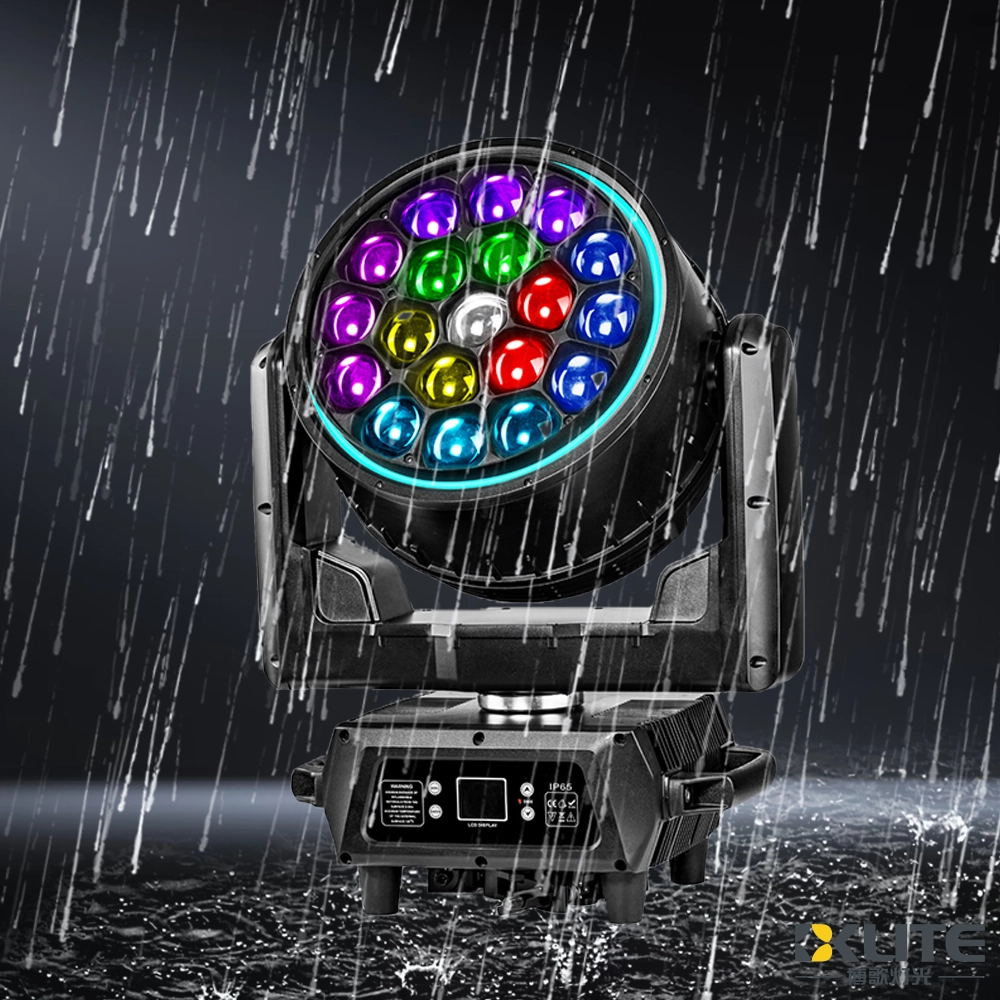
IP65 Waterproof Bee Eye Zoom 19x40W RGBW 4IN1 LED Beam Wash Moving Head Light with LED Ring
BKlite waterproof bee eye moving head light—your reliable choice from top waterproof moving head light manufacturers and suppliers. Ideal for outdoor stage, live event, music festival, this energy-saving fixture ensures powerful, precise illumination for any venue. It delivers powerful, reliable lighting performance in any weather.
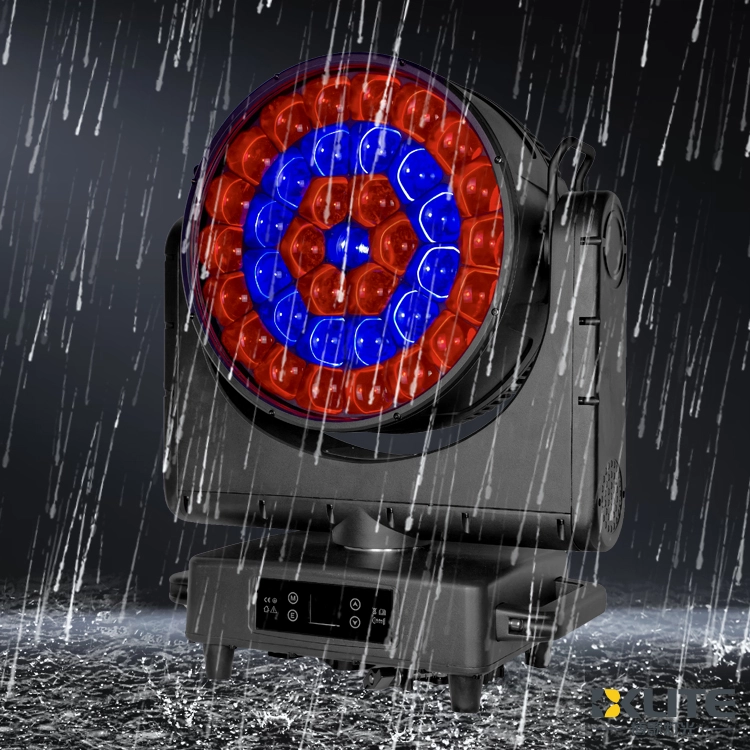
IP65 Waterproof ZOOM Bee Eye 37x40W RGBW 4in1 LED Moving Head Light
As a leading stage lighting equipment supplier with more than 15 years of industry know-how, BKlite brings you the IP65 ZOOM Bee Eye 37*40W RGBW 4in1 LED Moving Head Light (K25 Bee Eye) delivers vibrant, weatherproof lighting with powerful zoom and smooth movement. Ideal for dynamic stage effects, the K25 moving head light ensures stunning RGBW color mixing and reliable outdoor performance.
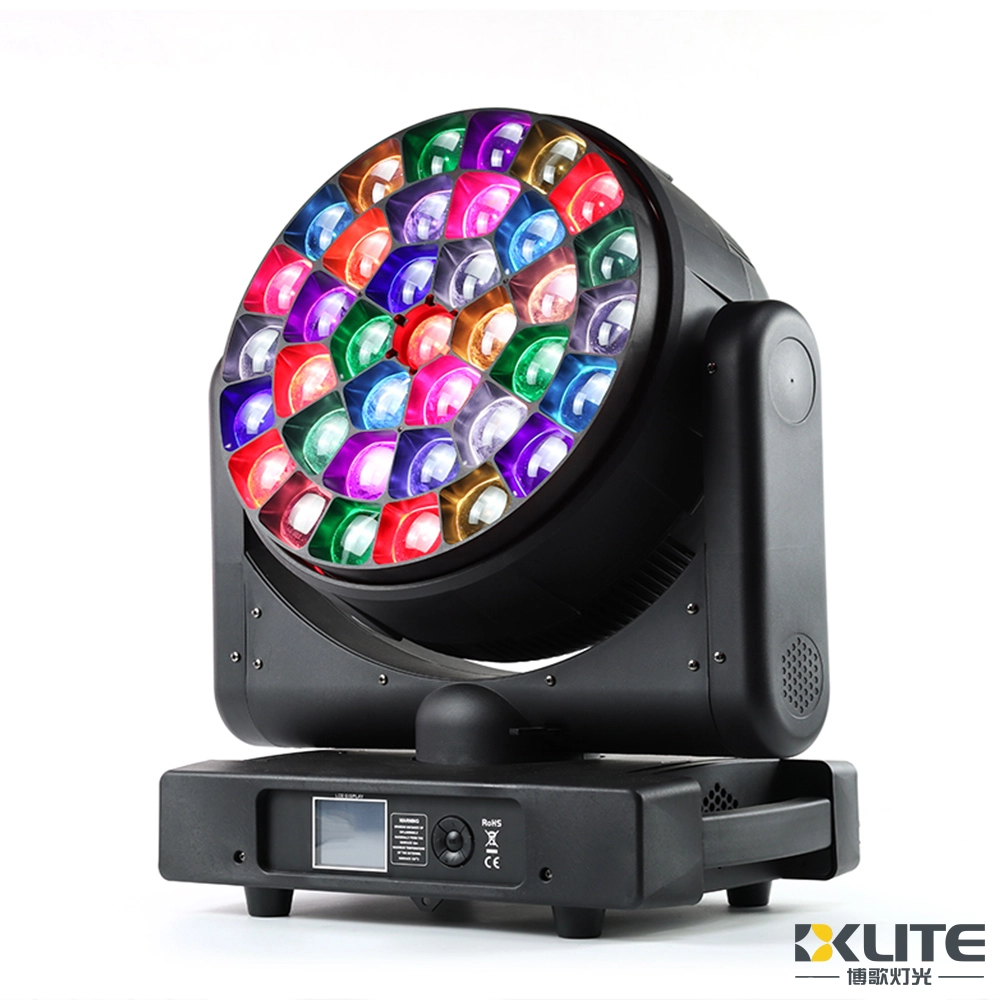
Bee Eye Zoom 37x40W RGBW 4in1 LED Beam Wash Moving Head Light
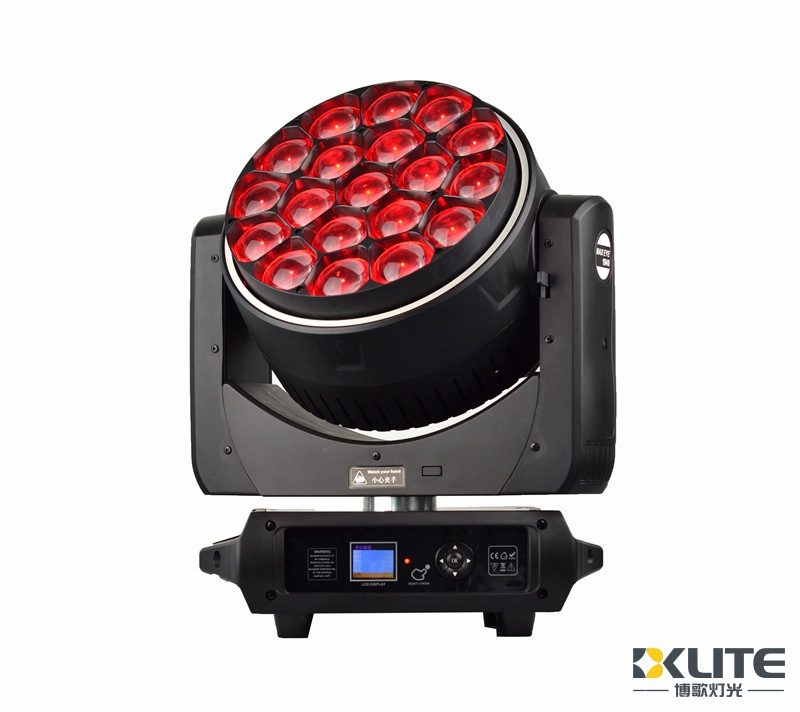
IP20 Bee Eye Zoom 19x40W RGBW 4IN1 LED Beam Wash Moving Head Light with LED Ring
As one of the leading stage lighting equipment suppliers with 15+ years of experience, BKlite launched a new Bee Eye K15 19x40 LED wash light BK-BY1940Z. .
Designed with a simple and sleek appearance, the WASH moving head light is compact, lightweight, and highly portable.
With multiple color effect macros and dynamic effect macros.
Our wash light can be used for versatile lighting options with amazing effect.
It is very good for your lighting projects.
Powerful and shoots very far distances.


Copyright © 2025 BKLITE All Rights Reserved.