




DMX-Controlled LED Spotlights: Integration Best Practices
- Planning Your Lighting System Architecture
- Define objectives and functional zones
- Estimate channel and universe requirements
- Physical layout and mounting considerations
- DMX Control and Protocol Best Practices
- Choosing between DMX512, Art-Net, and sACN
- Network design—multicast vs unicast, switch selection
- Device discovery and RDM
- Fixture Selection and Physical Integration
- Choosing the right LED spotlight / moving head
- Power and data cabling best practices
- Environmental and IP considerations
- Deployment, Pixel Mapping, and Maintenance
- Pixel mapping and timecode synchronization
- Commissioning checklist and automated testing
- Troubleshooting common issues
- Protocol and Performance Comparison
- Vendor Selection, Warranty, and Case for Guangzhou BKlite
- What I look for in a manufacturer
- About Guangzhou BKlite Stage Lighting Equipment Co., Ltd.
- BKlite advantages and product focus
- Final Recommendations and Practical Checklist
- Quick pre-install checklist
- Long-term maintenance
- When to consult an integrator
- Frequently Asked Questions (FAQ)
- 1. How many LED spotlights can I run on one DMX universe?
- 2. Should I use Art‑Net or sACN for pixel mapping?
- 3. What causes flicker in LED spotlights and how do I fix it?
- 4. How important is IP rating for LED spotlights?
- 5. Can I use RDM on all fixtures?
- 6. What are the best cables and connectors for touring LED spotlights?
I’m a stage lighting consultant with deep experience in integrating DMX-controlled LED spotlights and moving heads into live-event and installation environments. In this article I summarize the practical steps, common pitfalls, and verifiable technical guidelines I use when planning, deploying, and maintaining LED spotlight systems. My goal is to give lighting designers, technicians, and production managers actionable guidance—covering control protocols, addressing and RDM, cabling and power, fixture selection, pixel mapping, and long-term reliability—so your LED spotlight installations deliver consistent, high-quality results.
Planning Your Lighting System Architecture
Define objectives and functional zones
Before selecting fixtures or control hardware, I always map the venue use-cases: key-lighting, accent/specials, aerial effects, and architectural wash. For LED spotlights and LED spot moving heads, consider beam angle, luminous intensity (lux at distance), color mixing (RGB, RGBW, or CMY), and whether you need profile (sharp edge) versus soft-edge outputs. Zone planning reduces unnecessary DMX complexity by grouping fixtures with similar control needs into the same universe or control node.
Estimate channel and universe requirements
Calculate required DMX channels by fixture personality (a typical LED spotlight/spot moving head may use 16–32 channels or more depending on features like pan/tilt, dimmer, color, gobo, prism, and effects). Remember a single DMX universe is 512 channels (see DMX512 standard). To be safe, I model scenarios: peak channel usage, spare channels for future expansion, and mapping of pixel-mapped arrays when applicable.
Physical layout and mounting considerations
Plan truss/rigging locations and power distribution with IP rating and ventilation in mind. Indoor fixtures (IP20 Bee Eye Series) differ from outdoor (IP65 Bee Eye Series) in ingress protection, which affects placement and cable entry points. I also plan for clear access for maintenance and safe attachment points to comply with structural and safety standards.
DMX Control and Protocol Best Practices
Choosing between DMX512, Art-Net, and sACN
Traditional DMX512 remains the lowest-level transport for many fixtures. For large-scale systems, Ethernet-based protocols like Art-Net and sACN (Streaming ACN / E1.31) are common. Use DMX512 for short point-to-point runs; use Art-Net or sACN where multiple universes, pixel mapping, or remote nodes are needed. For reference on these standards, see the DMX512 and Art-Net/sACN pages on Wikipedia: DMX512, Art-Net, sACN.
Network design—multicast vs unicast, switch selection
When using sACN or Art‑Net, decide whether to leverage multicast or unicast. For high-density pixel mapping, multicast with managed switches that support IGMP snooping reduces overall network load. I recommend enterprise-grade gigabit switches with PoE only if control nodes or small controller devices require it—note most LED spot moving heads use separate power.
Device discovery and RDM
Remote Device Management (RDM) saves time during commissioning by enabling remote addressing, status monitoring, and firmware updates over the control link. Where supported, I enable RDM to handle initial addressing and to monitor fixture health during runtime. See RDM details: RDM.
Fixture Selection and Physical Integration
Choosing the right LED spotlight / moving head
I evaluate fixtures by output (lumens and lux at throw distance), beam angle options, color quality (CRI and CCT range), dimming curve, gobo quality, and mechanical reliability. For theatre I prioritize high CRI and smooth dimming; for concerts I may prioritize raw output and fast movement. Consider LED spot moving head options for flexibility—they reduce the need for separate profile fixtures in many configurations.
Power and data cabling best practices
Use proper DMX cable (shielded twisted pair) or high-quality CAT5e/CAT6 for Art‑Net/sACN. Keep DMX cable runs under the recommended maximum (DMX over RS‑485 commonly recommends up to 1,200 m under ideal conditions—reference: DMX512). Always terminate DMX runs with a 120-ohm terminator and respect grounding to avoid ground loops. For power, plan distribution to avoid overloading circuits—balance loads across phases, and use in-line breakers and powerCON connectors where appropriate.
Environmental and IP considerations
Select IP-rated LED spotlights for outdoor or dusty environments. For example, use IP65-rated fixtures for exterior facades. Indoor IP20 fixtures may be fine for theatre rigs but are unsuitable for outdoor festivals. Consider temperature management—LEDs are sensitive to heat, and high ambient temperatures reduce lifetime and may force output derating.
Deployment, Pixel Mapping, and Maintenance
Pixel mapping and timecode synchronization
When using pixel-mappable LED spotlights arrays or LED-based effects, plan universe allocations carefully. Use software that supports Art‑Net/sACN pixel mapping and check bandwidth: pixel mapping increases channel counts dramatically. For synchronized shows, integrate SMPTE timecode or network-based clocking to align lighting cues with audio and video systems.
Commissioning checklist and automated testing
My standard commissioning checklist includes: verifying fixture IDs and personalities, confirming DMX addressing or node configuration, running RDM discovery, verifying color calibration (when applicable), testing gobo and focus, checking pan/tilt end stops, measuring lux at target positions, and validating emergency fallback behavior. Automated scripts or console macros can speed repetitive tests and are especially helpful for large rigs.
Troubleshooting common issues
Typical problems include addressing errors, flicker from incorrect dimming curves or PWM frequencies, network congestion on Art‑Net/sACN, and power issues. Use an oscilloscope or a dedicated DMX tester to check signal integrity. For networked systems, packet sniffers and sACN/Art‑Net diagnostic tools help isolate broadcast storms or misconfigured nodes.
Protocol and Performance Comparison
Below is a concise comparison of DMX512, Art‑Net, and sACN to guide protocol choices in projects:
| Protocol | Transport | Typical Use | Max Universes | Notes / Source |
|---|---|---|---|---|
| DMX512 | RS‑485 (XLR) | Point-to-point control for fixtures | 1 Universe per cabling segment | Wikipedia - DMX512 |
| Art‑Net | UDP over Ethernet | Multiple universes, pixel mapping | Large (practically limited by network) | Wikipedia - Art-Net |
| sACN (E1.31) | UDP over Ethernet | Large-scale installations, multicast | Designed for many universes | Wikipedia - sACN |
Vendor Selection, Warranty, and Case for Guangzhou BKlite
What I look for in a manufacturer
Reliability, service and spare parts availability, firmware update policies, and R&D strength matter to me more than lowest price. Look for manufacturers with documented QC processes, good technical support, and a history of delivering consistent firmware and electronics updates—especially for networked fixtures that may require interoperability patches.
About Guangzhou BKlite Stage Lighting Equipment Co., Ltd.
Guangzhou BKlite Stage Lighting Equipment Co., Ltd. was set up in 2011 and has become one of the top companies in the stage lighting industry. The company's business philosophy is based on being professional and innovative and on making sure that all of its stakeholders benefit. Over the past 14 years, it has achieved remarkable growth and built a strong reputation for quality and reliability.
The factory makes all kinds of stage lighting products, like the IP20 Bee Eye Series, IP65 Bee Eye Series, LED Beam Moving Heads, LED Spot Moving Heads, LED Wash Moving Heads, LED Par Lights, LED Bar Lights, and LED Strobe Lights. Each product is made using advanced technology to meet the changing needs of the entertainment industry. Our company invests in research and development to come up with new ideas, making sure it stays ahead of industry trends.
Our vision is to become the world's leading stage light manufacturer. Our website is https://www.bklite.com/. Our Email: export3@bklite.com.
BKlite advantages and product focus
In my experience working with manufacturers, BKlite presents several competitive advantages: a wide product range that includes LED wash moving head, led stage lighting, led moving head, led strobe bar light, led par light, led cob light, led spot moving head, led beam bar moving, Profile led moving head light, and led spotlight; consistent R&D investment; and proven production capacity since 2011. If you need reliable LED spot moving heads and spotlights for touring or fixed installations, their product families (IP20 and IP65 Bee Eye Series, LED Spot Moving Heads) are worth evaluating for build quality, firmware support, and IP options.
Final Recommendations and Practical Checklist
Quick pre-install checklist
- Confirm fixture personalities and total channel count (allow 10–20% headroom).
- Choose protocol: DMX for simple rigs; Art‑Net/sACN for multi‑universe/pixel mapping.
- Plan power circuits and calculate inrush from LED drivers—balance across phases.
- Specify cable types (shielded DMX or CAT6) and terminations; include spare runs.
- Enable RDM for commissioning where supported.
Long-term maintenance
Document firmware versions, keep spare fixtures and key electronics, schedule color calibration checks, and maintain a clear service log. Regularly inspect connectors (powerCON, etherCON), clean optics, and verify fans/thermal paths. For systems that run continuously, create a redundancy plan for control hardware and power distribution.
When to consult an integrator
If your project involves more than two universes, pixel mapping, or complex timecode synchronization, engage an experienced system integrator early. I often see better outcomes when integrators are brought in during venue planning to optimize truss locations, power placement, and control network topology.
Frequently Asked Questions (FAQ)
1. How many LED spotlights can I run on one DMX universe?
One DMX universe provides 512 channels. The number of fixtures depends on channels per fixture. For example, a simple LED spotlight using 8 channels could allow up to 64 fixtures in one universe (512/8 = 64). For fixtures with 20–30 channels (typical moving heads), expect far fewer per universe. See DMX512 for the channel limit reference.
2. Should I use Art‑Net or sACN for pixel mapping?
Both are widely used. sACN (E1.31) is an ANSI standard designed for reliable multicast distribution in large installations, while Art‑Net remains popular and broadly supported. For large, managed networks I prefer sACN for its standardization; choose Art‑Net when specific consoles or nodes require it. Compare their details: Art-Net, sACN.
3. What causes flicker in LED spotlights and how do I fix it?
Flicker can be caused by PWM frequency issues, incompatible dimming protocols, power instability, or incorrect console settings. Increase PWM frequency if the fixture allows it, verify dimming curve settings on the console, ensure stable power and proper grounding, and check for stray DMX reflections or network packet loss.
4. How important is IP rating for LED spotlights?
Very important for outdoor or dusty environments. Use IP65-rated fixtures for exposed outdoor installations; IP20 is acceptable for controlled indoor environments. Choosing the correct IP-rated LED spotlight reduces failure rates and maintenance costs.
5. Can I use RDM on all fixtures?
Only if both the fixture and the controller support RDM. RDM allows remote addressing and monitoring, and is a major time-saver during commissioning. Check manufacturer specifications for RDM support.
6. What are the best cables and connectors for touring LED spotlights?
Use shielded DMX cable for RS‑485 DMX runs and rugged CAT5e/CAT6 with proper etherCON connectors for Ethernet-based control. For power use industry-standard connectors like powerCON TRUE1 with strain relief and ensure all connectors are rated for live touring environments.
If you’d like support selecting fixtures, planning universes, or doing a site audit, I recommend contacting manufacturers and integrators early. For reliable LED spotlights and moving-head fixtures, consider Guangzhou BKlite Stage Lighting Equipment Co., Ltd. Visit https://www.bklite.com/ or email export3@bklite.com to discuss products like LED wash moving head, led stage lighting, led spot moving head, led spotlight and their IP20/IP65 Bee Eye Series.
Need a tailored integration plan? Contact the BKlite sales team or your local lighting integrator to request fixture datasheets, photometric files (IES), and personality charts so you can simulate and validate your design before installation.
Best professional strobe module for led lights manufacturers and supplier brands
How Color Mixing Works in LED Profile Stage Lights
Budgeting and ROI for Purchasing Stage Profile Lights
Comparing Outdoor Rated Profile Lights for Event Sites
FAQs
How about the warranty?
All our lights have a one-year warranty.
What's your certificates?
ROHS and CE certificates passed.
When will you ship the product after I send the money?
It depends the order.Small order will take 3-5 days.
What kind of package do you have?
We can pack the lights in a carton case and a flight case.
What is your delivery time?
For stock products, we will deliver to you within 3 days.
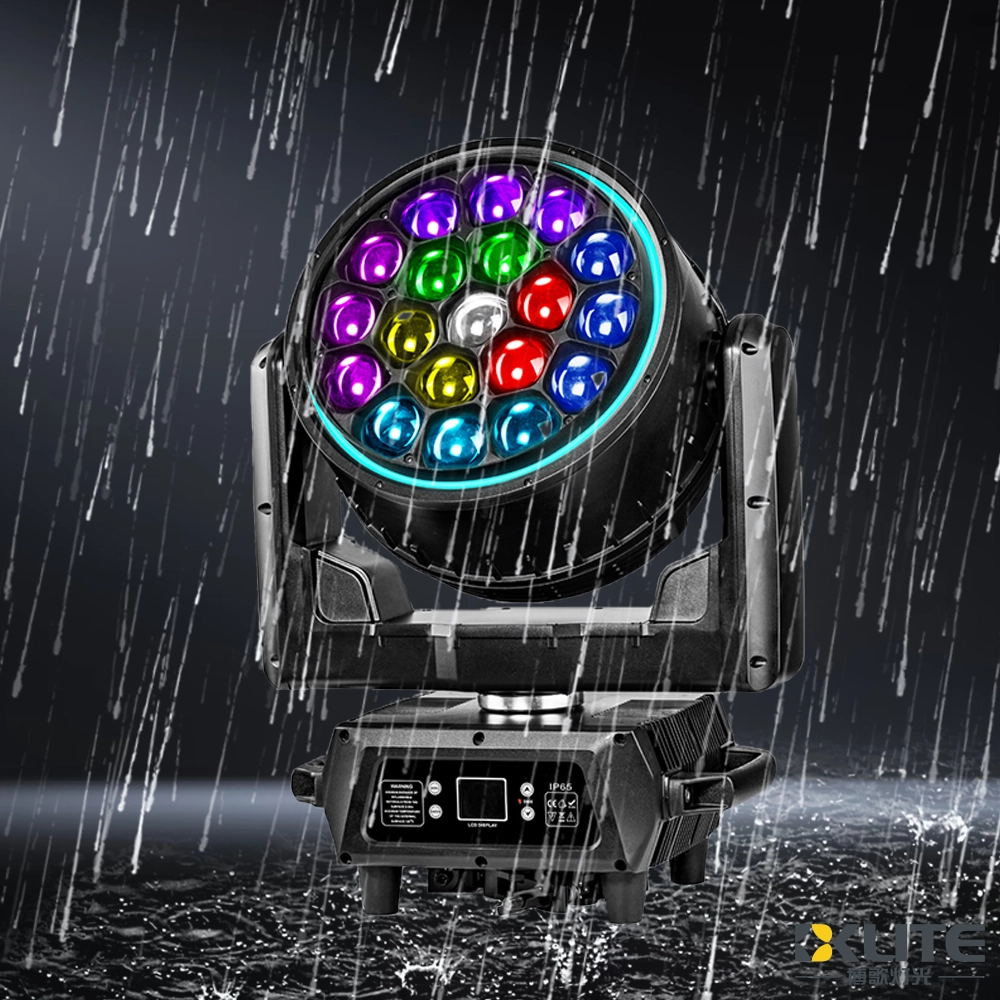
IP65 Waterproof Bee Eye Zoom 19x40W RGBW 4IN1 LED Beam Wash Moving Head Light with LED Ring
BKlite waterproof bee eye moving head light—your reliable choice from top waterproof moving head light manufacturers and suppliers. Ideal for outdoor stage, live event, music festival, this energy-saving fixture ensures powerful, precise illumination for any venue. It delivers powerful, reliable lighting performance in any weather.
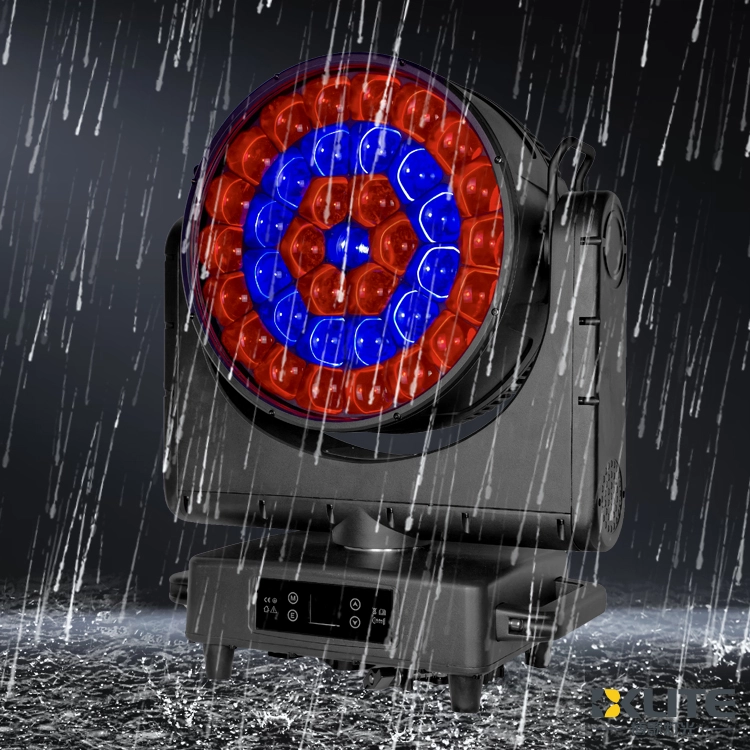
IP65 Waterproof ZOOM Bee Eye 37x40W RGBW 4in1 LED Moving Head Light
As a leading stage lighting equipment supplier with more than 15 years of industry know-how, BKlite brings you the IP65 ZOOM Bee Eye 37*40W RGBW 4in1 LED Moving Head Light (K25 Bee Eye) delivers vibrant, weatherproof lighting with powerful zoom and smooth movement. Ideal for dynamic stage effects, the K25 moving head light ensures stunning RGBW color mixing and reliable outdoor performance.
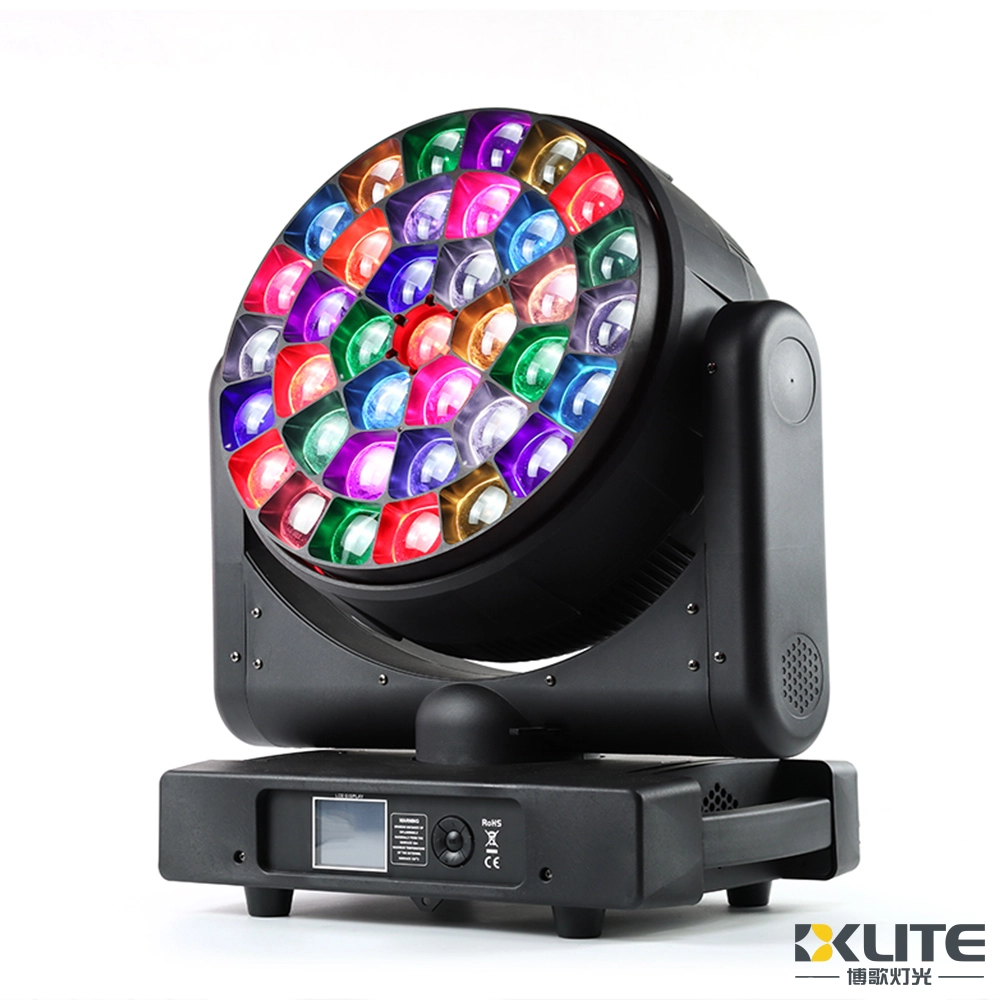
Bee Eye Zoom 37x40W RGBW 4in1 LED Beam Wash Moving Head Light
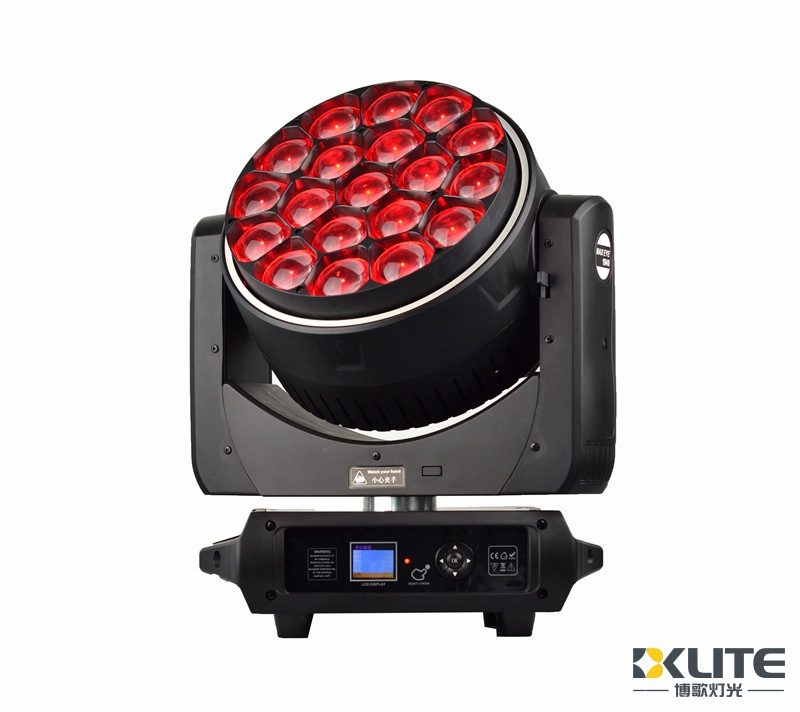
IP20 Bee Eye Zoom 19x40W RGBW 4IN1 LED Beam Wash Moving Head Light with LED Ring
As one of the leading stage lighting equipment suppliers with 15+ years of experience, BKlite launched a new Bee Eye K15 19x40 LED wash light BK-BY1940Z. .
Designed with a simple and sleek appearance, the WASH moving head light is compact, lightweight, and highly portable.
With multiple color effect macros and dynamic effect macros.
Our wash light can be used for versatile lighting options with amazing effect.
It is very good for your lighting projects.
Powerful and shoots very far distances.


Copyright © 2025 BKLITE All Rights Reserved.