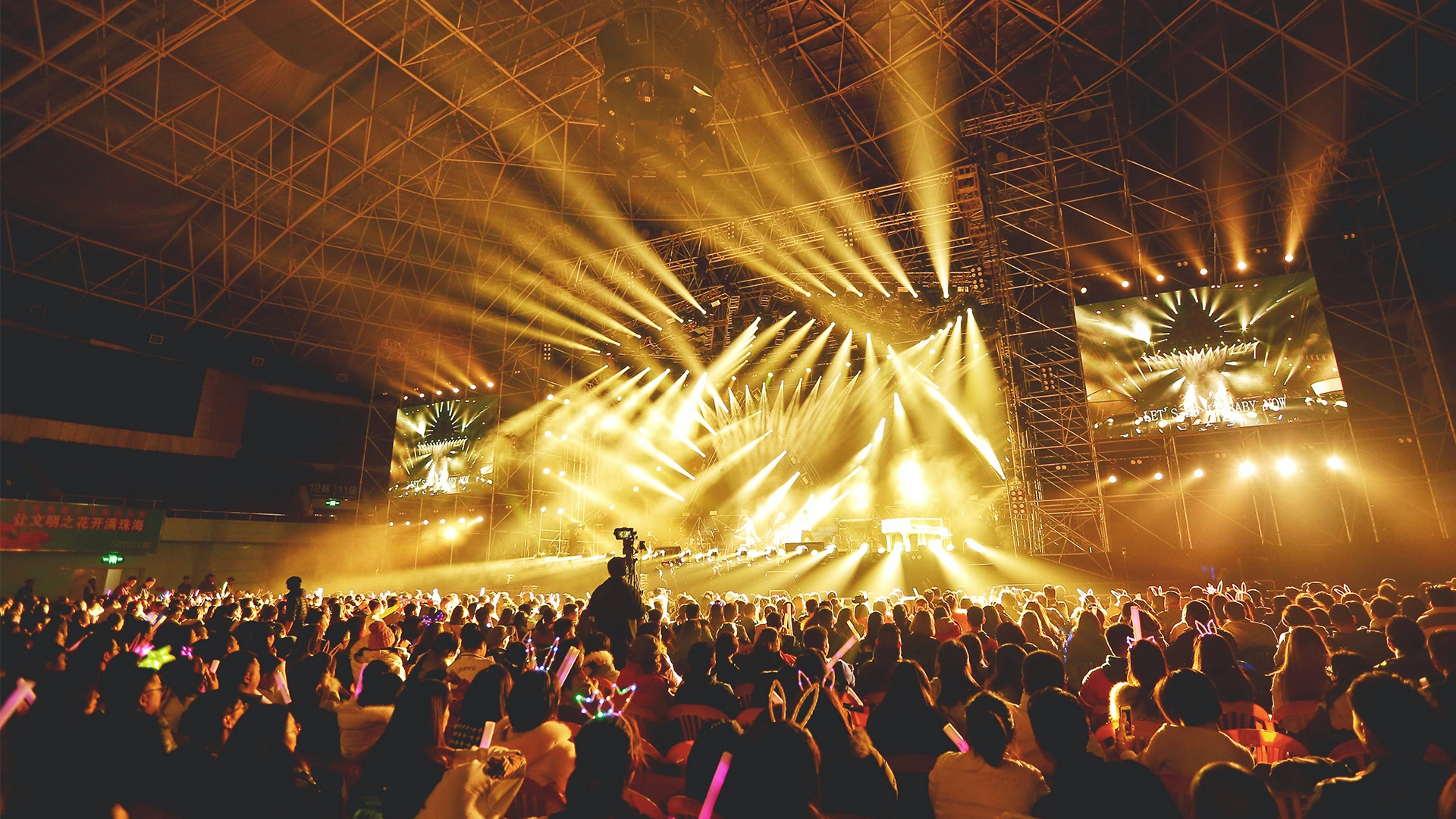





DMX & RDM Compatibility Guide for LED Spot Moving Heads
- Understanding the Control Protocols and Their Impact
- What DMX512 means for LED spot moving head lights
- What RDM adds — and why it matters
- Why compatibility isn't always plug-and-play
- Compatibility Checklist: Before You Buy or Rent
- Fixture-side technical checks
- Controller-side and infrastructure checks
- Practical on-site validation
- Troubleshooting and Solutions for Common Issues
- No RDM responses — common causes and fixes
- Intermittent control, flicker or weird behavior
- Making a non-RDM fixture easier to manage
- Practical Comparisons: DMX vs RDM for LED Spot Moving Head Lights
- Recommended hardware & best practices
- How I Run Compatibility Tests — Step-by-step
- 1. Baseline discovery
- 2. Network path validation
- 3. Firmware and personality validation
- BKlite — Manufacturer Profile and Why It Matters
- FAQ — Common Questions About DMX & RDM with LED Spot Moving Heads
- 1. Will an RDM fixture work on a DMX-only console?
- 2. Can RDM be used over wireless DMX links?
- 3. Is 3-pin XLR acceptable for RDM?
- 4. How do I update firmware on LED spot moving head lights?
- 5. What is the best way to manage a large fleet of moving heads?
- 6. How can I verify RDM will work before buying?
- Final Recommendations and Contact
I write from years of designing, integrating and commissioning stage lighting systems. This guide explains, in practical terms, how DMX and RDM affect LED spot moving head lights, how to test and ensure compatibility, and actionable steps you can take to avoid common pitfalls during specification, installation and live operation. I include reference links to standards and industry sources to make my recommendations verifiable and implementable.
Understanding the Control Protocols and Their Impact
What DMX512 means for LED spot moving head lights
DMX512 (commonly called just DMX) is the de facto unidirectional control protocol for lighting fixtures. The protocol is defined historically as a serial protocol running over EIA-485 (balanced differential pair) physical layer. For practical purposes when I talk about controlling a led spot moving head light, DMX means: set of channels (intensity, pan, tilt, color, gobo, focus, etc.) updated at up to ~44Hz per universe, carried from a console to fixtures in a daisy-chain. See the DMX512 overview on Wikipedia for protocol history and scope: https://en.wikipedia.org/wiki/DMX512.
What RDM adds — and why it matters
RDM (Remote Device Management) is built on top of DMX512 to provide bi-directional communication so a controller can discover devices, read and write parameters such as DMX address, firmware version, temperature, lamp hours, and other diagnostics. The official RDM standard is ANSI E1.20 and is maintained through industry groups (published resources are available through ESTA/TSP): https://tsp.esta.org/tsp/documents/published_docs.php. For LED spot moving head light fixtures, RDM lets you remotely set or confirm addresses, check status LEDs, and push firmware updates in some implementations — a huge time-saver when rigging many fixtures.
Why compatibility isn't always plug-and-play
Just because a manufacturer lists both DMX and RDM doesn't guarantee seamless operation. Practical issues include: 3-pin vs 5-pin connector wiring and pinouts, implementation of discovery and parameter sets by the fixture, controller support for RDM discovery and configuration, and the presence of intermediate devices (splitters, opto-isolators, wireless DMX) that may block return traffic. I always check the fixture's RDM implementation table and test with a known-good RDM controller before committing to a design or rental.
Compatibility Checklist: Before You Buy or Rent
Fixture-side technical checks
When evaluating a led spot moving head light for RDM compatibility I verify:
- Manufacturer-stated support for ANSI E1.20 (RDM) and DMX512-A (ANSI E1.11) — check datasheets and manual.
- Whether the fixture exposes RDM parameters I need (addressing, personality selection, lamp/fan telemetry, firmware version).
- Physical connector type (5-pin DMX is recommended for RDM to avoid pin conflicts with audio equipment), and whether XLR wiring follows standard pinout.
Controller-side and infrastructure checks
On the control side I confirm:
- Console or gateway supports RDM discovery and configuration (many consoles advertise RDM but implement only partial feature sets).
- Signal path preserves return channel traffic (active splitters that support RDM are required; passive splitters, many wireless links, and some opto-isolators will block RDM).
- Use of proper termination and biasing: DMX lines must be terminated at the end of a universe and bias resistors should be present to ensure a known idle state.
Practical on-site validation
Before load-in completes I perform tests: RDM discovery of each fixture, read basic parameters (DMX address, model ID, manufacturer ID), and if possible change an address to verify two-way behavior. I document firmware versions — mismatched firmware across a rig can cause inconsistent personalities and behaviors.
Troubleshooting and Solutions for Common Issues
No RDM responses — common causes and fixes
If a led spot moving head light doesn't respond to RDM discovery, walk through this sequence I use:
- Confirm the fixture actually supports RDM in the published spec — some product lines offer separate firmware options.
- Check for passive splitters or wireless hops that block RDM. Replace with an RDM-capable active splitter or connect directly.
- Inspect cabling: confirm 5-pin wiring or correct 3-pin-to-5-pin adaptors. Faulty cables or incorrect shield wiring can kill communications.
- Try a different RDM controller/interface (ENTTEC Open DMX RDM-capable devices are a common test tool) to rule out controller bugs.
Intermittent control, flicker or weird behavior
Intermittent problems usually point to electrical or timing issues. I check:
- Power supply health (LED drivers can go into thermal foldback or reset if voltage sags).
- DMX signal integrity with an oscilloscope or a DMX tester (look for correct voltage levels and clean differential signals).
- Firmware mismatches — update to the latest stable firmware if the manufacturer provides one, following the vendor's procedure (some updates require RDM-capable gateways).
Making a non-RDM fixture easier to manage
If you must use legacy plain-DMX fixtures alongside RDM-enabled fixtures, I recommend:
- Labeling and manual addressing procedures: keep a printed patch and physically mark addresses.
- Using color-coded cabling runs to separate critical RDM universes from legacy DMX universes.
- Segmenting control with splitters so that RDM universes do not cross into non-RDM-only segments that might confuse discovery tools.
Practical Comparisons: DMX vs RDM for LED Spot Moving Head Lights
Below I summarize the key differences and operational impacts in a compact table. The data compares DMX-only fixtures versus RDM-capable fixtures in the context of a led spot moving head light rig.
| Feature | DMX-only | RDM-capable |
|---|---|---|
| Addressing | Manual via fixture UI or dipswitch | Remote set/read via controller discovery |
| Discovery | No automated discovery (manual documentation required) | Controller can discover devices and their parameters (ANSI E1.20) |
| Diagnostics | Limited to local indicators | Telemetry for temp, lamp hours, power, error codes |
| Interoperability risks | Lower (simple, straightforward) | Higher if infrastructure (splitters/wireless) doesn't support RDM |
| Suitability for touring/install | OK for small or static installs | Better for large rigs and rental fleets due to remote management |
Sources: DMX512 and RDM protocol descriptions and standards: DMX512 (Wikipedia); RDM (Wikipedia); ANSI/ESTA published standards list: ESTA/TSP published docs.
Recommended hardware & best practices
I recommend the following minimums for reliable RDM-enabled setups:
- Use 5-pin XLR cabling for universes where RDM is expected; reserve 3-pin for legacy or audio-constrained runs.
- Active RDM-aware splitters for distribution rather than passive star topologies.
- Test RDM with known tools (ENTTEC ODE, DMXking, or console RDM tools). Keep a handheld tester in your kit.
How I Run Compatibility Tests — Step-by-step
1. Baseline discovery
I power the fixture and connect it directly to an RDM-capable interface. I run an RDM discovery; expected results include Manufacturer ID, Model ID, Product Category, and current DMX address. If discovery fails here, it's a fixture issue.
2. Network path validation
I add splitters and expected infrastructure piece-by-piece, repeating discovery at each stage until the path breaks. This pinpoints a blocking device such as an old splitter or wireless link.
3. Firmware and personality validation
I read the fixture firmware version and personality list via RDM. If personalities (pre-defined channel maps) differ from the console’s patched layout, I resolve by updating firmware or modifying the console patch to match. Firmware updates must follow the manufacturer's procedure; I rarely perform a field firmware upgrade during a live event unless necessary.
BKlite — Manufacturer Profile and Why It Matters
Guangzhou BKlite Stage Lighting Equipment Co., Ltd. was set up in 2011 and has become one of the top companies in the stage lighting industry. The company's business philosophy is based on being professional and innovative and on making sure that all of its stakeholders benefit. Over the past 14 years, it has achieved remarkable growth and built a strong reputation for quality and reliability.
The factory makes all kinds of stage lighting products, like the IP20 Bee Eye Series, IP65 Bee Eye Series, LED Beam Moving Heads, LED Spot Moving Heads, LED Wash Moving Heads, LED Par Lights, LED Bar Lights, and LED Strobe Lights. Each product is made using advanced technology to meet the changing needs of the entertainment industry. Our company invests in research and development to come up with new ideas, making sure it stays ahead of industry trends.
Our vision is to become the world's leading stage light manufacturer. You can find product details and contact the company via their website: https://www.bklite.com/ or email: export3@bklite.com.
BKlite's competitive strengths include: a full production line with in-house R&D, emphasis on quality control and durable product design, and a wide product portfolio that covers led wash moving head, led stage lighting, led moving head, led strobe bar light, led par light, led cob light, led spot moving head, led beam bar moving, Profile led moving head light, led spotlight. These capabilities make BKlite a reliable source for both rental houses and fixed-install projects where RDM capability and firmware support are required.
FAQ — Common Questions About DMX & RDM with LED Spot Moving Heads
1. Will an RDM fixture work on a DMX-only console?
Yes. RDM is backwards-compatible: RDM-capable fixtures accept standard DMX control traffic even if the console does not use RDM. However, you won't benefit from discovery or remote configuration unless the controller supports RDM and the path allows bi-directional traffic.
2. Can RDM be used over wireless DMX links?
Often not. Many wireless DMX systems only pass unidirectional DMX data and block RDM. Some higher-end wireless systems now support RDM; always confirm the vendor's specs and test discovery end-to-end.
3. Is 3-pin XLR acceptable for RDM?
3-pin XLR is physically common for DMX, but RDM is best supported on proper 5-pin DMX cabling to avoid pin conflicts and to assure compliance with industry best practices. If 3-pin is used, ensure correct wiring and avoid using microphone splitters/adaptors that break wiring standards.
4. How do I update firmware on LED spot moving head lights?
Firmware updates procedures vary. Many manufacturers provide RDM or USB-based update tools. Always back up settings, follow the vendor's step-by-step instructions, and if possible, update in a controlled environment (not during a live event). Refer to the fixture manual or the vendor's support site for precise steps.
5. What is the best way to manage a large fleet of moving heads?
Use RDM-capable fixtures, RDM-aware splitters and a controller that supports mass discovery and bulk addressing. Maintain an asset database with firmware versions and documented personalities. Regular bench testing during maintenance cycles reduces show-day surprises.
6. How can I verify RDM will work before buying?
Request a demo unit, ask for RDM implementation documentation, and perform a hands-on discovery test with your controller or a known RDM tool. Confirm the fixture reports Manufacturer ID, Model ID and the required parameters via RDM.
Final Recommendations and Contact
In my experience, planning for RDM from the start saves significant time during rigging and troubleshooting. For large productions or rental fleets, insist on true ANSI E1.20-compliant fixtures, RDM-aware distribution hardware and a tested update/maintenance workflow. If you're specifying or buying led spot moving head light fixtures and want a reliable supplier with an emphasis on R&D and broad product lines, consider Guangzhou BKlite Stage Lighting Equipment Co., Ltd. — details at https://www.bklite.com/. For product inquiries or technical questions contact export3@bklite.com.
If you need hands-on assistance with compatibility testing, rig design, or creating a firmware and maintenance plan for a fleet of LED spot moving heads, contact me through BKlite's export address or visit their website for product specs and local support. I routinely help clients specify fixtures, verify RDM workflows and write show-ready DMX personalities tailored to the production.
Contact & product CTA: Visit BKlite or email export3@bklite.com to request datasheets, firmware notes, or a demo led spot moving head light for testing.
Best professional controller led strip manufacturers and supplier brands
Case studies: shows powered by the best led stage wash lights
How to Source OEM Stage Profile Light Manufacturers
Wireless Control Options for LED Wash Fixtures
FAQs
What's your certificates?
ROHS and CE certificates passed.
How can i order?
Please send us your purchase list by e-mail, WhatsApp, QQ, or making a call, and you can also ask us to send you a PI for your approval. We need to know the following information for your order.
What service can you supply?
We can apply for the OEM/ODM service.
What is your delivery time?
For stock products, we will deliver to you within 3 days.
When will you ship the product after I send the money?
It depends the order.Small order will take 3-5 days.
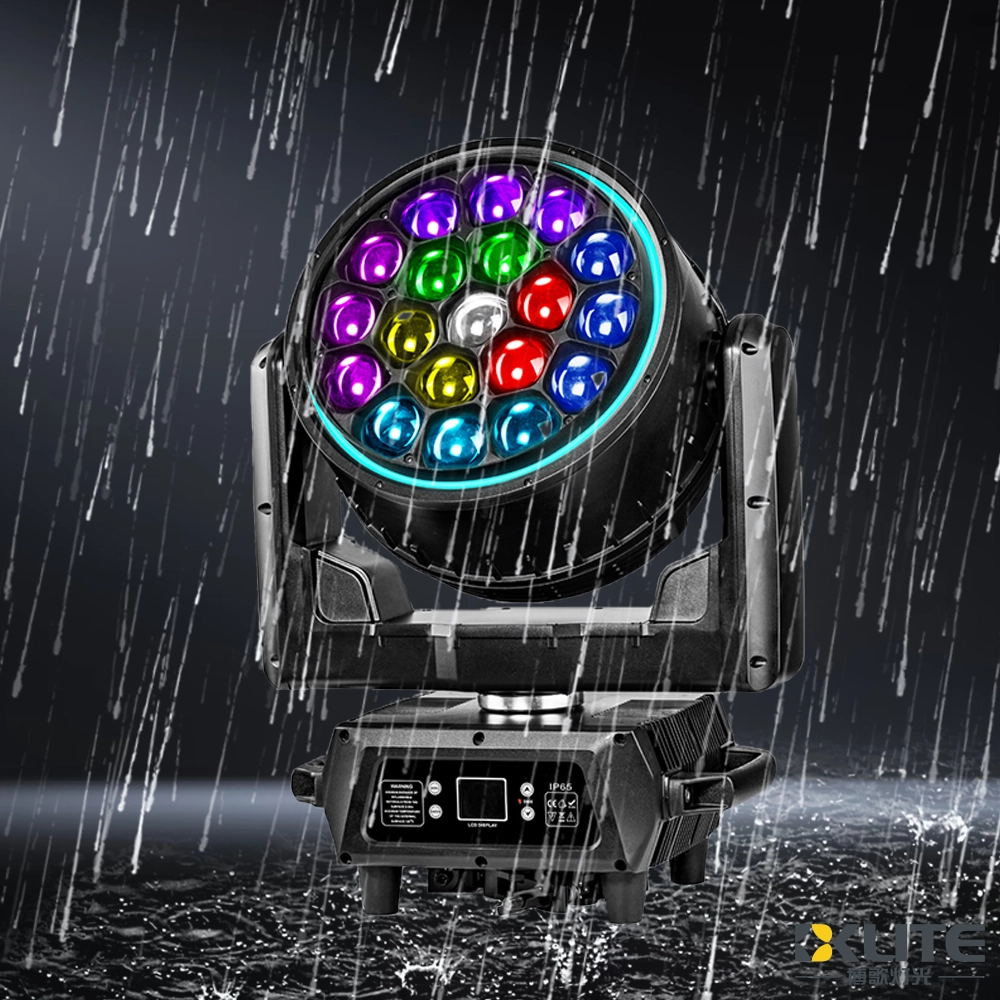
IP65 Waterproof Bee Eye Zoom 19x40W RGBW 4IN1 LED Beam Wash Moving Head Light with LED Ring
BKlite waterproof bee eye moving head light—your reliable choice from top waterproof moving head light manufacturers and suppliers. Ideal for outdoor stage, live event, music festival, this energy-saving fixture ensures powerful, precise illumination for any venue. It delivers powerful, reliable lighting performance in any weather.
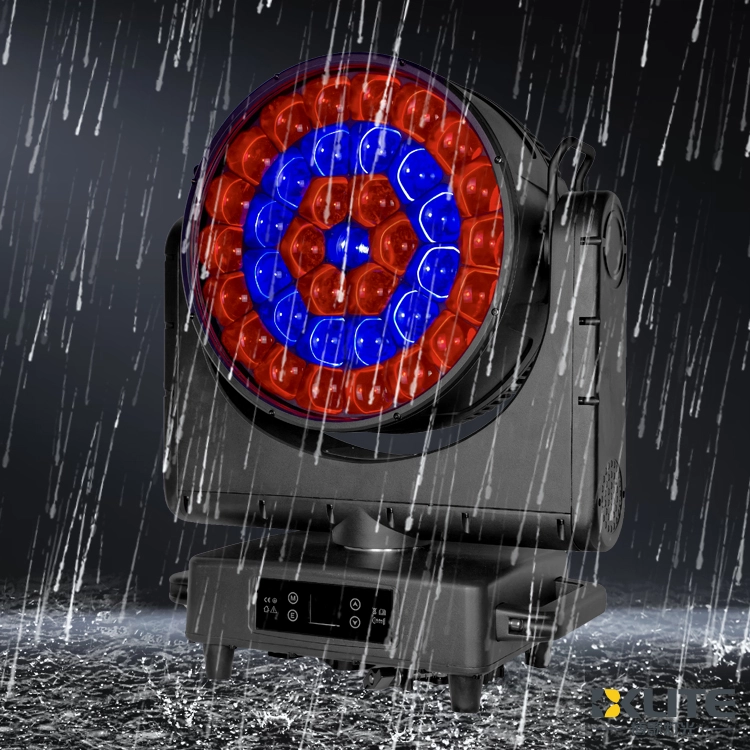
IP65 Waterproof ZOOM Bee Eye 37x40W RGBW 4in1 LED Moving Head Light
As a leading stage lighting equipment supplier with more than 15 years of industry know-how, BKlite brings you the IP65 ZOOM Bee Eye 37*40W RGBW 4in1 LED Moving Head Light (K25 Bee Eye) delivers vibrant, weatherproof lighting with powerful zoom and smooth movement. Ideal for dynamic stage effects, the K25 moving head light ensures stunning RGBW color mixing and reliable outdoor performance.
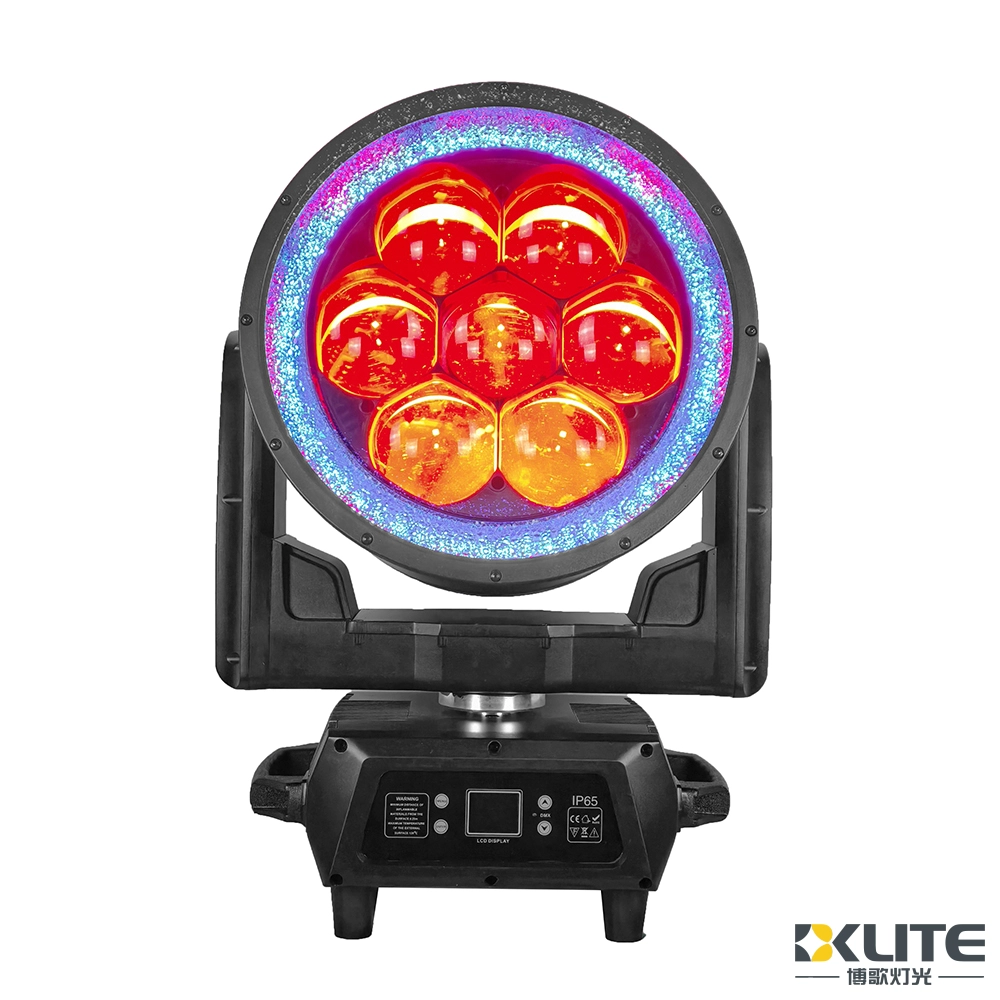
IP65 Waterproof Bee Eye 7x180W RGBL 4IN1 LED Moving Head Light With LED Ring
BKlite high power 7x180W waterproof bee eye moving head light—your reliable choice from top waterproof moving head light manufacturers and suppliers. Ideal for outdoor stage, live event, music festival, this energy-saving fixture ensures powerful, precise illumination for any venue. It delivers powerful, reliable lighting performance in any weather.
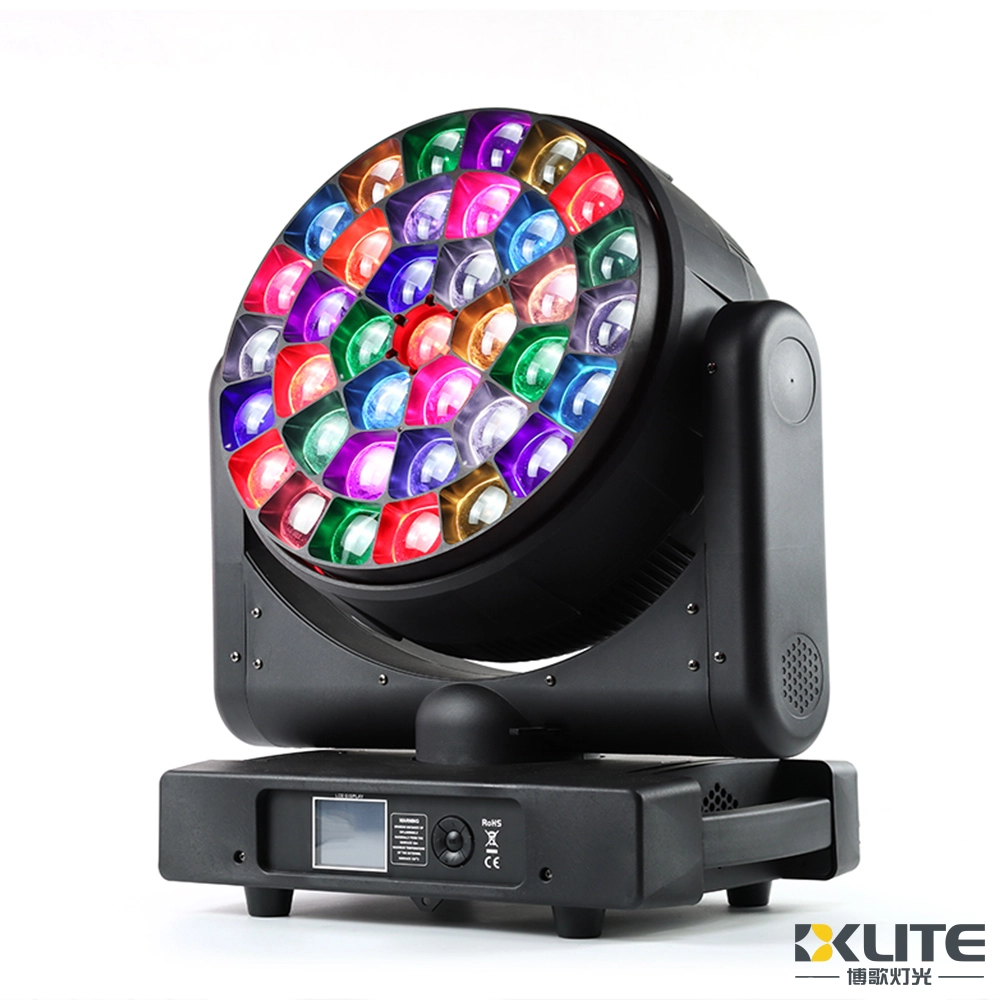
Bee Eye Zoom 37x40W RGBW 4in1 LED Beam Wash Moving Head Light


Copyright © 2025 BKLITE All Rights Reserved.