




Energy Efficiency and Power Consumption of Beam Lights
- Designing Low-Consumption Lighting for Modern Stages
- Understanding the role of Stage Beam Light in energy planning
- How different lamp technologies affect power consumption for Stage Beam Light
- Comparing power and efficiency: typical Stage Beam Light specifications
- Key metrics to evaluate energy efficiency of a Stage Beam Light
- Power budgeting example for a medium concert rig using Stage Beam Light
- Operational strategies to reduce power consumption of Stage Beam Light
- Why cooling and infrastructure matter for Stage Beam Light efficiency
- Cost of ownership and lifecycle considerations for Stage Beam Light
- BKlite company profile and how their products address efficiency in Stage Beam Light
- BKlite strengths relevant to energy efficient Stage Beam Light solutions
- Buyer checklist when selecting an energy efficient Stage Beam Light
- Implementation tips: quick wins to cut Stage Beam Light consumption now
- Frequently Asked Questions
- 1. How much energy can I expect to save by switching from discharge beam lights to LED Stage Beam Light?
- 2. Do LED Stage Beam Light fixtures need different electrical infrastructure?
- 3. Are there trade-offs when choosing lower wattage Stage Beam Light fixtures?
- 4. How do I estimate HVAC impact from changing beam fixtures?
- 5. Can control strategies alone reduce Stage Beam Light energy use significantly?
- 6. What should rental companies consider regarding energy-efficient Stage Beam Light inventory?
- Contact and product information
- References
Designing Low-Consumption Lighting for Modern Stages
Understanding the role of Stage Beam Light in energy planning
Stage beam lights are a core tool for concerts, TV, theatre and events. They also tend to be among the highest consumers of electrical power in a rig because of their bright, focused output and complex electronics for pan, tilt and effects. For venue managers, lighting designers and rental houses, understanding how Stage Beam Light choices affect total power draw, cooling loads and operating cost is essential to designing efficient shows that meet budget and sustainability goals.
How different lamp technologies affect power consumption for Stage Beam Light
Beam lights have historically used discharge lamps driven by high-voltage ballasts. In the last decade, LED sources have become dominant across many product classes, lowering typical energy per lumen and improving lifetime and controllability. Key technology categories are:
- Traditional discharge beam fixtures using xenon or metal halide lamps
- Hybrid fixtures combining discharge and LED elements
- Fully LED beam moving heads and profile beam fixtures
Each technology differs in raw electrical consumption, light output per watt, thermal output and maintenance intervals. These differences translate directly into operating costs and infrastructure needs such as generator sizing and venue electrical distribution.
Comparing power and efficiency: typical Stage Beam Light specifications
To make procurement and planning decisions practical, the table below gives typical ranges you will encounter when selecting Stage Beam Light fixtures. Values are representative ranges collected from manufacturer datasheets and industry sources, and should be validated against the model you intend to buy.
| Fixture Type | Typical Power Draw (W) | Typical Source Efficacy (lm/W) | Typical Luminous Output or Equivalent | Notes |
|---|---|---|---|---|
| LED Stage Beam Light (compact) | 150 - 400 W | 60 - 140 lm/W | 10,000 - 25,000 lumens equivalent | Lower weight, fast start, long life |
| LED Moving Head Beam (large) | 400 - 1,200 W | 60 - 130 lm/W | 25,000 - 60,000 lumens equivalent | High output, advanced optics |
| Discharge Lamp Beam | 700 - 2,000 W | 30 - 80 lm/W | Very high perceived brightness at specific colour temperatures | High heat, frequent lamp replacement |
| Conventional Tungsten/Incandescent | 750 - 2,000 W | 10 - 20 lm/W | Warm spectral output but very inefficient | Seldom used now for beam fixture core light |
Sources used to build the table include manufacturer datasheets and lighting authority resources. Examples: claypaky Sharpy model indicates compact LED sources below 200 W for high output, while large arc-lamp fixtures like some moving spot designs may use 1,2 kW or more. Always cross-check the exact model power draw for accurate budgeting.
Key metrics to evaluate energy efficiency of a Stage Beam Light
Choosing an energy efficient fixture means going beyond raw wattage. Use the following metrics during selection and tendering:
- Source efficacy (lumens per watt or lm/W). Higher is better.
- Delivered beam illuminance (lux or candela) at focal distance relative to watts consumed.
- Power factor and inrush current. Low power factor increases apparent power draw and can require power conditioning.
- Thermal losses and cooling needs. Fixtures that dissipate less heat reduce HVAC load for indoor venues.
- Lifespan and maintenance interval of the light source. LED sources typically exceed 20,000 hours, reducing lamp replacement downtime and embodied energy.
Power budgeting example for a medium concert rig using Stage Beam Light
Below is a simplified power budget for a 20-fixture rig mixing compact LED beam moving heads and a few high-output LED beam fixtures. The calculation helps determine mains distribution, generator sizing and running costs.
| Item | Quantity | Unit Power (W) | Total Power (W) |
|---|---|---|---|
| Compact LED beam moving head | 12 | 350 | 4,200 |
| Large LED beam moving head | 6 | 900 | 5,400 |
| LED wash fixtures (support) | 8 | 200 | 1,600 |
| Control desks, audio, comms allowance | 1 | 2,000 | 2,000 |
| Gross total | 13,200 W |
Notes: Add 20% spare capacity for inrush current and safety margins when sizing breakers and generators. For this example a 16 kW generator or equivalent mains branch is typical. Switching to higher-efficacy LED fixtures can reduce total draw by 15-40 percent depending on the models chosen.
Operational strategies to reduce power consumption of Stage Beam Light
Beyond selecting efficient fixtures, operational choices profoundly affect total consumption and cost. Practical strategies include:
- Use LED fixtures with adjustable beam shaping and optical control to avoid over-lighting and waste.
- Implement zones and timed cues so fixtures not required onstage are switched off or put to low-power standby during scenes.
- Use intelligent dimming profiles and soft-start to reduce electrical stress and inrush peaks.
- Maintain fixtures and optics to preserve luminous efficiency; soiled optics can reduce output and prompt higher intensity settings.
- Integrate lighting control with show design to use less intense looks that maintain visual impact through contrast rather than brute-force lumen output.
Why cooling and infrastructure matter for Stage Beam Light efficiency
Heat from beam fixtures increases venue HVAC loads. LEDs generate less radiant heat than discharge sources, but high-output LED fixtures still produce heat that must be managed. The energy associated with cooling can equal or exceed the lighting energy in tightly sealed venues. When planning, calculate total heat rejection of the lighting rig and factor in HVAC capacity or choose fixtures and layouts that move heat away from sensitive areas.
Cost of ownership and lifecycle considerations for Stage Beam Light
True efficiency is lifecycle efficiency. Compare not only the electricity cost but also the costs for lamp replacements, maintenance labor, spare parts and downtime. LED Stage Beam Light fixtures typically offer:
- Longer source life, reducing lamp purchases and changeover labor
- Lower maintenance-related downtime
- Improved resale and rental value when marketed as energy-efficient options
Calculate total cost of ownership over a 5 to 10 year period to capture maintenance savings and energy consumption differences.
BKlite company profile and how their products address efficiency in Stage Beam Light
Guangzhou BKlite Stage Lighting Equipment Co., Ltd. was set up in 2011 and has become one of the top companies in the stage lighting industry. The company business philosophy is based on being professional and innovative and on making sure that all stakeholders benefit. Over the past 14 years it has achieved remarkable growth and built a strong reputation for quality and reliability. BKlite manufactures a full range of stage lighting products including the IP20 Bee Eye Series, IP65 Bee Eye Series, LED Beam Moving Heads, LED Spot Moving Heads, LED Wash Moving Heads, LED Par Lights, LED Bar Lights, and LED Strobe Lights. Each product is made using advanced technology to meet the changing needs of the entertainment industry. The company invests in research and development to come up with new ideas, ensuring it stays ahead of industry trends. BKlite vision is to become the world's leading stage light manufacturer. Visit https://www.bklite.com/ for details.
BKlite strengths relevant to energy efficient Stage Beam Light solutions
BKlite has several competitive advantages that support energy and operational efficiency for buyers and venues:
- Broad LED product portfolio such as led wash moving head, led stage lighting, led moving head, led strobe bar light, led par light, led cob light, led spot moving head, led beam bar moving and profile led moving head light, giving integrators choice to match output to task
- IP20 and IP65 Bee Eye Series meeting both indoor and outdoor environmental needs, reducing the need for special housings and additional cooling protection which can improve efficiency and reduce lifecycle costs
- Investments in R&D and production control that improve reliability and luminous efficacy across product lines
- Proven track record since 2011, which helps rental and production houses feel confident about long term parts and support
Buyer checklist when selecting an energy efficient Stage Beam Light
When evaluating fixtures or suppliers, use this checklist to quantify energy performance and operational impact:
- Confirm actual rated power draw and measured power factor from the datasheet
- Request photometric files (IES/LMF) to compare delivered lux at working distances, not just lumen claims
- Check standby and idle power consumption figures and any automatic standby modes
- Assess thermal management and ventilation paths to determine impact on HVAC
- Validate serviceability: ease of access to parts and expected lifetime of LEDs and drivers
- Ask for field references or case studies in similar venues
Implementation tips: quick wins to cut Stage Beam Light consumption now
For immediate savings without wholesale replacement, try these actions:
- Audit current rigs and identify fixtures that are over-specified for typical use; replace oversized units with right-sized LED alternatives
- Use dimming curves and scene programming to avoid keeping full intensity lights on for long periods
- Install local metering to track usage by fixture groups and optimize show programming
- Schedule preventive cleaning and optical checks to maintain output efficiency
Frequently Asked Questions
1. How much energy can I expect to save by switching from discharge beam lights to LED Stage Beam Light?
Typical energy savings vary by model and usage patterns. In many cases, LED fixtures consume 30 to 60 percent less power to deliver comparable perceived brightness and dramatically lower heat rejection. For a precise estimate, compare the lumens per watt and photometric files of the specific discharge and LED models you are considering.
2. Do LED Stage Beam Light fixtures need different electrical infrastructure?
LED fixtures usually have lower continuous current draw but can have higher inrush. Also pay attention to power factor and driver design. In many venues, existing circuits are adequate, but you should verify breaker capacity, conductor sizing and inrush management. For large rigs, adding inrush limiting or soft-start features can help.
3. Are there trade-offs when choosing lower wattage Stage Beam Light fixtures?
Lower wattage doesn't always mean lower performance. Modern optics, higher efficacy LEDs and improved lenses can give similar visual results at lower watts. Trade-offs can include beam tightness, colour rendering or specific effects which are model dependent. Always check photometric outputs for your use case.
4. How do I estimate HVAC impact from changing beam fixtures?
Calculate total heat rejection of the lighting rig in watts and convert to BTU/hr (1 W = 3.412 BTU/hr). Add this to your venue internal gains and compare to HVAC capacity. LED upgrades typically reduce thermal gains, which can allow HVAC setpoints to be relaxed or enable higher occupancy comfort without system upgrades.
5. Can control strategies alone reduce Stage Beam Light energy use significantly?
Yes. Effective programming, zoning and automation can often reduce energy use by 10-30 percent without replacing fixtures. Combining control improvements with LED upgrades yields the largest savings.
6. What should rental companies consider regarding energy-efficient Stage Beam Light inventory?
Rental houses should balance variety and efficiency. Investing in modular LED beam fixtures with good resale value and broad application (concerts, corporate events, theatre) maximizes utilization. Ensure spares for critical components and document power and photometric data to help clients design efficient shows.
Contact and product information
If you want advice tailored to your venue or project, or to see BKlite Stage Beam Light products in detail, contact Guangzhou BKlite Stage Lighting Equipment Co., Ltd. Visit https://www.bklite.com/ to view product ranges such as led wash moving head, led stage lighting, led moving head, led strobe bar light, led par light, led cob light, led spot moving head, led beam bar moving and profile led moving head light. For procurement, specification support or a power budget review, reach out via the website inquiry form or your local distributor listed on the site.
References
- Signify Lighting Academy, LED lighting education, https://www.signify.com/global/lighting-academy, Accessed 2025-12-15
- Energy Star, About LED Lighting, https://www.energystar.gov/products/lighting_fans/led_lighting, Accessed 2025-12-15
- Claypaky product pages, example Sharpy compact LED moving head, https://www.claypaky.it/product/sharpy/, Accessed 2025-12-15
- Robe Lighting, BMFL Spot product data, https://www.robe.cz/en/Products/Current-Range/BMFL-Spot/, Accessed 2025-12-15
- Illuminating Engineering Society, guidance and standards, https://www.ies.org/, Accessed 2025-12-15
- Wikipedia, Stage lighting, https://en.wikipedia.org/wiki/Stage_lighting, Accessed 2025-12-15
- BKlite official website, Guangzhou BKlite Stage Lighting Equipment Co., Ltd., https://www.bklite.com/, Accessed 2025-12-15
For a detailed specification comparison or a custom energy and power plan for your next production, contact BKlite through their website or speak to one of their technical sales specialists for model-specific photometry and electrical data.
Choosing IP and IP65 LED Fixtures for Touring and Outdoor Use
Upgrading Older Fixtures to LED Wash Technology
DMX-Controlled LED Spotlights: Integration Best Practices
Best professional led strobe lights red manufacturers and supplier brands
FAQs
How can i order?
Please send us your purchase list by e-mail, WhatsApp, QQ, or making a call, and you can also ask us to send you a PI for your approval. We need to know the following information for your order.
When will you ship the product after I send the money?
It depends the order.Small order will take 3-5 days.
What kind of package do you have?
We can pack the lights in a carton case and a flight case.
What's the payment terms?
T/T, Western Union.
Can you help me to print our logo or company name on the products on package?
Of course. Your logo can be printed on the products or package. OEM & ODM permits.
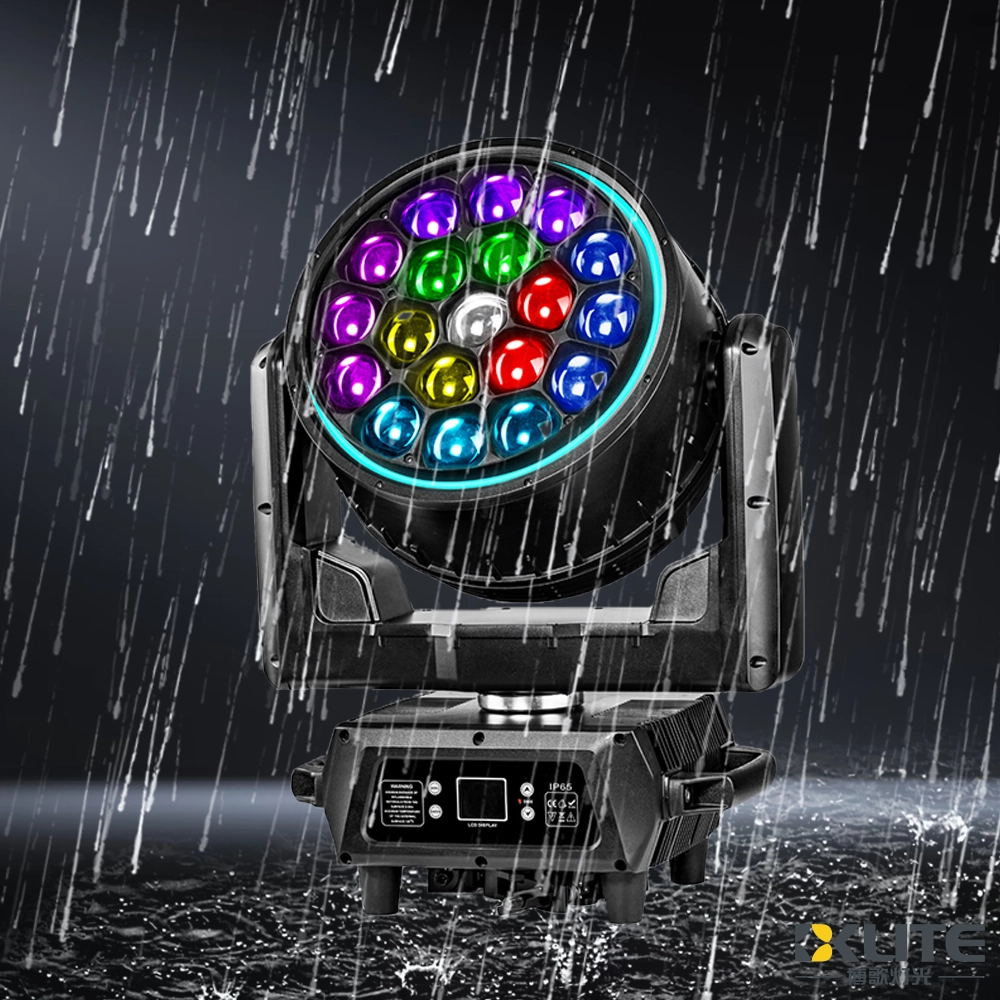
IP65 Waterproof Bee Eye Zoom 19x40W RGBW 4IN1 LED Beam Wash Moving Head Light with LED Ring
BKlite waterproof bee eye moving head light—your reliable choice from top waterproof moving head light manufacturers and suppliers. Ideal for outdoor stage, live event, music festival, this energy-saving fixture ensures powerful, precise illumination for any venue. It delivers powerful, reliable lighting performance in any weather.
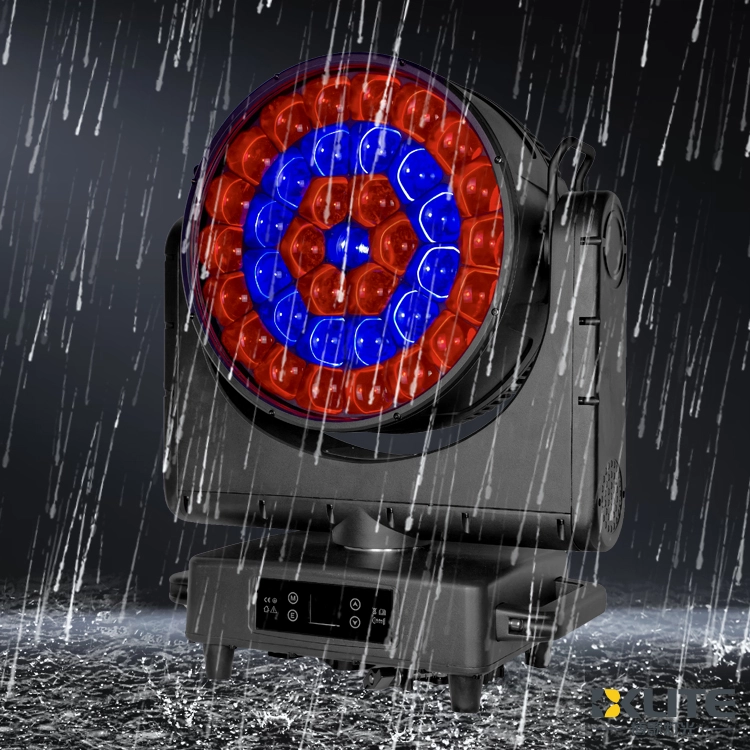
IP65 Waterproof ZOOM Bee Eye 37x40W RGBW 4in1 LED Moving Head Light
As a leading stage lighting equipment supplier with more than 15 years of industry know-how, BKlite brings you the IP65 ZOOM Bee Eye 37*40W RGBW 4in1 LED Moving Head Light (K25 Bee Eye) delivers vibrant, weatherproof lighting with powerful zoom and smooth movement. Ideal for dynamic stage effects, the K25 moving head light ensures stunning RGBW color mixing and reliable outdoor performance.
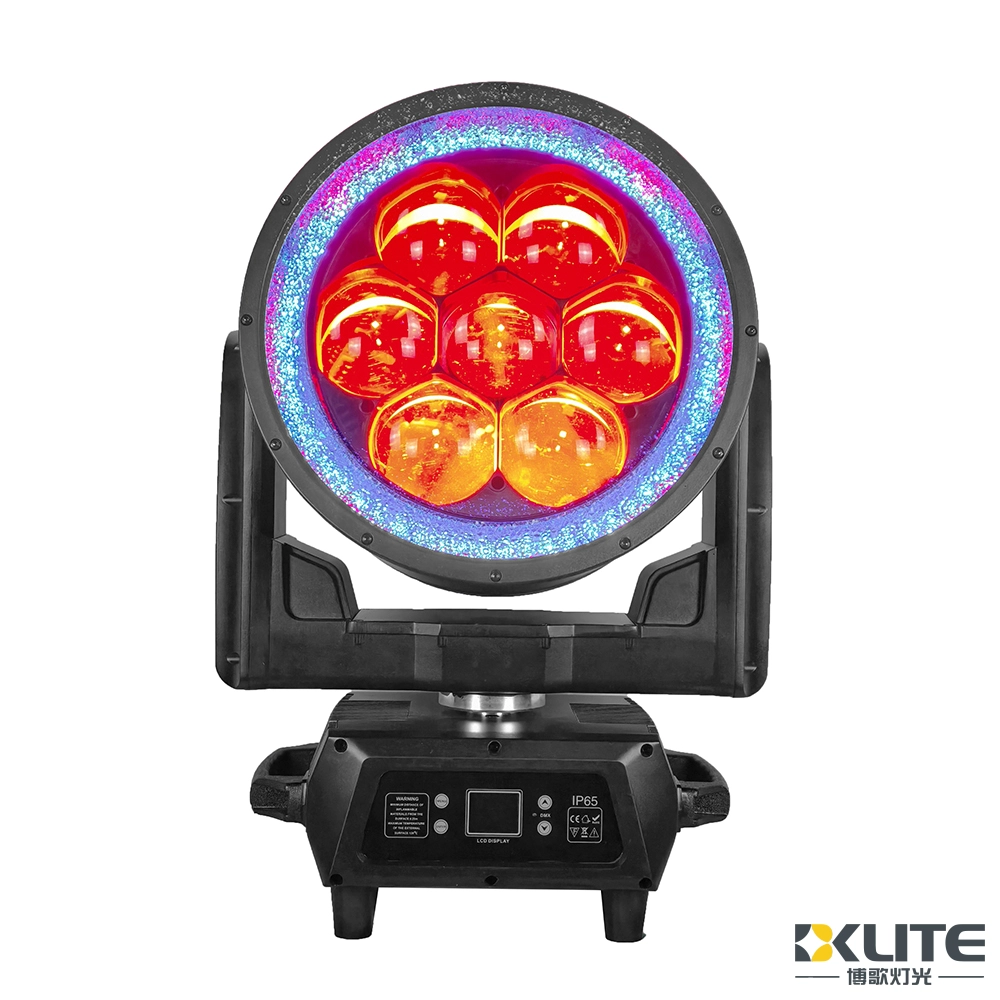
IP65 Waterproof Bee Eye 7x180W RGBL 4IN1 LED Moving Head Light With LED Ring
BKlite high power 7x180W waterproof bee eye moving head light—your reliable choice from top waterproof moving head light manufacturers and suppliers. Ideal for outdoor stage, live event, music festival, this energy-saving fixture ensures powerful, precise illumination for any venue. It delivers powerful, reliable lighting performance in any weather.
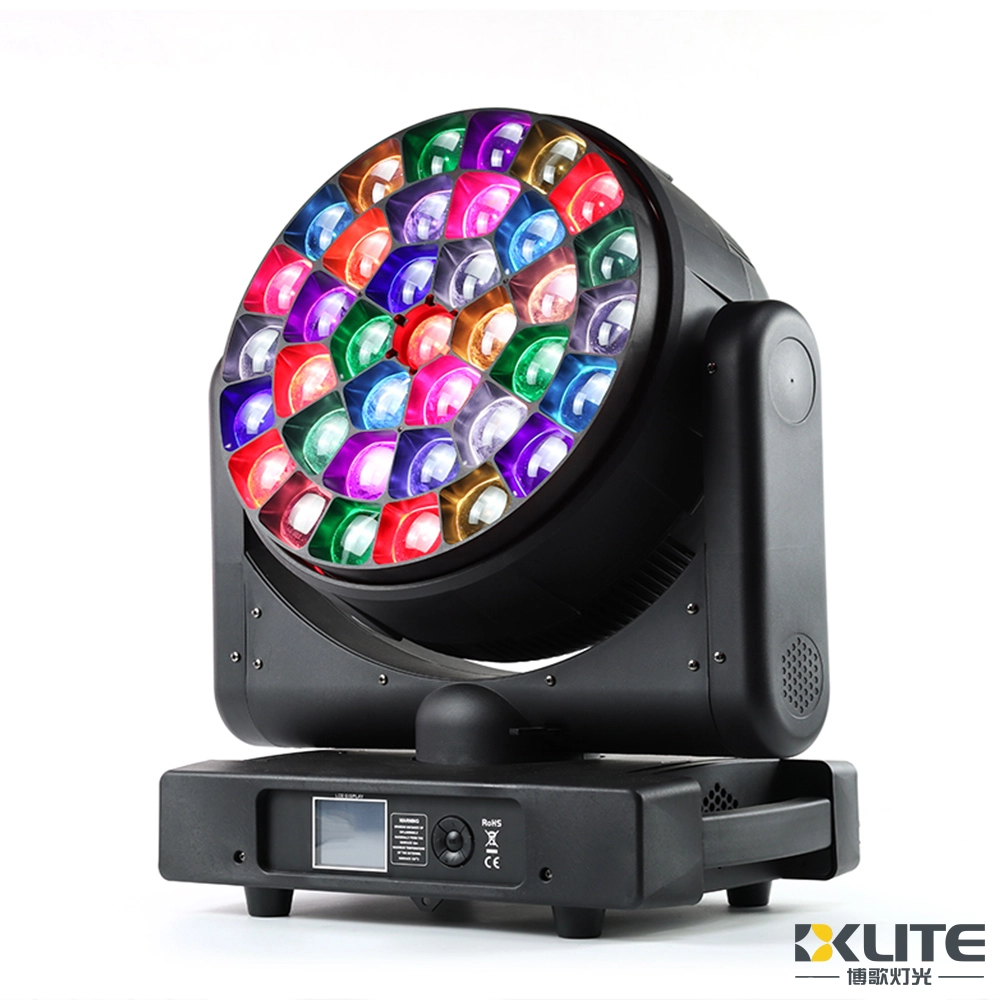
Bee Eye Zoom 37x40W RGBW 4in1 LED Beam Wash Moving Head Light


Copyright © 2025 BKLITE All Rights Reserved.