



How to Evaluate Stage Profile Light Beam Quality
- Assessing Beam Quality for Stage Profile Lights
- Key Beam Quality Parameters and Why They Matter
- Beam Angle and Distribution
- Edge Quality (Hard vs Soft)
- Uniformity and Hotspots
- Color Quality and Stability
- Beam Intensity and Controllability
- Tools and Measurement Methods
- Essential Tools
- How to Run Standardized Tests
- Comparison of Measurement Tools
- Practical Evaluation: Step-by-Step Tests and Troubleshooting
- Test 1 — Beam Angle and Intensity Profile
- Test 2 — Edge Sharpness and Gobo Performance
- Test 3 — Color Rendering, Dimming and Flicker
- Selection Criteria and Buying Guidance
- Match Specs to Application
- Reliability, Service and Brand Considerations
- Comparative Specification Table (Example)
- How Guangzhou BKlite Aligns with Beam Quality Needs
- Company Overview and R&D Strength
- BKlite Product Advantages for Profile Beam Quality
- Why Choose BKlite
- FAQs
- 1. What is the simplest test to check if a profile light has a hotspot?
- 2. How do I measure beam edge sharpness in the field?
- 3. Is CRI enough to judge color quality?
- 4. How important is thermal design to beam quality?
- 5. What specifications should I demand from a manufacturer when buying profile fixtures?
- 6. Can LED profile lights match the edge quality of traditional ellipsoidals?
- Contact & Product Inquiry
- References
Assessing Beam Quality for Stage Profile Lights
Stage profile lights are designed to shape and control a beam with precision. Evaluating their beam quality requires both objective measurement and subjective appraisal because the artistic and technical demands of theatre, concert and corporate shows are different. This article gives a practical testing framework—parameters to check, tools to use, step-by-step tests you can run, and purchasing guidance so you can choose a profile fixture that meets your creative and operational needs.
Key Beam Quality Parameters and Why They Matter
Beam Angle and Distribution
Beam angle defines how wide the main cone of light is, often expressed as full-width at half-maximum (FWHM). For profile fixtures, common beam angles range from narrow (5°–15°) for tight spots to medium (16°–40°) for general key or front light. The distribution curve (intensity across the beam) affects how even the light appears on surfaces and how gradients behave when you shape the beam with shutters or gobos.
Edge Quality (Hard vs Soft)
Profiles are valued for their ability to produce sharp edged beams and to soften those edges with the focus mechanism. Edge quality is a combination of optical design, aperture/focus mechanics and internal aberrations. Evaluate edge transition width (distance over which intensity drops from 90% to 10%) to compare fixtures objectively.
Uniformity and Hotspots
Uniformity measures how evenly the beam illuminates a given target. Hotspots indicate uneven optics or poor LED chip distribution. Uniformity is commonly expressed as a ratio (min lux / max lux) within a defined area; values closer to 1.0 are better. For profile fixtures used on faces or cyc light, good uniformity is crucial to avoid distracting bright spots.
Color Quality and Stability
Color rendering impacts how skin tones and costumes look. Key metrics are CRI (Ra) and modern metrics like TM-30 Rf/Rg. For critical theatre work, aim for CRI > 90 or TM-30 Rf close to 90 with stable chromaticity (Δuv near zero). Also check color mixing behavior across intensity ranges and after effects like dimming—color shift can reveal limitations in LED modules or control electronics.
Beam Intensity and Controllability
Measured in lux (illuminance) at a fixed distance or in luminous flux (lumens), intensity must meet stage requirements. More important practically is controllability: smooth dimming curves, +/- flicker-free performance at expected frame rates (important for broadcast/recorded events), and repeatable levels across fixtures.
Tools and Measurement Methods
Essential Tools
A basic toolkit for evaluating profile beams includes a calibrated lux meter, spectrometer (for color/CRI/Δuv), a goniophotometer or rotating rig (for full angular distribution), and a high-resolution camera for photographing edge quality and hotspots. For routine in-the-field checks, a lux meter + color meter + focusing screen will cover most needs.
How to Run Standardized Tests
Set a consistent test distance (e.g., 5 m or a distance that corresponds to typical throw for your venue) and use a neutral gray target to assess uniformity and edge falloff. Record lux at center and at points across a grid (e.g., 9-point grid) to calculate uniformity. Capture spectral data at full output and at several dimming levels to spot color shifts.
Comparison of Measurement Tools
| Tool | What it measures | Typical cost / Use case |
|---|---|---|
| Calibrated Lux Meter | Illuminance (lux), useful for intensity and uniformity | Low–Mid; essential for venue technicians |
| Spectrometer / Color Meter | CRI/TM-30, CCT, chromaticity (x/y), Δuv | Mid–High; essential when color fidelity matters |
| Goniophotometer / Rotating Rig | Angular distribution (candela curves), beam angle | High; used for lab-level photometric certification |
| High-Resolution Camera + Grey Card | Edge quality, hotspots, beam imaging | Low–Mid; great for visual comparison and documentation |
Sources: instrument manufacturers and testing protocols such as goniophotometry and spectroradiometry (see References).
Practical Evaluation: Step-by-Step Tests and Troubleshooting
Test 1 — Beam Angle and Intensity Profile
Procedure: Mount the fixture on a rig at a fixed height and point it at a white screen. Measure center lux at your chosen distance, then measure at 50% of the expected beam radius and at the beam edge. Plot an intensity curve or use software when available. Check whether measured beam angle matches manufacturer spec and whether intensity falloff is smooth.
Test 2 — Edge Sharpness and Gobo Performance
Use a high-contrast gobo and photograph the projected pattern at the same exposure. Inspect the edge transition in the image and measure the transition width (90%–10%). Rotate shutters or focus to confirm the fixture can produce a clean hard edge and a smooth soft edge. Irregularities can indicate poor lens alignment or internal dust.
Test 3 — Color Rendering, Dimming and Flicker
Capture spectral data at 100%, 50% and 10% intensity. Look for shifts in CCT/Δuv and drops in spectral power especially in red bands (important for skin tone). Run a camera test at expected frame rates to reveal flicker or pulse-width modulation (PWM) issues. Good fixtures will maintain consistent chromaticity and offer smooth dimming curves.
Selection Criteria and Buying Guidance
Match Specs to Application
Theatre and opera prioritize color fidelity and smooth focus while concert and live events often prioritize raw output and narrow beams for aerial effects. For broadcast applications, prioritize flicker-free specifications and stable chromaticity. Match beam angle, CRI/TM-30 and lux requirements to your rig and stage size.
Reliability, Service and Brand Considerations
Optics quality, mechanical focus/shutter design, and thermal management influence long-term beam stability. Look for manufacturers with strong R&D, factory testing, transparent photometric data, and accessible service networks. Warranties and mean time between failures (MTBF) figures are useful when comparing fixtures for rental fleets.
Comparative Specification Table (Example)
| Parameter | Rent/House Theatre Ideal | Concert/Production Ideal |
|---|---|---|
| Beam Angle | 16°–35° (flexible zoom) | 5°–20° (narrow tight beams) |
| CRI / TM-30 | CRI ≥ 90 / TM-30 Rf > 85 | CRI ≥ 80 acceptable; focus on output |
| Uniformity (min/max) | >0.75 | >0.7 |
| Flicker / Camera | Flicker-free at multiple frame rates | Flicker-free critical for broadcast |
How Guangzhou BKlite Aligns with Beam Quality Needs
Company Overview and R&D Strength
Guangzhou BKlite Stage Lighting Equipment Co., Ltd. was set up in 2011 and has become one of the top companies in the stage lighting industry. The company's business philosophy is based on being professional and innovative and on making sure that all of its stakeholders benefit. Over the past 14 years, it has achieved remarkable growth and built a strong reputation for quality and reliability. The factory makes all kinds of stage lighting products, like the IP20 Bee Eye Series, IP65 Bee Eye Series, LED Beam Moving Heads, LED Spot Moving Heads, LED Wash Moving Heads, LED Par Lights, LED Bar Lights, and LED Strobe Lights. Each product is made using advanced technology to meet the changing needs of the entertainment industry. Our company invests in research and development to come up with new ideas, making sure it stays ahead of industry trends. Our vision is to become the world's leading stage light manufacturer. For details visit: https://www.bklite.com/.
BKlite Product Advantages for Profile Beam Quality
BKlite’s product lines focus on tight optical control, reliable thermal management and consistent color performance—three core components that affect beam quality. Their LED modules and optical assemblies are designed to minimize hotspots and color shift across dimming ranges. For buyers, BKlite offers a broad range of fixtures relevant to profile-like applications: led wash moving head, led stage lighting, led moving head, led strobe bar light, led par light, led cob light, led spot moving head, led beam bar moving, Profile led moving head light, and led spotlight. These categories show BKlite’s capability to supply both high-output beam fixtures and fixtures tuned for color fidelity and visual nuance.
Why Choose BKlite
Competitive points: integrated in-house production (optics + electronics), continual R&D investment, and a 14+ year track record in the industry. For rental houses and venues needing consistent photometric results, BKlite emphasizes factory testing and product development that targets real-world performance—meaning similar beam angle, edge characteristics and color stability across production runs. That consistency is critical when specifying profile fixtures for tours or fixed installations.
FAQs
1. What is the simplest test to check if a profile light has a hotspot?
Point the fixture at a neutral white screen at a fixed distance and photograph with even exposure alongside a grey card. Inspect for concentrated bright areas relative to surrounding field. Use a lux meter to measure center vs peripheral lux; a large center-to-edge ratio suggests a hotspot.
2. How do I measure beam edge sharpness in the field?
Project a high-contrast pattern (like a gobo with sharp lines) on a flat screen. Photograph at consistent exposure and measure the transition zone between illuminated and non-illuminated areas (90%–10% intensity). A smaller transition width indicates a crisper edge.
3. Is CRI enough to judge color quality?
No. CRI (Ra) is widely used but has limitations, especially with LEDs. TM-30 metrics (Rf/Rg) and spectral power distribution data give a fuller picture of color rendering and are recommended when skin tones and costume colors are critical.
4. How important is thermal design to beam quality?
Very important. Poor thermal design can cause LED bin shift, reducing color consistency and intensity over time. Good heat sinking maintains stable color and output across long shows and extended use.
5. What specifications should I demand from a manufacturer when buying profile fixtures?
Request measured photometric data (beam angle, candela distribution), spectral data (CCT, CRI/TM-30), dimming/flicker specs (frame-rate performance), and sample fixture tests or lab reports. Also ask about warranty, MTBF figures and service support.
6. Can LED profile lights match the edge quality of traditional ellipsoidals?
Modern LED profile-style units (Profile LED moving heads and LED spot moving heads) can approach or match the edge control of traditional ellipsoidals, but quality depends on optical assembly and focus mechanism. Test units side-by-side with focus and gobo tests to confirm.
Contact & Product Inquiry
If you need help evaluating fixtures on your inventory, want lab-quality photometric reports, or are interested in BKlite’s product lines (led wash moving head, led stage lighting, led moving head, led strobe bar light, led par light, led cob light, led spot moving head, led beam bar moving, Profile led moving head light, led spotlight), contact Guangzhou BKlite via their website: https://www.bklite.com/. For product demos and technical data sheets, request factory test reports and sample photometric curves to ensure chosen fixtures meet your production requirements.
References
- Spotlight (theatre) — Wikipedia. https://en.wikipedia.org/wiki/Spotlight_(theatre) (accessed 2026-01-04)
- Color rendering index — Wikipedia. https://en.wikipedia.org/wiki/Color_rendering_index (accessed 2026-01-04)
- Goniophotometer — Wikipedia. https://en.wikipedia.org/wiki/Goniophotometer (accessed 2026-01-04)
- IES TM-30 (Illuminating Engineering Society) — Overview and guidelines. https://www.ies.org/ (accessed 2026-01-04)
- Guangzhou BKlite official site — Product and company information. https://www.bklite.com/ (accessed 2026-01-04)
Best professional led lights controller manufacturers and supplier brands
Comparing Narrow vs Wide Beam Lights for Theatrical Use
Custom Branding and OEM Options for LED Stage Light Manufacturers
Best professional led laser light projector manufacturers and supplier brands
FAQs
What's the payment terms?
T/T, Western Union.
What's your certificates?
ROHS and CE certificates passed.
If the products broken during the warranty, what should i do?
If there is a problem with the products, you describe it and send pictures or videos to us to analyze, and then we will guide you on how to fix it and provide spare parts for free if needed.
Can you help me to print our logo or company name on the products on package?
Of course. Your logo can be printed on the products or package. OEM & ODM permits.
What's the shipping way, shipping time?
The ways of shipping—you can choose which is suitable for you. (1). By Sea, 30-60 days; apply for bulk quantity.
(2). By Air, 5-7 days; apply for bulk quantity.
(3). By Express, 3-5 days; apply for small quantity and urgent order.
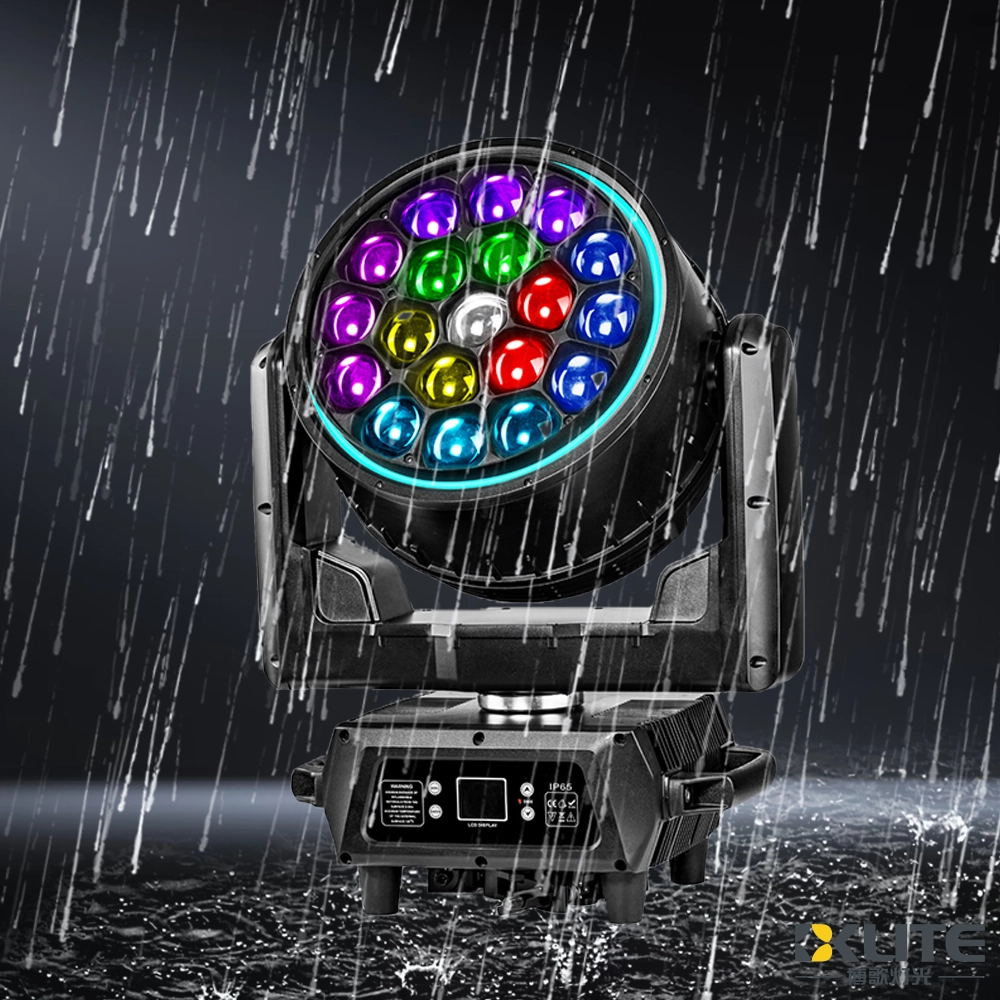
IP65 Waterproof Bee Eye Zoom 19x40W RGBW 4IN1 LED Beam Wash Moving Head Light with LED Ring
BKlite waterproof bee eye moving head light—your reliable choice from top waterproof moving head light manufacturers and suppliers. Ideal for outdoor stage, live event, music festival, this energy-saving fixture ensures powerful, precise illumination for any venue. It delivers powerful, reliable lighting performance in any weather.
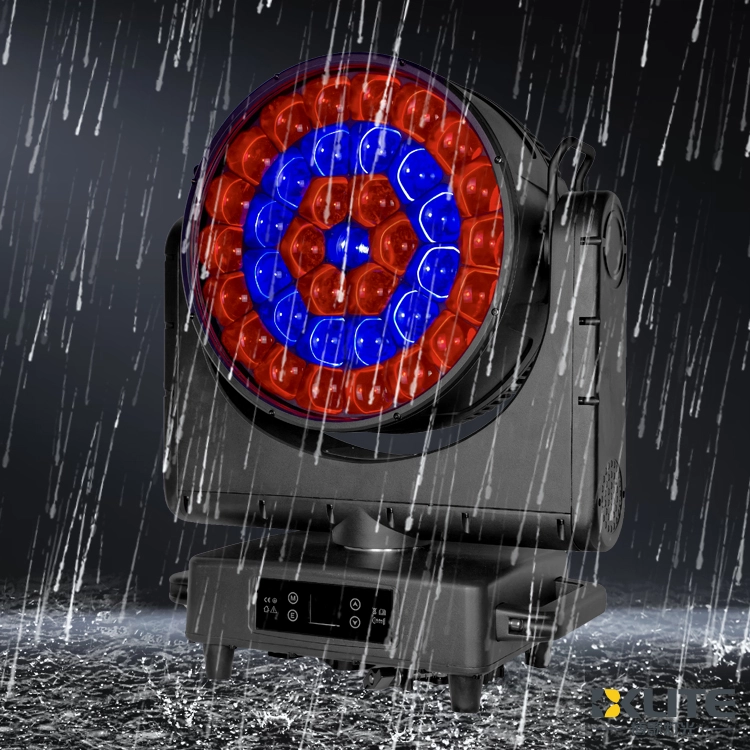
IP65 Waterproof ZOOM Bee Eye 37x40W RGBW 4in1 LED Moving Head Light
As a leading stage lighting equipment supplier with more than 15 years of industry know-how, BKlite brings you the IP65 ZOOM Bee Eye 37*40W RGBW 4in1 LED Moving Head Light (K25 Bee Eye) delivers vibrant, weatherproof lighting with powerful zoom and smooth movement. Ideal for dynamic stage effects, the K25 moving head light ensures stunning RGBW color mixing and reliable outdoor performance.
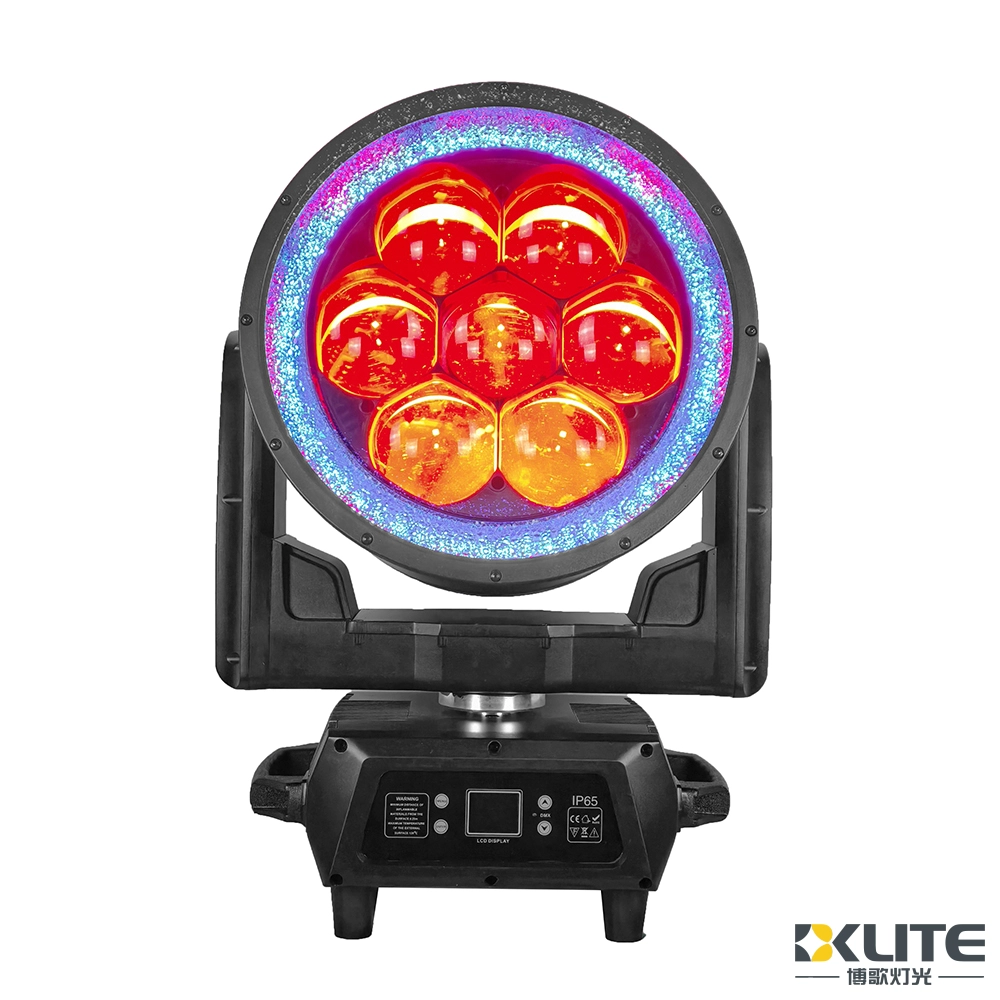
IP65 Waterproof Bee Eye 7x180W RGBL 4IN1 LED Moving Head Light With LED Ring
BKlite high power 7x180W waterproof bee eye moving head light—your reliable choice from top waterproof moving head light manufacturers and suppliers. Ideal for outdoor stage, live event, music festival, this energy-saving fixture ensures powerful, precise illumination for any venue. It delivers powerful, reliable lighting performance in any weather.
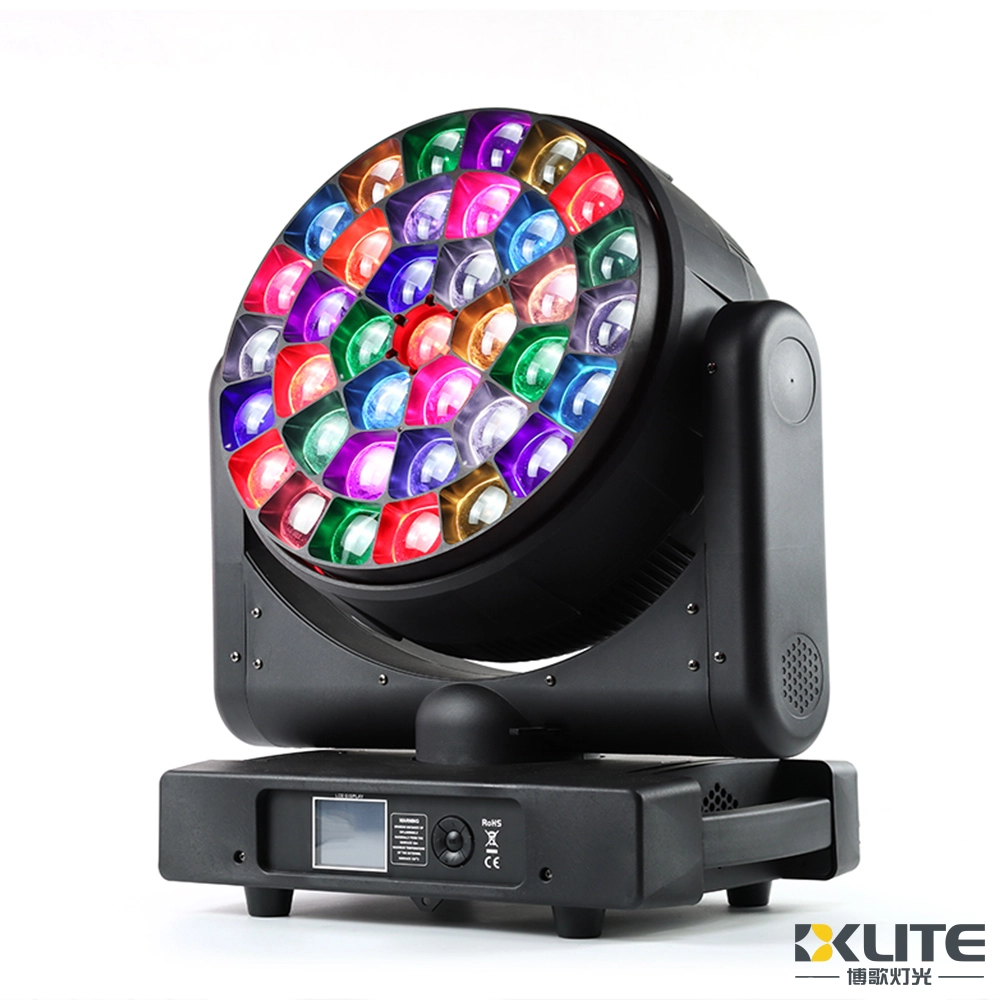
Bee Eye Zoom 37x40W RGBW 4in1 LED Beam Wash Moving Head Light


Copyright © 2025 BKLITE All Rights Reserved.