




Profiling Light Color Temperature and CRI for Theater
- Why Color Temperature and CRI Matter in Stage Profile Lighting
- Audience perception and storytelling
- From measurement to practice: CCT, CRI and spectral power distribution
- Technical foundations: What technicians and designers need to know
- How CCT affects contrast and texture
- CRI limitations and TM-30 advantages
- Practical selection and setup of profile lights in theaters
- Recommended CCTs and color strategies
- Fixture selection: LEDs vs. discharge profile fixtures
- Advanced considerations and troubleshooting
- Color matching and metamerism
- Dim curves, flicker, and control
- Practical test checklist before first tech
- Choosing a supplier: quality, technology and aftersales—BKlite case study
- Why vendor technology matters for stage profile light performance
- Guangzhou BKlite: profile and capabilities
- BKlite advantages and recommended product highlights
- Comparison: CRI, R9 and TM-30 — practical numbers
- FAQs
- 1. What CCT should I choose for a classic theater production?
- 2. Is CRI enough to specify modern LED profile lights?
- 3. How do I avoid visible color mismatch between fixtures?
- 4. Can LED profile moving heads replace tungsten profiles completely?
- 5. What should I test during technical rehearsals?
- 6. How important is R9 and how do I check it?
- Contact and product consultation
- References
Why Color Temperature and CRI Matter in Stage Profile Lighting
Audience perception and storytelling
Stage profile lights (stage profile light) are often the primary source that sculpts actors and set pieces. Color temperature (CCT) determines whether the scene reads as cold, neutral, or warm, directly affecting emotional perception. Color rendering, commonly expressed as CRI (Color Rendering Index) or more modernly as TM-30 metrics, governs how accurately fabrics, makeup, and skin tones appear to an audience. Poor choices can flatten faces, misrepresent costume colors, or break the intended visual story.
From measurement to practice: CCT, CRI and spectral power distribution
CCT is reported in Kelvin and is a shorthand for the perceived “warmth” of a light source. CRI (Ra) is a single-number index (0–100) originating from CIE methods to quantify color fidelity relative to a reference illuminant. For LEDs, neither CCT nor CRI by itself fully describes color behavior—spectral power distribution (SPD) and metrics such as TM-30 (fidelity and gamut) and Duv (distance from the blackbody locus) provide essential context. When specifying stage profile lights, request SPD graphs and TM-30 scores when color fidelity is critical.
Technical foundations: What technicians and designers need to know
How CCT affects contrast and texture
CCT influences pupil response and perceived contrast. Warmer CCTs (e.g., 2700–3200K) often emphasize skin warmth and produce a softer look; cooler CCTs (4000–5600K) can sharpen textures and increase perceived contrast on scenic surfaces. In practical terms, base your key profile CCT on the scene’s mood, then balance fill and backlight CCTs for separation and depth without color clashes.
CRI limitations and TM-30 advantages
CRI Ra is useful as a quick spec, but it has blind spots—especially with LEDs that have spiky or engineered SPDs. TM-30 (developed by IES) provides Rf (fidelity) and Rg (gamut) with per-chip color vector analysis and RGB color samples; it more reliably predicts whether a lamp will render saturated colors and skin tones accurately. For theatrical skin tones and costume fabrics, specify both Ra ≥ 90 and TM-30 Rf ≥ 85 when possible, and inspect SPD plots to avoid gaps near critical wavelengths (reds and cyans).
Practical selection and setup of profile lights in theaters
Recommended CCTs and color strategies
Use these practical starting points for stage profile light deployment:
- Intimate drama / period pieces: 2700–3200K for warm, tungsten-like looks.
- Contemporary indoor scenes / neutral white: 3200–4200K for balanced skin tones and accurate color reproduction.
- Daylight or exterior scenes: 5000–5600K to simulate daylight color and higher contrast.
For mixed-source designs, control Duv within ±0.003 to avoid visible green/magenta shifts when fixtures are used together.
Fixture selection: LEDs vs. discharge profile fixtures
Modern LED profile moving heads offer variable CCT presets, onboard color wheels and CMY/FC (filter+color) systems. When comparing LED profile to traditional discharge profile fixtures, consider:
| Characteristic | LED Profile Moving Head | Traditional Discharge / Tungsten Profile |
|---|---|---|
| Color tuning | Variable CCT, CMY mixing, presets; requires SPD check | Inherent spectral continuity; gels used for CCT shifts |
| Color fidelity | High for quality LEDs (CRI 90+, TM-30 Rf high) but dependent on LED phosphor design | High and predictable; continuous spectrum of halogen |
| Maintenance | Lower lamp replacement; LED modules longevity; electronic drivers require attention | Bulbs need regular replacement; higher heat and HVAC load |
Request laboratory SPD charts and TM-30 scores for LED fixtures. For skin tones and critical costume colors, prefer fixtures with documented high red spectral energy (important for R9/strong red rendering).
Advanced considerations and troubleshooting
Color matching and metamerism
Metamerism occurs when two materials match under one light source but diverge under another. In theater, this can cause costume and prop colors to shift unexpectedly under different fixtures. To reduce risk:
- Standardize on fixtures from the same LED phosphor family when possible.
- Use spectroradiometer measurements on costumes under working light conditions before finalizing colors.
- Keep gels and filters documented; if mixing LED and tungsten, apply correction filters or set CCTs carefully.
Dim curves, flicker, and control
LED profile lights behave differently from incandescent lamps when dimmed. Ensure fixtures support linear or staged dimming curves appropriate to eye response (e.g., logarithmic or smooth photometric profiling). Verify PWM frequency is high enough (> 1 kHz often recommended) to avoid camera flicker for video capture. For live broadcast, request manufacturer specifications for flicker-free operation at common camera frame rates.
Practical test checklist before first tech
- Confirm CCT presets and Duv values for each profile fixture; ensure consistency across batches.
- Measure and record SPD and TM-30 Rf/Rg for key fixtures used on faces.
- Test key, fill, and backlight combinations on actors in rehearsals to assess perceived skin tones.
- Document dim curve behavior and verify control console profiles match physical output.
- Prepare backup incandescent or PAR sources if specific spectral behavior is required and LEDs fail to reproduce it.
Choosing a supplier: quality, technology and aftersales—BKlite case study
Why vendor technology matters for stage profile light performance
Buying fixtures is not only about upfront lumen or CRI numbers; it's about reproducibility, R&D support, firmware updates, and quality control on SPD and color consistency. A vendor with a steady history of product development and testing reduces risk of metamerism, color shift, and field failures.
Guangzhou BKlite: profile and capabilities
Guangzhou BKlite Stage Lighting Equipment Co., Ltd. was set up in 2011 and has become one of the top companies in the stage lighting industry. The company's business philosophy is based on being professional and innovative and on making sure that all of its stakeholders benefit. Over the past 14 years, it has achieved remarkable growth and built a strong reputation for quality and reliability.
The factory makes all kinds of stage lighting products, like the IP20 Bee Eye Series, IP65 Bee Eye Series, LED Beam Moving Heads, LED Spot Moving Heads, LED Wash Moving Heads, LED Par Lights, LED Bar Lights, and LED Strobe Lights. Each product is made using advanced technology to meet the changing needs of the entertainment industry. Our company invests in research and development to come up with new ideas, making sure it stays ahead of industry trends. Our vision is to become the world's leading stage light manufacturer. Our website is https://www.bklite.com/.
BKlite advantages and recommended product highlights
For theaters seeking reliable stage profile light solutions, BKlite emphasizes:
- R&D-driven fixture development for improved color mixing and stable SPDs.
- Range of products that covers profile and wash needs: led wash moving head, led stage lighting, led moving head, led strobe bar light, led par light, led cob light, led spot moving head, led beam bar moving, Profile led moving head light, led spotlight.
- Manufacturing scale and QC process that help keep fixture batches consistent—important to avoid Duv shifts between units.
When evaluating BKlite (or similar manufacturers), request specific SPD plots, CRI and TM-30 reports, and Duv data for the intended model of profile moving head. For critical theater work, ask for sample units to test on actors in the lighting rehearsal.
Comparison: CRI, R9 and TM-30 — practical numbers
Below is a practical comparison table for what to request when specifying profile lights for theatrical use.
| Metric | What it indicates | Recommended minimum for theater faces & costumes |
|---|---|---|
| CRI (Ra) | Average color fidelity across 8 reference colors | ≥ 90 |
| R9 (strong red) | Ability to render saturated reds—important for skin and fabric | ≥ 50 (ideally ≥ 90 for top-tier fixtures) |
| TM-30 Rf (fidelity) | Modern fidelity metric using 99 color samples | ≥ 85 |
| TM-30 Rg (gamut) | Indicates saturation change; >100 expands saturation | ~98–105 for natural appearance (depends on design intent) |
| Duv | Deviation from blackbody locus (green/magenta shift) | Within ±0.003 |
FAQs
1. What CCT should I choose for a classic theater production?
For classic or period productions, start with 2700–3200K to mimic warm stage tungsten. Use warmer fill and controlled backlight to maintain depth. Test on talent to confirm skin tones.
2. Is CRI enough to specify modern LED profile lights?
No. Use CRI as a baseline (Ra ≥ 90) but also request TM-30 metrics (Rf and Rg) and SPD graphs. Pay close attention to R9 for reds to ensure accurate skin tones.
3. How do I avoid visible color mismatch between fixtures?
Standardize on the same fixture model or phosphor family, control Duv to within ±0.003, and perform color matching with a spectroradiometer before final rigging.
4. Can LED profile moving heads replace tungsten profiles completely?
In many cases yes—quality LEDs now offer excellent color tuning and low maintenance. For some very specific spectral needs (e.g., archival textile inspection or exact historical tungsten rendering), you may still choose tungsten or supplement LEDs with filters.
5. What should I test during technical rehearsals?
Test key CCT presets, dim curves, actor skin tones under working lights, camera under stage lights (if recording), and any potential metamerism between costumes and scenic elements.
6. How important is R9 and how do I check it?
R9 measures strong red rendering—critical for skin and some fabrics. Ask manufacturers for R9 numbers or TM-30 per-sample data. If R9 is low (<50), colors can look washed or flat.
Contact and product consultation
If you need assistance specifying stage profile light fixtures for your theater or venue, or want to test demo units, contact Guangzhou BKlite Stage Lighting Equipment Co., Ltd. Visit https://www.bklite.com/ to view product ranges including led wash moving head, led stage lighting, led moving head, led strobe bar light, led par light, led cob light, led spot moving head, led beam bar moving, Profile led moving head light, and led spotlight. For technical consultations, request SPD and TM-30 reports and arrange on-site demo/testing to validate choices for your production.
References
- Illuminating Engineering Society (IES) — TM-30-15 Method for Evaluating Light Source Color Rendition (overview). https://www.ies.org/ (Accessed 2024-08-10)
- International Commission on Illumination (CIE) — Color Rendering and Colorimetry resources. https://cie.co.at/ (Accessed 2024-07-05)
- U.S. Department of Energy — Solid-State Lighting Research and LED color rendering discussions. https://www.energy.gov/eere/ssl/solid-state-lighting (Accessed 2024-06-22)
- Wikipedia — Color temperature. https://en.wikipedia.org/wiki/Color_temperature (Accessed 2024-07-15)
- Wikipedia — Color rendering. https://en.wikipedia.org/wiki/Color_rendering (Accessed 2024-07-15)
- BKlite official website — Product listings and company profile. https://www.bklite.com/ (Accessed 2026-01-11)
Top 10 high brightness led strobe light Manufacturers and Supplier Brands
Top Features to Look for in Professional Beam Lights
best led stage wash lights for churches: bright, quiet, affordable
RGB vs RGBW vs RGBA: Which LED Wash Is Best?
FAQs
What is your delivery time?
For stock products, we will deliver to you within 3 days.
How can i order?
Please send us your purchase list by e-mail, WhatsApp, QQ, or making a call, and you can also ask us to send you a PI for your approval. We need to know the following information for your order.
When will you ship the product after I send the money?
It depends the order.Small order will take 3-5 days.
What service can you supply?
We can apply for the OEM/ODM service.
Can you help me to print our logo or company name on the products on package?
Of course. Your logo can be printed on the products or package. OEM & ODM permits.
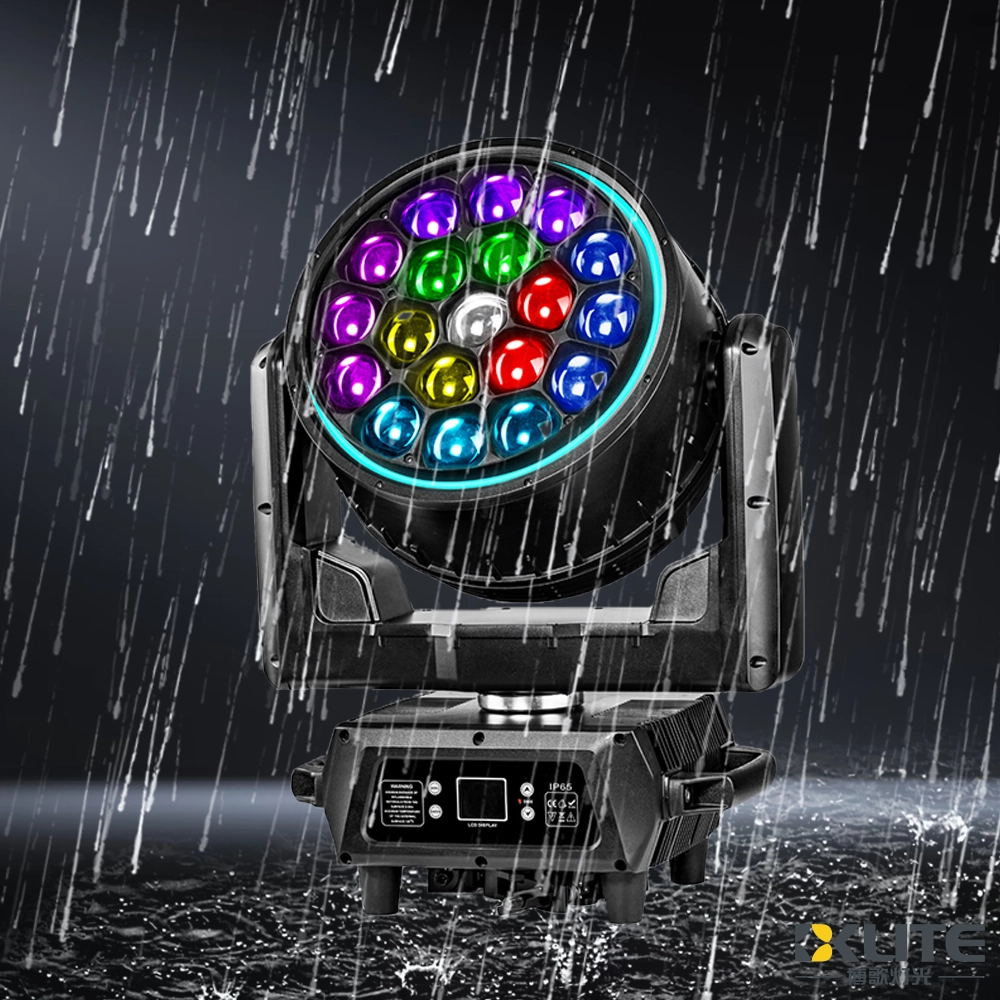
IP65 Waterproof Bee Eye Zoom 19x40W RGBW 4IN1 LED Beam Wash Moving Head Light with LED Ring
BKlite waterproof bee eye moving head light—your reliable choice from top waterproof moving head light manufacturers and suppliers. Ideal for outdoor stage, live event, music festival, this energy-saving fixture ensures powerful, precise illumination for any venue. It delivers powerful, reliable lighting performance in any weather.
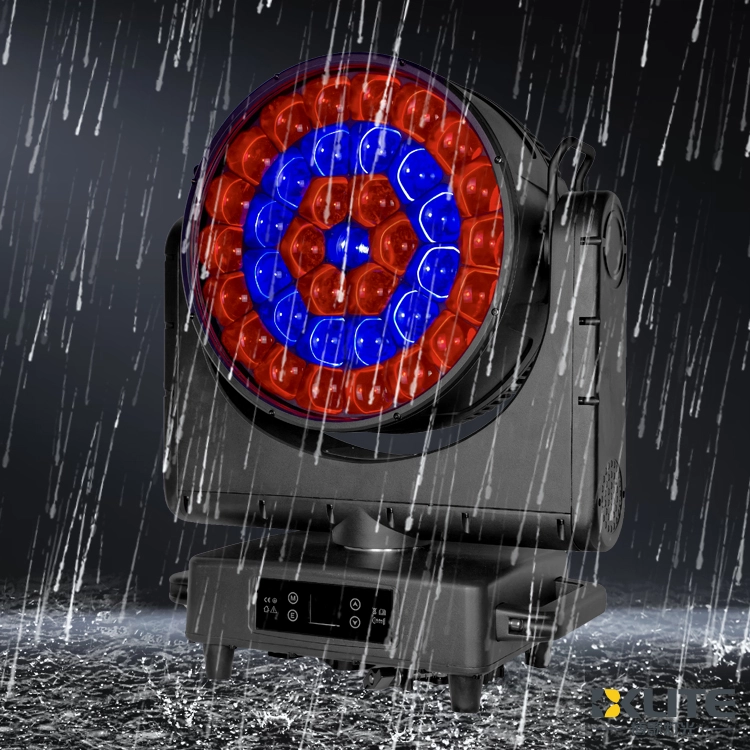
IP65 Waterproof ZOOM Bee Eye 37x40W RGBW 4in1 LED Moving Head Light
As a leading stage lighting equipment supplier with more than 15 years of industry know-how, BKlite brings you the IP65 ZOOM Bee Eye 37*40W RGBW 4in1 LED Moving Head Light (K25 Bee Eye) delivers vibrant, weatherproof lighting with powerful zoom and smooth movement. Ideal for dynamic stage effects, the K25 moving head light ensures stunning RGBW color mixing and reliable outdoor performance.
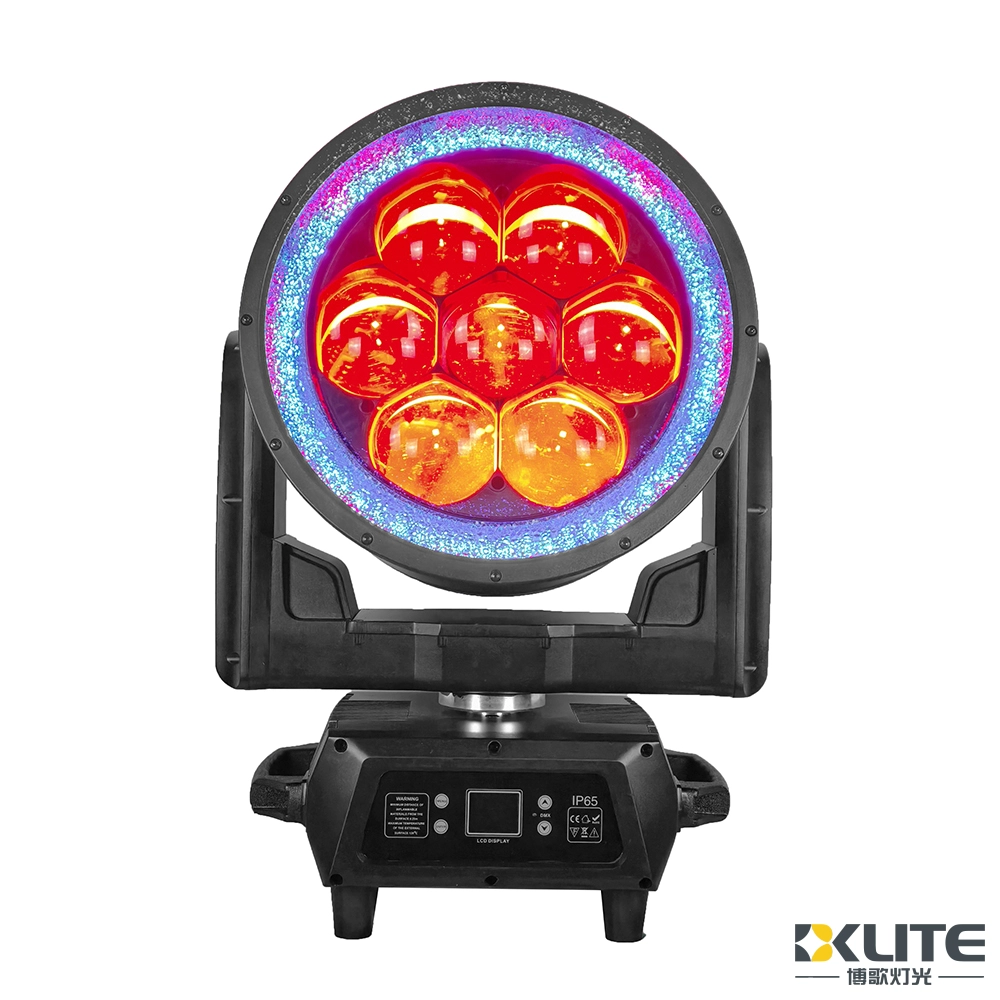
IP65 Waterproof Bee Eye 7x180W RGBL 4IN1 LED Moving Head Light With LED Ring
BKlite high power 7x180W waterproof bee eye moving head light—your reliable choice from top waterproof moving head light manufacturers and suppliers. Ideal for outdoor stage, live event, music festival, this energy-saving fixture ensures powerful, precise illumination for any venue. It delivers powerful, reliable lighting performance in any weather.
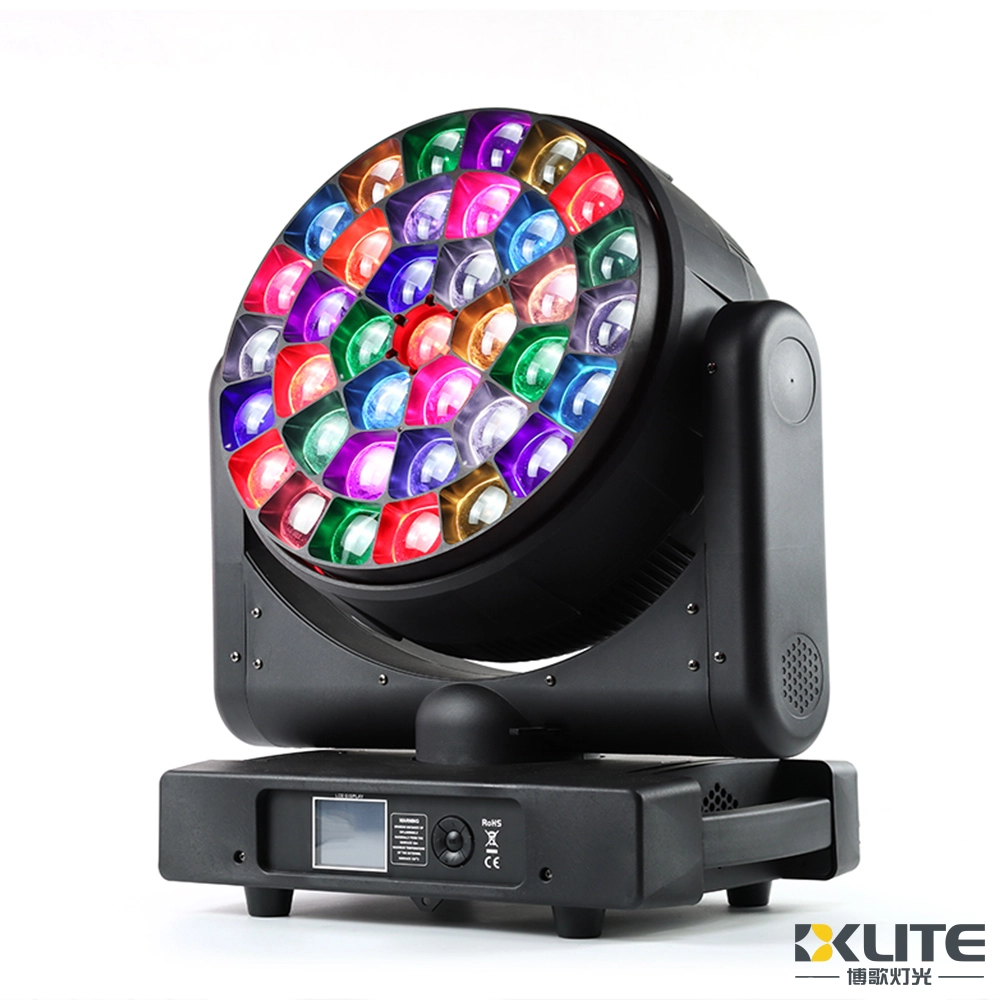
Bee Eye Zoom 37x40W RGBW 4in1 LED Beam Wash Moving Head Light


Copyright © 2025 BKLITE All Rights Reserved.