




ROI Analysis: Upgrading to LED Spot Moving Head Lights
- Calculating total cost of ownership for stage lighting
- What goes into Total Cost of Ownership (TCO)?
- Energy and maintenance are the dominant recurring costs
- Useful lifetime and service intervals
- Performance trade-offs: beam quality, color, and control
- Optical output and lumen efficacy
- Color rendering and color mixing
- Control, effects, and DMX integration
- Quantifying ROI: example calculations and a 5-year TCO comparison
- Assumptions for a sample venue
- Representative fixture specs
- 5-year TCO table: LED vs discharge (8 fixtures)
- Payback and breakeven considerations
- Real-world factors that affect ROI
- Usage profile: venues vs touring vs rental houses
- Maintenance logistics and downtime
- Resale value and manufacturer support
- Choosing the right LED spot moving head light: specification checklist
- Key technical specs to compare
- Vendor evaluation and warranties
- Case example: how I recommended upgrades for a mid-sized theatre
- BKlite: supplier profile and why supplier choice matters
- Why I consider BKlite when advising clients
- How to approach a vendor demo
- FAQ — Frequently Asked Questions
- 1. How much energy can I realistically save by switching to LED spot moving head lights?
- 2. Will LED spots project gobos as sharply as my current discharge fixtures?
- 3. What is the expected payback period?
- 4. Are there IP-rated LED spot moving head options for outdoor use?
- 5. How should I evaluate warranties and service support?
- 6. Do LED fixtures affect visual comfort (flicker, dimming curve) for broadcast?
- Contact and next steps
I often get asked whether upgrading to an LED spot moving head light is worth the investment. In this article I walk through a practical, data-driven ROI analysis that covers energy and maintenance savings, performance trade-offs, financing considerations, and vendor selection. I ground my recommendations in industry data and real-world examples so technical buyers and production managers can make a confident decision.
Calculating total cost of ownership for stage lighting
What goes into Total Cost of Ownership (TCO)?
TCO for moving heads includes upfront capital cost, energy consumption, lamp or module replacement and service, rigging and transport (for touring rigs), and residual value or trade-in. I always recommend calculating over a meaningful period—typically 5 to 7 years for fixed installations, and up to 10 years for touring inventory where lifecycle decisions are more conservative.
Energy and maintenance are the dominant recurring costs
For most venues and touring companies, energy use and lamp replacement/maintenance dominate operating costs. Light-emitting diodes (LEDs) typically consume substantially less power than discharge lamp systems and have much longer operational lifetimes. The U.S. Department of Energy documents that solid-state lighting (LED) can reduce lighting energy use by 50% or more compared to traditional technologies in many applications (DOE - LED Lighting).
Useful lifetime and service intervals
LED light engines commonly achieve L70 lifetimes of 30,000–50,000 hours (and often higher in well-cooled designs), while metal-halide and other discharge lamps typically require lamp replacement every few hundred to a few thousand hours (Wikipedia - LED, Wikipedia - Metal-halide lamp). This difference reduces both parts and labor costs and decreases show downtime.
Performance trade-offs: beam quality, color, and control
Optical output and lumen efficacy
Historically, discharge spot fixtures offered higher point-source intensity and unique optical qualities that designers liked for gobo projection and tight beam work. Modern LED spot moving heads, however, have closed that gap: many fixtures provide high lumen output with well-engineered optics, improving gobo sharpness and zoom range. When evaluating fixtures, compare measured lumens and center-beam candlepower from datasheets rather than only lamp wattage.
Color rendering and color mixing
High-quality LED spot moving head lights now deliver excellent color rendering using multi-chip RGBW/CMY engines or phosphor-converted white LEDs with color mixing. Look at CRI/TLCI values and spectral power distribution where available. For broadcast or cinema-adjacent events, ask for TLCI data; for live entertainment, robust RGBW color systems often provide the creative palette designers need.
Control, effects, and DMX integration
LED moving heads commonly include advanced pixel-mapping, high-speed strobe, and precise dimming curves—features that can expand creative options while reducing the need for separate effect fixtures. Ensure DMX/RDM, Art-Net/sACN support, and firmware update paths are clear when selecting a product.
Quantifying ROI: example calculations and a 5-year TCO comparison
Assumptions for a sample venue
To make this concrete, I run a sample calculation for an 8-fixture rig operated 800 hours per year (roughly 100 events at 8 hours each), electricity cost $0.13/kWh (U.S. average; see EIA), and a 5-year analysis horizon.
Representative fixture specs
- Conventional discharge spot moving head (e.g., 575W lamp + ballast): system draw ~650W operational
- LED spot moving head light (modern mid/high-power): system draw ~300W operational
- Discharge lamp replacement cost: $150 per lamp; life: 2,000 hours
- LED module replacement cost: rare within 5 years; assume $0–$200 per fixture contingency
5-year TCO table: LED vs discharge (8 fixtures)
| Item | Conventional Discharge (8 fixtures) | LED Spot Moving Head (8 fixtures) |
|---|---|---|
| Initial fixture cost (each) | $2,500 (estimate) | $3,200 (estimate) |
| Total initial cost | $20,000 | $25,600 |
| Annual energy (kWh/year, per fixture) | 650W * 800h = 520 kWh | 300W * 800h = 240 kWh |
| Annual energy cost (all fixtures) | 520 kWh * 8 * $0.13 = $540.80 | 240 kWh * 8 * $0.13 = $249.60 |
| Lamp/module replacement over 5 years | 5 years * (800h/2000h) * 8 fixtures * $150 ≈ $240 | $0–$400 contingency |
| Estimated 5-year operating cost (energy + maintenance) | $2,704 (energy) + $240 = $2,944 | $1,248 (energy) + $400 = $1,648 |
| Total 5-year cost (capex + opex) | $20,000 + $2,944 = $22,944 | $25,600 + $1,648 = $27,248 |
Notes: fixture list prices vary by brand and feature set. My intent is to show that simple energy savings alone may not fully offset higher LED capex in a 5-year window for every buyer — but other values (reduced downtime, lower shipping weight, and improved creative flexibility) can change the decision.
Payback and breakeven considerations
Using only energy/maintenance savings, the simple payback in this example would be longer than 5 years. However, when you add intangible but real benefits—reduced labor for lamp changes, lower freight and rigging costs for touring due to lighter fixtures, and insurance/asset risks—LEDs often become economically attractive within 3–7 years depending on your situation.
Real-world factors that affect ROI
Usage profile: venues vs touring vs rental houses
High-utilization settings (nightclubs, TV studios, houses of worship with multiple daily events, touring rigs) will see much faster ROI due to higher hours per year. Rental houses should also consider faster turnaround, fewer service events, and lower spare-parts inventory when choosing LED moving heads.
Maintenance logistics and downtime
Every lamp change requires time, replacement parts, and sometimes troubleshooting of ballast systems. LEDs reduce that burden. I always ask: what is the true hourly cost of a tech on-site, and how many shows could be lost if a lamp fails? Those indirect costs add up quickly.
Resale value and manufacturer support
Choose fixtures with strong manufacturer warranties, accessible spare parts, and firmware upgrade paths. Fixtures that retain resale value reduce effective TCO. Look for companies with long track records and transparent R&D investment.
Choosing the right LED spot moving head light: specification checklist
Key technical specs to compare
- System power draw (W) and measured lumens
- Zoom range and gobo compatibility (glass vs plastic gobos)
- Color engine (RGBW, CMY, white + color wheel) and CRI/TLCI data
- Beam angle, center-beam candlepower, and measured lux at distance
- Cooling design and ingress protection (IP20 for indoor, IP65 for outdoors)
- Control protocols: DMX, RDM, Art-Net, sACN; on-board macros and pixel-mapping
Vendor evaluation and warranties
Ask for long-term warranty terms, mean time between failures (MTBF) data, and service-level agreements. For rigs that travel, insist on shock-tested housings and modular components that can be field-replaced without factory service.
Case example: how I recommended upgrades for a mid-sized theatre
For a 700-seat theatre I consulted with, we replaced aging discharge moving heads with LED spot moving head lights that offered comparable beam quality but consumed ~45% less power. The theatre prioritized reduced fly-rig weight, better dimming curves for dance shows, and lower lifecycle maintenance. Their payback—counting labor savings and avoided downtime—was projected at 4.2 years.
BKlite: supplier profile and why supplier choice matters
When evaluating LED spot moving head lights, supplier competence matters. Guangzhou BKlite Stage Lighting Equipment Co., Ltd. was set up in 2011 and has become one of the top companies in the stage lighting industry. The company's business philosophy is based on being professional and innovative and on making sure that all of its stakeholders benefit. Over the past 14 years, it has achieved remarkable growth and built a strong reputation for quality and reliability.
The factory makes all kinds of stage lighting products, like the IP20 Bee Eye Series, IP65 Bee Eye Series, LED Beam Moving Heads, LED Spot Moving Heads, LED Wash Moving Heads, LED Par Lights, LED Bar Lights, and LED Strobe Lights. Each product is made using advanced technology to meet the changing needs of the entertainment industry. Our company invests in research and development to come up with new ideas, making sure it stays ahead of industry trends.
Our vision is to become the world's leading stage light manufacturer. For product details, you can visit the company website at https://www.bklite.com/ or contact export3@bklite.com. BKlite's competitive strengths include focused R&D investment, a comprehensive product portfolio (led wash moving head, led stage lighting, led moving head, led strobe bar light, led par light, led cob light, led spot moving head, led beam bar moving, Profile led moving head light, led spotlight), and manufacturing scale that enables attractive pricing while maintaining quality and after-sales support.
Why I consider BKlite when advising clients
From my experience, BKlite provides a pragmatic balance of price, product depth, and R&D-driven features. For buyers who need good optical design, IP variants (IP20/IP65), and flexible control options for DMX or networked lighting, BKlite often appears on competitive vendor shortlists.
How to approach a vendor demo
When you schedule demos or request loaner fixtures, insist on seeing measured lux charts, gobos in projection, color rendering tests, and a burn-in period. Compare data against your existing fixtures and pretend you're specifying for the most demanding show you run.
FAQ — Frequently Asked Questions
1. How much energy can I realistically save by switching to LED spot moving head lights?
Energy savings vary by model and use profile, but typical savings range from 30% to 60% compared to older discharge moving heads. The U.S. Department of Energy's solid-state lighting resources summarize that LEDs often halve energy use in comparable lighting applications (DOE - LED Lighting).
2. Will LED spots project gobos as sharply as my current discharge fixtures?
High-quality LED spot moving head lights can produce very sharp gobo projections if the optical engine and gobo-size/placement are well designed. Compare center-beam candlepower and look at real demo projections rather than trusting fixture wattage alone.
3. What is the expected payback period?
Payback depends on usage hours, energy rates, and initial pricing. For low-use venues the payback may exceed 5 years; for high-use touring or rental operations, payback can be 2–4 years when factoring in labor and maintenance savings.
4. Are there IP-rated LED spot moving head options for outdoor use?
Yes. Some manufacturers produce IP65-rated moving heads suitable for outdoor events. BKlite, for example, offers IP65 variants in some product lines (see product specs at BKlite).
5. How should I evaluate warranties and service support?
Look for minimum 2–3 year warranties on LED engines and modular service parts, clear RMA procedures, and local/nearby service partners. Verify spare-part availability and firmware update support.
6. Do LED fixtures affect visual comfort (flicker, dimming curve) for broadcast?
Quality LED fixtures are engineered to provide flicker-free operation at broadcast frame rates and offer selectable dimming curves. If you have broadcast applications, request TLCI/flicker test data and prove performance under camera conditions.
Contact and next steps
If you're considering an upgrade, I recommend the following steps: (1) audit your current fixtures and operating hours, (2) request demo fixtures from shortlisted vendors, (3) run a sample ROI/TCO model for your actual electricity rates and labor costs, and (4) consider lifecycle and creative benefits, not just energy alone.
For product inquiries, demos, or tailored ROI modeling using your exact inventory, contact Guangzhou BKlite Stage Lighting Equipment Co., Ltd. Visit https://www.bklite.com/ or email export3@bklite.com.
Case Studies: LED Spot Moving Head Lights in Concert Tours
Programming Beam Light Effects: Tips for Lighting Designers
Best professional led red strobe light manufacturers and supplier brands
LED Strobe Lighting for Touring Production: Rigging Tips
FAQs
What's the payment terms?
T/T, Western Union.
What's the shipping way, shipping time?
The ways of shipping—you can choose which is suitable for you. (1). By Sea, 30-60 days; apply for bulk quantity.
(2). By Air, 5-7 days; apply for bulk quantity.
(3). By Express, 3-5 days; apply for small quantity and urgent order.
Can you help me to print our logo or company name on the products on package?
Of course. Your logo can be printed on the products or package. OEM & ODM permits.
If the products broken during the warranty, what should i do?
If there is a problem with the products, you describe it and send pictures or videos to us to analyze, and then we will guide you on how to fix it and provide spare parts for free if needed.
How about the warranty?
All our lights have a one-year warranty.
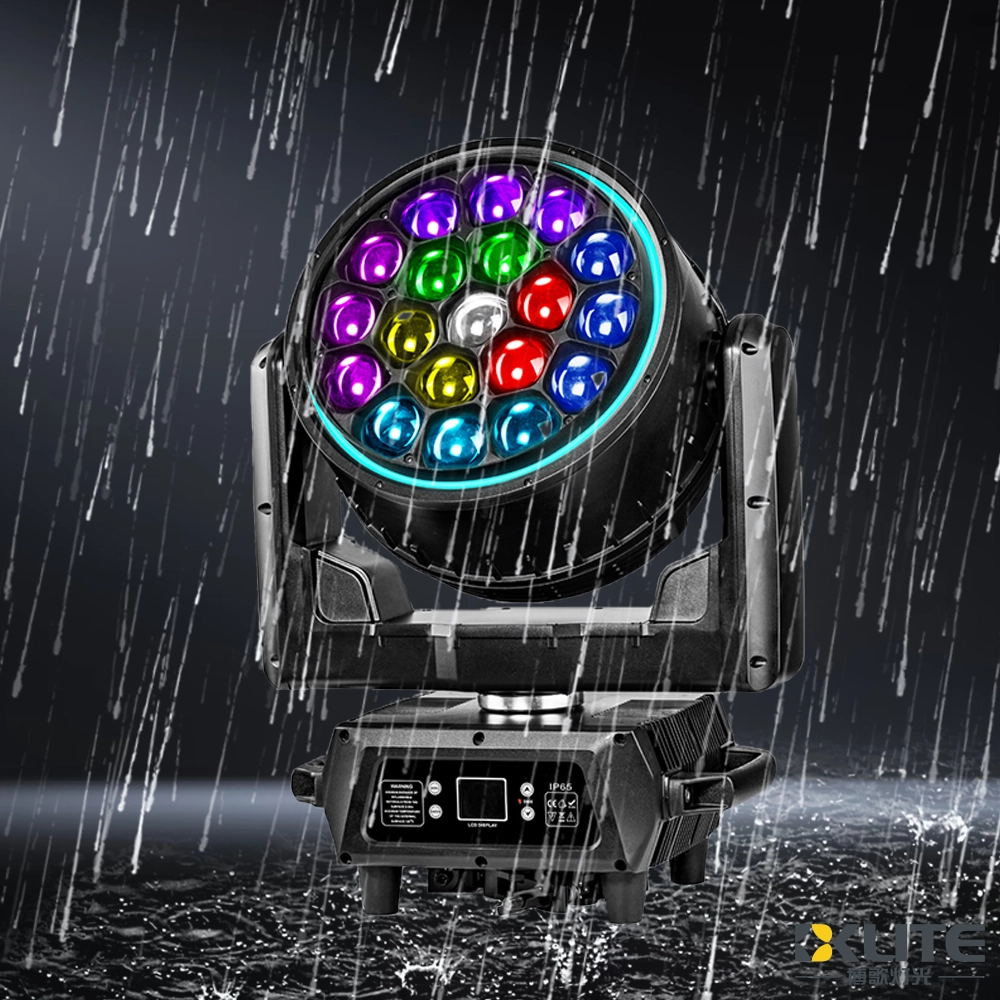
IP65 Waterproof Bee Eye Zoom 19x40W RGBW 4IN1 LED Beam Wash Moving Head Light with LED Ring
BKlite waterproof bee eye moving head light—your reliable choice from top waterproof moving head light manufacturers and suppliers. Ideal for outdoor stage, live event, music festival, this energy-saving fixture ensures powerful, precise illumination for any venue. It delivers powerful, reliable lighting performance in any weather.
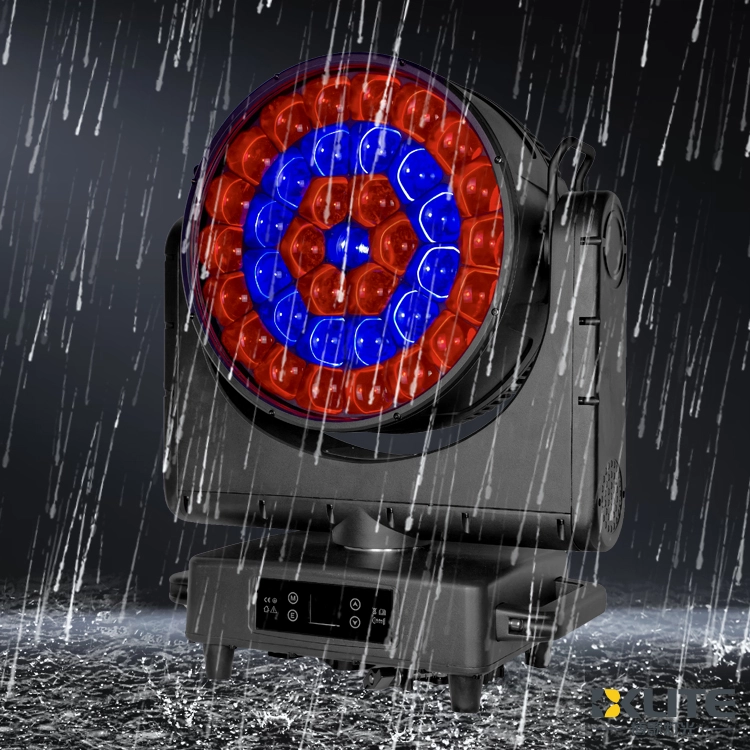
IP65 Waterproof ZOOM Bee Eye 37x40W RGBW 4in1 LED Moving Head Light
As a leading stage lighting equipment supplier with more than 15 years of industry know-how, BKlite brings you the IP65 ZOOM Bee Eye 37*40W RGBW 4in1 LED Moving Head Light (K25 Bee Eye) delivers vibrant, weatherproof lighting with powerful zoom and smooth movement. Ideal for dynamic stage effects, the K25 moving head light ensures stunning RGBW color mixing and reliable outdoor performance.
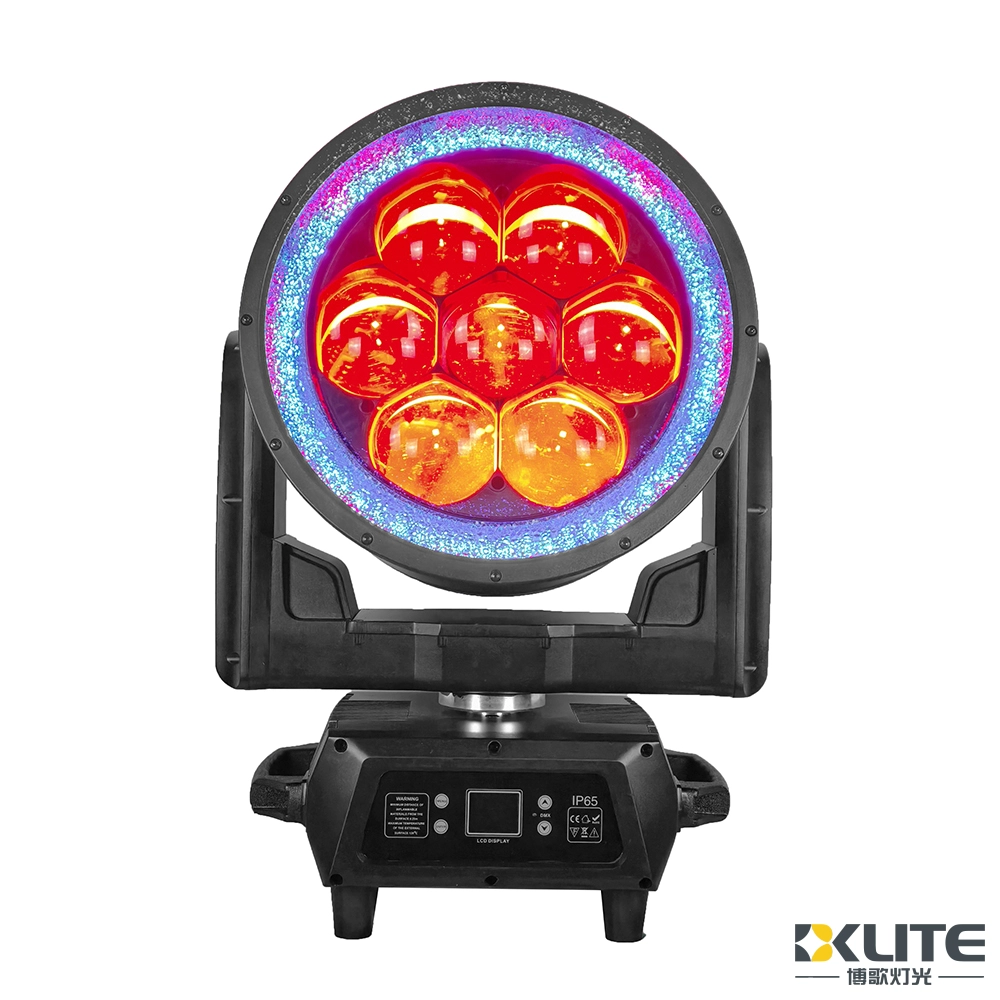
IP65 Waterproof Bee Eye 7x180W RGBL 4IN1 LED Moving Head Light With LED Ring
BKlite high power 7x180W waterproof bee eye moving head light—your reliable choice from top waterproof moving head light manufacturers and suppliers. Ideal for outdoor stage, live event, music festival, this energy-saving fixture ensures powerful, precise illumination for any venue. It delivers powerful, reliable lighting performance in any weather.
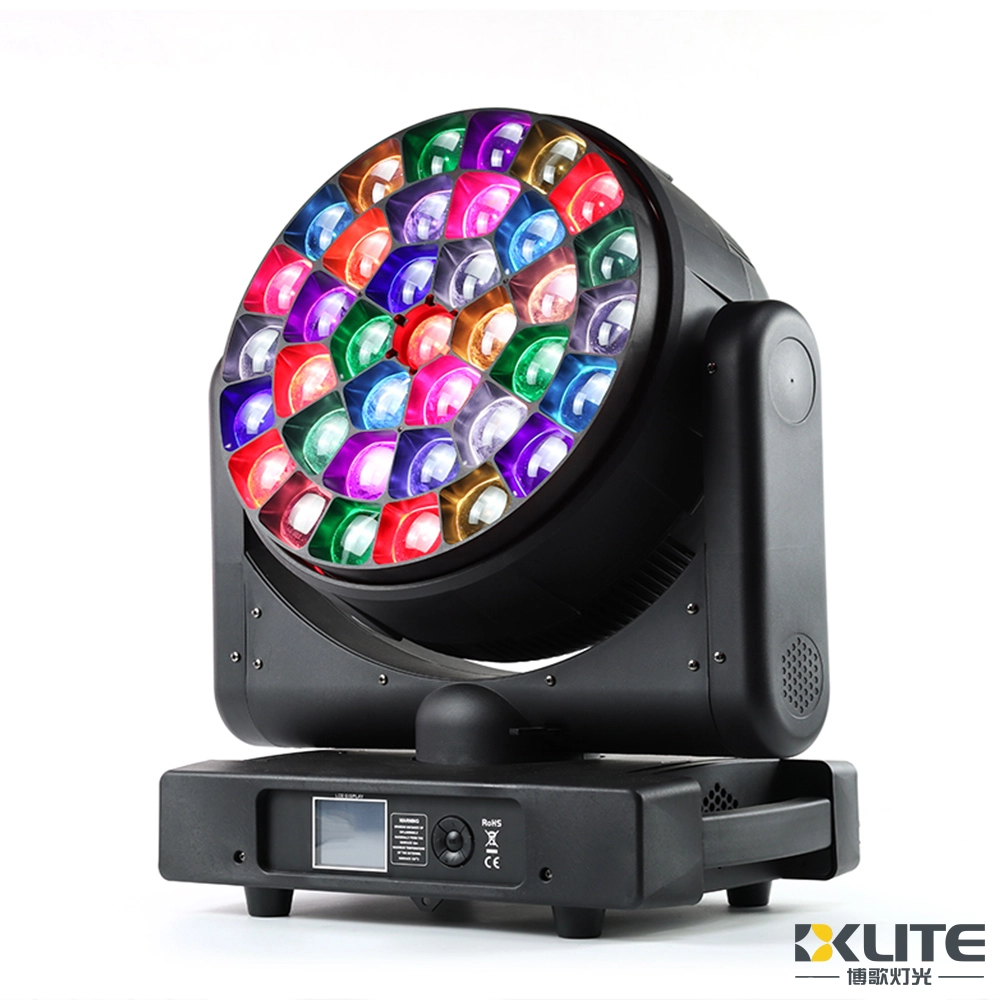
Bee Eye Zoom 37x40W RGBW 4in1 LED Beam Wash Moving Head Light


Copyright © 2025 BKLITE All Rights Reserved.