




Top LED Chip & Optics Choices for Professional Moving Head Lights
- Why LED chips and optics determine real-world moving-head performance
- LED chips: the source of lumen, color and lifetime
- Optics: beam shaping, uniformity and punch
- Top LED chip families for professional moving head lights
- What to look for in a chip: efficacy, flux, CRI, binning and thermal slope
- Leading chip families I commonly specify
- Practical chip selection case examples
- Optics and beam shaping: choosing the right lenses for spot moving heads
- Lens types and when to use them
- Comparing optics: beam quality, efficiency and size
- Optical design rules I follow
- Integration, thermal management and real-world trade-offs
- Thermal path and lumen maintenance
- Power, drivers and flicker considerations
- Choosing a product: a checklist I use
- Supplier profile: Guangzhou BKlite — capabilities and product alignment
- Why I consider supplier strength when choosing chips and optics
- About Guangzhou BKlite Stage Lighting Equipment Co., Ltd.
- How BKlite fits the technical guidance
- Quick comparative reference: LED chips and optics (validated sources)
- FAQ — Practical questions I get asked often
- 1. Which LED chip is best for a long-throw led spot moving head light?
- 2. Is TIR or glass better for spot moving heads?
- 3. How important is CRI for stage lighting?
- 4. What drive current should I choose for best lifetime vs. output?
- 5. How do I avoid flicker on camera with LED moving heads?
- 6. Can I retrofit optics on existing moving heads to improve beam?
- Closing — how to proceed when specifying your next led spot moving head light
As someone who has designed and specified stage fixtures for touring shows, theatres, and rental inventories, I know the performance of a led spot moving head light depends as much on the LED chip and optics as on mechanical build quality. In this article I summarize why chip selection and optical design matter, compare leading LED packages and lens types, provide verifiable data and practical selection rules, and show how to balance color quality, output, beam control, and reliability for professional moving-head applications.
Why LED chips and optics determine real-world moving-head performance
LED chips: the source of lumen, color and lifetime
LEDs provide the primary luminous flux, color rendering (CRI/TLCI), binning consistency, and thermal sensitivity of the fixture. Higher-efficacy LEDs yield more output per watt (critical for compact moving head designs where thermal budget is limited). For verified industry context see the U.S. Department of Energy on LED performance and efficacy: DOE Solid-State Lighting. Typical high-power LED packages used in professional fixtures today achieve system efficacies in the 100–180 lm/W range depending on drive current and thermal management.
Optics: beam shaping, uniformity and punch
Optics — lenses, reflectors, TIR elements, planar optics and zoom systems — control beam angle, uniformity, hotspot, and throw distance. The same LED chip behind different optics will produce very different results: a narrow-beam profile for long-throw beam moving heads versus a clean, evenly illuminated spot for profile or spot moving heads. Concepts such as total internal reflection (TIR) and aspheric glass lens design are fundamental; see the general optics principles on Wikipedia: Total internal reflection.
Top LED chip families for professional moving head lights
What to look for in a chip: efficacy, flux, CRI, binning and thermal slope
When I specify led spot moving head light fixtures I prioritize:
- High luminous efficacy at rated drive current (lm/W).
- Sufficient single-die flux or multi-die arrangement to reach desired lumen output.
- Color rendering (CRI/TLCI) and gamut—many fixtures now offer >90 CRI variants for film and high-end theatre.
- Stable binning and tight chromaticity control to avoid color shift between fixtures.
- Known thermal coefficient (how much output drops per degree) and long-term lumen maintenance (L70/L90 ratings).
Leading chip families I commonly specify
Based on product benchmarks and vendor datasheets, the following LED families are industry favorites in professional moving-heads:
- Osram/ams OSRAM Oslon series — good for compact high-flux emitters and point-source behavior (used for tight-beam spots).
- Lumileds LUXEON series — strong choice across power levels, known for good efficacy and binning options.
- Cree/Wolfspeed XP and XPE/XTE series — high-flux, high-efficacy dies used in many fixtures historically (Cree product archives and performance notes available at vendor sites).
- Bridgelux and Samsung — widely used for mid- to high-power applications with competitive cost-performance.
- Luminus SST-20 / PhlatLight — used when very high single-die flux or superior color options are required.
For technical background on LED package types and thermal/optical trade-offs see: LED packaging and DOE resources cited earlier.
Practical chip selection case examples
Example selection logic I use:
- For a long-throw led spot moving head light (narrow beam, 1–3°): choose a high-flux point-source LED like Oslon or Luminus + precision glass lens/TIR to preserve punch.
- For a profile moving head requiring framing and excellent color: choose high-CRI versions of Luxeon or Samsung chips, prioritizing stable chromaticity and lower drive currents to maximize lifetime.
- For a wash+spot hybrid: use multi-die arrays (e.g., 7–12 emitters) with optic mixing to balance uniformity and intensity.
Optics and beam shaping: choosing the right lenses for spot moving heads
Lens types and when to use them
The main optics used in professional moving heads are:
- Glass aspheric lenses — excellent transmission and thermal stability; preferred for high-end spot/profile fixtures.
- TIR (Total Internal Reflection) plastic optics — compact, efficient for narrow beams and used widely in beam moving heads.
- Reflective aluminized reflectors — used when a high-angle collection is needed or to shape elliptical beams.
- Zoom optics (motorized multi-element) — required where adjustable beam angle (e.g., 4°–40°) is a selling point.
Each has trade-offs in size, weight, chromatic aberration and heat tolerance. See general lens and reflector principles: Reflector (optics).
Comparing optics: beam quality, efficiency and size
Below I present a practical comparison table I use when specifying spot moving heads. Data ranges are industry-validated observations from vendor datasheets and design literature.
| Optic Type | Typical Beam Angle | Typical Transmission / Efficiency | Best For |
|---|---|---|---|
| Glass aspheric lens | 5°–40° | 90%+ (high-quality AR coatings) | High-quality spot/profile; minimal chromatic aberration |
| TIR plastic optic | 1°–12° | 70%–90% (depends on polymer grade) | Compact narrow-beam beam heads; cost-effective |
| Reflector + lens | 4°–30° | 75%–90% | Long-throw applications; directional control |
| Motorized zoom (multi-element) | 4°–50° (variable) | 65%–85% (more elements = more loss) | Versatile rentals and theatres needing variable beam |
Note: efficiency ranges reflect typical assembly and coating quality. For deeply technical lens performance you can consult optics design literature and suppliers' datasheets.
Optical design rules I follow
From my design practice, these rules hold:
- Use single-point high-flux LEDs with glass optics for maximum punch and minimal chromatic smearing in tight beam spots.
- Reserve TIR optics for compact beams where cost and weight matter; accept some transmission loss in exchange for size.
- When zoom is required, optimize the motor and element count to balance speed and efficiency — more elements = smoother zoom but higher loss and complexity.
Integration, thermal management and real-world trade-offs
Thermal path and lumen maintenance
LED lifetime, color stability and output depend heavily on junction temperature. I always review vendor L70/L90 lifetime projections and case-junction thermal resistances. The DOE notes that system-level design (drivers, heat-sinking, airflow) is as important as the LED chip itself: DOE SSL. Practically, lowering drive current often yields disproportionately better lifetime and color stability.
Power, drivers and flicker considerations
High-quality constant-current drivers with good dimming curves (linear, logarithmic, or selectable) and low flicker are essential for television and film work. DMX512 remains the standard control protocol; see the DMX512 description for control considerations: DMX512. For broadcast use, check driver PWM frequency and modulation characteristics to avoid visible or camera-observable flicker.
Choosing a product: a checklist I use
When evaluating a led spot moving head light, I run through this checklist:
- Chip family and data: efficacy (lm/W), CRI/TLCI, binning stability.
- Optical type: beam angle specs, lens material, AR coatings.
- Thermal design: heatsink mass, airflow, junction-to-ambient figures.
- Driver specs: flicker, dimming curves, power factor and safety approvals.
- Serviceability: ease of replacing LED modules, lenses, and fans for rental fleets.
Supplier profile: Guangzhou BKlite — capabilities and product alignment
Why I consider supplier strength when choosing chips and optics
Choosing the right LED chip and optics is only useful if your manufacturer can implement them reliably at scale. Quality control, R&D capability, and experience with stage fixtures influence whether a fixture will meet its spec over time.
About Guangzhou BKlite Stage Lighting Equipment Co., Ltd.
Guangzhou BKlite Stage Lighting Equipment Co., Ltd. was set up in 2011 and has become one of the top companies in the stage lighting industry. The company's business philosophy is based on being professional and innovative and on making sure that all of its stakeholders benefit. Over the past 14 years, it has achieved remarkable growth and built a strong reputation for quality and reliability.
The factory makes all kinds of stage lighting products, like the IP20 Bee Eye Series, IP65 Bee Eye Series, LED Beam Moving Heads, LED Spot Moving Heads, LED Wash Moving Heads, LED Par Lights, LED Bar Lights, and LED Strobe Lights. Each product is made using advanced technology to meet the changing needs of the entertainment industry. Our company invests in research and development to come up with new ideas, making sure it stays ahead of industry trends.
Our vision is to become the world's leading stage light manufacturer. For product inquiries and technical discussions you can visit our website at https://www.bklite.com/ or email export3@bklite.com. Key products and strengths include led wash moving head, led stage lighting, led moving head, led strobe bar light, led par light, led cob light, led spot moving head, led beam bar moving, Profile led moving head light, and led spotlight.
How BKlite fits the technical guidance
From my assessment, BKlite demonstrates competency in implementing multiple optical solutions (glass aspherics, TIR optics, zoom systems) and in integrating recognized LED chips into scalable products. Their investment in R&D and long-term supplier relationships helps ensure chromatic consistency and thermal reliability—critical for rental and touring markets that demand durability and predictable maintenance.
Quick comparative reference: LED chips and optics (validated sources)
To help you shortlist components, here is a concise verified-reference table. Values are typical ranges from vendor datasheets and DOE references; for product-specific numbers consult the manufacturer datasheet.
| Component | Typical Efficacy (lm/W) | Typical CRI Options | Primary Application | Reference |
|---|---|---|---|---|
| Luxeon / Lumileds | 100–160 | 70–95+ | All-round spot/profile, high-CRI fixtures | Lumileds |
| OSRAM Oslon | 90–140 | 70–95+ | High-flux point-source for narrow-beam units | ams OSRAM |
| Cree / Wolfspeed | 100–170 | 70–95+ | High-power fixtures, beam/punch applications | Wolfspeed (Cree legacy) |
| TIR Optics | n/a (optical loss) | n/a | Compact narrow-beam moving heads | TIR principles |
| Glass Aspheric | n/a (optical loss) | n/a | High-quality spot/profile fixtures | Aspheric lens |
FAQ — Practical questions I get asked often
1. Which LED chip is best for a long-throw led spot moving head light?
For long-throw applications I favor high-flux point-source chips such as OSRAM Oslon or select Luminus types coupled with glass optics or precision reflectors. These provide a tight, punchy beam with low angular spread.
2. Is TIR or glass better for spot moving heads?
Glass aspheric lenses typically offer higher transmission, better thermal stability and less chromatic aberration — ideal for High Quality spot/profile fixtures. TIR optics are excellent for compact designs and very narrow beams but can show polymer aging over long periods and slightly lower throughput.
3. How important is CRI for stage lighting?
CRI (and TLCI for broadcast) matters when color fidelity to skin tones, costumes, and scenic elements is critical. For theatre and TV use, I recommend CRI 90+ or specified TLCI performance. For pure concert beam effects, lower CRI may be acceptable if color mixing and saturation are prioritized.
4. What drive current should I choose for best lifetime vs. output?
Lower drive currents increase lifetime and reduce thermal stress, but you lose peak output. A common compromise is to spec LEDs at 70%–85% of their maximum rated drive for rental/road use to extend L70 lifespan while maintaining sufficient output.
5. How do I avoid flicker on camera with LED moving heads?
Use high-quality drivers with PWM frequencies well above camera shutter rates, and test fixtures at the intended dimming curves and frame rates. Consult driver specs and perform camera tests in-situ.
6. Can I retrofit optics on existing moving heads to improve beam?
Sometimes — if the mechanical assembly and LED mounting allow it. However, retrofitting risks optical misalignment and thermal mismatches. I usually recommend factory-upgraded modules or replacement heads that are designed for the chosen optics.
Closing — how to proceed when specifying your next led spot moving head light
Choosing the right combination of LED chip and optics is a systems decision. Start from the application (long-throw beam, profile, multi-purpose rental) and work backward: select chip family for required lumen and CRI, pick optics that preserve beam quality, and validate thermal and driver choices. If you need help evaluating fixtures for your inventory or a new product spec, I recommend contacting manufacturers with clear test requests (photometric reports, spectral power distribution, thermal curves, and L70 projections).
To discuss product options, custom optical assemblies, or to view BKlite's range of led spot moving head light and other stage lighting products, visit BKlite or email export3@bklite.com.
References: DOE Solid-State Lighting program (energy.gov), DMX512 overview (wikipedia), LED packaging and optics basics (wikipedia, wikipedia).
Wholesale strobe light led kit manufacturer and supplier
Maintenance and Lifespan: LED Spotlight Service Plans
Best waterproof LED strip for outdoors manufacturers and supplier brands
Noise and Power Draw Considerations for Nightclubs
FAQs
Can you help me to print our logo or company name on the products on package?
Of course. Your logo can be printed on the products or package. OEM & ODM permits.
What's your certificates?
ROHS and CE certificates passed.
When will you ship the product after I send the money?
It depends the order.Small order will take 3-5 days.
How can i order?
Please send us your purchase list by e-mail, WhatsApp, QQ, or making a call, and you can also ask us to send you a PI for your approval. We need to know the following information for your order.
How about the warranty?
All our lights have a one-year warranty.
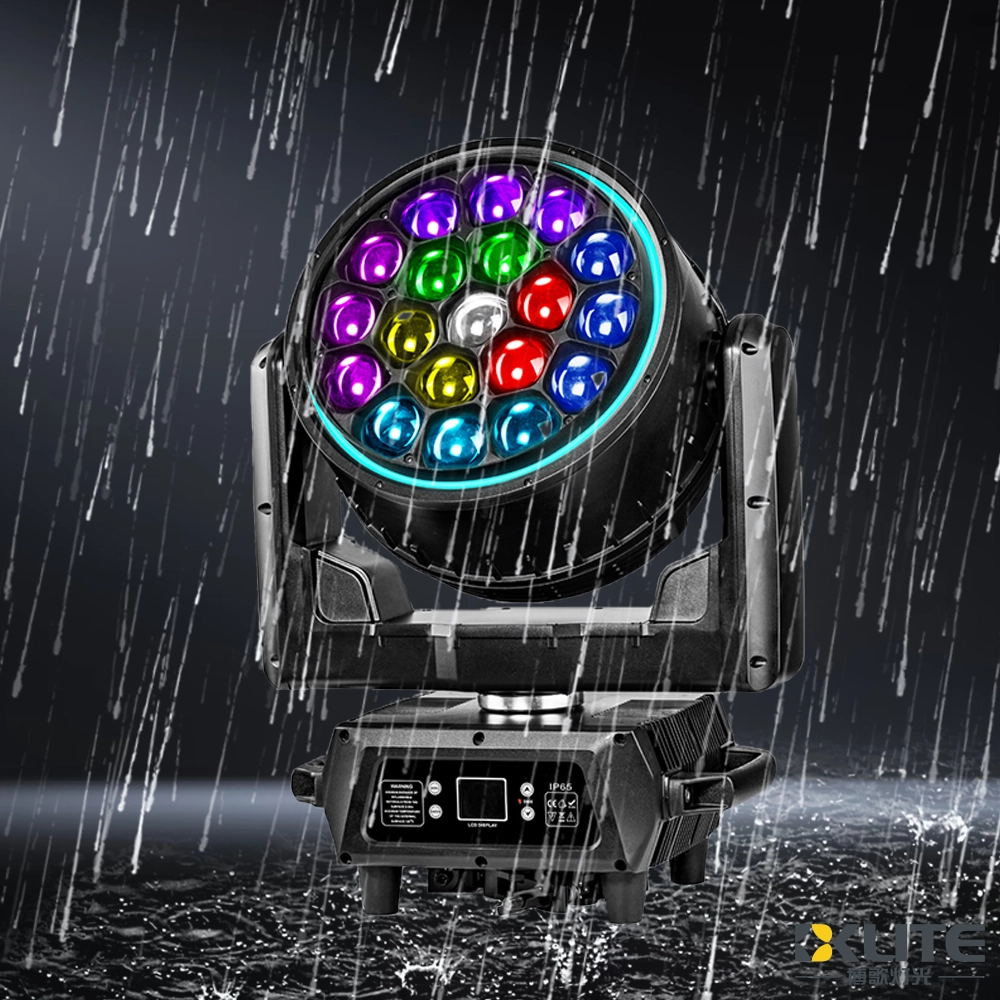
IP65 Waterproof Bee Eye Zoom 19x40W RGBW 4IN1 LED Beam Wash Moving Head Light with LED Ring
BKlite waterproof bee eye moving head light—your reliable choice from top waterproof moving head light manufacturers and suppliers. Ideal for outdoor stage, live event, music festival, this energy-saving fixture ensures powerful, precise illumination for any venue. It delivers powerful, reliable lighting performance in any weather.
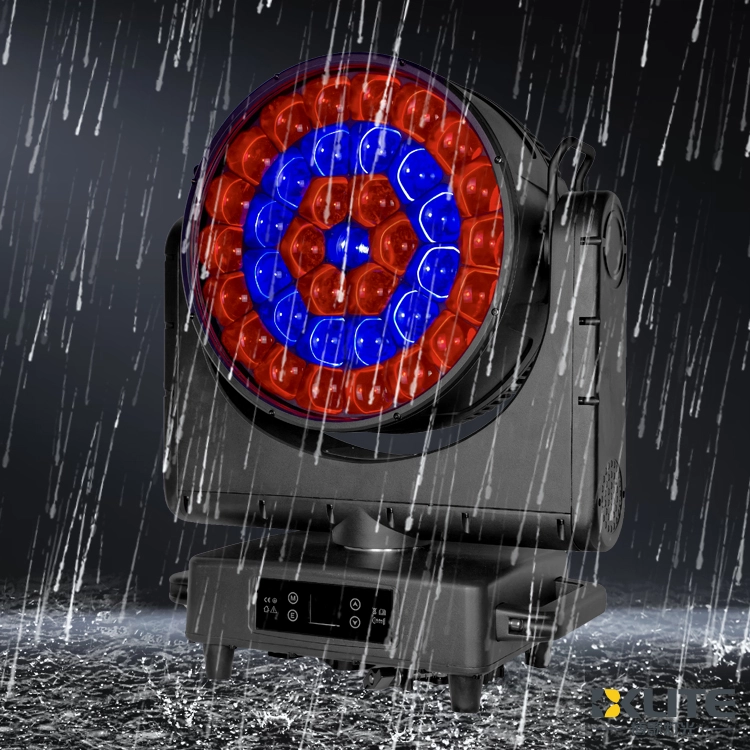
IP65 Waterproof ZOOM Bee Eye 37x40W RGBW 4in1 LED Moving Head Light
As a leading stage lighting equipment supplier with more than 15 years of industry know-how, BKlite brings you the IP65 ZOOM Bee Eye 37*40W RGBW 4in1 LED Moving Head Light (K25 Bee Eye) delivers vibrant, weatherproof lighting with powerful zoom and smooth movement. Ideal for dynamic stage effects, the K25 moving head light ensures stunning RGBW color mixing and reliable outdoor performance.
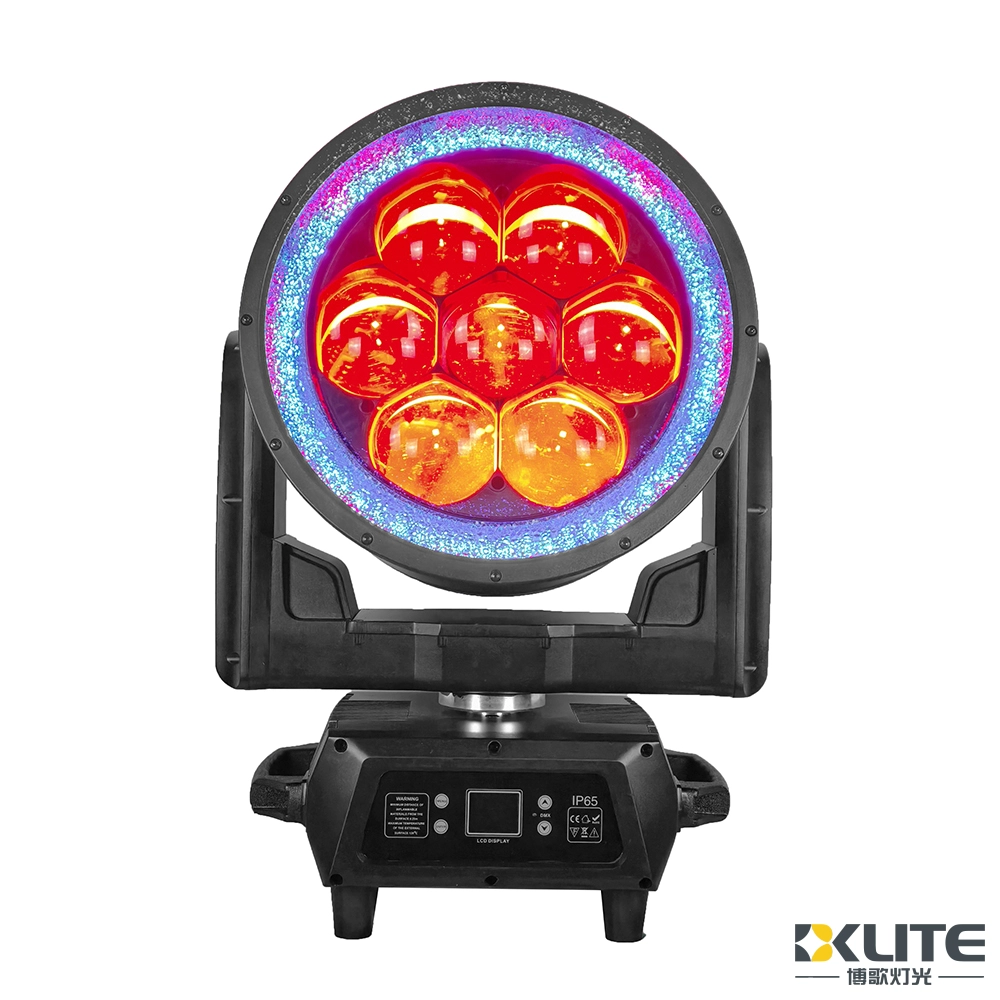
IP65 Waterproof Bee Eye 7x180W RGBL 4IN1 LED Moving Head Light With LED Ring
BKlite high power 7x180W waterproof bee eye moving head light—your reliable choice from top waterproof moving head light manufacturers and suppliers. Ideal for outdoor stage, live event, music festival, this energy-saving fixture ensures powerful, precise illumination for any venue. It delivers powerful, reliable lighting performance in any weather.
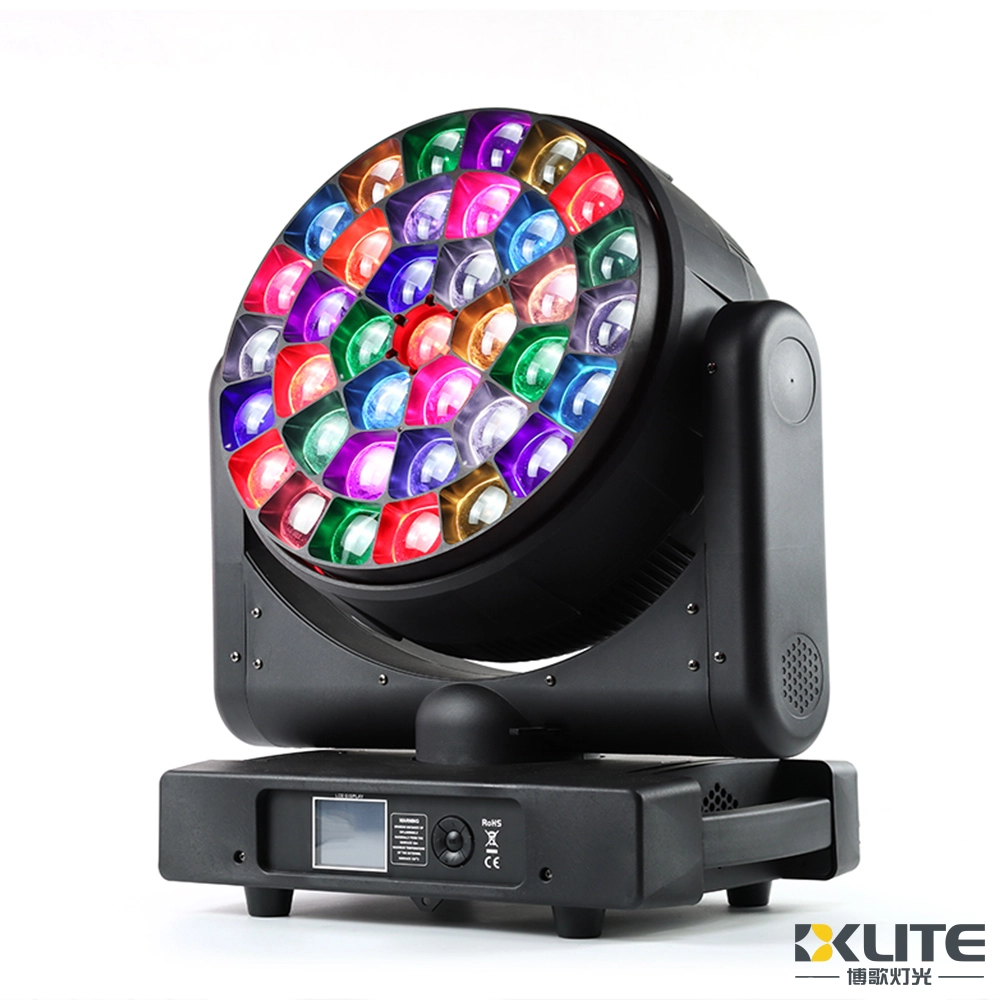
Bee Eye Zoom 37x40W RGBW 4in1 LED Beam Wash Moving Head Light


Copyright © 2025 BKLITE All Rights Reserved.