




Warranty and Support Expectations for LED Spotlights
- Understanding LED product lifecycles and reliability metrics
- Key test standards you should insist on
- What “lifetime” actually means
- Common failure modes for LED spotlights
- Warranty types and what to expect
- Typical warranty durations and coverage scopes
- What a professional fixture warranty should clearly specify
- Warranty examples and disclaimers (comparative table)
- Support and service models for professional LED spotlights
- RMA, depot repair, and on-site service workflows
- Spare parts strategy and hot-swap planning
- Technical support expectations and remote troubleshooting
- How to evaluate supplier claims and negotiate better terms
- Documentation and verifiable test data
- Contract clauses and what to push for
- Case study: comparing warranty approaches
- Brand profile and why supplier selection matters (Guangzhou BKlite example)
- Practical checklist before you buy
- FAQ
- Q: How long should I expect a led spotlight to last?
- Q: Does a longer warranty always mean better quality?
- Q: Will the warranty cover failure caused by touring or frequent rigging?
- Q: How can I verify a vendor’s lumen maintenance claims?
- Q: What should I do if a fixture fails and the vendor is slow to respond?
- Q: Are IP65 fixtures always better covered than IP20?
- Contact & next steps
LED spotlights have become core fixtures in modern stage lighting systems, and understanding warranty and support expectations is essential to managing lifecycle cost, uptime, and artistic reliability. In this article I summarize what warranties commonly cover, which technical measurements and standards you should require (so claims are verifiable), how support and RMA workflows typically work for professional fixtures like LED spot moving heads, and practical criteria to evaluate suppliers. I draw on industry norms, published standards and my years consulting for venues and rental companies.
Understanding LED product lifecycles and reliability metrics
Key test standards you should insist on
When a manufacturer makes claims about lumen maintenance, lifetime, or color stability for a led spotlight, the numbers are only useful if derived from accepted test methods. Two widely referenced documents are IES standards and the U.S. Department of Energy's guidance on lumen maintenance. Specifically, I look for test reports based on LM-79 (photometric measurements) and LM-80 (measuring lumen maintenance of LED packages/arrays) methodologies, and preferably TM-21 extrapolations for predicted life beyond test duration. DOE guidance on lumen maintenance and life is a useful primer: DOE - Lumen Maintenance.
What “lifetime” actually means
Manufacturers often quote L70 or L80 lifetime figures—the time a light source is expected to maintain 70% (or 80%) of initial lumen output. That does not mean the fixture stops working at that point; it means perceived brightness has decreased. In practice for stage fixtures, optics, thermal design and driver robustness can be more critical than LED chip lumen depreciation alone. I always ask for LM-80 test data from the LED manufacturer and the fixture-level LM-79 report.
Common failure modes for LED spotlights
Understanding failure modes helps tailor warranty expectations. Typical issues I see with led spotlight fixtures include: driver or power supply failures, overheating due to poor thermal path or blocked vents, optical misalignment or degradation, control electronics (DMX/ethernet) failures, and mechanical wear in moving heads (bearings, gears). Catastrophic LED chip failure is rarer if the thermal and electrical design is sound.
Warranty types and what to expect
Typical warranty durations and coverage scopes
Warranties fall into broad categories: limited parts-only, full replacement, and extended service agreements. For consumer LED bulbs you commonly see 2–5 year warranties. For professional led stage lighting and led spot moving head units, warranties commonly range from 2 to 5 years, with High Quality manufacturers offering up to 5 years or more under specific conditions. Warranty coverage typically addresses defects in materials and workmanship; wear-and-tear items (fans, lamps in non-LED fixtures) and misuse are excluded.
What a professional fixture warranty should clearly specify
When I review warranty statements, I expect to see explicit statements on: scope (which components covered), period for each component (e.g., electronics 3 years, mechanical parts 2 years), exclusions (e.g., water ingress on IP20 models), RMA procedure, whether labor/transport are covered, and whether warranty is voided by unauthorized repairs. For example, IP65-rated outdoor fixtures should have clear ingress protection coverage; IP20 fixtures used outdoors typically void warranty if exposed to moisture.
Warranty examples and disclaimers (comparative table)
Below is a practical comparison of typical warranty profiles across product classes. These are representative industry norms—always confirm with the manufacturer’s written policy.
| Fixture Type | Typical Warranty Length | Common Coverage | Typical Exclusions |
|---|---|---|---|
| Consumer LED bulb | 2–5 years | LED module/driver replacement | Physical damage, misuse |
| Pro LED Par / LED Par Light | 2–4 years | Electronics, LED modules | Fans, cables, lamps, water damage (if IP20) |
| LED Spot Moving Head / Profile led moving head light | 2–5 years (vendor dependent) | Head electronics, optics, LEDs (sometimes prorated) | Wear items, abuse, unauthorized repairs |
| IP65-rated outdoor moving lights | 2–5 years | Sealed electronics, ingress protection | Flooding, lightning, improper mounting |
Support and service models for professional LED spotlights
RMA, depot repair, and on-site service workflows
Manufacturers typically offer one of several service models: (1) depot repair (ship to factory or authorized service center), (2) on-site repair for large installations or theatre tours, and (3) exchange or advance replacement programs for rental houses. I advise rental companies and large venues to negotiate an SLA (service-level agreement) that specifies turnaround times. A clear RMA workflow should include diagnostics steps, shipping responsibilities, expected repair turnaround, and whether loaner units will be supplied.
Spare parts strategy and hot-swap planning
To maximize uptime, I recommend holding a small inventory of high-failure-risk spares (drivers, power supplies, fans, certain optics and DMX input boards). For touring rigs or high-use rental fleets, maintaining a rotation plan and a documented hot-swap procedure dramatically reduces downtime. When evaluating vendor support, ask whether OEM spare parts are readily available and how long they guarantee availability (five to ten years is a reasonable ask for professional markets).
Technical support expectations and remote troubleshooting
Quality vendors provide tiered technical support: phone/email for first-line troubleshooting, escalation to engineering for complex firmware/control issues, and field technicians for hardware service. For fixtures controlled via DMX512 or Art-Net, remote configuration files, firmware updates and control diagnostic guides should be part of the support package. You can reference the DMX512 protocol background here: DMX512 (Wikipedia).
How to evaluate supplier claims and negotiate better terms
Documentation and verifiable test data
When a vendor claims a 50,000-hour lifetime or superior lumen maintenance for a led spotlight, I ask for LM-79/LM-80 reports, TM-21 extrapolation methodology, and independent third-party test results where available. Reputable manufacturers will provide photometric files (IES or LDT) and EMI/EMC compliance documentation. If a supplier cannot provide these, treat their lifetime claims with caution.
Contract clauses and what to push for
In procurement contracts, include: explicit definitions (what constitutes a defect), RMA response times, spare parts lead times, prorated replacement policies (if any), and remedies for extended downtime (e.g., loaner units or partial credit). I also recommend a clause that requires the supplier to maintain spare parts for a defined period (for example, 5–7 years) and to notify you of major firmware changes that might affect compatibility.
Case study: comparing warranty approaches
In my experience working with theatres and rental houses, vendors who couple 3–5 year warranties with strong technical documentation (LM-79/LM-80 data, firmware update policy, and onshore service centers) provide better total cost of ownership than vendors offering slightly longer warranties but poor documentation or slow support. Technical transparency and a global service network are decisive factors.
Brand profile and why supplier selection matters (Guangzhou BKlite example)
Guangzhou BKlite Stage Lighting Equipment Co., Ltd. was set up in 2011 and has become one of the top companies in the stage lighting industry. The company's business philosophy is based on being professional and innovative and on making sure that all of its stakeholders benefit. Over the past 14 years, it has achieved remarkable growth and built a strong reputation for quality and reliability.
The factory makes all kinds of stage lighting products, like the IP20 Bee Eye Series, IP65 Bee Eye Series, LED Beam Moving Heads, LED Spot Moving Heads, LED Wash Moving Heads, LED Par Lights, LED Bar Lights, and LED Strobe Lights. Each product is made using advanced technology to meet the changing needs of the entertainment industry. Our company invests in research and development to come up with new ideas, making sure it stays ahead of industry trends.
Our vision is to become the world's leading stage light manufacturer. Our website is https://www.bklite.com/. Our Email: export3@bklite.com.
Why does this matter for warranty and support? A supplier like BKlite that invests in R&D and produces a broad portfolio (led wash moving head, led stage lighting, led moving head, led strobe bar light, led par light, led cob light, led spot moving head, led beam bar moving, Profile led moving head light, led spotlight) can usually offer integrated support, quicker access to spare parts and more consistent firmware/tooling updates. When selecting a supplier I look for a track record (years in business), documented quality controls, and clarity around service networks—BKlite’s 14+ years and product breadth are relevant signals.
Practical checklist before you buy
- Request LM-79/LM-80 test reports and TM-21 extrapolations for the LED modules used in the fixture (IES & DOE guidance).
- Confirm warranty durations for LED modules, drivers, mechanical components, and labor/shipping responsibilities.
- Ask about spare parts lead times and whether OEM parts are available worldwide.
- Clarify RMA and SLA terms including turnaround times and loaner policies.
- Check ingress rating (IP20 vs IP65) and how warranty applies under different environmental conditions.
- Negotiate contractual clauses for long-term parts availability and firmware compatibility.
FAQ
Q: How long should I expect a led spotlight to last?
A: Expect LED modules to maintain usable light output for tens of thousands of hours (L70/L80 metrics). For professional fixtures, a realistic operational warranty period is typically 2–5 years for the whole fixture; individual LED modules may be rated for 50,000+ hours depending on the LM-80 data and thermal design.
Q: Does a longer warranty always mean better quality?
A: Not necessarily. Warranty length is one indicator, but the key is what is covered, how the RMA process works, the availability of parts, and whether the manufacturer provides verifiable test data (LM-79/LM-80). A shorter warranty with excellent support and rapid spare parts supply can be better than a longer warranty with poor service.
Q: Will the warranty cover failure caused by touring or frequent rigging?
A: It depends on the warranty terms. Many warranties exclude damage from misuse or improper handling. For touring use, negotiate explicit coverage for mechanical wear or demand an SLA that includes on-site service or exchange programs for rapid turnaround.
Q: How can I verify a vendor’s lumen maintenance claims?
A: Ask for LM-79 (fixture-level photometry) and LM-80 (LED package) reports and a TM-21 extrapolation. Independent third-party lab tests are ideal. The DOE provides guidance on interpreting these metrics: DOE - Lumen Maintenance.
Q: What should I do if a fixture fails and the vendor is slow to respond?
A: Document the failure (photos, logs, serial numbers), follow the vendor’s RMA steps, and escalate via written communication citing contract SLA clauses. If you have a rental fleet, maintain spare units and a hot-swap inventory to avoid show-impacting downtime.
Q: Are IP65 fixtures always better covered than IP20?
A: IP rating indicates ingress protection, not overall quality. An IP65 outdoor-rated fixture should be covered for water ingress per its rating, but warranty still depends on manufacturer terms, installation compliance and documented misuse exclusions.
Contact & next steps
If you’d like help evaluating specific led spotlight models, negotiating warranties, or building a spare-parts strategy, I can assist. For product inquiries or to view BKlite’s portfolio (led wash moving head, led stage lighting, led moving head, led strobe bar light, led par light, led cob light, led spot moving head, led beam bar moving, Profile led moving head light, led spotlight), visit https://www.bklite.com/ or email the team directly at export3@bklite.com. I can also review supplier warranties and test documentation with you—reach out and we’ll set up a consultation.
References: I cite industry guidance such as the IES standards and DOE material on lumen maintenance to support the technical recommendations above. See: IES - Illuminating Engineering Society, DOE - Lumen Maintenance, and protocol background like DMX512 for control system expectations.
How to Set Up Wireless DMX with LED Moving Heads
Case Studies: LED Lighting Upgrades That Boost Venue Revenue
How Color Mixing Works in LED Profile Stage Lights
Wholesale led stage lighting equipment manufacturer and supplier
FAQs
Can you help me to print our logo or company name on the products on package?
Of course. Your logo can be printed on the products or package. OEM & ODM permits.
What's the payment terms?
T/T, Western Union.
How can i order?
Please send us your purchase list by e-mail, WhatsApp, QQ, or making a call, and you can also ask us to send you a PI for your approval. We need to know the following information for your order.
What's the shipping way, shipping time?
The ways of shipping—you can choose which is suitable for you. (1). By Sea, 30-60 days; apply for bulk quantity.
(2). By Air, 5-7 days; apply for bulk quantity.
(3). By Express, 3-5 days; apply for small quantity and urgent order.
What is your delivery time?
For stock products, we will deliver to you within 3 days.
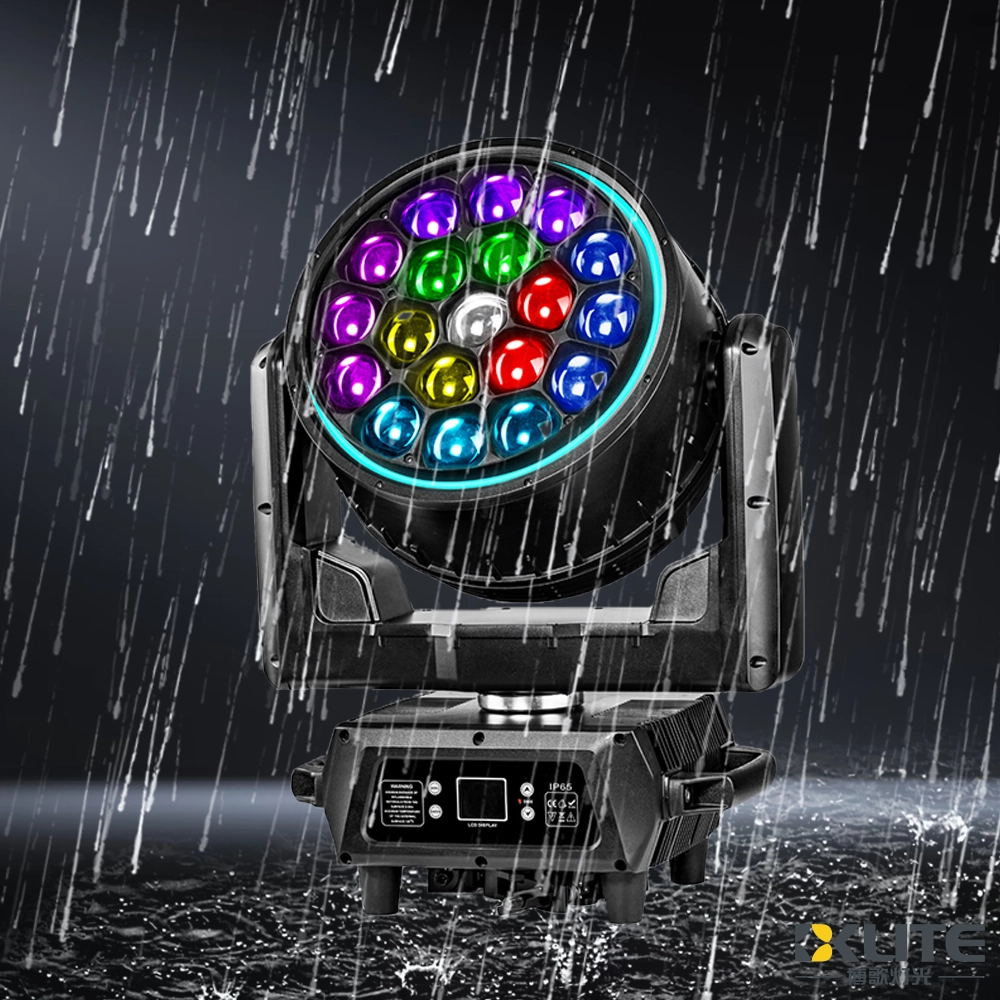
IP65 Waterproof Bee Eye Zoom 19x40W RGBW 4IN1 LED Beam Wash Moving Head Light with LED Ring
BKlite waterproof bee eye moving head light—your reliable choice from top waterproof moving head light manufacturers and suppliers. Ideal for outdoor stage, live event, music festival, this energy-saving fixture ensures powerful, precise illumination for any venue. It delivers powerful, reliable lighting performance in any weather.
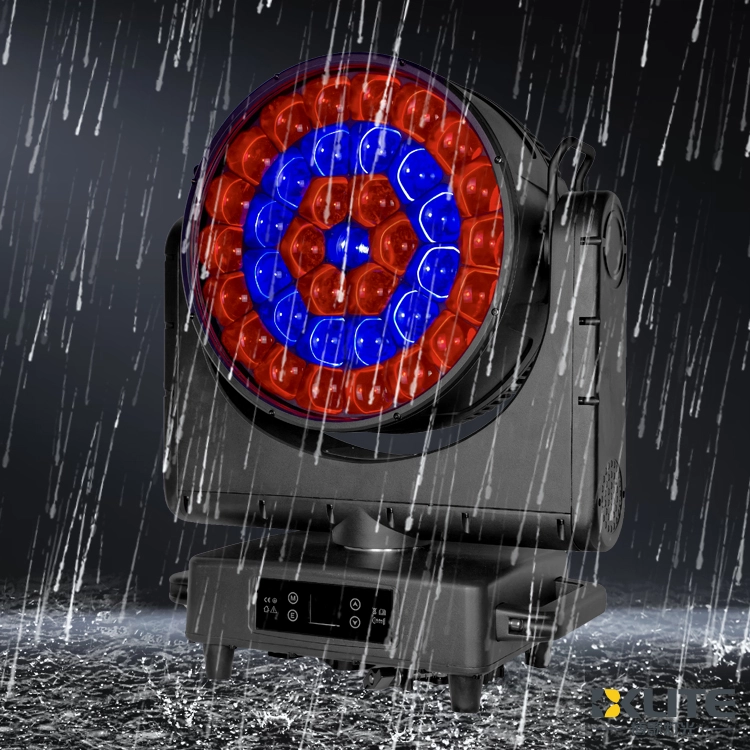
IP65 Waterproof ZOOM Bee Eye 37x40W RGBW 4in1 LED Moving Head Light
As a leading stage lighting equipment supplier with more than 15 years of industry know-how, BKlite brings you the IP65 ZOOM Bee Eye 37*40W RGBW 4in1 LED Moving Head Light (K25 Bee Eye) delivers vibrant, weatherproof lighting with powerful zoom and smooth movement. Ideal for dynamic stage effects, the K25 moving head light ensures stunning RGBW color mixing and reliable outdoor performance.
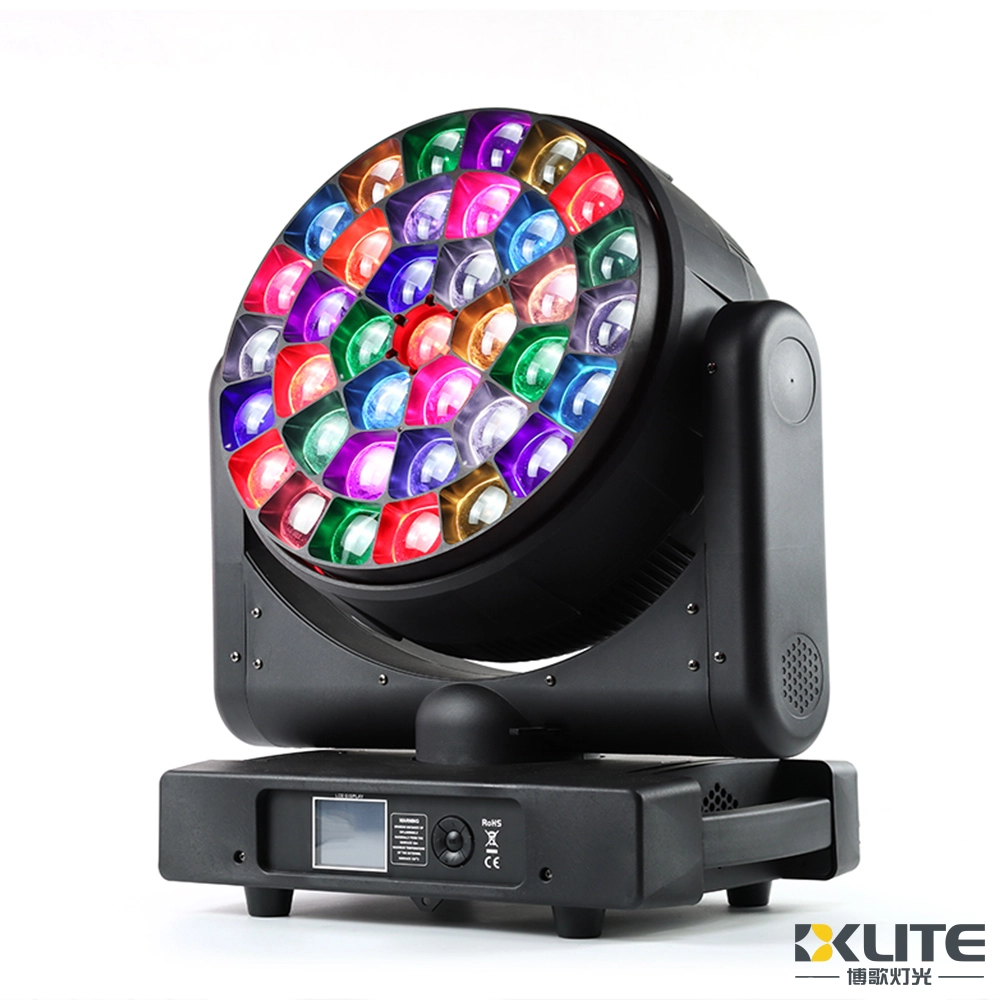
Bee Eye Zoom 37x40W RGBW 4in1 LED Beam Wash Moving Head Light
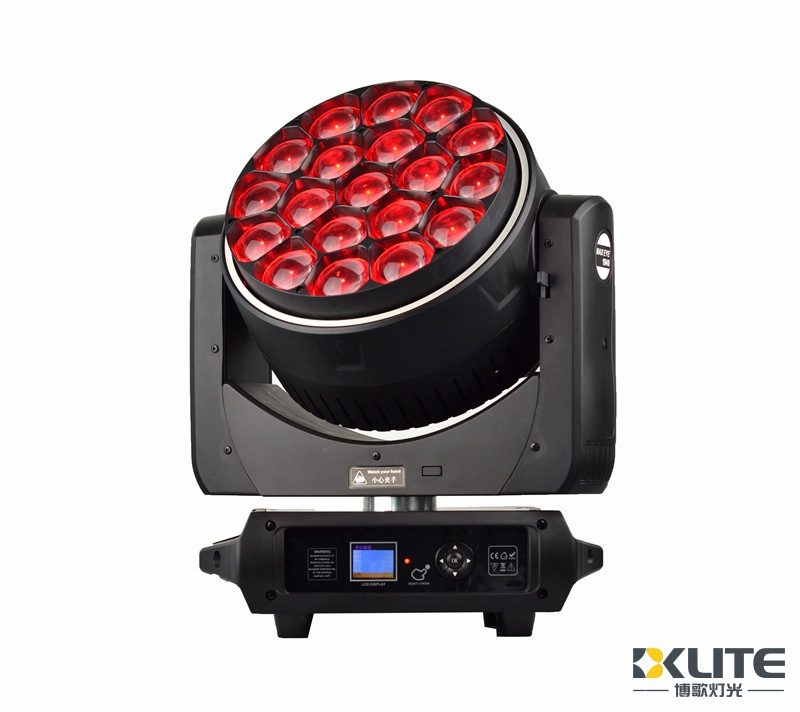
IP20 Bee Eye Zoom 19x40W RGBW 4IN1 LED Beam Wash Moving Head Light with LED Ring
As one of the leading stage lighting equipment suppliers with 15+ years of experience, BKlite launched a new Bee Eye K15 19x40 LED wash light BK-BY1940Z. .
Designed with a simple and sleek appearance, the WASH moving head light is compact, lightweight, and highly portable.
With multiple color effect macros and dynamic effect macros.
Our wash light can be used for versatile lighting options with amazing effect.
It is very good for your lighting projects.
Powerful and shoots very far distances.


Copyright © 2025 BKLITE All Rights Reserved.