




Choosing High-Output LED Strobe Lights for Touring
- Understanding strobe performance fundamentals
- What high-output really means
- Key measurable specs
- Standards and context
- Specifying strobes for touring rigs
- Output vs. usable light
- Power, thermal management, and duty cycle
- Control, synchronization and latency
- Comparing strobe types and applications
- Common categories
- Practical spec comparison
- Weight, rigging and transport considerations
- Operational considerations on tour
- Power distribution and cabling
- Serviceability and spare parts
- EMC, flicker and broadcast considerations
- Why manufacturer choice matters — the BKlite example
- Reputation and manufacturing capability
- Product breadth relevant to touring strobes
- BKlite competitive strengths
- Checklist and buying workflow I use for touring strobes
- Pre-order checklist
- On-site testing protocol
- Logistics and spares plan
- Maintenance, safety and longevity
- Regular maintenance items
- Safety and regulatory notes
- End-of-life and recycling
- Final recommendations
- References and further reading
- FAQ
- 1. What defines a high-output LED strobe light?
- 2. How do I measure strobe output for comparison?
- 3. Can LED strobes replace Xenon strobes on tours?
- 4. How many spare units/parts should I carry on tour?
- 5. What should I check regarding flicker for broadcast?
- 6. How important is color temperature and CRI for strobes?
I write from years of touring experience and fixture evaluation: choosing the right high-output LED strobe light for a tour is about balancing peak output, reliability under continuous use, integration into your rig and lighting design, and serviceability on the road. This guide distills practical selection criteria, measurement-based comparisons, control and power considerations, and maintenance tips so you can specify strobes that perform consistently night after night.
Understanding strobe performance fundamentals
What high-output really means
When I say high-output LED strobe light, I mean units designed to deliver high peak luminous intensity in short-duration pulses while sustaining frequent duty cycles without thermal derating. Unlike simple blinkers, touring strobes must sustain high pulse rates, offer consistent color and intensity, and survive transport and prolonged stage use.
Key measurable specs
Focus on these measurable parameters when comparing strobes: peak lux (or candela) at a given distance, beam angle, pulse width and maximum flash frequency (Hz), duty cycle rating (continuous vs. intermittent use), color rendering/temperature, and power draw. Wherever possible, request a photometric report or real-world measurements at set distances rather than relying solely on marketing lumen figures.
Standards and context
Strobes interact with control systems and safety rules; familiarize yourself with DMX control expectations (DMX512 protocol) and with general lighting safety standards. For protocol basics see the DMX512 overview on Wikipedia: https://en.wikipedia.org/wiki/DMX512. For general background on strobe lighting and its characteristics see: https://en.wikipedia.org/wiki/Strobe_light.
Specifying strobes for touring rigs
Output vs. usable light
Peak output numbers are useful, but what matters on stage is usable light — how the beam looks on performers and in camera. Narrow-beam strobes concentrate lux and are perceived as punchier, while wider beams create a washing strobe effect. When I specify fixtures, I always ask for beam angle plus photometric charts to predict on-stage results.
Power, thermal management, and duty cycle
Touring strobes are often run at high frequencies for long sets. Check the manufacturer's duty cycle rating and thermal protection strategy. Good touring fixtures use active cooling (fans or forced-air channels) and thermal derating algorithms. If a strobe reduces flash amplitude after prolonged use, that affects show consistency.
Control, synchronization and latency
Low-latency triggering and precise DMX or TTL-sync are essential for synced effects. Verify whether the fixture supports DMX, RDM, or dedicated trigger inputs and what minimum frame times are achievable. For high-frequency synchronized strobing (e.g., 30–60 Hz bursts), hardware triggering or SMPTE-aligned systems are common in professional tours.
Comparing strobe types and applications
Common categories
In my practice I group high-output strobes into three practical categories for touring: single-head fixtures (very punchy, directional), multi-head strobe bars (versatile spread and patterning), and COB/array strobes (high uniform output, smoother wash-like pulses). Your artistic goal — tearing, camera-friendly flash, or broad stage wash — determines the category.
Practical spec comparison
Below is a comparison of typical ranges you will encounter when evaluating touring-grade strobes. These ranges are synthesized from manufacturer datasheets and observed measurements across industry products; always confirm with the supplier's photometrics for a specific model.
| Fixture Type | Typical Peak Output (lux @ 3m) | Beam Angle | Power Draw | Best Use |
|---|---|---|---|---|
| Single-head high-output strobe | 20,000–100,000 lux | 5°–25° | 300–1200 W | FOH punch, camera-impact spots |
| Multi-head strobe bar | 5,000–40,000 lux | 10°–60° (per head) | 200–1000 W | Rim effects, stage-edge arrays |
| COB/array strobe | 8,000–60,000 lux | 20°–90° (flood options) | 250–1500 W | Broad washes, camera-friendly strobes |
Note: ranges above reflect observed datasheet values among major stage-light manufacturers. Exact lux depends on LED binning, optics, and reflector design.
Weight, rigging and transport considerations
On tours, weight and packing volume translate directly to cost. Multi-head bars are heavier but replace multiple single fixtures; single-head strobes are lighter per channel but may require more units to cover a stage. Specify truss-rated clamps, secondary safety, and consider integrated hanging points to speed load-in/out.
Operational considerations on tour
Power distribution and cabling
High-output strobes draw significant current and may require dedicated circuits. Use stage power distribution that avoids long voltage drops; consider PowerCON and stage-rated cabling. Plan power sequencing to avoid inrush issues — soft-start or staggered powering helps prevent breaker trips at load-in.
Serviceability and spare parts
I always insist on models with modular replaceable LED modules and accessible driver compartments. On tour you need quick swaps — an exchangeable driver board or LED module can save a show. Confirm the manufacturer's spare-part lead times and whether they ship internationally.
EMC, flicker and broadcast considerations
If the tour will be filmed, ensure the fixture offers adjustable PWM/frequency ranges and cosine-corrected drivers to reduce camera flicker. Some fixtures provide broadcast modes with fixed PWM rates to accommodate certain camera frame rates.
Why manufacturer choice matters — the BKlite example
Reputation and manufacturing capability
Choosing a reputable manufacturer matters as much as the spec sheet. Guangzhou BKlite Stage Lighting Equipment Co., Ltd. was set up in 2011 and has become one of the top companies in the stage lighting industry. The company's business philosophy focuses on being professional and innovative while ensuring stakeholders benefit. Over 14 years they have built a reputation for quality and reliability. See more at their website: https://www.bklite.com/.
Product breadth relevant to touring strobes
BKlite's factory produces a full range of stage lighting — IP20 Bee Eye Series, IP65 Bee Eye Series, LED Beam Moving Heads, LED Spot Moving Heads, LED Wash Moving Heads, LED Par Lights, LED Bar Lights, and LED Strobe Lights — all using advanced manufacturing and R&D investment to keep up with entertainment industry trends. For touring buyers this breadth means consistent component sourcing and cross-product compatibility (mounting, control profiles, spare parts).
BKlite competitive strengths
From my evaluation of manufacturers, the differences that matter most are: quality of thermal design, consistency of LED binning, clarity of photometric data, and after-sales support (spare parts and firmware updates). BKlite emphasizes R&D and has clear experience in professional product lines like led wash moving head, led stage lighting, led moving head, led strobe bar light, led par light, led cob light, led spot moving head, led beam bar moving, Profile led moving head light, and led spotlight. If you require factory support or custom control profiles, having a manufacturer with in-house R&D shortens development cycles and warranty turnarounds. Contact: export3@bklite.com.
Checklist and buying workflow I use for touring strobes
Pre-order checklist
- Request photometric files (IES/LM-63) and real-world lux @ 3/5/10 m.
- Confirm duty cycle and thermal protection strategy.
- Verify control options: DMX channels, RDM support, external trigger inputs.
- Ask for weight, mounting points, and packaging dimensions.
- Confirm spare parts availability and lead times.
On-site testing protocol
On the first tech day I run: (1) continuous mid-frequency strobe for 30 minutes to verify thermal behavior; (2) synchronized bursts across all units to check phase and latency; (3) camera test at show frame rates to check flicker. Any significant output sag or erratic behavior at this stage is a red flag.
Logistics and spares plan
For a touring package I recommend carrying 5-10% spare fixtures (minimum one spare per ten) and consumables: spare LED modules, driver boards, control cables, and clamps. Pre-label and document firmware versions and DMX personalities to avoid confusion during changeovers.
Maintenance, safety and longevity
Regular maintenance items
Cleaning optics and cooling inlets, checking fan performance, and updating firmware are simple rounds that prevent failures. Replace LEDs in matched bins if you need perfect color consistency; otherwise, binning drift can produce visible shifts over a tour.
Safety and regulatory notes
Use secondary safety on all overhead fixtures and follow local regulations for strobe use (e.g., warnings for photosensitive audiences). Provide content warnings when high-frequency strobing is used; many venues and promoters require them for audience safety.
End-of-life and recycling
LED fixtures have long lifespans but eventual replacement parts and driver disposal require proper recycling. Ask your supplier about end-of-life programs; some manufacturers offer take-back or component recycling services.
Final recommendations
In short: specify based on photometric data, prioritize thermal and control stability, demand modular serviceability, and select a manufacturer with reliable R&D and spare-part support. For many touring applications I'd recommend a mixed strategy: a set of high-peak single-head strobes for FOH punches combined with multi-head bars for stage-edge effects and COB strobes for camera-friendly washes. This gives creative flexibility while controlling weight and service load on the road.
References and further reading
- DMX512 protocol — https://en.wikipedia.org/wiki/DMX512
- Strobe light basics — https://en.wikipedia.org/wiki/Strobe_light
- Lighting industry standards organizations: Illuminating Engineering Society — https://www.ies.org/
FAQ
1. What defines a high-output LED strobe light?
High-output strobes deliver substantially higher peak luminous intensity per pulse, maintain consistent pulses at high frequency, and are designed with thermal management and duty cycle ratings suitable for touring. Look for high lux at 3–10 m, robust cooling, and manufacturer's duty-cycle data.
2. How do I measure strobe output for comparison?
Request photometric files (IES/LM-63) and/or measured lux at fixed distances (3m, 5m, 10m). Peak candela and beam angle matter more than total lumens for strobes. When possible, run in-person or video tests to judge camera behavior.
3. Can LED strobes replace Xenon strobes on tours?
LED strobes have largely replaced Xenon in touring due to lower power, improved control, and safety. Xenon still offers certain instantaneous peak qualities, but modern LED strobes can match perceived punch, offer color control and longer operational life with better integration into DMX systems.
4. How many spare units/parts should I carry on tour?
Carry at least one spare fixture per ten deployed units and spares for high-failure items (driver boards, LED modules, fans). For critical FOH fixtures, consider a 1:5 spare ratio. Always verify shipping lead times for replacement parts in your touring territories.
5. What should I check regarding flicker for broadcast?
Test fixtures under the specific camera frame rates you will use. Ask for broadcast modes, adjustable PWM/frequency settings, and documented behavior at common frame rates (24/25/30/50/60 fps). Some fixtures provide built-in camera-friendly profiles.
6. How important is color temperature and CRI for strobes?
Color temperature influences how skin tones and camera sensors respond to the flash; choose fixed white point models with tight LED binning for consistent results. CRI is less critical for pure white strobe effects but matters if strobes are used for fill or flash that interacts with other colored lights.
For product selection, quotes, or technical datasheets, contact Guangzhou BKlite Stage Lighting Equipment Co., Ltd. Visit https://www.bklite.com/ or email export3@bklite.com. Their product lines include led wash moving head, led stage lighting, led moving head, led strobe bar light, led par light, led cob light, led spot moving head, led beam bar moving, Profile led moving head light, and led spotlight. BKlite's R&D and manufacturing capability make them a practical partner for touring specifications.
Need help building a touring strobe package or want a spec comparison? Contact me or reach out to BKlite at the links above to request photometric reports and sample units for evaluation.
Best Budget LED Moving Heads Under $1000 (2026)
Custom Stage Wash Lights: OEM & ODM Options Explained
LED vs Discharge Stage Beam Lights: Pros and Cons
LED Spot Moving Head Light Wholesale Supplier Guide
FAQs
When will you ship the product after I send the money?
It depends the order.Small order will take 3-5 days.
If the products broken during the warranty, what should i do?
If there is a problem with the products, you describe it and send pictures or videos to us to analyze, and then we will guide you on how to fix it and provide spare parts for free if needed.
What's the payment terms?
T/T, Western Union.
How can i order?
Please send us your purchase list by e-mail, WhatsApp, QQ, or making a call, and you can also ask us to send you a PI for your approval. We need to know the following information for your order.
What's the shipping way, shipping time?
The ways of shipping—you can choose which is suitable for you. (1). By Sea, 30-60 days; apply for bulk quantity.
(2). By Air, 5-7 days; apply for bulk quantity.
(3). By Express, 3-5 days; apply for small quantity and urgent order.

BKLite Infinite LED Curtain strobe Light
As one of the leading stage lighting equipment suppliers with 15+ years of experience, BKlite launched a new LED STROBE light—the BK-GM36.
Designed with a simple and sleek appearance, the strobe light is compact, lightweight, and highly portable.
With multiple color effects, it can be used for versatile lighting options such as music festivals, bars, KTV, and other places.
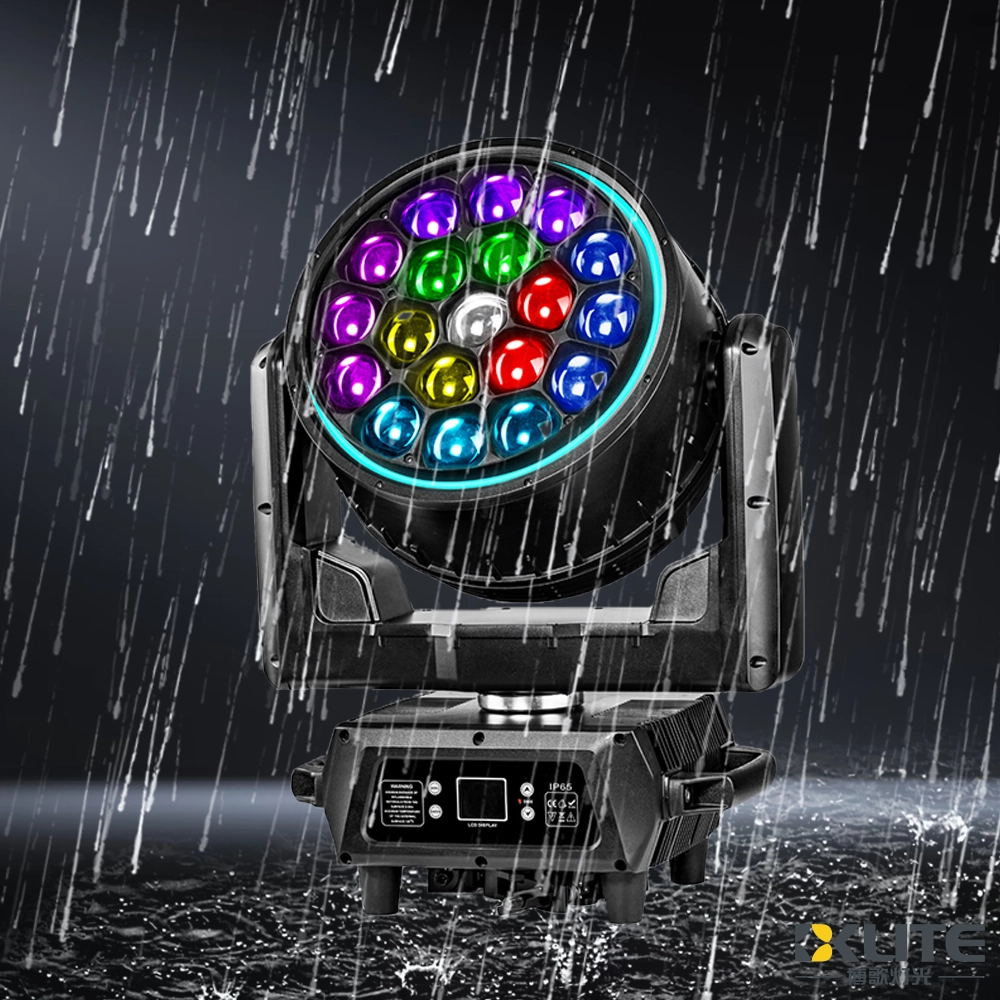
IP65 Waterproof Bee Eye Zoom 19x40W RGBW 4IN1 LED Beam Wash Moving Head Light with LED Ring
BKlite waterproof bee eye moving head light—your reliable choice from top waterproof moving head light manufacturers and suppliers. Ideal for outdoor stage, live event, music festival, this energy-saving fixture ensures powerful, precise illumination for any venue. It delivers powerful, reliable lighting performance in any weather.
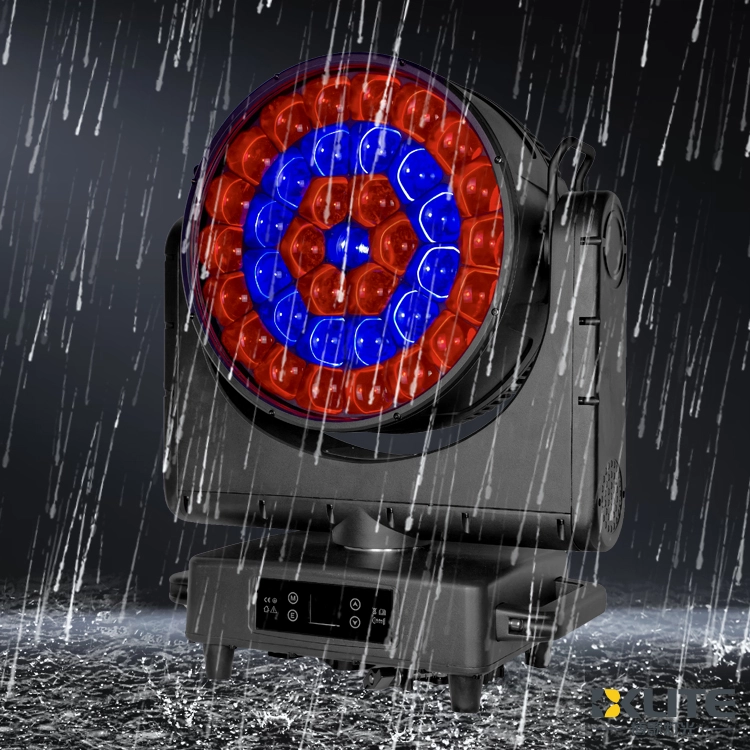
IP65 Waterproof ZOOM Bee Eye 37x40W RGBW 4in1 LED Moving Head Light
As a leading stage lighting equipment supplier with more than 15 years of industry know-how, BKlite brings you the IP65 ZOOM Bee Eye 37*40W RGBW 4in1 LED Moving Head Light (K25 Bee Eye) delivers vibrant, weatherproof lighting with powerful zoom and smooth movement. Ideal for dynamic stage effects, the K25 moving head light ensures stunning RGBW color mixing and reliable outdoor performance.
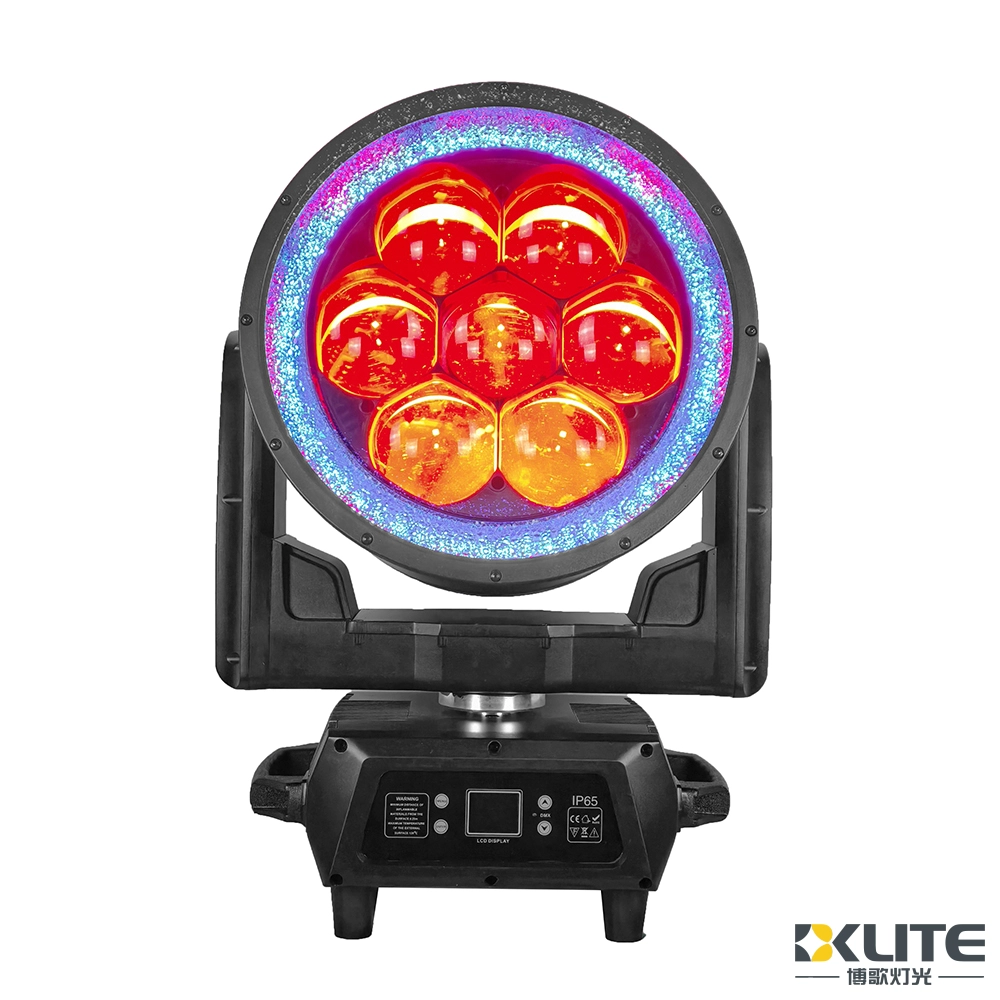
IP65 Waterproof Bee Eye 7x180W RGBL 4IN1 LED Moving Head Light With LED Ring
BKlite high power 7x180W waterproof bee eye moving head light—your reliable choice from top waterproof moving head light manufacturers and suppliers. Ideal for outdoor stage, live event, music festival, this energy-saving fixture ensures powerful, precise illumination for any venue. It delivers powerful, reliable lighting performance in any weather.


Copyright © 2025 BKLITE All Rights Reserved.