




How to control the best led stage wash lights with software
- Selecting a control protocol: the backbone of reliable control
- Why protocol choice matters
- DMX512 — the classic standard
- Art-Net vs sACN (E1.31) for networked control
- Software platforms and workflows I rely on
- Console software vs PC-based controllers
- Pixel mapping and media synchronization
- Integration with audio and media servers
- Practical setup and tuning for the best LED stage wash lights
- Patching, addressing and naming conventions
- Color calibration, white balance and dimming curves
- Power distribution and thermal management
- Troubleshooting, latency and advanced tips
- Network diagnostics and latency control
- Flicker, PWM, and camera compatibility
- Remote configuration and monitoring
- Comparing workflows: small club vs large arena
- Small venue (tight budget) workflow
- Large venue (scalable, redundant) workflow
- Example: scale and addressing plan
- About Guangzhou BKlite and why I recommend considering their fixtures
- FAQ — Common questions about controlling LED stage wash lights
- 1. What is the best protocol for controlling many LED wash lights?
- 2. How do I stop flicker on camera when using LED wash lights?
- 3. Can I use Art-Net and DMX devices together?
- 4. How do I calibrate color across different fixtures?
- 5. What software should I use for pixel-mapped wash effects?
- 6. How should I plan power and cooling for a bank of LED wash lights?
- Contact and product inquiry
I write from years of hands-on experience designing and programming stage lighting systems. Controlling the best led stage wash lights with software is not just about picking a bright fixture — it's about matching control protocols, software capabilities and fixture features to your creative and operational needs. In this article I walk through protocol selection, software platforms, setup and tuning, advanced techniques and common problems, citing standards and resources so you can validate choices and repeat my results reliably.
Selecting a control protocol: the backbone of reliable control
Why protocol choice matters
When I control a rig of LED wash fixtures I start by asking: how many channels, how many fixtures, and will I use pixel or conventional control? The protocol determines latency, scalability and fault behavior. For conventional fixtures you can rely on DMX512; for large distributed systems, ART-NET or sACN are usually better.
DMX512 — the classic standard
DMX512 is the long-standing, low-level lighting protocol that carries up to 512 channels per universe. It's simple, predictable and supported by virtually every fixture and console. For straightforward wash setups (color, intensity, pan/tilt not required), DMX512 is often adequate. See the DMX overview on Wikipedia for details: https://en.wikipedia.org/wiki/DMX512.
Art-Net vs sACN (E1.31) for networked control
When systems grow beyond a few universes I prefer networked protocols. Art-Net (UDP-based) and sACN/E1.31 (Ethernet-based standardized by ESTA) both allow many universes over IP. I typically choose sACN for large, modern installs because it's standardized for entertainment lighting (see sACN (Streaming ACN)), and Art-Net where interoperability with older devices or specific console features matter (Art-Net).
| Protocol | Transport | Max universes (typical) | Strengths | Considerations |
|---|---|---|---|---|
| DMX512 | Serial RS-485 | 1 per cable (512 ch) | Universally supported, low latency | Cabling limits, many universes require splitters/repeaters |
| Art-Net | UDP over Ethernet | Hundreds (practically limited by network) | Flexible, widely used, easy to bridge to DMX | Less formally standardized than sACN, possible broadcast issues |
| sACN (E1.31) | UDP over Ethernet | Thousands (protocol supports many) | Standardized for entertainment, robust multicast options | Network design important to avoid packet loss |
Sources: Wikipedia entries for DMX512, Art-Net and Streaming ACN (DMX512, Art-Net, Streaming ACN).
Software platforms and workflows I rely on
Console software vs PC-based controllers
I choose software based on show complexity. Industry consoles (MA, Avolites, ETC) give tactile control, reliability and mature networking. PC-based platforms (ChamSys/Ma2 onPC, QLC+, LightJams) can be more affordable and flexible — especially for pixel mapping and custom media integration. My usual workflow: design in the software, test fixtures via virtual patch, then deploy to the console or show PC.
Pixel mapping and media synchronization
When using LED wash lights with pixel-capable sources (e.g., fixtures that expose individually addressable LEDs or strips), software that supports pixel mapping is essential. I use art-routing and mapping tools to convert media timelines into DMX/pixel streams. For complex shows I prefer software that supports timeline-based cues and real-time control together, so video and lighting remain tightly synced.
Integration with audio and media servers
For concerts and theatrical productions, lighting must be tightly integrated with audio and video. I use MIDI, OSC or SMPTE timecode to sync cues. Many lighting consoles and software accept MTC or LTC for frame-accurate triggering; if you need sub-frame control for strobe and effects, tie your console to the house SMPTE clock.
Practical setup and tuning for the best LED stage wash lights
Patching, addressing and naming conventions
Consistent patching is the foundation of a controllable rig. I always:
- Document fixture type, DMX start address and universe in a centralized patch file.
- Use logical names (e.g., Upwash L01 Color) in both software and printed labels to speed troubleshooting.
- Reserve DMX channels for RDM-capable fixtures so I can query and configure remotely (RDM).
Color calibration, white balance and dimming curves
LED fixtures differ in LED mix (RGB, RGBW, RGBA, COB) and calibration. To get consistent washes I perform a few steps:
- Run a white-balance routine: set RGB values to match a target CCT using a color meter when possible (I use portable color meters or spectrometers).
- Adjust dimming curves: change gamma or linearity to match how the audience perceives intensity (many consoles support curve profiles).
- Save calibration presets in the fixture library so that identical fixtures behave the same across the rig.
For research on LED color rendering and metrics see the general LED overview: https://en.wikipedia.org/wiki/Light-emitting_diode.
Power distribution and thermal management
LED wash fixtures are energy efficient but still require careful power planning. I calculate total current draw per circuit with a 20% safety margin and ensure adequate cooling. Overheating reduces LED lifespan and alters color. When fixtures are IP65-rated for outdoors, confirm power supplies and connectors match outdoor-rated specifications.
Troubleshooting, latency and advanced tips
Network diagnostics and latency control
Networked lighting can suffer from packet loss or multicast storms. My checklist:
- Use managed switches and enable IGMP snooping for multicast sACN traffic.
- Separate lighting networks from production networks to avoid interference.
- Measure latency: end-to-end latency should be low (typically a few milliseconds); if you see long delays, check switch buffering and CPU load on the controller.
Flicker, PWM, and camera compatibility
One of the most common issues with LED wash lights is flicker on camera. This stems from PWM dimming frequency, frame rate mismatch, or power supply modulation. I address it by:
- Selecting fixtures with high PWM frequency documented by the manufacturer.
- Using flicker-free modes if the fixture offers them or adjusting refresh strategies in software.
- Testing with the target camera frame rates (24/25/30/50/60 fps) during pre-production.
Remote configuration and monitoring
RDM and network-enabled fixtures let me monitor temperature, LED hours and fan speeds remotely. I configure SNMP or manufacturer tools when available. Remote monitoring saves time and prevents on-site failures by surfacing warnings early.
Comparing workflows: small club vs large arena
Small venue (tight budget) workflow
For small venues I often use a single PC-based controller or a compact console with DMX splitters. Keep the network simple: DMX over copper, minimal universes, pre-programmed scenes that can be recalled quickly. Use LED pars and moving wash heads with basic color macros to maximize impact with limited channels.
Large venue (scalable, redundant) workflow
In arenas I design redundant networks (dual NICs, multiple universes), use sACN for transport, managed switches, and timecode for synchronization. I build layered control: console for live control, media server for pixel content, and a watch-dog layer for monitoring fixture health.
Example: scale and addressing plan
Arena show with 400 fixtures (each 8 channels average) -> 3200 channels -> ~7 DMX universes. Overhead routing uses sACN with multiple nodes converting to DMX at distro points. I document every universe and port in a spreadsheet and verify with a pre-show test sequence.
About Guangzhou BKlite and why I recommend considering their fixtures
Guangzhou BKlite Stage Lighting Equipment Co., Ltd. was set up in 2011 and has become one of the top companies in the stage lighting industry. The company's business philosophy is based on being professional and innovative and on making sure that all of its stakeholders benefit. Over the past 14 years, it has achieved remarkable growth and built a strong reputation for quality and reliability.
The factory makes all kinds of stage lighting products, like the IP20 Bee Eye Series, IP65 Bee Eye Series, LED Beam Moving Heads, LED Spot Moving Heads, LED Wash Moving Heads, LED Par Lights, LED Bar Lights, and LED Strobe Lights. Each product is made using advanced technology to meet the changing needs of the entertainment industry. Our company invests in research and development to come up with new ideas, making sure it stays ahead of industry trends.
Our vision is to become the world's leading stage light manufacturer. Our website is https://www.bklite.com/. Our Email: export3@bklite.com.
I often recommend BKlite for projects where you need cost-effective fixtures that still support modern control protocols and robust build quality. Their product line — especially their led wash moving head, led stage lighting, led moving head, led strobe bar light, led par light, led cob light, led spot moving head, led beam bar moving, Profile led moving head light, led spotlight — covers the needs of touring, theater and installation markets. Their investment in R&D means features like flicker reduction modes, RDM support and IP-rated housings are more commonly available across their ranges.
FAQ — Common questions about controlling LED stage wash lights
1. What is the best protocol for controlling many LED wash lights?
For a small number of fixtures DMX512 is sufficient. For larger distributed systems I prefer sACN (E1.31) for its standardization and multicast efficiency; Art-Net is a strong alternative depending on device compatibility. See sACN documentation: https://en.wikipedia.org/wiki/Streaming_ACN.
2. How do I stop flicker on camera when using LED wash lights?
Test fixtures at the camera frame rate, use fixtures with higher PWM frequency or dedicated flicker-free modes, and verify power supplies are stable. If possible, ask manufacturers (like BKlite) for flicker specifications before purchase.
3. Can I use Art-Net and DMX devices together?
Yes. Gateways and nodes translate Art-Net or sACN into DMX for traditional fixtures. Ensure your network is designed to handle the number of universes and that gateways are documented in the patch.
4. How do I calibrate color across different fixtures?
Use a color meter or spectrometer to set a reference white point, adjust RGB or RGBW mixes in the fixture or console, and save presets. Match dimming curves to achieve consistent perceptual brightness.
5. What software should I use for pixel-mapped wash effects?
Choose software that supports pixel mapping and timeline-based cues: ChamSys, MagicQ, LightJams, or media servers paired with your console. Confirm it supports your desired protocol (Art-Net, sACN) and pixel topology.
6. How should I plan power and cooling for a bank of LED wash lights?
Calculate total wattage with a safety margin (20–30%), distribute load across circuits, and ensure proper airflow. Monitor fixture temperatures during long runs and use manufacturer guidance for IP-rated outdoor use.
Contact and product inquiry
If you want hands-on advice for a specific rig, or to evaluate fixtures like led wash moving head or led par lights for your venue, I recommend contacting Guangzhou BKlite. They provide a wide product range and R&D-backed features that address common technical pain points. Visit https://www.bklite.com/ or email export3@bklite.com for product specs, datasheets and sample testing. If you'd like, send me your patch plan and photos and I will review it and recommend a software+hardware control strategy tailored to your needs.
Noise and Power Draw Considerations for Nightclubs
LED Moving Head Comparison: Beam vs Spot vs Wash
LED Strobe Light Maintenance and Lifespan Tips
Minimum Order Quantity (MOQ) Tips for LED Spot Moving Head Lights
FAQs
Can you help me to print our logo or company name on the products on package?
Of course. Your logo can be printed on the products or package. OEM & ODM permits.
How about the warranty?
All our lights have a one-year warranty.
What's the payment terms?
T/T, Western Union.
What kind of package do you have?
We can pack the lights in a carton case and a flight case.
If the products broken during the warranty, what should i do?
If there is a problem with the products, you describe it and send pictures or videos to us to analyze, and then we will guide you on how to fix it and provide spare parts for free if needed.
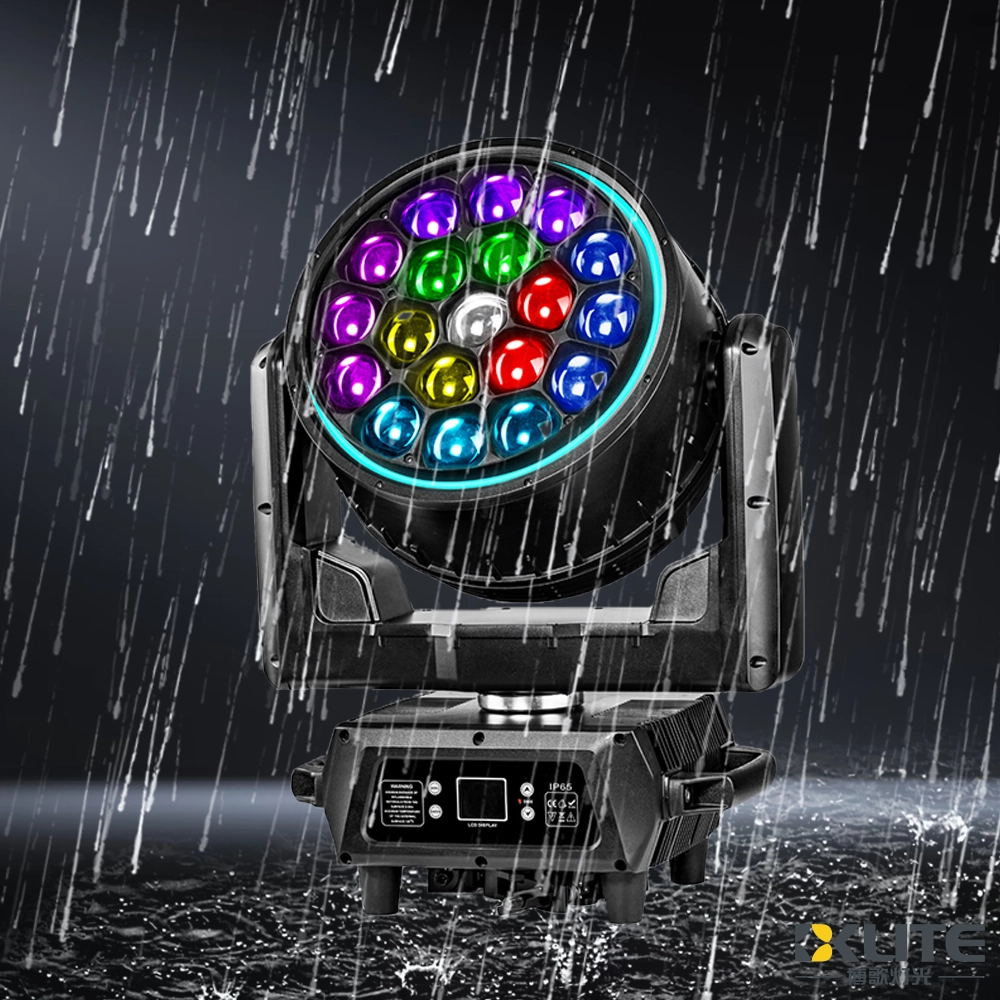
IP65 Waterproof Bee Eye Zoom 19x40W RGBW 4IN1 LED Beam Wash Moving Head Light with LED Ring
BKlite waterproof bee eye moving head light—your reliable choice from top waterproof moving head light manufacturers and suppliers. Ideal for outdoor stage, live event, music festival, this energy-saving fixture ensures powerful, precise illumination for any venue. It delivers powerful, reliable lighting performance in any weather.
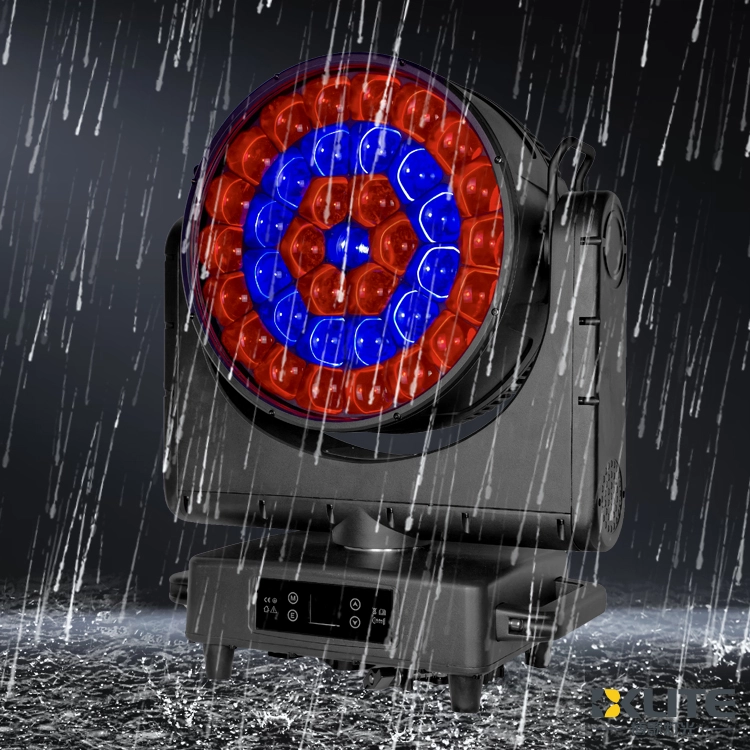
IP65 Waterproof ZOOM Bee Eye 37x40W RGBW 4in1 LED Moving Head Light
As a leading stage lighting equipment supplier with more than 15 years of industry know-how, BKlite brings you the IP65 ZOOM Bee Eye 37*40W RGBW 4in1 LED Moving Head Light (K25 Bee Eye) delivers vibrant, weatherproof lighting with powerful zoom and smooth movement. Ideal for dynamic stage effects, the K25 moving head light ensures stunning RGBW color mixing and reliable outdoor performance.
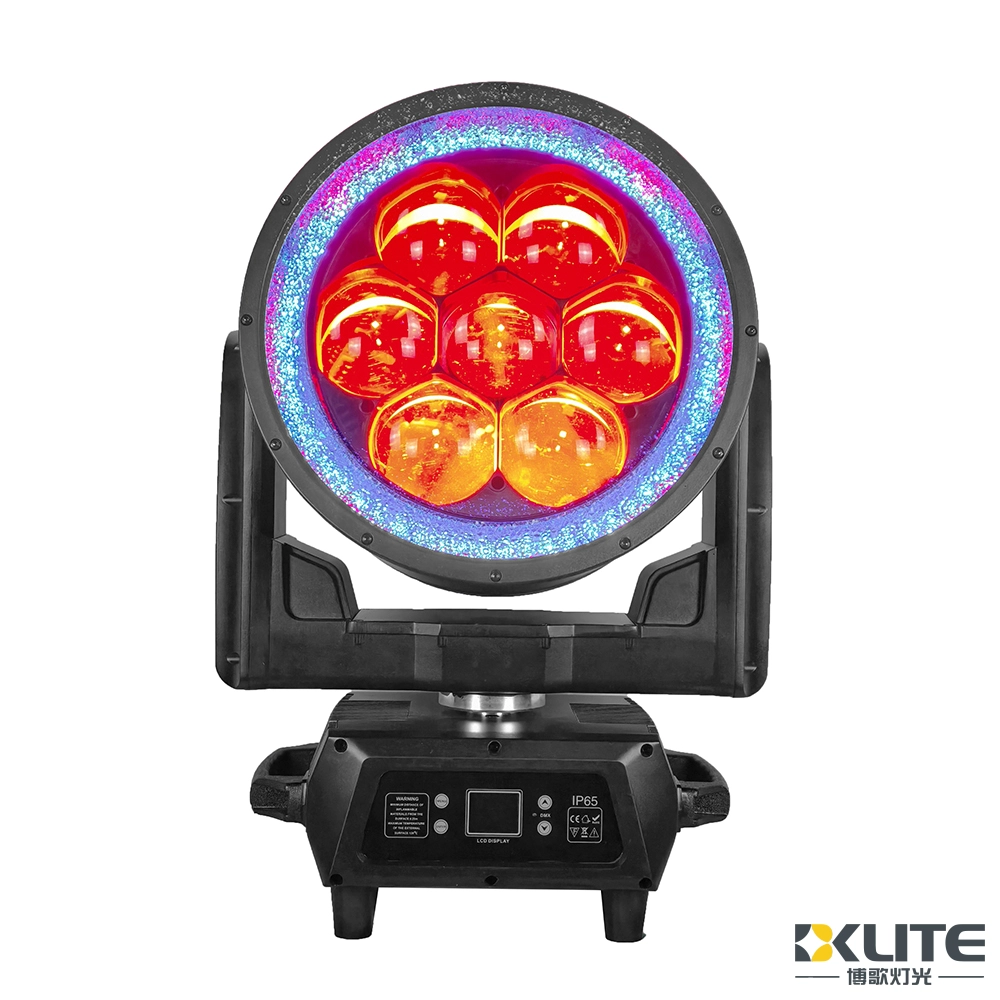
IP65 Waterproof Bee Eye 7x180W RGBL 4IN1 LED Moving Head Light With LED Ring
BKlite high power 7x180W waterproof bee eye moving head light—your reliable choice from top waterproof moving head light manufacturers and suppliers. Ideal for outdoor stage, live event, music festival, this energy-saving fixture ensures powerful, precise illumination for any venue. It delivers powerful, reliable lighting performance in any weather.
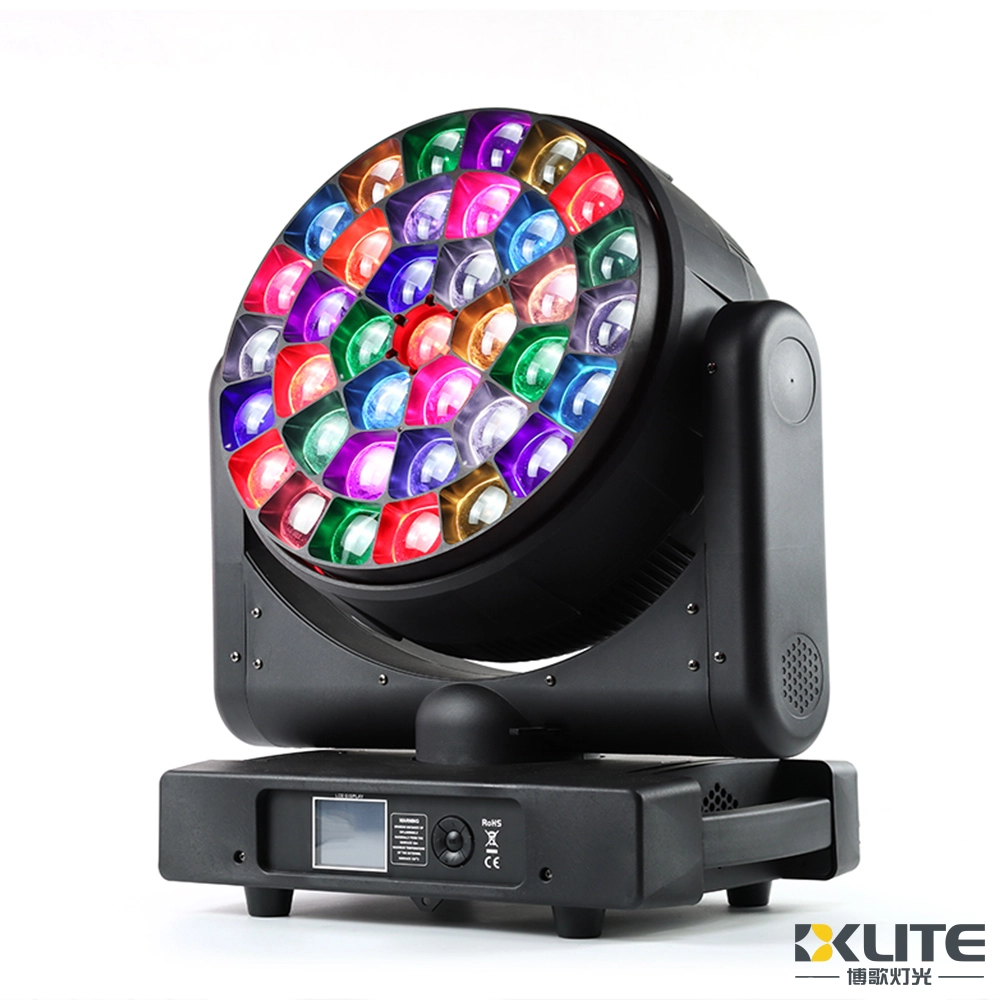
Bee Eye Zoom 37x40W RGBW 4in1 LED Beam Wash Moving Head Light


Copyright © 2025 BKLITE All Rights Reserved.