




How Beam Angle Affects Visual Impact on Stage
- Understanding Beam Behavior in Stage Lighting
- What is beam angle and why it matters for Stage Beam Light
- How to calculate beam spread — practical formula for Stage Beam Light rigging
- Stage Beam Light: Categories and Visual Effects
- Photometric trade-offs for Stage Beam Light selection
- Stage Beam Light: Practical Rigging and Design Strategies
- Example calculations for rigging a medium venue
- Stage Beam Light: Color, Optics, and Perceived Brightness
- Why manufacturers provide beam and field angles for Stage Beam Light
- Stage Beam Light: Choosing Fixtures — LEDs, Moving Heads, and Bars
- Stage Beam Light: Production Considerations and Budgeting
- Sample planning checklist for a concert tour using Stage Beam Light
- Stage Beam Light: Guangzhou BKlite — Manufacturer Profile and Product Fit
- Stage Beam Light: Case Example — Designing a Festival Headline Look
- Quantitative planning table — sample fixture count estimate
- Stage Beam Light: Maintenance, Specification Tips, and Final Recommendations
- Frequently Asked Questions (FAQ)
- 1. What beam angle should I choose for visible hazy shafts?
- 2. How does beam angle affect the number of fixtures I need?
- 3. Are LED beam lights always better than traditional discharge beam fixtures?
- 4. What is the difference between beam angle and field angle on the spec sheet?
- 5. How should I plan for beam angles in touring shows across multiple venues?
- 6. Do beam angles change with color mixing or gobos?
- Contact and Product Inquiry
- References and Further Reading
Understanding Beam Behavior in Stage Lighting
Beam angle is one of the most influential parameters of any stage beam light. It governs how light is distributed in space, how intense a beam appears, and how it interacts with haze, scenery, and performers. For lighting designers, technical directors, and event producers, understanding beam angle is essential to achieve the intended visual hierarchy, focus, and atmosphere while optimizing the choice of fixtures and rigging.
What is beam angle and why it matters for Stage Beam Light
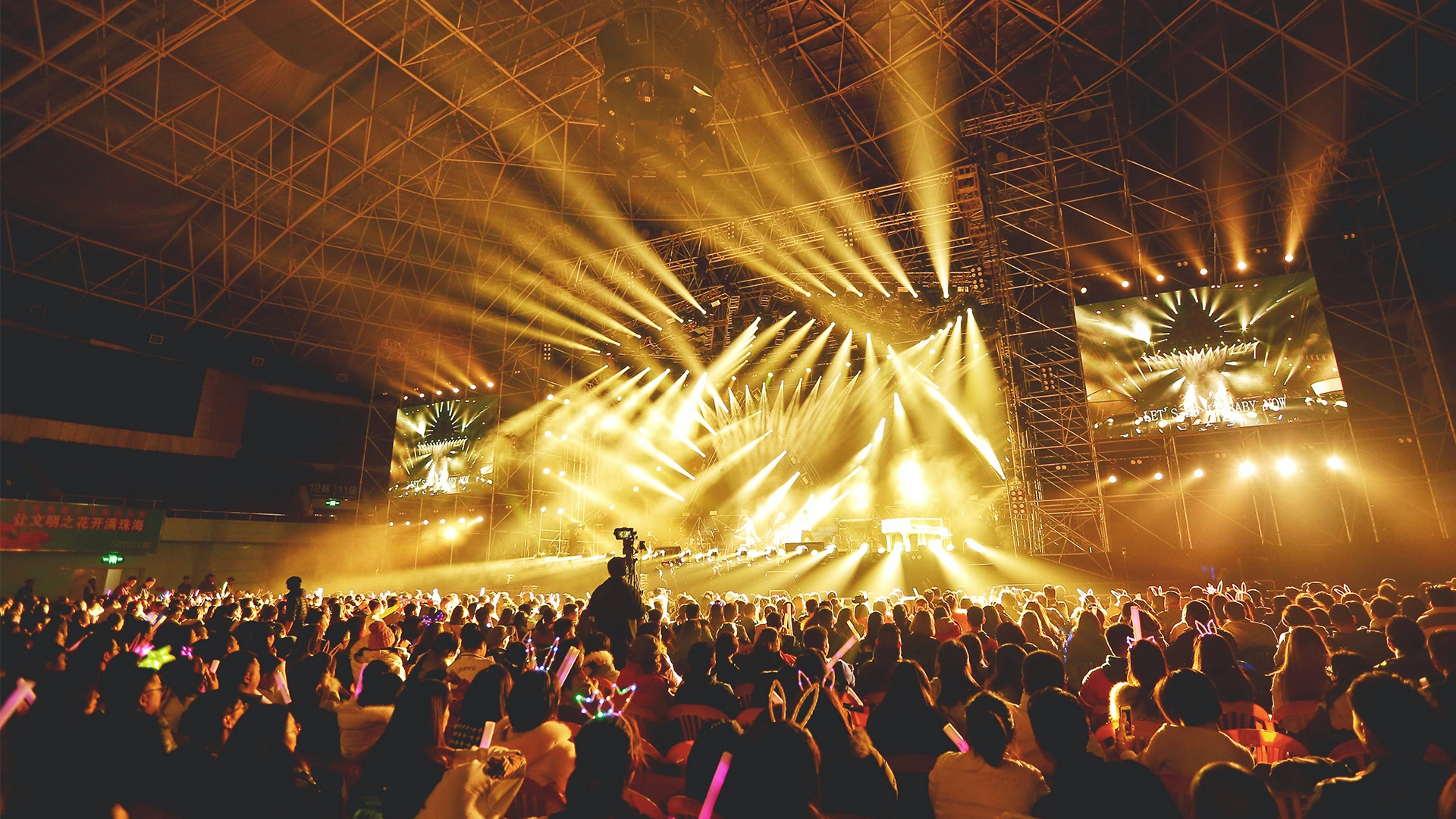
Beam angle is defined as the angle between the two directions for which the luminous intensity is 50% of the maximum intensity on the beam axis. In practical terms, a smaller beam angle creates a tighter, more intense column of light (useful for aerial beams and long-throw applications), while a larger beam angle produces a broader wash (better for coverage and softening edges).
Why this matters for a Stage Beam Light:
- Visual focus: Narrow beams draw the eye to a point; wide beams distribute attention across an area.
- Perceived brightness: The same lamp/LED looks brighter through a narrow beam because light is concentrated.
- Interaction with atmosphere: Narrow beams cut through haze with visible shafts; wide beams give ambient glow.
- Fixture planning: Beam angle affects the number of units needed, positioning, and power budget.
How to calculate beam spread — practical formula for Stage Beam Light rigging
The beam diameter at a given throw distance can be estimated by basic trigonometry. Use this formula for planning positions and coverage:
Beam diameter = 2 × (throw distance) × tan(beam angle / 2)
Example: A 5° beam at 20 meters produces a beam diameter ≈ 2 × 20 × tan(2.5°) ≈ 1.75 m. This helps determine where to hang fixtures to avoid unwanted overlap or to create strong aerial shafts.
Stage Beam Light: Categories and Visual Effects
Beam angles are typically grouped into ranges representing different visual roles on stage. The following table summarizes common categories, their visual effect, and typical uses.
| Beam Angle | Category | Visual Effect | Common Fixture Types | Typical Uses |
|---|---|---|---|---|
| <= 5° | Ultra-narrow beam | Very tight shafts, high intensity, visible aerial rays with haze | LED Beam Moving Heads, Beam Spot Moving Heads | Festival aerial effects, searchlight-style looks, long-throw highlights |
| 6–12° | Narrow beam | Intense, focused beams, good for mid-to-long throws | Beam Moving Heads, Profile Moving Heads | Front-of-house accents, soloist highlights, truss-mounted beams |
| 13–25° | Medium beam / spot | Balanced between intensity and spread; good edge control | Spot Moving Heads, LED Spot Moving Head, Profile LED Moving Head | Gobo projection, stage washes with sharper edges |
| 26–45° | Wide spot / narrow wash | Smoother coverage, softer edges | LED Wash Moving Head, LED Par Light, LED COB Light | Area washes, cyclorama lighting, audience washes |
| > 45° | Wide wash | Even coverage across a large surface | LED Bar Lights, LED Strobe Bar Light, LED Par | Full-stage washes, backlight fills, color blending |
Photometric trade-offs for Stage Beam Light selection
When selecting a Stage Beam Light, consider lux at target, beam edge definition (hard vs soft), color rendering, and fixture optics. Two fixtures with identical luminous flux (lumens) will produce different illuminance (lux) depending on beam angle and throw distance. Use manufacturer photometric charts (IES files) for accurate planning; they provide lux values at distances and beam spreads for real-world layout and rigging.
Stage Beam Light: Practical Rigging and Design Strategies
Good visual design blends narrow and wide beam angles to create layering: sharp beams for drama and verticality; washes for readability and ambience. Key strategies:
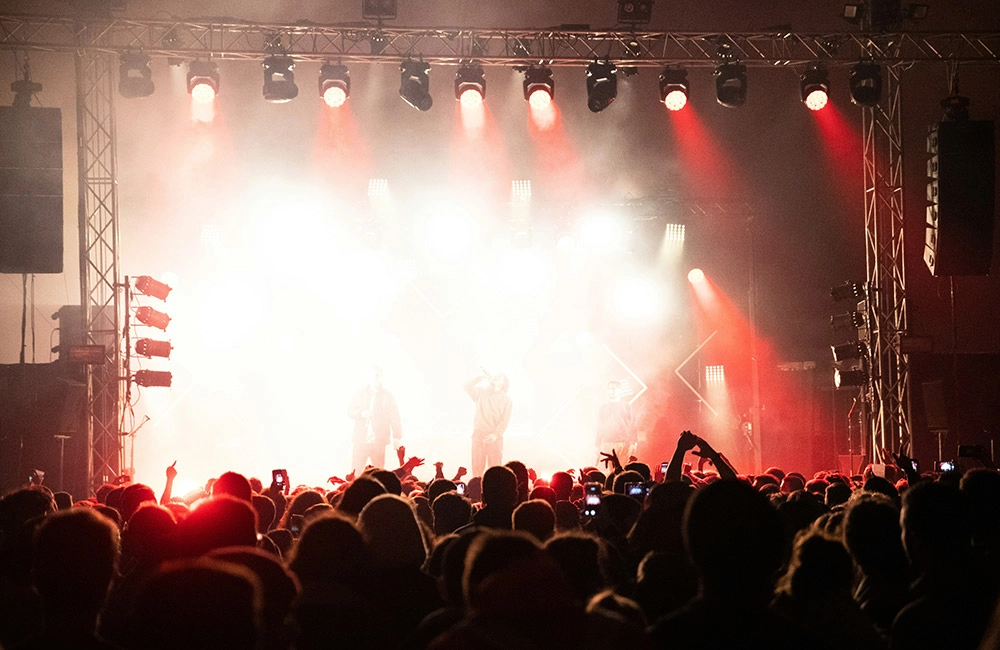
- Layering: Use a mix of beam fixtures (6–12°) for aerial drama and wash fixtures (25–45°) for face and set lighting to preserve visibility.
- Positioning: Hang narrow beams higher and farther back to maximize shaft length; place washes closer to stage to minimize spill.
- Haze calibration: A small amount of haze sharply increases beam visibility; test haze density during tech to balance optical shafts and performer comfort.
- Overlap control: Calculate beam diameter at stage to avoid unintentional hot spots or excessive overlap from multiple beams.
Example calculations for rigging a medium venue
Assume a mid-size theater with 12 m throw distance from truss to stage. Using the formula above:
| Beam Angle | Beam Diameter @12m (approx.) | Visual Note |
|---|---|---|
| 5° | 1.05 m | Tight shafts—good for back-of-house beams |
| 10° | 2.10 m | Focused spot—soloist accents |
| 25° | 5.37 m | Broad spot—set or area highlight |
| 45° | 9.95 m | Wash—covers full stage width in many venues |
Stage Beam Light: Color, Optics, and Perceived Brightness
Perceived brightness depends on more than lumens: color, contrast, and background all matter. A warm-color beam may appear less intense than a cool-white beam at the same lux because of luminance perception and eye sensitivity. Similarly, projecting a bright narrow beam onto a dark backdrop increases perceived contrast, making the beam look stronger.
Optical elements (lenses, reflectors, and gobos) also shape the beam's character. High-quality optics preserve beam edge definition and minimize chromatic aberration; manufacturers often specify beam angle in both 'beam' and 'field' angles — field angle corresponds to the angle where intensity drops to 10% of maximum and helps define spill.
Why manufacturers provide beam and field angles for Stage Beam Light
Beam angle (50% intensity) indicates the core shaft, while field angle (~10% intensity) shows the full area of significant illumination. For precise scenic work — gobos, profiles, or tight aerial effects — both numbers matter for masking, gobo scale, and avoiding light on unintended surfaces.
Stage Beam Light: Choosing Fixtures — LEDs, Moving Heads, and Bars
Modern LED technology has changed how beam angles are implemented. Many advanced fixtures include interchangeable lenses, zoom ranges, or modular optics. Below is a compact comparison of fixture families and how beam angle typically applies.
| Fixture Family | Typical Beam Range | Strengths | Limitations |
|---|---|---|---|
| LED Beam Moving Heads | 2°–6° | High aerial impact, intense shafts | Limited coverage, requires multiple units for wash |
| LED Spot/Profile Moving Heads | 6°–30° (zoom) | Gobo projection, versatile focus | Less extreme narrowness than beams |
| LED Wash Moving Head | 20°–60° | Even coverage, color blending | Soft edges; not suitable for long-throw shafts |
| LED Bar Lights / Par / Strobes | Wide floods & asymmetric | Background and audience washes, effects | Not for tight aerial beams |
Stage Beam Light: Production Considerations and Budgeting
Beam angle impacts how many fixtures you need and where to place them. Consider these practical items during budgeting:
- Number of fixtures — narrow beams cover less stage area; more units may be required for consistent coverage.
- Power and cooling — high-intensity narrow-beam fixtures may draw more power and produce more heat per channel.
- Rigging and focusing time — precise focusing of narrow beams is labor- and tech-time intensive.
- Supporting gear — haze machines, trussing, and safety equipment to realize aerial beam looks safely.
Sample planning checklist for a concert tour using Stage Beam Light
- Define look: proportion of aerial beams vs washes per song.
- Calculate throw distances for each venue; maintain a database of beam diameters by venue.
- Select fixtures: match beam angle ranges to design roles (beams, spots, washes).
- Request IES/IESNA photometric files from manufacturers for final lux calculations.
- Plan haze schedule and safety procedures for laser/beam interactions if used.
Stage Beam Light: Guangzhou BKlite — Manufacturer Profile and Product Fit
Guangzhou BKlite Stage Lighting Equipment Co., Ltd. was set up in 2011 and has become one of the top companies in the stage lighting industry. The company's business philosophy is based on being professional and innovative and on making sure that all of its stakeholders benefit. Over the past 14 years, it has achieved remarkable growth and built a strong reputation for quality and reliability.
The factory makes all kinds of stage lighting products, like the IP20 Bee Eye Series, IP65 Bee Eye Series, LED Beam Moving Heads, LED Spot Moving Heads, LED Wash Moving Heads, LED Par Lights, LED Bar Lights, and LED Strobe Lights. Each product is made using advanced technology to meet the changing needs of the entertainment industry. Our company invests in research and development to come up with new ideas, making sure it stays ahead of industry trends.
Our vision is to become the world's leading stage light manufacturer. Our website is https://www.bklite.com/.
How BKlite products address beam-angle needs:
- LED Beam Moving Head: engineered for ultra-narrow beams (ideal for aerial shafts and long-throw stages).
- LED Spot Moving Head & Profile LED Moving Head: offer sharp edge control and gobo projection — useful where beam and field angles need to be controlled precisely.
- LED Wash Moving Head & LED Par Light: optimized for even color blending and wide coverage with controlled beam edges for stage washes.
- LED Strobe Bar Light & LED Bar (Beam Bar Moving): provide wide asymmetric effects and audience/wash applications.
- LED COB Light & LED Spotlight: deliver high CRI output for front-of-house and color-accurate illumination of performers and sets.
BKlite's advantages include vertical integration (factory production), sustained R&D investment, and a comprehensive product line that spans the beam-angle spectrum required by touring productions and permanent installations. The company emphasizes quality control and provides product ranges (IP20 and IP65 Bee Eye Series) suitable for indoor and outdoor applications — an important distinction when choosing beam fixtures for different venues.
Stage Beam Light: Case Example — Designing a Festival Headline Look
Scenario: A headline set at an outdoor festival requires strong aerial effects and good front-of-house coverage for camera. Approach:
- Use LED Beam Moving Heads (3–5°) hung at rear truss for visible shafts through haze to create aerial spectacle.
- Deploy LED Wash Moving Heads and LED Par Lights (25–45°) for face light and stage coverage to ensure cameras capture performers without harsh shadows.
- Balance power and fixture count: use calculated beam diameters to determine counts so coverage is even but intensity is maintained.
- Specify IP65-rated fixtures for weather resilience on outdoor stages (BKlite IP65 Bee Eye Series as an example).
Quantitative planning table — sample fixture count estimate
| Role | Fixture Type | Beam Angle | Estimated Count |
|---|---|---|---|
| Aerial shafts | LED Beam Moving Head | 3–5° | 12–16 |
| Front fill (cameras) | LED Spot Moving Head | 10–20° | 6–8 |
| Stage wash | LED Wash Moving Head | 25–40° | 8–12 |
Stage Beam Light: Maintenance, Specification Tips, and Final Recommendations
Specification tips:
- Ask for IES files and photometric sheets for final rigging calculations.
- Specify beam and field angles and CRI/ TLCI for broadcast applications.
- Consider modular optics or zoom fixtures if you need flexible beam-angle changes across a tour.
- For outdoor or wet environments, choose IP-rated fixtures to maintain optical performance and safety.
Maintenance and lifecycle:
- Clean optics regularly and follow manufacturer guidelines to preserve beam quality.
- Verify firmware and calibration for advanced moving-head fixtures to ensure motors and gobos behave predictably.
- Keep an inventory of spare lenses or replacement units if using fixtures where optics are mission-critical.
Frequently Asked Questions (FAQ)
1. What beam angle should I choose for visible hazy shafts?
Choose narrow beam angles (around 3°–10°) with a haze machine. Narrow beams maintain intensity and produce visible shafts even at long throw distances.
2. How does beam angle affect the number of fixtures I need?
Narrower beams cover smaller areas, so you generally need more fixtures for even coverage. Use the beam-diameter formula and venue dimensions to estimate counts precisely.
3. Are LED beam lights always better than traditional discharge beam fixtures?
LED beams offer advantages in color control, power efficiency, and modular optics. Traditional discharge fixtures can produce extremely high lumen output and different color characteristics; choice depends on design needs, budget, and maintenance preferences.
4. What is the difference between beam angle and field angle on the spec sheet?
Beam angle refers to the core where intensity ≥ 50% of peak. Field angle refers to the wider area where intensity drops to around 10% of peak. Field angle indicates spill and overall illuminated footprint.
5. How should I plan for beam angles in touring shows across multiple venues?
Create a venue database with throw distances and calculate beam diameters for each planned fixture. Prefer fixtures with zoom ranges or multiple optic options for flexibility. Request IES files from suppliers for each fixture model.
6. Do beam angles change with color mixing or gobos?
Optically, beam angle is mainly determined by the fixture's lenses and reflectors. Color mixing may slightly alter perceived intensity and edge definition, and certain gobos can clip or shape beams, but the nominal beam angle remains the same.
Contact and Product Inquiry
If you want help selecting the right Stage Beam Light for your venue or project, or to explore BKlite's product range (LED wash moving head, led stage lighting, led moving head, led strobe bar light, led par light, led cob light, led spot moving head, led beam bar moving, Profile led moving head light, led spotlight), visit BKlite website or contact their sales team for datasheets, IES files, and custom quotes. For hands-on consulting, provide venue dimensions and desired visual references so lighting designers can calculate beam counts and exact mounting locations.
References and Further Reading
- Stage lighting — Wikipedia. https://en.wikipedia.org/wiki/Stage_lighting (accessed 2025-12-18)
- Photometry (optics) — Wikipedia. https://en.wikipedia.org/wiki/Photometry_(optics) (accessed 2025-12-18)
- Chauvet Professional — Knowledgebase: What's the difference between beam and spot? https://www.chauvetprofessional.com/knowledgebase/whats-the-difference-between-beam-and-spot/ (accessed 2025-12-18)
- Illuminating Engineering Society (IES) — Official site. https://www.ies.org/ (accessed 2025-12-18)
- BKlite official website — Guangzhou BKlite Stage Lighting Equipment Co., Ltd. https://www.bklite.com/ (accessed 2025-12-18)
Maintenance, Servicing and Spare Parts for LED Stage Light Bars
Wholesale led stage lighting manufacturers manufacturer and supplier
Warranty and Support Expectations for LED Spotlights
Noise and Power Draw Considerations for Nightclubs
FAQs
What's the shipping way, shipping time?
The ways of shipping—you can choose which is suitable for you. (1). By Sea, 30-60 days; apply for bulk quantity.
(2). By Air, 5-7 days; apply for bulk quantity.
(3). By Express, 3-5 days; apply for small quantity and urgent order.
How about the warranty?
All our lights have a one-year warranty.
What's your certificates?
ROHS and CE certificates passed.
How can i order?
Please send us your purchase list by e-mail, WhatsApp, QQ, or making a call, and you can also ask us to send you a PI for your approval. We need to know the following information for your order.
If the products broken during the warranty, what should i do?
If there is a problem with the products, you describe it and send pictures or videos to us to analyze, and then we will guide you on how to fix it and provide spare parts for free if needed.
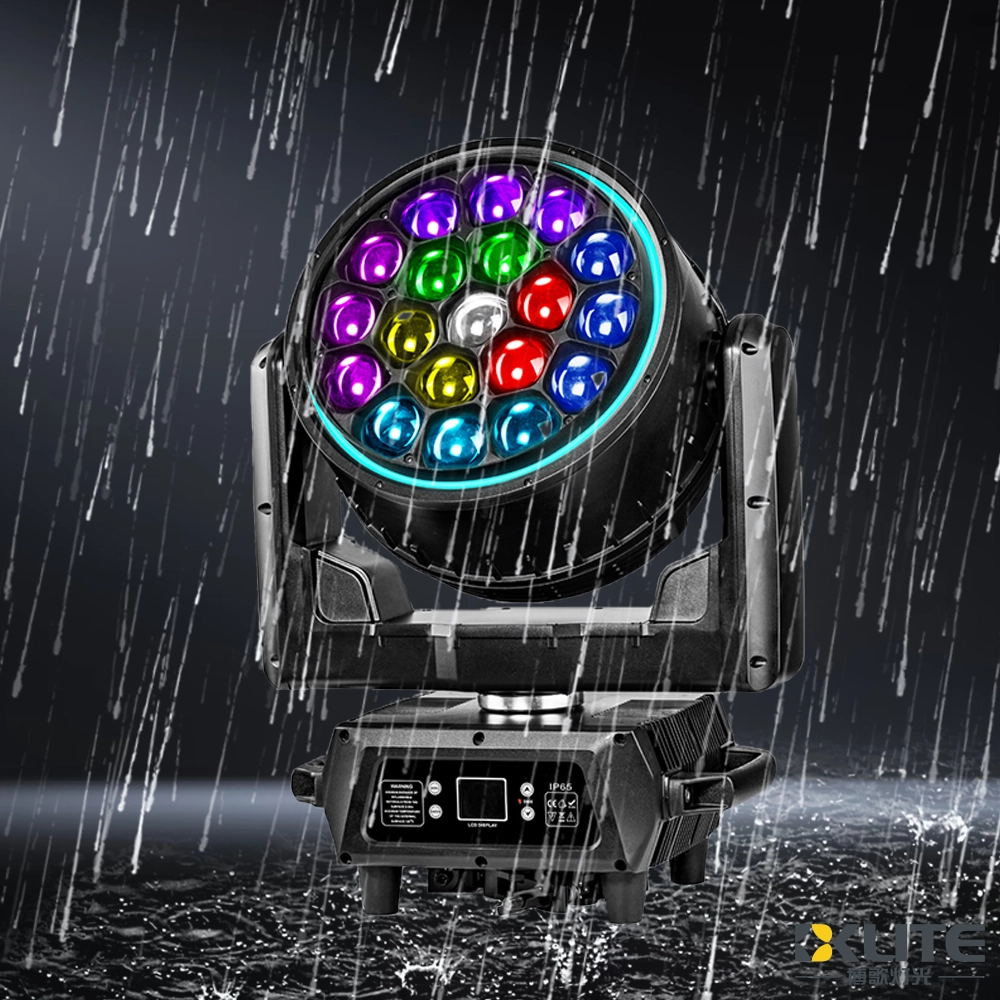
IP65 Waterproof Bee Eye Zoom 19x40W RGBW 4IN1 LED Beam Wash Moving Head Light with LED Ring
BKlite waterproof bee eye moving head light—your reliable choice from top waterproof moving head light manufacturers and suppliers. Ideal for outdoor stage, live event, music festival, this energy-saving fixture ensures powerful, precise illumination for any venue. It delivers powerful, reliable lighting performance in any weather.
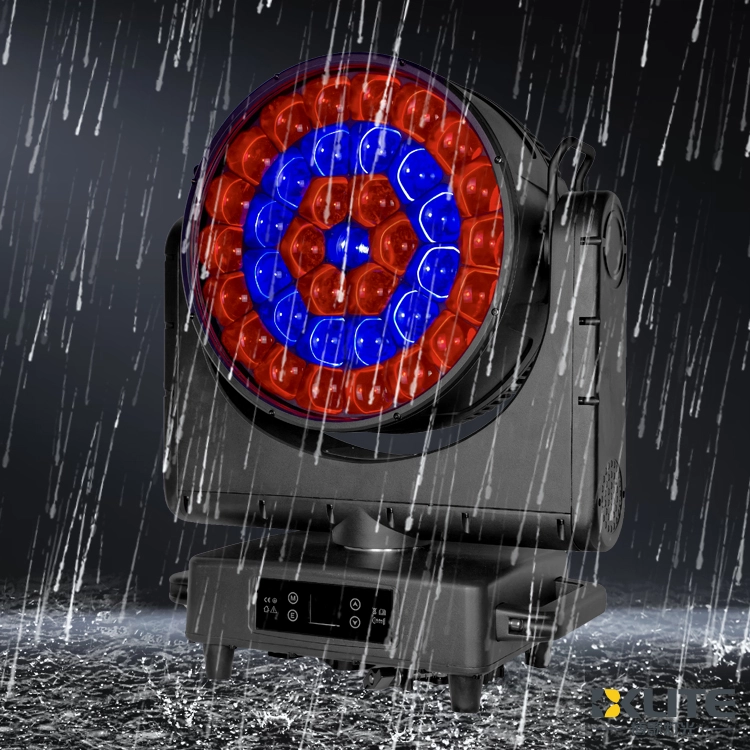
IP65 Waterproof ZOOM Bee Eye 37x40W RGBW 4in1 LED Moving Head Light
As a leading stage lighting equipment supplier with more than 15 years of industry know-how, BKlite brings you the IP65 ZOOM Bee Eye 37*40W RGBW 4in1 LED Moving Head Light (K25 Bee Eye) delivers vibrant, weatherproof lighting with powerful zoom and smooth movement. Ideal for dynamic stage effects, the K25 moving head light ensures stunning RGBW color mixing and reliable outdoor performance.
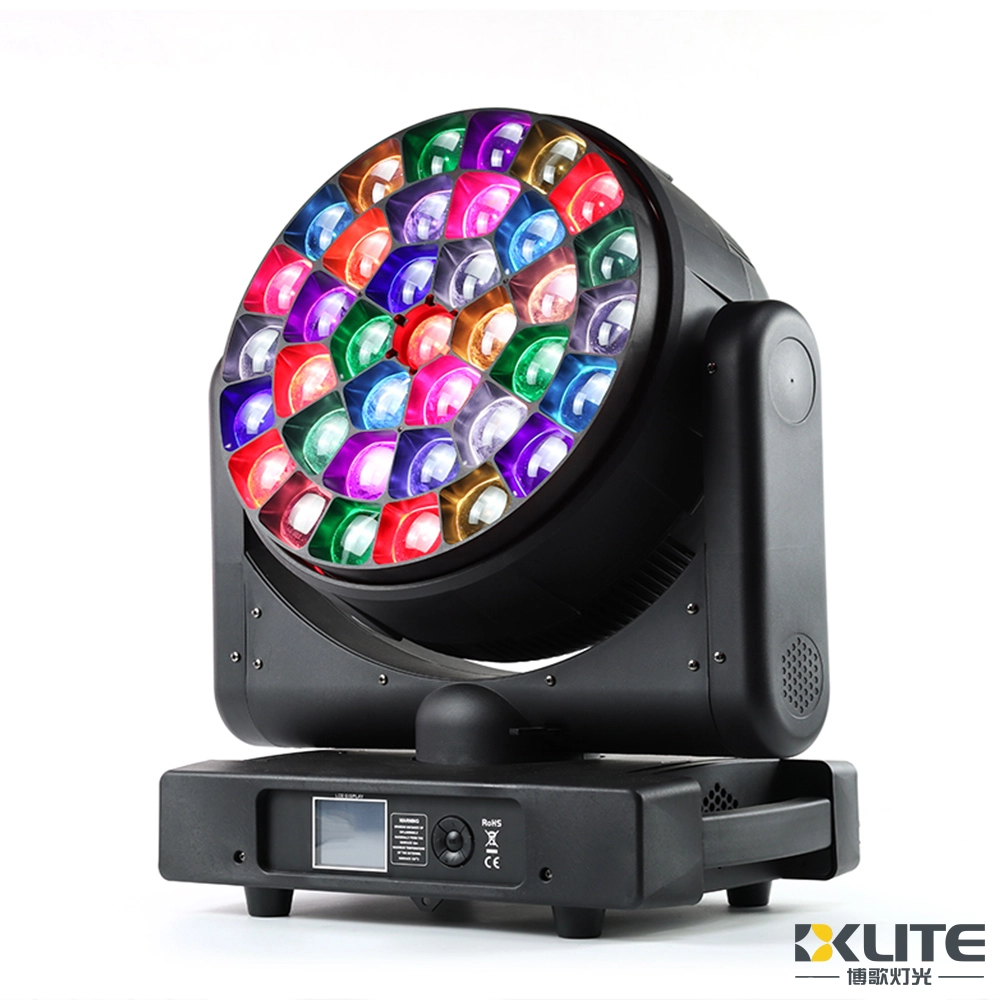
Bee Eye Zoom 37x40W RGBW 4in1 LED Beam Wash Moving Head Light
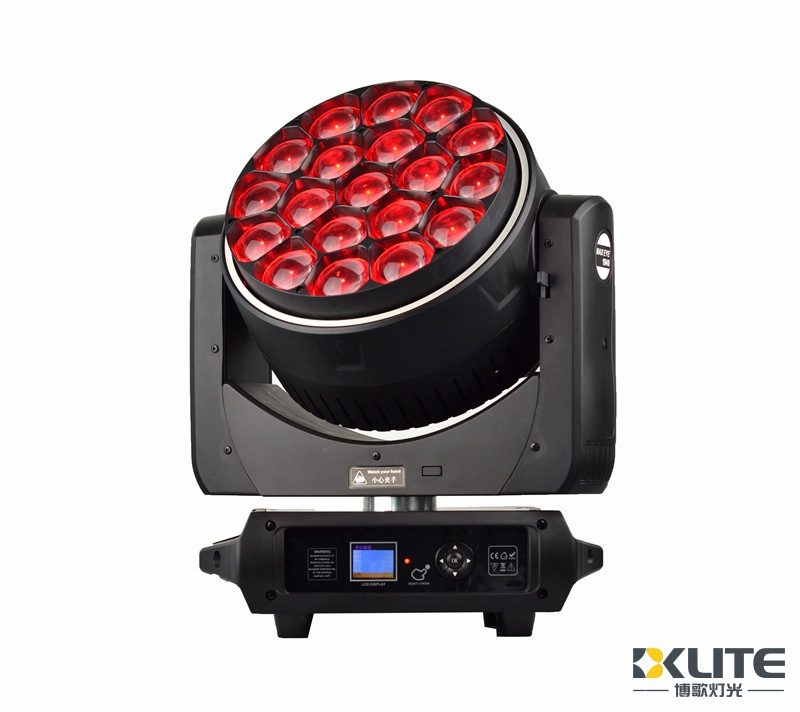
IP20 Bee Eye Zoom 19x40W RGBW 4IN1 LED Beam Wash Moving Head Light with LED Ring
As one of the leading stage lighting equipment suppliers with 15+ years of experience, BKlite launched a new Bee Eye K15 19x40 LED wash light BK-BY1940Z. .
Designed with a simple and sleek appearance, the WASH moving head light is compact, lightweight, and highly portable.
With multiple color effect macros and dynamic effect macros.
Our wash light can be used for versatile lighting options with amazing effect.
It is very good for your lighting projects.
Powerful and shoots very far distances.


Copyright © 2025 BKLITE All Rights Reserved.